- English
- French
- German
- Portuguese
- Spanish
- Russian
- Japanese
- Korean
- Arabic
- Greek
- German
- Turkish
- Italian
- Danish
- Romanian
- Indonesian
- Czech
- Afrikaans
- Swedish
- Polish
- Basque
- Catalan
- Esperanto
- Hindi
- Lao
- Albanian
- Amharic
- Armenian
- Azerbaijani
- Belarusian
- Bengali
- Bosnian
- Bulgarian
- Cebuano
- Chichewa
- Corsican
- Croatian
- Dutch
- Estonian
- Filipino
- Finnish
- Frisian
- Galician
- Georgian
- Gujarati
- Haitian
- Hausa
- Hawaiian
- Hebrew
- Hmong
- Hungarian
- Icelandic
- Igbo
- Javanese
- Kannada
- Kazakh
- Khmer
- Kurdish
- Kyrgyz
- Latin
- Latvian
- Lithuanian
- Luxembou..
- Macedonian
- Malagasy
- Malay
- Malayalam
- Maltese
- Maori
- Marathi
- Mongolian
- Burmese
- Nepali
- Norwegian
- Pashto
- Persian
- Punjabi
- Serbian
- Sesotho
- Sinhala
- Slovak
- Slovenian
- Somali
- Samoan
- Scots Gaelic
- Shona
- Sindhi
- Sundanese
- Swahili
- Tajik
- Tamil
- Telugu
- Thai
- Ukrainian
- Urdu
- Uzbek
- Vietnamese
- Welsh
- Xhosa
- Yiddish
- Yoruba
- Zulu
Cup Lock Scaffold System Uses in Construction, Maintenance, and More
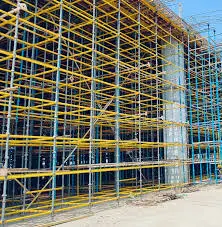
A modular steel cup lock scaffold system provides temporary access platforms and load-bearing support structures. For building construction, formwork shoring, industrial plant maintenance, bridge and tunnel work and temporary structures, contractors employ it. Each vertical standard has interval-welded lower cups. Crews handle fewer loose pieces since horizontal ledgers slide into those cups. Shandong Xingrui Building Materials Co., Ltd.’s GREEN FORMWORK makes superior Q235 steel indoor formwork complete scaffolding assembly to specification. Where it fits and what to examine before buying are shown below.
Introduction: Why the Cup Lock Scaffold System Remains a Practical Choice
What Is a Cup Lock Scaffold System?
A modular cup lock scaffold system uses steel tubes and fittings. Each vertical standard has 500-mm-distance fixed lower cups welded on. A sliding top cup locks the ledger blades in one operation, and one node receives four horizontals. It eliminates loose nuts, bolts, and wedges that delay workers. We utilise excellent Q235 steel with a 48.3 mm outside diameter. The structure stays put and examination is easy thanks to the cup-lock connection.
Why Cup Lock Scaffolding Is Used in Global B2B Projects
Cuplock scaffolding is popular with contractors, rental firms, and distributors since the same standards and ledgers create multiple configurations. Hand-assembled pieces are stored in standard lengths and reused across sites. Each region's buyers examine it against local laws, such as US OSHA scaffold regulations or European EN standards. Bay size, bracing, connections, foundations, and height determine capacity, not system name. Each project requires a design check. Our spec-built components allow your engineer to work from clear designs.
Key Selection Factors
List cost and safety criteria before choosing a modular scaffolding system. Reusability, local compliance, load requirements, working height, site circumstances, assembly speed, and total cost of ownership are examples. A cheap price per tonne might mask thinner walls or poorer welds, shortening service life. A better question is how many projects one set can reliably support. Reusable, built-to-spec parts distribute costs. Clear documentation reduces inspector and client approval time.
Cup Lock Scaffold System Components and How the System Works
Essential Cup Lock Scaffold Components
Cup lock scaffold system relies on a small set of components. Standards are cup-carrying vertical tubes. Horizontal tubes with forged blades lock into cups as ledgers. Transoms stabilise platforms, while diagonal bracing prevent shifting. On uneven terrain, base jacks level the structure, and steel planks, guardrails, toe boards, and stair or ladder units finish the work area. Fully scaffolded indoor formwork uses standards, ledgers, braces, and base jacks as the slab support grid. Each item should be clearly marked to help workers sort and count components during assembly and return.
How a Cup Lock Scaffolding System Works
The assembly order is established. Team members placed base jacks on flat ground and established the first standards. The top cup lowers down and spins to lock all blades once ledgers fall into the lower cups. Before loading each lift, crews install bracing, platforms and guardrails and ensure plumb and level. The cup keeps blades under stress, preventing displacement and saving workers time tightening fittings. At higher heights, ties or bracing stabilise the structure.
Cup Lock Scaffold Dimensions and Configuration Options
Layout depends on dimensions. Cup spacing of 500 mm allows fixed lift height changes, and ledger length determines bay size. Before a bulk purchase, check tube diameter, wall thickness, ledger blade fit, and base jack range with your provider. Parts from various manufacturers may not match. Table shows our standard specification. Send designs or examples, and we create to request.
| Parameter | Specification |
|---|---|
| Material | Q235 steel |
| Outer diameter | 48.3 mm |
| Wall thickness | 3.0–3.25 mm |
| Cup interval | 500 mm |
| Load capacity | 40–60 kN per standard, depending on bracing spacing and tube thickness |
| Surface treatment | Hot-dip galvanization (HDG) |
| Standards listed | EN 12810/12811, BS 1139, ANSI/SSFI SC100-5/05 |
Major Cup Lock Scaffold System Uses in Construction and Maintenance
Building Construction and Structural Work
Indoor formwork complete scaffolding assembly is our speciality. Under floor slabs and beams, crews establish a full-area support grid, adjust height using foundation jacks, and add formwork. The node design withstands tremendous concrete pressure and adapts to different ceiling heights. The same modular sections may build façade access platforms outside. Any application requires a skilled engineer to check bay spacing, bracing and ties against the concrete load and local code before starting construction.
Industrial Plant Maintenance and Shutdown Projects
Refineries, power plants, and manufacturers have short shutdown periods and limited space. Cuplock scaffolding around tanks, pipes, and process equipment is fast since four ledgers join at one node. Fewer loose fittings imply fewer parts in work areas. Between painting and inspection, crews might alter the structure. Plants should incorporate site-specific controls including hot-work rules and engineer permission for loaded platforms and check delivered parts match the specified configuration.
Bridges, Tunnels, and Infrastructure Projects
Civil engineering projects like bridge rehabilitation and tunnel lining include uneven forms and elevations for the cup lock scaffold system. Because ledger lengths and cup placements allow designers to walk above or around obstructions, cup lock components adjust. The design must include wet concrete weight, foundation strength, wind, and bracing since falsework and shoring bear heavy loads. Shipyards and event stages employ modular scaffolding, but corrosion, wind, and crowd-load issues need engineering permission and anchoring arrangements.
Cup Lock Scaffold System Advantages and Limitations
Key Advantages of Cup Lock Scaffolding
Here are the core advantages contractors and distributors mention most often.
- Fast assembly with fewer loose parts: The sliding upper cup locks up to four horizontals in one action, so crews do not handle nuts, bolts, or separate wedges. That shortens assembly time, reduces lost fittings, and keeps site inventory simple to count at the end of every shift.
- Stable, secure connections: The anti-detachment, anti-loosening cup node holds ledger blades firmly and limits displacement during work. The structure keeps its integrity under concrete pressure and cantilevered loads when engineers size the bracing correctly, and inspectors have fewer fittings to check.
- Reusable, built-to-spec parts: Premium Q235 steel components with hot-dip galvanizing can serve many projects when you inspect and store them properly. Standard lengths stack neatly for shipping, and custom lengths made from your drawings help rental companies match their most common layouts.
These advantages address the slow assembly and lost-fitting problems of tube-and-clamp methods.
Potential Limitations and Project Considerations
Cup-lock scaffolding is limited. Staff must be trained to assemble and examine it. Due to their weight, steel items cost more to ship and handle. Avoid combining manufacturers without formal confirmation since components may not fit. Clamp-and-tube or frame scaffolding may be cheaper for short-term access projects. Prepare early and get drawings from your supplier so your team can confirm fit before parts come.
Cup Lock vs. Ringlock, Kwikstage, and Frame Scaffolding
Nobody wins every job. Cup lock works for uneven layouts, shoring, and maintenance. Kwikstage is good for lighter access, Ringlock has greater connection angles, and frame scaffolding goes up quickly on straight, repeating façades. Instead of price per tonne, match the system to project geometry, working height, intended usage, local laws, and crew experience.
| System | Connection design | Typical fit |
|---|---|---|
| Cup lock | Fixed lower cup, sliding upper cup, up to four horizontals per node | Irregular layouts, shoring, formwork support, maintenance |
| Ringlock | Rosette with wedge pins, up to eight connection points | Complex layouts needing more angles |
| Kwikstage | Welded connectors with wedges | Lighter access work |
| Frame | Prefabricated frames with cross braces | Regular, repetitive façades |
Cup Lock Scaffold Load Capacity, Safety, and Procurement Guide
Factors That Determine Cup Lock Scaffold Load Capacity
Our norm is 40–60 kN for the cup lock scaffold system, depending on bracing height and tube thickness. Bay size, lift height, ties, foundation, platform loading, and weather affect capacity. A scaffold must sustain its own weight and four times the maximum load under OSHA (29 CFR 1926.451). Platforms above 10 feet above ground must have guardrails. Before every shift, a qualified person must examine the scaffold for damaged tubes, vessels, base jacks, and corrosion. Professionals should create the layout.
Quality Criteria and Finishes for International Procurement
Request steel grade, weld inspection, dimensional tolerance, and coating data from every supplier. Our plant employs 360-degree CO2 welding robots on cup-to-standard joints and 500-hour salt spray testing on protective coatings. Galvanising is good for coastal, humid, or outdoor applications. Paint is cheaper for short, dry interior tasks. Management systems are ISO 9001, ISO 14001, and ISO 45001 certified, and goods are CE certified.
Comparing Quotes and Choosing a Supplier
Request a materials bill instead of per-tonne cost. Compare tube wall thickness, weight, finish, accessories, packaging, products, certificates, and support. Assess factory capacity, export history, and design-build readiness. Shandong Xingrui, founded in 2007, exports to over 100 nations and regions from a 79,800-square-meter facility with 180 professionals. Production-direct purchasing suits repeat orders and custom layouts. For their first ship, GCC importers should review local compliance papers with their customs broker, like Saudi SABRE requirements. Technically supported samples let you test fit before bulk orders.
Conclusion
A modular stainless cup lock scaffold system locks four horizontals via a cup node. Standards, ledgers, braces, base jacks, and platforms are key. Building construction, inner formwork shoring, upkeep of plants, and infrastructure tasks are supported. We provide fast assembly, components that can be reused and fewer loose fittings. Large items, qualified people, and manufacturer fit concerns restrict it. Which Ringlock, Kwikstage, or frame scaffolding is best depends on math, load, and local regulations. Foundations, bracing, bay size, and ties determine capacity. As critical as per-tonne cost is validated material, weld, and coating records.
FAQ
What is a cup lock scaffold system used for?
It builds access platforms and support structures for building construction, formwork shoring, plant maintenance, and infrastructure work. Our version targets indoor formwork full scaffolding assembly.
Is cup lock scaffolding suitable for heavy-duty construction?
It can be when an engineer designs the layout. Our listed capacity is 40–60 kN per standard, depending on bracing spacing and tube thickness. Confirm bay size, ties, and foundations against your load.
Is cup lock scaffolding better than Ringlock scaffolding?
Neither wins every project. Cup lock suits many shoring and irregular layouts, while Ringlock offers more connection angles. Choose by geometry, load, local rules, and crew experience, and avoid mixing systems.
What documents should a supplier provide?
Ask for technical drawings, a bill of materials, steel grade records, quality system certificates, test records, and packing details. We provide samples with technical backup.
Request a Cup Lock Scaffold System Quote from GREEN FORMWORK
Planning a project or stocking inventory? Send GREEN FORMWORK your application, destination, dimensions, load needs, finish, quantities, and drawings. As a cup lock scaffold system manufacturer, we build to specification and supply samples with technical backup. Email sdxingruiqp@126.com or visit sdxingrui.com for details, and we will reply with a project-specific component schedule and quotation.
References
1. OSHA, Scaffolds Standard, 29 CFR 1926 Subpart L, 1996
2. European Committee for Standardization, EN 12810-1: Façade Scaffolds Made of Prefabricated Components, 2003
3. European Committee for Standardization, EN 12811-1: Temporary Works Equipment – Scaffolds, 2003
4. ASSP, ANSI/ASSP A10.8: Scaffolding Safety Requirements in Construction and Demolition Operations, 2019
5. International Organization for Standardization, ISO 1461: Hot Dip Galvanized Coatings on Fabricated Iron and Steel Articles, 2022
6. International Organization for Standardization, ISO 9227: Corrosion Tests in Artificial Atmospheres – Salt Spray Tests, 2022
Learn about our latest products and discounts through SMS or email