- English
- French
- German
- Portuguese
- Spanish
- Russian
- Japanese
- Korean
- Arabic
- Greek
- German
- Turkish
- Italian
- Danish
- Romanian
- Indonesian
- Czech
- Afrikaans
- Swedish
- Polish
- Basque
- Catalan
- Esperanto
- Hindi
- Lao
- Albanian
- Amharic
- Armenian
- Azerbaijani
- Belarusian
- Bengali
- Bosnian
- Bulgarian
- Cebuano
- Chichewa
- Corsican
- Croatian
- Dutch
- Estonian
- Filipino
- Finnish
- Frisian
- Galician
- Georgian
- Gujarati
- Haitian
- Hausa
- Hawaiian
- Hebrew
- Hmong
- Hungarian
- Icelandic
- Igbo
- Javanese
- Kannada
- Kazakh
- Khmer
- Kurdish
- Kyrgyz
- Latin
- Latvian
- Lithuanian
- Luxembou..
- Macedonian
- Malagasy
- Malay
- Malayalam
- Maltese
- Maori
- Marathi
- Mongolian
- Burmese
- Nepali
- Norwegian
- Pashto
- Persian
- Punjabi
- Serbian
- Sesotho
- Sinhala
- Slovak
- Slovenian
- Somali
- Samoan
- Scots Gaelic
- Shona
- Sindhi
- Sundanese
- Swahili
- Tajik
- Tamil
- Telugu
- Thai
- Ukrainian
- Urdu
- Uzbek
- Vietnamese
- Welsh
- Xhosa
- Yiddish
- Yoruba
- Zulu
All-Round Scaffolding Benefits for High-Rise and Industrial Builds
All-round scaffolding — technically classified as a ringlock modular system — gives contractors working on high-rise facades and industrial facilities a structural access solution that traditional tube-and-clamp setups simply cannot match. Built around a precision-welded rosette disc that accepts up to eight ledger connections at a single node, this system delivers predictable load distribution, faster erection cycles, and cleaner site presentation. At GREEN FORMWORK, we manufacture this system from Q235 premium carbon steel with hot-dip galvanization, backing every shipment with ISO 9001, ISO 14001, and ISO 45001 certification and full batch traceability documentation.
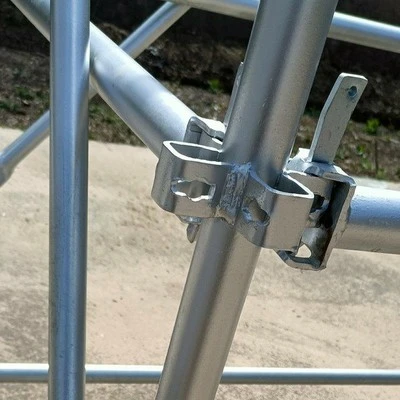
Understanding All-Round Scaffolding and Its Core Advantages
What the System Actually Is?
All-round scaffolding is a modular access system where rosette disks are fixedly placed every 500 mm on vertical standards, and horizontal ledgers lock into those disks with the help of a self-seating wedge head. There are no loose bolts or separate clamps. The shape of the connection forces automatic right-angle alignment, which keeps the verticality of the structure within a 0.2% range. When putting up shoring towers taller than 30 meters or covering bent industrial ships, where small mistakes add up and become a safety risk, that accuracy is very important.
Core Structural Advantages
The numbers for the system's performance come from mechanical tests that have been confirmed. These are the main technical strengths that buying experts always bring up during review of specifications:
- Load capacity up to 50 kN per vertical standard, measured under EN 12810/12811 compliance protocols. This figure supports heavy concrete pours and multi-deck industrial shutdowns without additional reinforcement columns.
- 60–80 micron hot-dip zinc coating per ISO 1461, which translates to a verified service life of 15–20 years in aggressive environments including saltwater yards and petrochemical plants.
- Eight-direction rosette connectivity, allowing diagonal bracing to attach directly at the node rather than mid-span. This geometry creates a rigid truss effect that resists lateral wind loads far better than frame scaffolding.
- 48 mm and 60 mm series compatibility, so existing yard inventory integrates with new components without sourcing entirely new accessories.
These structural features directly address the two most expensive issues in industrial access work: parts breaking at unexpected load points and slow installation that causes more facility downtime.
Safety Standards and Maintenance
When products are checked against EN 12810 and have the CE mark on them, HSE workers can see a paper trail from the batch of raw materials to the finished assembly. It's easy to keep up with maintenance after a project is done. Just clean off the concrete from the rosette disks, check the wedge heads for deformation, and do a magnetic induction test on the zinc layer to find any localized corrosion before it spreads. Documented inspection cycles also meet the safety requirements of ISO 45001 for the workplace.
How All-Round Scaffolding Solves Common Construction Challenges?
The Limitations of Legacy Systems
For tube-and-clamp structure to work, each corner needs its own right-angle and swivel couplers. A 2019 study in the journal Construction and Building Materials found that coupler-based systems require up to 40% more work hours per square meter than node-lock systems. Frame scaffolding, on the other hand, can only have fixed bay widths, so it can't be used for curved shipyard hulls or dense refinery pipe racks.
Modular Assembly in Practice
That gap in work is immediately closed by the wedge-lock concept. A member of the crew puts the wedge head into the rosette slot and hits it down once with a hammer. The joint locks itself, and the ledger fits squarely in place. Compared to tube-and-clamp, assembly time is cut by about 50%, which is in line with data from industrial shutdown contracts in Northern Europe. That gap can mean several full crew days of recovery for a 2,000 m² refinery platform.
Risk Reduction on Complex Structures
The all-round scaffolding system gets rid of the human mistake factor that makes irregular buildings dangerous with old methods. This is because every link point is geometrically similar and automatically lines up. Instead of being clamped in the middle of the tube, diagonal bracing is attached directly to the rosette node. This spreads the rotational stress across the whole vertical standard instead of gathering it at a single clamp bite point. This is important in dry docks for making ships because the shape of the scaffolding has to follow the shape of the hull from different directions at the same time.
Selecting the Right All-Round Scaffolding: A Buying Guide for B2B Clients
Evaluation Criteria That Decide Vendor Selection
When looking for ringlock scaffolding manufacturers in the European and Middle Eastern areas, purchasing managers use the same set of criteria every time. It is necessary to have CE certification with load test results, batch traceability records (material certificates that can be traced back to the steel mill), English-language technical data sheets, and zinc coating thickness reports from a third party. If a supplier can't make all four items within 48 hours, they usually don't get past the first qualification stage.
Comparing System Types for Specific Applications
Every project needs a different set of tools. Here's how the main choices stack up against the needs of industry and high-rise buildings:
- Ringlock / all-round systems handle multi-directional geometry, high node loads, and aggressive corrosion environments. Best fit for refineries, shipyards, power stations, and high-rise exterior protection.
- Cuplock scaffolding suits straight-run civil work and is cost-effective for standard building facades, but its fixed four-way top cup limits angular flexibility on curved structures.
- Frame scaffolding offers the fastest erection on repetitive residential facades but cannot adapt to irregular geometries or carry the node loads required for industrial shoring.
Cuplock scaffolding is good for straight-run civil work and is cheap for standard building facades, but it can't bend in four different directions, which makes it less useful for curved structures.
Customization and Lead Time
The ringlock system works with 48 mm accessories, so procurement teams that are in charge of a variety of project types can use their existing frame stock while the system is being set up.
Procurement and Installation: Streamlining Your Acquisition
Purchasing Options and Inventory Scalability
People who want to buy all-round scaffolding can either buy it outright and own it for a long time, or they can place modular repeat orders under a framework deal that locks in prices and delivery windows for 12 months. Sample review → load test confirmation → small trial order → annual contract is the best way to go for first-time buyers. This process usually takes between two and six months and sets up a supply relationship for three to five years.
Professional Installation and Training Support
Hiring a trained erection crew cuts down on mistakes during setup that would otherwise need to be taken apart and fixed, which costs a lot more than the money saved by not hiring trained workers. GREEN FORMWORK helps both in-house crews and third-party scaffolding subcontractors by giving them technical installation advice and safety data documentation. All of the paperwork meets the safety requirements set by ISO 45001 for the site.
After-Sales Support
Post-delivery help includes finding replacement parts, answering technical questions, and making changes to paperwork for regulatory checks. Having a single point of contact who speaks English gets rid of the problems that slow down the compliance-driven buying processes in European markets.
Maximizing Efficiency and Safety with Best Practices
Step-by-Step Erection Sequence
Start with a level base plate layout for all-round scaffolding that has been checked by a surveying tool. Place vertical standards at the right distances between the bays, then insert ledgers from the bottom lift up, making sure that each wedge head is in place before moving on to the next bay. At least every third lift, you should put in diagonal support that connects directly to rosette nodes. Last check: use a spirit level to make sure that each standard is straight before loading the platform.
Routine Inspection and Documentation
Check the scaffolding before each shift. The inspection log should see the condition of the zinc surface, the deformation of the wedge head, the strength of the rosette disk weld, and the settlement of the base plate. Under EN 12811, the inspection record must be signed by a qualified person before work can begin. The proof file for ISO 45001 internal audits is made up of these documents as well.
Preventing Common Failures
Most ringlock scaffold accidents happen because the wedge heads aren't seated properly, the single bays are too full from staging materials, or the zinc coating on the weld points is damaged and corrodes. You can fix the first problem by making sure that the hammer-seating is correct during the construction inspection. The second problem can be fixed by putting the maximum load for each bay on the site. Finally, any damage to the coating that is found during the inspection should be fixed with zinc-rich cold repair compound.
Conclusion
The all-round scaffolding ringlock modular system helps industrial and high-rise builders build faster, more reliably, and with assets that will last for a long time. This system is one of the most specification-friendly choices for procurement teams working to meet CE and EN standards. It is made of Q235 steel, has an HDG finish of 60–80 microns, and has been proven to withstand node loads of up to 50 kN. The rosette connector's shape makes it possible for it to handle situations that other systems can't, like shutting down a refinery or protecting the outside of a tall building.
FAQ
Q1: What zinc coating thickness should I specify for a marine or chemical environment?
A: Specify a minimum of 60 microns per ISO 1461. For continuous saltwater or chemical exposure — such as dry-dock shipbuilding or refinery turnarounds — 80 microns is the preferred baseline. Always request third-party magnetic induction test reports, not manufacturer self-declaration alone.
Q2: Can I mix components from different manufacturers?
A: Technically possible if both manufacturers use the standard 48.3 mm OD tube, but mixing is inadvisable unless you hold a certified load-test report confirming wedge-and-rosette compatibility between the two brands. Geometric tolerance differences accumulate in tall structures and can compromise joint integrity.
Q3: What is a realistic standalone tower height?
A: Standalone towers typically reach 50+ meters when properly tied to a permanent structure at specified intervals. Height beyond that requires a structural engineer's calculation specific to the site ground bearing capacity and wind exposure class.
Q4: How do I verify batch traceability before placing a large order?
A: Request the material mill certificate (EN 10204 Type 3.1 or 3.2) and the HDG batch report for each consignment. A supplier with a fully traced quality system can produce these documents within 24 hours of the order being placed.
Partner with GREEN FORMWORK for Certified Ringlock Scaffolding
Our 79,800 m² production base in Rizhao, China, is where GREEN FORMWORK makes all-around scaffolding that is CE-certified and meets ISO 9001, ISO 14001, and ISO 45001 standards. As a reliable all-around scaffolding manufacturer that works with contractors in more than 100 countries, we offer sample supplies, technical documentation written in English, and custom fabrication from drawings provided by clients. For your next project, you can ask for a sample kit and batch tracking papers by emailing sdxingruiqp@126.com.
References
1. Construction and Building Materials — "Labor Productivity Benchmarks in Modular Scaffolding Systems," Elsevier, 2019.
2. Scaffold Industry Association (SIA) — Scaffold and Access Industry Standards Manual, 7th Edition, 2020.
3. EN 12810-1:2003 — Facade Scaffolds Made of Prefabricated Components: Part 1, Product Specifications, European Committee for Standardization (CEN), 2003.
4. EN 12811-1:2003 — Temporary Works Equipment: Part 1, Scaffolds — Performance Requirements and General Design, European Committee for Standardization (CEN), 2003.
5. ISO 1461:2009 — Hot Dip Galvanized Coatings on Fabricated Iron and Steel Articles: Specifications and Test Methods, International Organization for Standardization, 2009.
6. Journal of Construction Engineering and Management — "Safety Performance of Node-Lock Scaffolding in Industrial Maintenance Applications," ASCE, 2021.
Learn about our latest products and discounts through SMS or email