- English
- French
- German
- Portuguese
- Spanish
- Russian
- Japanese
- Korean
- Arabic
- Greek
- German
- Turkish
- Italian
- Danish
- Romanian
- Indonesian
- Czech
- Afrikaans
- Swedish
- Polish
- Basque
- Catalan
- Esperanto
- Hindi
- Lao
- Albanian
- Amharic
- Armenian
- Azerbaijani
- Belarusian
- Bengali
- Bosnian
- Bulgarian
- Cebuano
- Chichewa
- Corsican
- Croatian
- Dutch
- Estonian
- Filipino
- Finnish
- Frisian
- Galician
- Georgian
- Gujarati
- Haitian
- Hausa
- Hawaiian
- Hebrew
- Hmong
- Hungarian
- Icelandic
- Igbo
- Javanese
- Kannada
- Kazakh
- Khmer
- Kurdish
- Kyrgyz
- Latin
- Latvian
- Lithuanian
- Luxembou..
- Macedonian
- Malagasy
- Malay
- Malayalam
- Maltese
- Maori
- Marathi
- Mongolian
- Burmese
- Nepali
- Norwegian
- Pashto
- Persian
- Punjabi
- Serbian
- Sesotho
- Sinhala
- Slovak
- Slovenian
- Somali
- Samoan
- Scots Gaelic
- Shona
- Sindhi
- Sundanese
- Swahili
- Tajik
- Tamil
- Telugu
- Thai
- Ukrainian
- Urdu
- Uzbek
- Vietnamese
- Welsh
- Xhosa
- Yiddish
- Yoruba
- Zulu
Best Coupler Type Round Tube Scaffolding for Heavy-Duty Projects
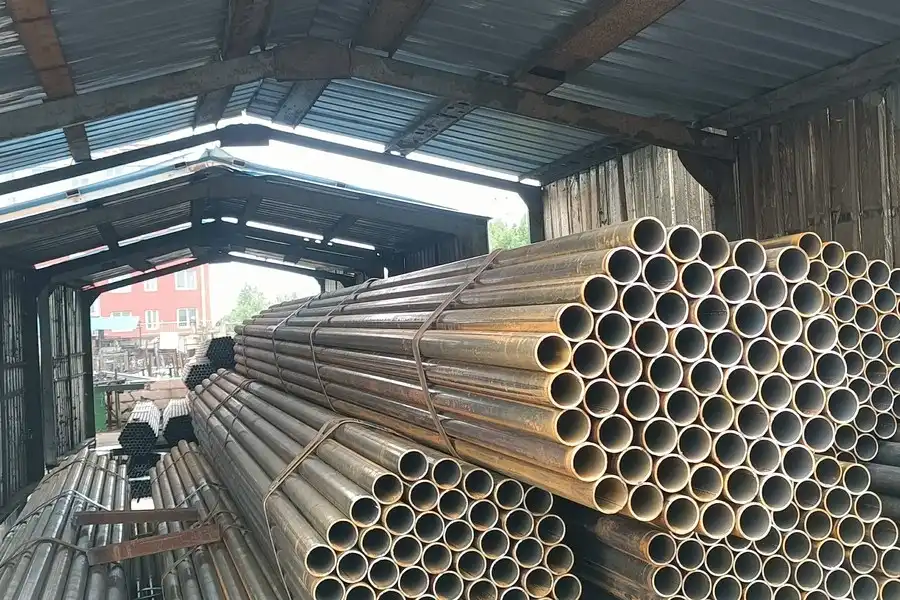
What makes the best coupler type round tube scaffolding for heavy-duty jobs? The coupler, the tube, the finish, and the layout. You can use swivel couplers to brace diagonally, fixed couplers to hold 90-degree joints, and sleeve couplers to link two tubes end to end. It is made of Φ48mm Q235 steel and has cast iron couplers that can be shaped. It is also hot-dip galvanized and has a 40–60 micron thick zinc coating. Still, the choice you make will depend on the load path, the exposure, and the rules your project has to follow, such as EN 74-1 or OSHA 1926.451 in the US. This book walks you through each choice one by one.
Understanding Coupler Types for Round Tube Scaffolding
Why Coupler Selection Matters?
In tube and coupler scaffolding, the load is spread out along the length of the tubes. They move the force from one tube to the next and hold each member in place. If a joint slips, the load path can change. This means that a bay that was designed to hold one force may also hold another. So, the coupler you choose is just as important as the grade of the tube. Scaffolds and their parts must be able to hold at least four times their own weight, according to OSHA 1926.451. That margin is important in factories, on bridge falsework, and on tunnel lining supports. Joints must stay tight even when they are loaded and vibrated many times.
Fixed and Swivel Couplers Compared
Fixed couplers, which are also known as right-angle couplers, connect two tubes at a right angle. They work with standards, ledgers, guardrails, and regular scaffold bays because the shape is always the same. Any angle can be used to connect tubes with swivel couplers since they can turn. They are used to hold up structures that aren't straight or are curved. They don't switch places. To connect at an angle, you need a fixed coupler. A swivel coupler, on the other hand, costs more and takes more work to tighten on joints that stay straight. It is common to use both, and they are matched to the design drawing. Make sure you count each type on the drawing before you place your order. It will take longer to get an erection if you mix them up wrong.
Sleeve, Putlog, and Specialty Couplers
A sleeve coupler can join two tubes end to end when you need more length than one tube can give you. With a putlog or single coupler, you can connect a tube to a structure or hold up a backup member. But they're not the same as right-angle joints that hold weight. Beam clamps connect tubes to steel flanges, which is useful for bridge and plant work. Some projects need couplers that are made just for them because the interfaces aren't standard. We can make these couplers based on the customer's drawings and samples. Before putting any part in place, make sure you check the load direction, tube size, and what it can be used for.
How to Choose the Right Coupler for Heavy-Duty Work?
Start With Function, Load Path, and Materials
Put each joint in order by what it's used for: moving vertical loads, bracing, holding things in place, getting to something, or extending a tube. Then, make sure you have the right steel grade, connection angle, outside diameter, and wall thickness for your coupler type round tube scaffolding. Q235 steel is what we use for our tubes. Based on the Chinese GB/T 700 standard, the number 235 means that it has a minimum yield strength of 235 MPa. To keep track of each batch, ask suppliers for certificates of materials, data on hardness, bolt specifications, and the ability to keep track of each batch. When you compare tubes, look at their jaw opening, body thickness, bolt size, and coating thickness. Sizes are also important. There should be more than just a label that tells you how much weight something can hold. There should also be tests that measure slip, tension, compression, and bending.
Forged, Pressed, and Malleable Iron Couplers
There are good and bad ways to make things. They are made of dense steel that can handle a lot of force. Pressed steel couplers are usually cheaper when you need a lot of them and are lighter. On our 48mm system, we use couplers made of cast iron that can be shaped. Heat is used to make these more flexible than regular cast iron. By itself, the method never proves that it works. A better way to compare things is to look at the slip-test results, body thickness, bolt quality, and actual size. It's not clear from the word "heavy-duty" what the test was about. You need to know the sample size, the standard, and the direction of the load.
Galvanized vs Painted Finishes
Finish has a bigger effect on service life than most buyers think. Zinc is added to the surface of steel when it is hot-dip galvanized. This zinc stops water from getting in and keeps small holes safe, so it can handle rain, humidity, and air from the coast. It can be used in coastal areas for more than 10 years and has a zinc layer that is 40–60 microns thick. Paint finishes can work for dry jobs inside or short projects that don't cost a lot of money. Make a list of the coating's type, thickness, and how it will be checked. It may cost more at first, but in the long run, galvanized items save money because they don't need to be painted or replaced as often.
Our Q235 Coupler Type Round Tube Scaffolding System
What Makes This System Different
This is the standard frame, which is made up of round tubes joined together with couplers. The fact that it comes with all the parts you need to keep it in good shape makes that easy. Like rigid modular systems, it doesn't have set gaps between the pieces. Pipes can be cut and joined to any length or angle by installers. This is helpful for factories with lots of pipes, buildings with odd shapes, and old buildings. There are strong locking systems on the flexible iron couplers that keep them from moving when they're full. Because it can bend to fit the shape of the area, this coupler type round tube scaffolding can be used on sites with curved walls or little room to work.
Technical Specifications at a Glance
These are the specs for our standard system.
| Parameter | Specification |
|---|---|
| Material | Q235 steel |
| Tube diameter | Φ48mm |
| Wall thickness | 3.2mm / 4.0mm |
| Coupler type | Malleable cast iron |
| Surface treatment | Hot-dip galvanization |
| Zinc coating | 40–60 microns |
| Load capacity | Above 2.5 kN/m² when designed correctly |
| Compliance standards | EN 74-1, BS 1139, EN 39 |
| Service life | 10+ years in coastal environments |
Even though the load figure comes from a good plan, your engineer should still check each project's spans, bracing, and ties. We'll match the layout to the right tube lengths and coupler numbers if you send us your plans.
Core Advantages for Irregular Facades
If you have an irregular facade, there are two main benefits that stand out. The first benefit is that you can set up the structure in any way you want since you can cut the tubes to the right lengths and connect them anywhere. Because of this, it can be used for envelopes where fixed-span systems leave spaces. The second thing is how strong the connection is. For example, malleable iron couplers lock securely and don't slip under heavy industrial loads, which keeps everyone safe. All of these parts keep the scaffolding close to the shape it was meant to have, so there is less need for quick fixes on the job site. You can also get everything you need in one place because we have a lot of foot planks, baffles, and hooks.
Standards, Installation, and Real-World Applications
EN 74 and Other Safety Standards
There are rules and ways to test tube couplers in EN 74-1. EN 39 talks about tube and coupler scaffolds that use loose steel tubes. And EN 12811-1 lists the performance standards that scaffolds must meet. A lot of places that export still use BS 1139 as a standard. Asp A10.8 and OSHA 1926.451 tell us how to build and use scaffolding in the US. Find out from your engineer what the rules are for your site. Ask for test reports, certificates of materials, data on sizes and shapes, reports on coatings, and batch numbers that are unique to the product. An inspection certificate from the factory is not the same as testing the item. Our factory has ISO 9001 and ISO 14001 certifications, and CE certifications mark our goods as safe to use.
Installation and Inspection Steps
It's possible for a well-made coupler to slip if it's not put in the right way. Start with tubes that are clean, straight, the right diameter, and don't have a lot of rust on them. Make sure all the bolts are tight and that both tubes are fully in the coupler jaws. Then, set the swivel couplers to the right angle for bracing. There are many specs that say the torque should be between 40 and 60 Nm, but you should always listen to your engineer because too much torque can bend the tube and too little torque can make it slip. According to OSHA, scaffolds need to be checked by a trained professional before each work shift. If you see any slipping, cracks, corrosion, bent parts, or bolts that aren't tight, you should take it out of service.
Best Configurations by Application
When working outside, fixed couplers are used in straight bays and swivel couplers are used for diagonal bracing. The job is done when it is galvanized and can be used outside. It works with factories that have a lot of pipes, uneven building facades, and old buildings. For supporting a bridge or tunnel, you need correct load data, strong bracing, and an engineering review of the wind, vibration, and conditions at the site. Distributors and rental fleets should look for steady supplies, uniform sizes, and items that are easy to check. For OEM programs, boxes, labels, and paperwork might need to be made just for them. Before placing an order, make sure the coupler mix is right for each use. In this way, your crew won't have to stop in the middle of an erection to find a part that they've lost.
Comparing Suppliers and Avoiding Costly Mistakes
How to Compare Suppliers
Don't just look at the price per unit if you want to buy coupler type round tube scaffolding. Ask the supplier if it makes the goods itself or if it hires other businesses to do it. Our company has been around since 2007 and is based in Rizhao, Shandong. It's 79,800 square meters big and has standard workshops that are more than 40,000 square meters big. There are 920 workers here, and 180 of them are technicians. There are also 12 robots that weld and 6 automatic welding lines. Rizhao has its own harbor, which makes sending goods to other countries easier. The quote you get should include the type of coupler, tube size, material, finish, weight, certification, packaging, minimum order quantity (MOQ), lead time, payment terms, and how the goods will be shipped. You can then compare the landed cost instead of the ex-works price.
Common Selection Mistakes
Four mistakes keep happening. People buy something because it's cheap without checking it out first, use swivel couplers at every joint, don't care about the tube diameter tolerance, and think of "heavy-duty" as a technical term. Any of these things makes it more likely that something will slip, deform, cost a lot to replace, or take longer than planned. Fixed, swivel, sleeve, single, and specialty couplers should all be on the order. This will help you stay away from them. Ask for test reports that include the standard, the load direction, and the failure criteria. First, approve a sample. This is especially important for parts or tubes that aren't standard. We make samples from the plans you give us so you can check that they fit before you buy a lot of them.
A Simple Decision Guide
Do it three times. If the project will be used inside or outside, say so. Also, describe its shape, how long it will last, how often it will be used, and when it will be delivered. Second, write down the most important technical things for you. Some of these are slip and load performance, tube compatibility, coating, certification, and how the system is set up. Third, write down the most important goals for your business, such as quality that stays the same, landed cost, lead time, responsiveness, and support after the sale.
Fixed couplers can be used with standard 90-degree bays, swivel couplers can be used with bracing and odd shapes, and they can be used outside after being galvanized. There are three types of iron couplers: forged, pressed, and malleable. You should choose based on test results rather than labels. This order makes sure that price doesn't change a choice that should be based on scientific facts about safety.
Conclusion
When choosing a coupler for heavy-duty round tube scaffolding, you need to make sure that each joint can be used with the coupler that was made for it. Swagel couplers are used for bracing and odd shapes, fixed couplers connect 90-degree bays, and sleeve and specialty parts are used for extensions and strange connections in coupler type round tube scaffolding. There are different kinds of iron couplers that can be used, as long as tests show that they don't slip or break when they're loaded.
Tubes and fittings that are near water or the coast are safer when they are galvanized. Q235 ¦48mm tubes and malleable iron couplers can be used to make a flexible system for uneven facades as long as the engineer checks the design against EN 74-1, EN 12811-1, or OSHA 1926.451. You can cut down on slips, costs for replacement, and delays by installing things correctly, checking them often, and comparing suppliers based on documents instead of unit price.
FAQ
Which coupler suits 90-degree joints?
Standards, ledgers, and guardrails can all be used with fixed couplers because they fit at a 90~ angle. Swivel couplers can connect parts that are at an angle or across the board. Write down how many of each type you need for most projects on your order.
Are forged couplers stronger than pressed ones?
Not all the time. If they are made right, both can work. Check the slip-test reports, steel grade, body thickness, and bolt quality. In our system, we use couplers made of cast iron that can be shaped.
What tube size does your system use?
With walls that are either 3.2 mm or 4.0 mm thick and a diameter of 48 mm, the round tubes we use are welded and made of Q235 steel. In many EN markets, the outside diameter is given as 48.3 mm. Test the fit on a small piece.
Should I choose galvanized or painted finishes?
Choose galvanized for projects that will be outside, in humid places, near the coast, or for rental fleets. Painting is a good way to finish short or dry jobs inside. Some 40–60 microns of zinc cover our item.
What do you need for a quotation?
Send the types of couplers, the number of them, the tube sizes, the applications, the load requirements, the finish, the certification needs, the destination, and the preferred delivery date. When you send us drawings or samples, we answer more quickly.
Request a Coupler Type Round Tube Scaffolding Quotation
We'll help you find the right mix of fixed, swivel, and sleeve couplers for your project if you tell us about it. Some of the certifications we have are ISO 9001, ISO 14001, and CE. We have been making coupler type round tube scaffolding for a long time. We ship to more than 100 countries, and you can send us drawings and samples to use for custom work. Please send an email to sdxingruiqp@126.com with your order number, tube size, and delivery date.
References
1. OSHA, Safety Standards for Scaffolds Used in the Construction Industry (29 CFR 1926.451), 1996
2. European Committee for Standardization, EN 74-1: Couplers, Loose Spigots and Baseplates for Use in Working Scaffolds and Falsework – Couplers for Tubes, 2005
3. European Committee for Standardization, EN 12811-1: Temporary Works Equipment – Scaffolds – Performance Requirements and General Design, 2003
4. European Committee for Standardization, EN 39: Loose Steel Tubes for Tube and Coupler Scaffolds, 2001
5. American Society of Safety Professionals, ANSI/ASSP A10.8 Scaffolding Safety Requirements, 2019
6. Standardization Administration of China, GB/T 700 Carbon Structural Steels, 2006
Learn about our latest products and discounts through SMS or email