- English
- French
- German
- Portuguese
- Spanish
- Russian
- Japanese
- Korean
- Arabic
- Greek
- German
- Turkish
- Italian
- Danish
- Romanian
- Indonesian
- Czech
- Afrikaans
- Swedish
- Polish
- Basque
- Catalan
- Esperanto
- Hindi
- Lao
- Albanian
- Amharic
- Armenian
- Azerbaijani
- Belarusian
- Bengali
- Bosnian
- Bulgarian
- Cebuano
- Chichewa
- Corsican
- Croatian
- Dutch
- Estonian
- Filipino
- Finnish
- Frisian
- Galician
- Georgian
- Gujarati
- Haitian
- Hausa
- Hawaiian
- Hebrew
- Hmong
- Hungarian
- Icelandic
- Igbo
- Javanese
- Kannada
- Kazakh
- Khmer
- Kurdish
- Kyrgyz
- Latin
- Latvian
- Lithuanian
- Luxembou..
- Macedonian
- Malagasy
- Malay
- Malayalam
- Maltese
- Maori
- Marathi
- Mongolian
- Burmese
- Nepali
- Norwegian
- Pashto
- Persian
- Punjabi
- Serbian
- Sesotho
- Sinhala
- Slovak
- Slovenian
- Somali
- Samoan
- Scots Gaelic
- Shona
- Sindhi
- Sundanese
- Swahili
- Tajik
- Tamil
- Telugu
- Thai
- Ukrainian
- Urdu
- Uzbek
- Vietnamese
- Welsh
- Xhosa
- Yiddish
- Yoruba
- Zulu
Crab 60 Series Scaffolding Benefits for Safer, Faster Assembly
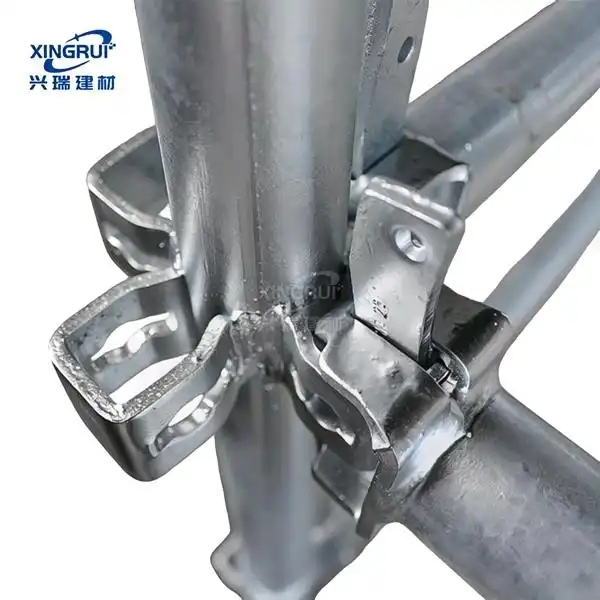
Crab 60series scaffolding is assembled quicker and safer with its 60.3 mm Q235 steel upright, eight-hole rosette and self-tightening wedge-lock connection. Crews attach ledgers for the rosette at predetermined angles for more regular layouts and less loose connections. The 3.2 mm wall as well as hot-dip galvanized finish allows heavy-load, large-span and high-rise work to be done. The pieces may be reused again and again on various projects. GREEN FORMWORK, SHANDONG XINGRUI COMPLETING MATERIALS CO., LTD. sells this system. It is produced in Rizhao and exported to over 100 countries.
Contractors or procurement teams are facing increasing labor costs, parts of varying sizes, complicated load planning and the danger of incorrect installation. One connection that may be reused again and again in a system of components might lessen such demands. It explains how the system projects, where it fits as well as what you should verify before you purchase. Before buying, verify that the current technical data is consistent with measurements, load assessments, tube specifications, finishes and certificates.
The Core Design of Crab 60 Series Scaffolding
Modular Components and Their Roles
There are things in the system that are related to each other. Tubes or standards are straight and carry weight to the ground. The rosette accommodates rows of ledgers. Transoms and platforms make up the working deck. Base jacks level a framework and guardrails and toe boards protect the edge when the ground isn’t level. Stairs and steps let personnel get to the summit safely. Joints are completed by connection add-ons. If the rosette hits each part at the same place, it is easy to lay out, train, examine and replace parts between projects. Assembly time varies depending on location and staffing.
Key Specifications at a Glance
The straight piece is made from Q235 steel and has a wall thickness of 3.2 mm and an outside diameter of 60.3 mm, which is about 2.375 inches. The core data for the standard configuration are shown in the table. Ledger spacing affects how much weight can be carried.
| Parameter | Specification |
|---|---|
| Upright outer diameter | 60.3 mm |
| Wall thickness | 3.2 mm |
| Material | Q235 steel |
| Connection | Eight-hole rosette with wedge lock |
| Step distance | 1.5 m |
| Standard span | 1.2 m |
| Vertical load capacity | 70–80 kN per leg |
| Coating | Hot-dip galvanized, 60–80 microns |
| Service life | 20+ years |
Check the most recent technical documents to make sure the numbers are correct for your setup.
A Practical Checklist for Complete and Compatible Packages
A quote might look low-cost, but it might still have holes in it. Make sure that it lists base jacks, braces, platforms, guardrails, toe boards, access units, and connection accessories by length of line and span. Since different tube diameters and wall thicknesses slow down work on site, make sure that all of your items are the same. So that your crew can plan how to handle it, ask for the load table, the rosette spacing tolerance, and the weights of the parts. Send drawings of your layout if it's not normal. We can make the right size for you based on your drawings and samples, so you don't have to bend the design to fit stock lengths.
Key Benefits of Crab 60 Series Scaffolding for Construction Projects
Faster Assembly Through Repeatable Connections
Repetition is what makes you fast with crab 60series scaffolding. Each eight-hole rosette can hold ledgers at certain angles, and the wedge-lock connection fits in place without the need for extra screws. The pattern used to build each bay is the same, so new workers quickly learn the steps. The system can also cut down on the diagonal bracing that some layouts need, but the final design must still be approved by the engineer of record. It's easier to sort things and find things when there are fewer loose fittings. It still depends on the crew's skill, how easy it is to get to the site, and the weather, so ask for a sample or trial bay before you place a large order.
Safer Work Areas and a Stable Structure
The wedge-lock style tightens itself. The wedge seats deeper into the rosette when the load or vibration increases. This makes the connection more rigid. The stiffness of the 60.3 mm tube is also higher than that of the standard 48.3 mm tube. OSHA 29 CFR 1926.451 says that on US projects, a scaffold must be able to hold at least four times its maximum intended load in addition to its own weight. Also, workers who are more than 10 feet above a lower level must wear fall protection. When designed and put in by a qualified person, guardrails, toe boards, and access units can help you follow those rules.
Load Capacity, Reuse, and Long-Term Value
Based on the distance between the ledgers, each standard can hold between 6 and 8 metric tons. This size works well for work with heavy loads, long spans, and tall buildings. Bridge decks, factories, stadium roofs, and tall formwork support are all common places to use it. The steel is protected by hot-dip galvanizing at 60–80 microns, and the parts can be used in different projects. As you look at different quotes, don't just look at the unit price. Add up the costs of labor, storage, replacement parts, and freight. One that doesn't need to be replaced as often can save you money on each project than a cheaper set that breaks down quickly.
How to Assemble Crab 60 Series Scaffolding Safely and Efficiently
Plan Before the First Component Goes Up
First, look over the design and the site. Check the working height, tie-in points, overhead hazards, traffic areas, wind exposure, and access routes to make sure they are all correct. Sort the parts that were sent to you and check each one. Before it gets to the structure, take out any bent tubes, broken rosettes, or pieces that don't fit right. OSHA says that a qualified person must oversee the setting up, moving, changing, and taking down of things. Before work starts, show the crew the drawing and the weight limits. This way, everyone builds the same design.
Step-by-Step Assembly Sequence
Do one lift at a time. Place the base jacks on solid sole boards and make sure they are level. Start by putting down the first standards. Then, connect the ledgers at the rosette by following the design's step distance and span. There is a 1.5 m step and a 1.2 m span in our standard set-up. Put up the platforms after adding the transoms and braces. Before anyone works on that level, guardrails, toe boards, and access units should be put in place. Check that the lift is level and plumb, and then do it again for the next lift. As the structure rises, put ties in place where the engineer told you to. To lower the risk of things falling off the deck, keep tools and loose parts off of it.
Final Inspection and Handover
Before putting it out there, make sure that each wedge fits properly, that the bracing and ties are the right size, and that the platforms are full. Put up load signs and keep track of the inspection. OSHA says that a qualified person must check a scaffold before every work shift and after anything that could damage its structure, like bad weather. Make sure you keep a written handover with the inspector's name, the layout drawing, and the load rating. Good records keep your crew safe, help with audits, and speed up repairs or installations of this crab 60series scaffolding in the future.
Crab 60 Series Scaffolding Compared With Other Systems and Finishes
Crab-Style Compared With Ringlock, Cuplock, Frame, and Kwikstage
Every approach has its place. Frame scaffolding goes erected rapidly on straight walls but slower on curved or uneven ones. Cuplock nodes link in four directions, although eight-hole rosettes may connect more. Like rosettes, ringlocks utilize 48.3 mm tubes. The 60.3 mm crab-style upright supports higher loads. Kwikstage outfits may reach sites local personnel know. Compare complete systems based on form, height, estimated loads, assembly frequency, training, part availability, and local restrictions. We produce ringlock, cuplock, banana-type, HK, and frame scaffolding, so one provider can quote you.
A Simple Decision Matrix
Score each option from 1 to 5 on six points: layout complexity, working height, expected load, reuse frequency, crew familiarity, and local rules. Pay attention to the things that are most important to your job. A frame system might work well for a simple low-rise facade. Most of the time, crab 60series scaffolding is better at supporting heavy forms, building bridge decks, and long spans. When it comes to engineering and safety, the best choice keeps costs low for installation, shipping, and ownership. Before you decide, add your own cost lines.
Galvanized or Painted: Which Finish Fits?
Our basic method uses hot-dip galvanizing with a 60–80 micron coating and a 20-year lifespan. Our scientific data shows 15–20 years in salty coastal locations. Galvanizing works well outdoors, along the shore, in industries, and on public infrastructure. Paint may be cheaper for indoor or short-term work, but repainting, touching up, or replacing it too soon can cost more. Ask about the coating, inspection, and packing, and make sure you know your order's finish. Comparisons should include storage and freight conditions.
Safety, Maintenance, Compliance, and Procurement Requirements
Compliance Requirements for US and Export Projects
Each country has its own rules. Part L of OSHA 29 CFR 1926 is followed by sites in the US. In Europe, projects use EN 12810-1 and EN 12811-2, while in other places they use BS or AS/NZS standards. Some of the management systems that we use are ISO 9001, ISO 14001, and ISO 45001, and our products have been approved by CE. These certificates explain how we manage and make our products. They are not the same as project-specific engineering. Check our documents along with the engineering and safety rules in your area, and get your engineer to sign off on the design before it is used for the first time.
Maintenance and Storage Habits
The more you reuse crab 60series scaffolding, the better. To keep the tubes and rosettes clean between jobs, wash them with soap and water. Don't use a part that is bent, cracked, or corroded again. Instead, put it aside. Keep accessories dry, stack parts off the ground, and keep records of each batch's inspections. Before each use, check the rosette holes and wedges for deformation. A worn connection makes the joint weaker. Sort parts by type and length to make it easy for the next crew to find what they need.
Procurement Checklist for Global Buyers
Ask each supplier to break down their quote into unit price, price per bay, platform area, and total package value. They should also put a delivery term in the quote, like FOB or CIF. The documents we think you should ask for are in the table.
| Item | What to request |
|---|---|
| Bill of materials | Part names, sizes, and quantities |
| Drawings and load tables | Layout drawings with approved load data |
| Material and quality records | Q235 material certificates and batch inspection reports |
| Certifications | ISO 9001, ISO 14001, ISO 45001, and CE documents |
| Finish data | Coating thickness and inspection criteria |
| Packing details | Bundling, labeling, and container loading plan |
| Commercial terms | FOB or CIF price, MOQ, lead time, warranty |
| Samples and guidance | Sample parts and technical support |
Also, make sure that the customs papers and spare parts are available. There is a seaport, airport, and high-speed rail hub in Rizhao, which helps with export shipping from our 79,800-square-meter site.
Conclusion
Crab 60series scaffolding is constructed of 60.3 mm Q235 steel upright and with eight-hole rosette and self-locking wedge-lock joint. The robust, reusable design withstands 70-80 kN per leg to heavy load, large span and high rise applications. These safe results need design approval, skilled installation, sturdy foundations, authorized ties, frequent inspections and OSHA Section L conformity. Beats frame, cuplock, a ringlock and kwikstage for robust, sturdy construction. Hot-dip galvanizing: saving money and protecting steel. Bids with a full range of options. Verified paperwork. Better total cost for ownership than unit pricing.
FAQ
What load can one Crab 60 Series standard carry?
Depending on the distance between the ledgers, one standard can hold 6 to 8 metric tons, or 70–80 kN. It depends on the lift height, the size of the bay, the bracing, the ties, the foundation, and the engineering approval.
Can I order custom sizes?
Yes. We can make parts to the exact size of a customer's drawings or samples, and the parts can be used on different projects. Before placing a bulk order, you can get samples and technical help.
Is a galvanized or painted finish better?
Hot-dip galvanizing at 60–80 microns is what our standard system does. This works well for work outside, at the coast, and in factories. Paint might work for short-term jobs inside. Before you order, make sure of any other finish.
How do I assemble it safely?
Verify the plan, verify the parts, ensure the base jacks are threshold, join the ledgers at the rosette, install the braces, levels, guardrails and toe boards and secure them. And last double verify everything before use.
What should I send for a quotation?
Please provide your need of kind of project, operational height, platform requirements, anticipated loads, finish, size, destination port and delivery date to sdxingruiqp@126.com.
Call to Action: Request a Crab 60 Series Scaffolding Solution
Green Formwork should be asked for the Crab 60 Series Scaffolding Catalog and Quote. You can email sdxingruiqp@126.com with the type of project, working height, expected loads, finish, quantity, destination port, and delivery date. We offer Q235 steel, custom sizes, samples, technical help, and management systems that are ISO 9001, ISO 14001, and ISO 45001 certified as a crab 60series scaffolding supplier. For more information, go to sdxingrui.com and talk to a specialist about your needs.
References
1. Occupational Safety and Health Administration, 29 CFR 1926 Subpart L: Scaffolds, 1996
2. British Standards Institution, BS EN 12811-1: Temporary Works Equipment – Scaffolds – Performance Requirements and General Design, 2003
3. British Standards Institution, BS EN 12810-1: Façade Scaffolds Made of Prefabricated Components – Product Specifications, 2003
4. ASTM International, ASTM A123/A123M: Standard Specification for Zinc (Hot-Dip Galvanized) Coatings on Iron and Steel Products, 2017
5. International Organization for Standardization, ISO 45001: Occupational Health and Safety Management Systems – Requirements, 2018
6. Standardization Administration of China, GB/T 700: Carbon Structural Steels, 2006
Learn about our latest products and discounts through SMS or email