- English
- French
- German
- Portuguese
- Spanish
- Russian
- Japanese
- Korean
- Arabic
- Greek
- German
- Turkish
- Italian
- Danish
- Romanian
- Indonesian
- Czech
- Afrikaans
- Swedish
- Polish
- Basque
- Catalan
- Esperanto
- Hindi
- Lao
- Albanian
- Amharic
- Armenian
- Azerbaijani
- Belarusian
- Bengali
- Bosnian
- Bulgarian
- Cebuano
- Chichewa
- Corsican
- Croatian
- Dutch
- Estonian
- Filipino
- Finnish
- Frisian
- Galician
- Georgian
- Gujarati
- Haitian
- Hausa
- Hawaiian
- Hebrew
- Hmong
- Hungarian
- Icelandic
- Igbo
- Javanese
- Kannada
- Kazakh
- Khmer
- Kurdish
- Kyrgyz
- Latin
- Latvian
- Lithuanian
- Luxembou..
- Macedonian
- Malagasy
- Malay
- Malayalam
- Maltese
- Maori
- Marathi
- Mongolian
- Burmese
- Nepali
- Norwegian
- Pashto
- Persian
- Punjabi
- Serbian
- Sesotho
- Sinhala
- Slovak
- Slovenian
- Somali
- Samoan
- Scots Gaelic
- Shona
- Sindhi
- Sundanese
- Swahili
- Tajik
- Tamil
- Telugu
- Thai
- Ukrainian
- Urdu
- Uzbek
- Vietnamese
- Welsh
- Xhosa
- Yiddish
- Yoruba
- Zulu
Fast Cuplock Scaffolding vs Traditional Systems: Which Works Best?
The best places for fast cuplock scaffolding to be used are on big, heavy projects that are built over and over again, like bridges, factories, and slab support. Frame scaffolding is best for simple facade work, and tube and clamp still works best for odd shapes. Instead of just going with the first system you see, this guide compares the main ones based on speed, load, safety, cost, and supplier support. That way, you can choose the right system for the job at hand. Based on our Q235 steel product data, I also talk about what our GREEN FORMWORK cup-lock system can do.
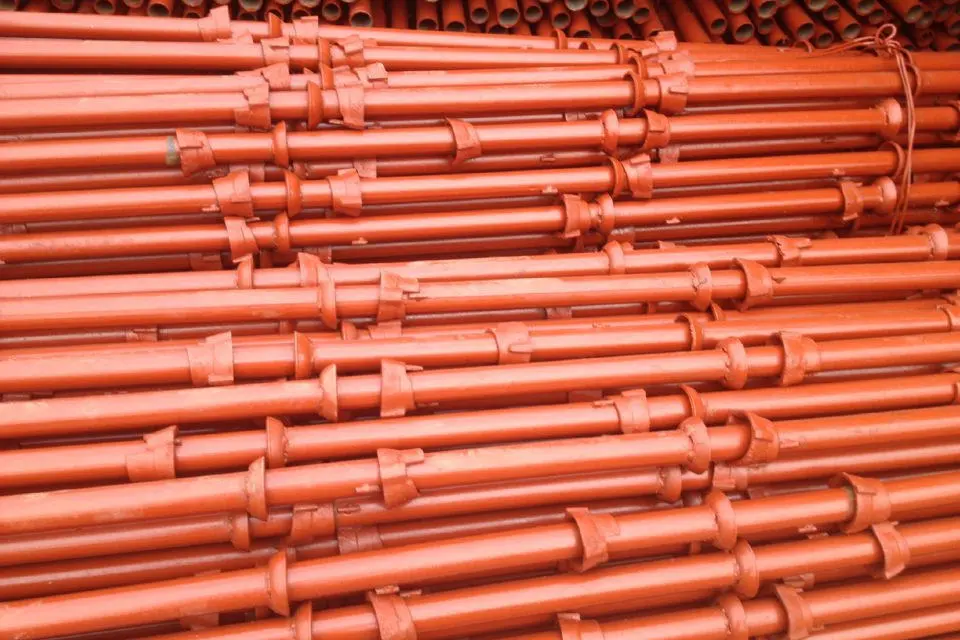
How Fast Cuplock Scaffolding Works
The Cup-Lock Node Explained
Each cuplock system needs its own node to work. The vertical standard is joined to a fixed bottom cup, and a sliding top cup sits on top of it. Our better quick-assembly design now has a spring built in. When you put the ledger blades in the right place inside the cup node, the spring automatically locks all four threads together. Crews don't have to use a hammer or tighten things by hand, and no loose bolts or wedges can get lost on the job site. Standard cup spacing is 0.5 m, which makes sure that layouts are the same from one bay to the last.
Main Components and Build Sequence
Standards, ledgers, transoms, diagonal braces, base jacks, U-head jacks, and platforms are all common parts of a system. The steps to build are easy. First, make sure the ground is firm and set the base jacks. Next, put the verticals on their feet, insert the ledgers into the cup nodes, and make sure they are level and plumb. Next, put in the braces, platforms, and access points. The building is inspected by a qualified person before it is turned over. Since nodes repeat every 0.5 m, managers can teach their teams one pattern that can be used on the whole structure. Base jacks that can be adjusted are also useful when the ground isn't level, which can happen on bridge and infrastructure sites.
What Really Drives Erection Speed
Based on our product data, our bowl buckle frames work 40% better than traditional ones at getting an erection. Compared to the tube and clamp method, it also saves up to 35% on labor costs. Those benefits come from the way the site is locked, but other things can still change the results. Speed is affected by things like a clear layout drawing, well-trained workers, parts that aren't broken, and steady deliveries of materials. Before putting in a full order, I always tell buyers to run a test bay with their own crew. That test shows the real number of hours worked, so there's no need to guess.
Cuplock vs Traditional Systems: A Practical Performance Comparison
Cuplock vs Tube and Clamp
You have the most freedom with tube and clamp. It works for curved walls, odd corners, and tight retrofit work because crews can put tubes in almost any angle. Work is what it costs. It takes a lot of work to tighten each coupler by hand, and there are a lot of them to count, check, and replace. Because the nodes in fast cuplock scaffolding are always in the same place, it gives up some freedom in exchange for speed and consistency. This trade usually pays off in labor hours on big layouts that are used over and over again. Even so, tube and clamp may still be better for small or odd jobs.
Cuplock vs Frame, Kwikstage, and Ringlock
Frame scaffolding is useful for recurring front-of-building work since workers can easily set up standard frames. Frames' set sizes restrict layout possibilities. Like cuplock, Ringlock and Kwikstage are modular. Ringlock's rosette offers numerous connection points, however Kwikstage is more popular in certain regions. Real-world variations include availability, fleet compatibility, and personnel familiarity. If your organization has several ringlock or Kwikstage systems, adding one will involve extra training and inventory management. Building a heavy-shoring fleet? Choose Cuplock.
Side-by-Side Comparison
Each system is shown in the table below. Use it as a guide, and then compare it to your own drawings.
| System | Best fit | Main limit |
|---|---|---|
| Fast cuplock | Repeated, heavy-duty layouts and shoring | Fixed node positions |
| Tube and clamp | Irregular shapes and small repairs | More labor per joint |
| Frame | Simple, repetitive facades | Fixed frame sizes |
| Ringlock / Kwikstage | Fleets already in use | Compatibility and regional availability |
Not every row gets the job. Your geometry, loads, and current stock will tell you.
Load Capacity, Safety, and Quality Controls
Load Capacity and Key Dimensions
Capacity is for the whole scaffold, not just one standard. The outcome depends on the length and height of the bay, the number of supports, the distance between the ties, the foundation, the wind, and the loads on the platform. The number we have for you ranges from up to 60 kN per standard. With the right engineering, towers can go over 50 meters tall. Make sure you know the tube diameter, wall thickness, cup spacing, jack ranges, and platform sizes before you place your order. For heavy shoring, your engineer needs to do calculations that are specific to the project.
| Parameter | Specification |
|---|---|
| Material | Q235 premium steel |
| Vertical tube diameter | 48.3 mm |
| Wall thickness | 3.2–3.5 mm |
| Cup spacing | 0.5 m |
| Surface treatment | Hot-dip galvanizing or electrophoretic coating |
| Galvanization thickness | 65–85 microns (ASTM A123 compliant) |
| Standards | BS EN 12811-1, ANSI/SSFI SC100-5/05, AS/NZS 1576 |
Safety Requirements and Inspections
The US has an OSHA scaffold regulation (29 CFR (1926, Subpart L) which states that each standardized scaffold should be able to bear at least four times the weight of itself plus any extra loads that are supposed to be placed on it. It also requires guardrails on platforms that are higher than 10 feet higher than a lower level and requires a certified person to inspect scaffolds before each work shift. ANSI/ASSP A10.8 adds safety requirements that have been mutually agreed upon. A handover checklist including the likes of level and plumb, reinforcement, ties, guard rails, toe boarding, access, signs and stated load restrictions is also a good idea. After poor weather or an impact or any change, check again.
Quality Control and Documents
Being good starts at the mill. Our fast cuplock scaffolding is produced under strict quality control. Our plant has ISO 9001, ISO 14001, and ISO 45001 certifications, which means that we can fully trace all of our products and raw materials. Our products have been CE-certified, and twelve welding robots and six automatic welding lines make sure that the node welds are always the same. You can ask any supplier for mill test certificates, reports on coating thickness, dimension records, data on weld inspection, and load test results. Before the material gets to your site, your engineer can use these records to check the steel grade, the depth of the galvanizing, and the strength of the nodes.
Applications, Cost, and Lifecycle
Where Cuplock Performs Best
Cuplock is good for heavy-duty, repeated, modular work. In high-rise buildings, it holds up slabs and beams of concrete while they are poured. In petrochemical and industrial maintenance, it quickly builds stable access platforms during shutdowns that need to be finished on time. Adjustable base jacks and U-head jacks are used for work on bridge decks and piers. Adjustable base jacks can handle ground that isn't level and heavy loads. If the shape is very uneven, the repair is small, or the crews and local rules prefer a different design, choose a different system. A good fit is more important than making a quick sale.
Cost, Finish, and Total Ownership
Unit pricing doesn't reveal everything. Price a working system since a simple set excludes platforms, bracing, jacks, and access gear. Divide the labor, shipping, storage, maintenance, and downtime expenses by the item's frequency of usage. Finish matters too. Hot-dip galvanizing at 65–85 microns prevents corrosion in coastal and industrial air, but electrophoretic coating may be preferable for less exposure. Different projects may utilize the same basic parts since our systems are custom-built and reusable. A cheap upfront price is meaningless if you have to return rusted or bent items.
Maintenance and Used-Equipment Checks
Safety and resale value are both protected by a short, written maintenance schedule. When not in use, clean the parts, keep them off the ground, and store them away from chemicals and water that is standing still. Separate and label the damaged items. Check for parts that aren't within tolerance, broken cups, cracked welds, and standards that are bent. Do not straighten things without permission, as this can hide steel that is weak. Keep track of when things are inspected, sent out, returned, or replaced. Clean records help rental companies the most because they sell more items and spend less on repairs.
Choosing a Supplier and the Right System
What to Check in a Cuplock Scaffolding Manufacturer
Don't just look at the unit price. Check the company's ability to make things, its ability to track materials, its packaging, its export history, and its response to customers after the sale. Fast cuplock scaffolding is one of our core scaffolding products. GREEN FORMWORK began in 2007 in Rizhao, Shandong, which has a seaport, airport, and high-speed rail hub that help with shipping. It is run by Shandong Xingrui Building Materials Co., Ltd. Our 79,800-square-meter site has 920 employees, 180 of whom are technicians. We send our goods to more than 100 different countries and areas. Even though those numbers show how much can be done, you should still check each supplier's paperwork and samples for accuracy.
Comparing Quotes on Equal Terms
It is unusual for two quotations to match line for line. Before you compare, know the sizes, forms, numbers, steel grade, conclude Incoterms, shipping port, lead time, warranty and extras. A cheap bid that doesn't include jacks or utilizes thinner walls will cost you extra in the end. We can handle your designs and samples in a manner that is unique for you. We additionally give samples and 24/7 technical assistance, so your team can be confident the nodes will be a good match before completing a complete purchase. If you want anything created to order you may also match how far to your typical bay sizes.
A Four-Step Decision Process
Determine its usage, access, formwork, height and loading. Step 2: Quantify things such as setup time, time of work, max weight, amount of uses, subject matter, compliance. Step 3: Check that each system is related to the project. Step 4: Take to engineering go over and trial a bay to validate a choice. Cuplock is well suited to high load, repeated-use construction. Or if there is a fleet or the geometry is not linear, it may be another system. Make a choice. Quantify results.
Conclusion
Fast cuplock scaffolding works well for repeating layouts, large loads, and reused parts. Its self-locking node eliminates hammering or loosening parts. It is 40% faster than bowl buckle frames during assembly and 35% cheaper than tube and clamp systems. Ringlock or Kwikstage work well with existing fleets, frame scaffolding for basic façade, and tube and clamp for strange forms. As the scaffold has capacity, engineering checks, inspections, and documentation are as critical as the node. Its overall cost depends on use, appearance, and maintenance. Project and test bay requirements should determine the ultimate option.
FAQ
Is fast cuplock scaffolding faster than tube and clamp?
Yes, on layouts that are used more than once. Compared to the tube and clamp method, our data shows that labor costs go down by up to 35%. The crew needs to be trained, there needs to be a clear layout drawing, and there needs to be a steady supply of materials.
Can it handle heavy-duty shoring?
Yes, if the engineering is done right. Based on how they are set up, our standards can hold up to 60 kN, and towers can go over 50 meters. Your engineer should check the numbers for the foundation, bracing, and bay sizes.
Which details should I confirm before ordering?
Make sure you know the standard for your project, the cup spacing (0.5 m), the jack ranges, the finish, and the tube diameter (48.3 mm). Ask for test records and mill certificates as well.
Which finish should I choose?
Hot-dip galvanizing at 65–85 microns is good for industrial or coastal use and repeated use. Electrophoretic coating can work for places with less exposure. Choose a finish that works with the weather, chemicals, and the tools you have for upkeep.
Request a Fast Cuplock Scaffolding Quote from GREEN FORMWORK
To GREEN FORMWORK at sdxingruiqp@126.com, send your drawings along with the working height, loads, quantities, finish, and delivery port. With ISO 9001, ISO 14001, and ISO 45001 certifications, we offer samples, made-to-order sizes, and technical support that you can call at any time. We are a fast cuplock scaffolding supplier that uses Q235 premium steel. You can find out more about the product at sdxingrui.com, and we'll get back to you with a clear quote and a bill of materials.
References
1. OSHA, 29 CFR 1925 Subpart L: The scaffolds, 1996
2. British Standards - BS EN 12711-1: Temporary Works Equipment, Frames, Performance Prerequisites, and General Design, 2003.
3. ANSI/ASSP A10.8: Ladder Safety Requirements, 2019.
4. AS/NZS 1576.1: The scaffolding, General Requirements, 2019.
5. ISO 9001: the Management of Quality Systems, Requirements, 2015.
6. ISO 45001: Occupational Security and Health Management Systems, Requirements, 2018.
Learn about our latest products and discounts through SMS or email