- English
- French
- German
- Portuguese
- Spanish
- Russian
- Japanese
- Korean
- Arabic
- Greek
- German
- Turkish
- Italian
- Danish
- Romanian
- Indonesian
- Czech
- Afrikaans
- Swedish
- Polish
- Basque
- Catalan
- Esperanto
- Hindi
- Lao
- Albanian
- Amharic
- Armenian
- Azerbaijani
- Belarusian
- Bengali
- Bosnian
- Bulgarian
- Cebuano
- Chichewa
- Corsican
- Croatian
- Dutch
- Estonian
- Filipino
- Finnish
- Frisian
- Galician
- Georgian
- Gujarati
- Haitian
- Hausa
- Hawaiian
- Hebrew
- Hmong
- Hungarian
- Icelandic
- Igbo
- Javanese
- Kannada
- Kazakh
- Khmer
- Kurdish
- Kyrgyz
- Latin
- Latvian
- Lithuanian
- Luxembou..
- Macedonian
- Malagasy
- Malay
- Malayalam
- Maltese
- Maori
- Marathi
- Mongolian
- Burmese
- Nepali
- Norwegian
- Pashto
- Persian
- Punjabi
- Serbian
- Sesotho
- Sinhala
- Slovak
- Slovenian
- Somali
- Samoan
- Scots Gaelic
- Shona
- Sindhi
- Sundanese
- Swahili
- Tajik
- Tamil
- Telugu
- Thai
- Ukrainian
- Urdu
- Uzbek
- Vietnamese
- Welsh
- Xhosa
- Yiddish
- Yoruba
- Zulu
TOP 5 Combined Steel Formwork Benefits for Large Building Projects
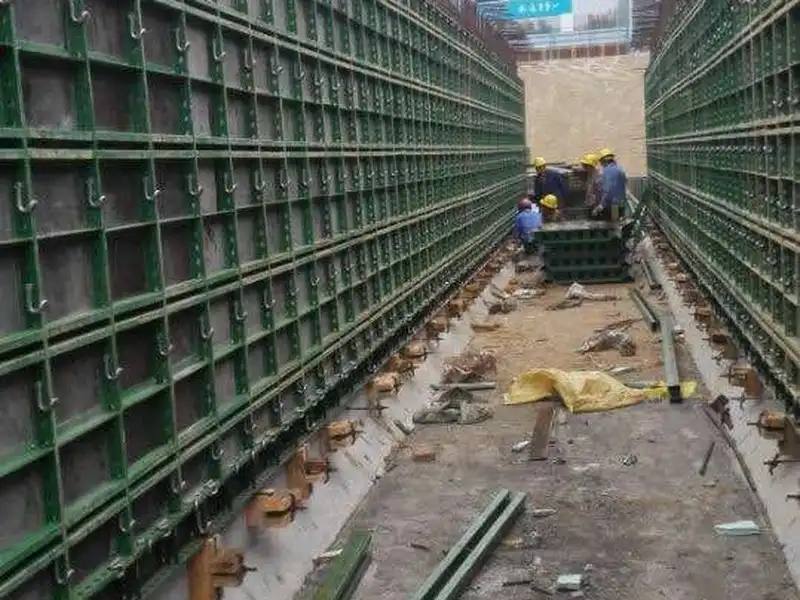
Modularly flexible, sturdy, accurate, faster to erect and cheaper during its lifespan, combined steel formwork is steel formwork suitable for huge building projects. System components include typical Q235 steel panels, connectors etc. Crews install walls, beams and columns, and slab edges. GREEN FORMWORK is a property of Shandong Xingrui Construction Materials Co., Ltd. Our panels can take 60-80 kN/m² and may be reused if they are well maintained. This guide is for US customers and covers what to look for before you buy and how each benefit works.
On large concrete projects there are a lot of repeat items like foundations, core walls, columns. The system is rewarded for reuse by being used again and again. Modular steel formwork is used with standard panels and project-specific corners and fillers. This way, workers don’t have to cut a lot of pieces on site and purchasers don’t have to order as numerous one-of-a-kind parts. It also mentions technical issues, tight timeframes, labor constraints, tolerance targets, shipping containers and manpower shortages.
Five Combined Steel Formwork Benefits That Matter on Large Sites
Benefit 1: Modular Flexibility for Complex Building Designs
Standardized modules allow one panel family to cover several layouts. Our national standard modulus comes in 900, 1200, 1500, and 1800 mm lengths and 100, 150, 200, 250, and 300 mm widths. Every part has conventional P-hole spacing, so crews can readily assemble panels into walls, columns, beams, foundations, and retaining walls. When working on many floors, the contractor may utilize the same panels and modify corners or infill as required. That combination of standard and specialized parts simplifies purchases. From your CAD files, we can create layouts and shop drawings for each project.
Benefit 2: High Durability and Long-Term Reusability
Steel panels may repeatedly be struck, raised, peeled, and pushed by concrete. The 206 GPa modulus of elasticity of our 2.5–3.0 mm Q235 carbon steel prevents bending in wet concrete. Each panel undergoes pickling, phosphating, and high-temperature baking to get salt spray grades above Grade 8. Properly handled, sanitized stored, and released panels may be utilized 200–300 times. "Combined" means modular and "reusable" means service cycles. Life varies on steel type, coating, handling, and repair speed. Instead of rebuilding the system, replace the damaged portion.
This is what buyers usually ask about first when they are buying.
| Parameter | Specification |
|---|---|
| Material | Q235 carbon steel |
| Panel thickness | 2.5-3.0 mm |
| Standard widths | 100/150/200/250/300 mm |
| Standard lengths | 900/1200/1500/1800 mm |
| Load-bearing capacity | 60-80 kN/m² |
| Modulus of elasticity | 206 GPa |
| Flatness tolerance | ≤2 mm (GB/T 50214) |
| Dimensional accuracy | ±0.5 mm |
| Reuse cycles | 200-300+ times |
| Connection method | U-clips and L-shaped bolts |
Because of these numbers, your engineer can begin to check the load.
Benefit 3: Improved Concrete Accuracy and Surface Finish
Rigid panels and tight joints of combined steel formwork maintain wall, column, and foundation sizes between pours. Our cold roll forming equipment measures are precise to ±0.5 mm, and flatness is maintained at or below 2 mm per GB/T 50214. Tight joints prevent water leaks and straighten everything. This is critical for shear walls, elevator cores, basement walls, footings, pile tops, and grade beams. Formwork doesn't guarantee excellence. Crews must examine alignment, joint tightness, release agent coverage, tie spacing, installation speed, and vibration. A systematic inspection plan should also be employed to assess final work to ACI 117.
Benefit 4: Faster Construction and Better On-Site Productivity
Composite steel forms eliminate much of the cutting or fitting required for wood manufactured on site. The usual cycle is to assess designs and pick panels. Assembly, ties and bracing, alignment, evaluation, pouring, stripping. Purge, moving. The U-clips and an L-shaped fasteners make it easy to assemble and disassemble, so the cycle durations are equal at the floors. The system creates platforms, obstacles and lifting points that facilitate work. Track your performance. Use labor hours per unit, cycle time, crew size, rework, lift time and panel utilization rate as your performance indicators. This is what your site is doing performance wise.
Benefit 5: Lower Total Project Cost Through Lifecycle Value
Consider entire cost of ownership rather than just buying it price. Add to the list items like panels, accessories, engineering, customisation, freight, duties, labor, equipment for lifting, tidying up, repairs, storage, spare parts and residual value. A lot of floors or tasks using one set of forms cuts the cost a pour for big operations. In terms of big loads, regular usage and extended life for equipment, steel typically wins. The following table displays the general comparison between several typical formwork materials.
| Factor | Steel | Aluminum | Timber |
|---|---|---|---|
| Weight | Heavier | Light | Light |
| Stiffness | High | Moderate | Lower |
| Durability | High | High with careful handling | Lower |
| Reuse | High | High | Low to moderate |
| On-site labor | Low once assembled | Low | High (cutting and fitting) |
| Best fit | Repetitive, heavy-duty work | Repetitive, crane-light work | Small or one-off pours |
The final choice is based on the size of the project, the crane's capacity, and the cost of labor in the area.
Technical Applications of Combined Steel Formwork
Walls, Cores, and High-Rise Structures
For multi-story pours to stay vertical and thick, shear walls, elevator cores, and basement walls need to be rigid. When softer systems bulge, steel panels don't show that. The same type of panel can be used for equipment bases, pile caps, columns, foundations, retaining walls, and pile caps. It depends on the shape of the structure, the pressure of the concrete, how easy it is to get to the site, how much weight it can hold, and how many times you plan to use it.
Slabs, Beams, and Infrastructure
Many times, crews pair panels of combined steel formwork with props, shoring towers, or table-form systems for slabs and beams. For bridge piers, abutments, tunnels, and water structures, it's common to need fast pouring, engineered lifting, bracing, and sometimes molding only one side. For tunnel and culvert sections, we set up corner modules and curved fillers. Tight joint sealing helps keep these structures dry when it's humid outside. Supply chain engineering support is important for these jobs because they are riskier.
Ideal for Irregular Structure Construction
For odd geometry, you don't need a completely custom system. Based on your CAD structural drawings, we make corner, filler, and circular modules just for you. Our panels can be connected to scaffolding and wood fillers where a non-standard shape shows up thanks to standard hole patterns. If you send us your drawings early, we can mark the spots that need standard panels and those that need special modules. Most of your order stays the same because of that split, which protects its reuse value.
How to Select the Best Combined Steel Formwork System
Match Specifications to Your Pour
First, determine the size of the building, the amount of concrete to be poured, how it will be used, how this is going to be handled, the weather at the site, the final requirements and any relevant standards. For U.S. projects, your project engineer ought to evaluate design loads to ACI 347 guidance. OSHA 29 CFR 1926.703 further requires that the formwork be capable of supporting all vertical and lateral stresses without failure. Then compare panel thicknesses, frame structure, surface treatment, connection techniques, tie systems, adjustability range, bracing, lifting points and availability of replacement parts.
Request a Clear Quotation
A good quote breaks down the costs of the product, engineering, customization, freight, delivery, warranty, and technical service. Ask for shop drawings, load calculations, a bill of materials, and information on how to package the goods for export. If you need a private label or have a proprietary node design, make sure that the OEM and confidentiality terms are clear before the drawings are given to someone else. Line-by-line quotes make it fair to compare suppliers and keep you from being surprised by extra costs after the order ships.
Common Mistakes to Avoid
Focusing on the unit price of combined steel formwork is where most mistakes begin. It's possible for a quote to leave out things like platforms, engineering, shipping, packaging, ties, or corners. People who are buying don't check the concrete pressure, tie spacing, bracing, lifting plans, container sizes, or storage on-site either. Mixing panels or accessories from different brands can make them not fit right or be unsafe. Finally, make sure you know how to clean, inspect, fix, and store things before you deliver them. This will protect their resale value.
Why a Qualified International Supplier Improves Project Outcomes
Factory Capacity and Quality Control
Shandong Xingrui began in Rizhao, Shandong, in 2007. Our site is 79,800 square meters big, and there are standard workshops on more than 40,000 square meters of that. We have 920 employees, 180 of whom are technicians. We also have 4 cold roll forming sets, 12 welding robots, and 6 automatic welding lines. That's why we keep track of all of our raw materials and every step of the production process in real time. The management systems we use are based on ISO 9001, ISO 14001, and ISO 45001, and all of our products are CE-certified.
Customization, Samples, and Technical Backup
We can do custom work based on your samples and drawings. We give you samples of our combined steel formwork along with technical support so that your project engineer and site manager can check out the panels before you place a larger order. We can make corner, filler, and circular modules to order, as well as adjustable parts and extras for walls, columns, foundations, slabs, and bridges. Thanks for your OEM requirements. Early review of the drawings helps us match the specs to your site.
Export Experience and Logistics
We send our goods to over 100 countries in Africa, Asia, Europe, the Americas, and Oceania. Rizhao has its own airport, seaport, and high-speed rail hub, all of which help with shipping. Ask any supplier about plans for loading containers, packing for large items, paperwork, project references, help with inspections, and supplies for spare parts. Before we start making things, we talk with buyers about these things.
Conclusion
Combined steel formwork allows for the modular and repeatable production of walls, columns, beams, slabs and foundations for big construction projects. The paper presents five benefits: changeability of modules, durability, accuracy of the concrete, shorter cycles on the building site, and lower expenses of longevity. The benefits are supported by features such as Q235 steel, 2.5–3 mm thickness, 60–80 kN/m² capacity, ±0.5 mm accuracy, 200–300+ reuse cycles.
The results depend on how the engineers manage, analyze and test the product. The price per unit is not as important as the cost of ownership because steel is better than lighter materials for heavy and repetitive work. Before selecting a system, ensure that the specifications are appropriate for the pouring conditions, get an itemized quotation, do not mix items and inquire about the manufacturer's capacity, quality methods and technical support.
FAQ
What is combined steel formwork used for?
It is used for making blocks, slabs, foundations for buildings, bridge piers, tunnels. The project geometry, concrete pressure and the intentions for reuse define the final layout.
How does it compare with aluminum and timber?
Steel is more durable and lasts longer yet heavier Aluminum is lighter , wood is cheaper upfront but can not be utilized as much . Choice is based on overall ownership expenses, local labor and crane access.
Can you customize panels?
Yes. Based on your CAD drawings, we make corners, fillers, and circular modules, and we give you samples with technical support.
What do you need for a quotation?
Send the type of project, the structure's size, the amount needed, the finishes you want, the site's location, the delivery schedule, and the standards you'd like to see.
Get a Combined Steel Formwork Recommendation from GREEN FORMWORK
Are you looking for a combined steel formwork supplier for a big building project? To get your drawings, quantities, reuse goals, and delivery dates from GREEN FORMWORK, email them at sdxingruiqp@126.com. At Shandong Xingrui, our team will make a panel layout, a bill of materials, and an itemized quote. We can also send samples with technical support. For information on the product, go to sdxingrui.com.
References
1. ACI 347R-14 Guide to Concrete Formwork, American Concrete Institute, 2014.
2. ACI 117-10 For Concrete Architecture and Materials Tolerances, American Concrete Institute, 2010.
3. Composite Steel Formwork Technical Code (GB/T 50214-2013), 2013.
4. ISO 9001:2015 QM Systems—Requirements, ISO, 2015.
5. ISO 14001:2015 the management of the environment Systems—Requirements with Guideline for Use, ISO, 2015.
6. ISO 45001:2018, Occupational Security and Health Management Systems—Requirements with Guidelines for Use, ISO, 2018.
Learn about our latest products and discounts through SMS or email