- English
- French
- German
- Portuguese
- Spanish
- Russian
- Japanese
- Korean
- Arabic
- Greek
- German
- Turkish
- Italian
- Danish
- Romanian
- Indonesian
- Czech
- Afrikaans
- Swedish
- Polish
- Basque
- Catalan
- Esperanto
- Hindi
- Lao
- Albanian
- Amharic
- Armenian
- Azerbaijani
- Belarusian
- Bengali
- Bosnian
- Bulgarian
- Cebuano
- Chichewa
- Corsican
- Croatian
- Dutch
- Estonian
- Filipino
- Finnish
- Frisian
- Galician
- Georgian
- Gujarati
- Haitian
- Hausa
- Hawaiian
- Hebrew
- Hmong
- Hungarian
- Icelandic
- Igbo
- Javanese
- Kannada
- Kazakh
- Khmer
- Kurdish
- Kyrgyz
- Latin
- Latvian
- Lithuanian
- Luxembou..
- Macedonian
- Malagasy
- Malay
- Malayalam
- Maltese
- Maori
- Marathi
- Mongolian
- Burmese
- Nepali
- Norwegian
- Pashto
- Persian
- Punjabi
- Serbian
- Sesotho
- Sinhala
- Slovak
- Slovenian
- Somali
- Samoan
- Scots Gaelic
- Shona
- Sindhi
- Sundanese
- Swahili
- Tajik
- Tamil
- Telugu
- Thai
- Ukrainian
- Urdu
- Uzbek
- Vietnamese
- Welsh
- Xhosa
- Yiddish
- Yoruba
- Zulu
Frame Scaffolding System vs Tube and Clamp: Which Is Better?
If you have to choose between a frame scaffolding system and a tube and clamp system, it depends on the type of project, your budget, and how many workers you have. Modular frame scaffolding is faster, cheaper, and more in line with OSHA rules for most masonry builders and wholesalers in North America. When compared to tube and clamp designs, its premade steel frames cut setup time by 50–70%. Tube and clamp scaffolding, on the other hand, has a clear advantage when working on uneven ground or in buildings with complicated shapes that rigid modular systems just can't handle. The difference between reactive and strategic procurement is that strategic procurement involves understanding both systems at both their basic and tactical levels.
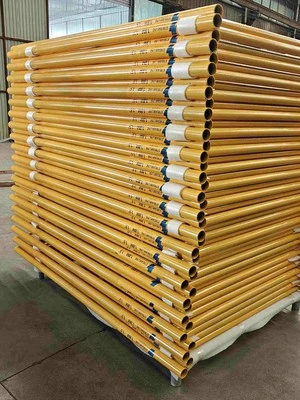
Understanding the Basics of Frame Scaffolding and Tube and Clamp Systems
What Makes Each System Distinct?
A frame scaffolding system is made up of steel portal frames, cross braces, and horizontal platforms that are already made. Because it's easy to put up and doesn't require any special training, it's the best choice for commercial work that needs to be done over and over again, like masonry on the outside of buildings, decorating inside, and installing MEP systems. Tube and clamp scaffolding, on the other hand, is made up of separate steel tubes that are joined together by swivel or set clamps. This gives it almost endless geometric freedom. That flexibility, on the other hand, needs skilled workers and a lot more time on-site.
The fundamental difference affects everything that comes after, from the cost of labor to plans for OSHA compliance. Both systems must meet the load and access requirements set out in OSHA 29 CFR 1926 Subpart Q, but frame systems are easier to check for compliance because their sizes are more uniform.
Key Decision Criteria for Choosing Between Frame and Tube & Clamp Systems
Safety Compliance and Regulatory Standards
In the United States, OSHA and ANSI/SSFI SC100-5/05 make sure that scaffolding is safe. Standardized pin-to-pin tolerances, ideally kept within ±1mm, in frame systems get rid of the risks of eccentric loads that happen when parts from different makers are put together. When put together by trained riggers, both tube and clamp systems are just as safe, but inspection is more difficult because clamp torque and tube alignment can change.
Cost and Labor Efficiency
When making procurement decisions, these are the main financial and labor factors that come into play:
- Assembly labor cost: Cost of assembly labor: Frame scaffolding doesn't need a lot of skilled labor. Two people can set up a standard bay in less than 15 minutes, which directly cuts down on the amount of work that needs to be done every day on busy sites.
- Purchase price vs. lifecycle value: Tube and clamp parts are cheaper per unit, but they require more work over the course of a project. Frame systems with a hot-dip galvanized (HDG) covering that is at least 60μm thick prevent corrosion for more than 15 years. This lowers the total cost of ownership over many rental rounds.
- Storage and transport efficiency: Modular frames stack evenly, which reduces the size of the warehouse and the cost of containers, which is very important for wholesalers who manage CIF prices on full-container imports.
These things have a direct effect on the profit margin that wholesalers have for each SKU. A product with consistent dimensions, finish, and low return rates protects both the distributor's investment in inventory and their relationships with contractors.
Flexibility for Complex Site Conditions
When working on uneven ground, curved facades, or historical repair jobs where no two bays are the same shape, tube and clamp scaffolding is the best way to go. Because it can be adjusted in any shape, engineers can make site-specific layouts that frame systems can't do. Frame scaffolding works great for most masonry and repair workers in the Southeast U.S., though, because most of their work is repetitive and square.
Performance and Operational Efficiency Comparison
Assembly Speed and Durability Under Load
A door-frame system's walk-through portal design lets people and tools move horizontally along the scaffold deck without having to climb over bracing. This unrestricted movement isn't just for looks; it actually speeds up MEP installation and makes the site less tiring. Studies on the effectiveness of modular scaffolding show that premade systems cut the time it takes to set up and take down by an average of 60% compared to tube and clamp on standard rectangular projects. Frame scaffolding system designs like this door-frame type deliver these time savings through standardized components and walk-through accessibility, reducing labor fatigue and accelerating project timelines.
When it comes to longevity, 42×2.0mm (O.D. × wall thickness) Q235 quality carbon steel tubing is a good starting point. When used with HDG surface treatment, the system can handle salt spray, dampness, and exposure to industrial chemicals, all of which are common in building zones along the Southeast U.S. coastline. Tube and clamp systems made of the same grade of steel work about the same in terms of how strong the raw materials are, but over time, corrosion can cause the clamp interfaces to become less tight.
Procurement Considerations for B2B Buyers
Supplier Certification and OEM Capability
When B2B wholesalers buy scaffolding to resell under their own brand name, they need to deal with suppliers whose quality systems go beyond just making sure the products are compliant. Together, the ISO 9001 quality management, ISO 14001 environmental management, and ISO 45001 occupational health standards show that a factory can keep up steady output for big orders that come in every year. Shandong Xingrui Building Materials Co., Ltd. has all three certifications and a production facility that covers 40,000 m². The company has 12 welding robots and 6 automated welding lines, and the vertical stacking accuracy is held to ±1 mm.
When distributors look at OEM providers, they should put these things at the top of their list:
- Barcode and packaging compliance: Compliance with barcodes and packaging: warehouse-ready labeling cuts down on receiving work and gets rid of the need to re-label items at distribution centers, which saves money.
- Component completeness: Completeness of the parts: Cross braces, foot planks, and screw jacks are all included in full kits, which keep contractors from calling back and protect the distributor's image.
- Sample availability: Samples that have been checked before a full container is committed to reduce quality disputes later on.
Shandong Xingrui offers samples upon request and expert support 24 hours a day, seven days a week. They help with the whole buying process, from reviewing the specifications to evaluating the trial containers. Frame scaffolding system inquiries receive priority sampling and dedicated engineering assistance, ensuring that every specification review and trial container evaluation meets project requirements before full-scale orders are placed.
Real-World Application Scenarios
Frame Scaffolding on Exterior Masonry Projects
A regional masonry contractor who works on several commercial sites in the Southeast U.S. said that switching from tube and clamp to a standard door-frame system cut the time it took to set up scaffolding by 40%. Standard brick bay plans could be used with the 914mm frame width because it was the same all the way across. Without any signs of rust, HDG-coated frames made it through two full project seasons, so there were no mid-project equipment swaps.
Tube and Clamp on Complex Architectural Work
For a historic facade repair job in a busy city, scaffolding had to be used to go around a curved 19th-century stone wall with many setbacks. The project engineer chose tube and clamp because there was no flexible frame system that could fit the different bay sizes and tie-in points that were at an angle. Total erection time was 35% longer than the frame-system standard, but the heritage preservation brief required very accurate structure, so tube and clamp was the only choice. These two examples make a clear point: the choice of system should be based on the geometry of the site and the economics of labor, not on brand preference.
Conclusion
Frame scaffolding works well for most construction and repair jobs in North America because it is easier to set up, costs less to operate, and is more likely to meet OSHA standards. When modular systems can't handle a site's shape or shape, tube and clamp scaffolding is still the best way to get the job done. Frame systems offer a better return on investment (ROI) for wholesalers who build a high-turnover rental and resale inventory. This is especially true when they come from approved makers who can work with OEMs and offer uniform dimensional tolerances and full-container price that protects landed cost profits. Frame scaffolding system buyers benefit from standardized component compatibility and OEM flexibility, enabling rapid inventory turns while maintaining OSHA-compliant safety margins and predictable landed-cost calculations.
FAQ
What height can a standard frame scaffolding system reach safely?
Safety standards set by OSHA say that standard configurations are fine up to 125 feet (38 meters). After that point, a licensed structural engineer has to make a plan that is specific to the site and has engineered tie-ins.
Can frame scaffolding components from different manufacturers be mixed?
Technically, a lot of systems have nominal dimensions that are similar, but mixing brands is not recommended unless a professional engineer says it's okay. Small changes in the position of the locking pin and the outside diameter of the tube can cause eccentric loading when stacked vertically.
What surface treatment lasts longer — HDG or powder coating?
Hot-dip galvanization (HDG) forms a metallic bond with the steel surface and protects the inside walls of the tubes. In humid or coastal areas, HDG lasts about five times longer than powder coating.
What inspection is required after a severe storm?
Before workers can get back on the scaffold, it has to go through a full re-inspection, which is sometimes called a "Green Tag" pass. This inspection checks for things like levelness, base plate subsidence, and connection strength.
Does GREEN FORMWORK offer private-label scaffolding?
Yes, Shandong Xingrui Building Materials Co., Ltd. (GREEN FORMWORK) takes custom OEM orders that include printing of logos, compliant packaging, and barcode labels that are good for direct warehouse entry.
Request a Quote from GREEN FORMWORK — Certified Frame Scaffolding Manufacturer
GREEN FORMWORK makes frame scaffolding systems that are OSHA- and ISO-compliant. These systems are made from premium Q235 steel with an HDG surface treatment that is rated to last more than 15 years. Our team is ready to help you whether you need a private-label frame scaffolding system provider for your network of stores or a trial container to make sure the quality is good. To get samples and a CIF quote right away, email us at sdxingruiqp@126.com.
References
1. Occupational Safety and Health Administration (OSHA). Scaffolding Standard 29 CFR 1926 Subpart Q. U.S. Department of Labor, 2023.
2. Scaffold & Access Industry Association (SAIA). ANSI/SSFI SC100-5/05: Scaffold Frame Shoring and Forming — Safety Requirements. SAIA, 2005.
3. National Institute for Occupational Safety and Health (NIOSH). Preventing Falls in Construction: Safe Use of Scaffolds. CDC/NIOSH Publication No. 2014-108, 2014.
4. European Committee for Standardization. EN 12810-1: Façade Scaffolding Made of Prefabricated Components — Part 1: Product Specifications. CEN, 2003.
5. Construction Industry Institute (CII). Modular and Industrialized Construction Performance Report. CII Research Summary RS271-1, University of Texas at Austin, 2012.
6. Historic England. Scaffolding in the Conservation of Historic Buildings: Technical Guidance. Historic England Advisory Services, 2020.
Learn about our latest products and discounts through SMS or email