- English
- French
- German
- Portuguese
- Spanish
- Russian
- Japanese
- Korean
- Arabic
- Greek
- German
- Turkish
- Italian
- Danish
- Romanian
- Indonesian
- Czech
- Afrikaans
- Swedish
- Polish
- Basque
- Catalan
- Esperanto
- Hindi
- Lao
- Albanian
- Amharic
- Armenian
- Azerbaijani
- Belarusian
- Bengali
- Bosnian
- Bulgarian
- Cebuano
- Chichewa
- Corsican
- Croatian
- Dutch
- Estonian
- Filipino
- Finnish
- Frisian
- Galician
- Georgian
- Gujarati
- Haitian
- Hausa
- Hawaiian
- Hebrew
- Hmong
- Hungarian
- Icelandic
- Igbo
- Javanese
- Kannada
- Kazakh
- Khmer
- Kurdish
- Kyrgyz
- Latin
- Latvian
- Lithuanian
- Luxembou..
- Macedonian
- Malagasy
- Malay
- Malayalam
- Maltese
- Maori
- Marathi
- Mongolian
- Burmese
- Nepali
- Norwegian
- Pashto
- Persian
- Punjabi
- Serbian
- Sesotho
- Sinhala
- Slovak
- Slovenian
- Somali
- Samoan
- Scots Gaelic
- Shona
- Sindhi
- Sundanese
- Swahili
- Tajik
- Tamil
- Telugu
- Thai
- Ukrainian
- Urdu
- Uzbek
- Vietnamese
- Welsh
- Xhosa
- Yiddish
- Yoruba
- Zulu
Disc Lock Scaffolding Uses: A Practical Guide for Contractors
If you work in construction, you already know that choosing the right access and support system affects your schedule, your budget, and your crew's safety. Disc lock scaffolding gives contractors a modular, wedge-pin system that assembles faster than tube-and-clamp rigs and carries heavier loads than most frame alternatives. Whether you are managing a high-rise facade, a bridge pier, or an industrial maintenance shutdown, understanding exactly how this system works—and where to source a certified supply—can save you real money on labor and material loss.
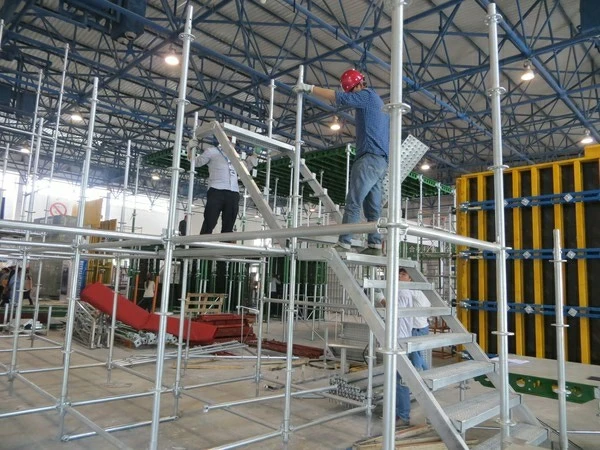
Understanding Disc Lock Scaffolding: Components, Functionality, and Benefits
What the System Actually Is?
A disk lock scaffold, sometimes called rosette scaffolding, is made up of steel standards that are welded 500 mm apart and have eight-hole punched rosette disks welded on them. It also has horizontal ledgers with forged wedge-head ends, diagonal braces, and base plates that can be adjusted. The wedge pin falls through the hole in the rosette and locks in place by gravity. This makes a secure node that doesn't need any tools or loose bolts. This shape makes sure that the load path stays straight and reliable.
How It Compares with Ringlock, Cuplock, and Frame Systems?
A disk lock setup and ringlock scaffolding are very similar in how they are put together. The main difference is the shape of the disk and the angle of the pin. Cuplock has a sliding top cup that needs to be hammered shut. This adds one step for each node and can become loose over time. Frame scaffolding that is usually shipped in fixed bay widths makes it hard to adapt to floor plans that aren't straight. Disk lock systems let site engineers choose from different angles of ledgers from a single rosette. This is something that neither cuplock nor frame scaffolds can do.
Core Benefits for Contractors
When you look at how well rosette scaffolding works compared to past methods, three things stand out. On a real project site, these benefits are the most important:
- Assembly speed: The gravity-driven wedge connection means one worker can lock a node in under ten seconds. Studies from European scaffold manufacturers report up to 50% reduction in erection time versus tube-and-clamp methods, which directly lowers your labor bill.
- Load capacity: Xingrui's 48mm light-duty series handles up to 30 kN vertically; the 60mm heavy-duty series carries up to 50 kN. This range covers most shoring and facade work without needing engineered overrides.
- Reusability and turnover: Because the rosette disc and wedge pin experience balanced stress at eight contact points, component wear is distributed evenly. Xingrui's system achieves a turnover frequency 30% higher than traditional systems, reducing replacement costs across multiple project cycles.
Because of these three things, EPC contractors and renting companies in more than 100 countries have switched to modular rosette systems as their main entry platform.
Comparing Disc Lock Scaffolding with Other Types: Making the Informed Choice
Structural Design and Load Path
The disc lock scaffolding geometry spreads the shear forces out over all eight rosette holes at the same time. Cuplock moves the load through a single cup throat, which concentrates stress and shortens the life of parts in heavy-shoring situations. The rosette design is the safer choice for bridge piers or multi-story concrete pours with loads greater than 40 kN per meter.
Ease of Assembly and Portability
Frame scaffolding is easy to set up in bays that are used over and over again, but it can't go around curved walls or odd column grids. Using the same standard parts, a disk lock system can be set up in any plan geometry. This portability is very important for maintenance workers who have to move scaffolding from one part of a plant to another during a shutdown.
Lifecycle Cost Analysis
Over a four- to five-year period, the rosette system always does better when buying teams add up the total cost of ownership, which includes the purchase price plus the cost of repairs, replacements, and work. When tools are standardized, you don't have to keep separate extra parts for each generation of scaffolding. All of your project types can be covered by the same inventory.
Installation Guide and Safety Best Practices
Site Preparation Steps
Make sure the base is level and packed down. Put base plates that can be adjusted on mudsills where the ground is soft. Before you add the first lift of ledgers, make sure that the vertical standards are level and that they don't deviate more than 1/500 of a height. This tolerance check stops leaning that builds up over time and becomes dangerous at a higher level.
Assembly Sequence and Locking Verification
Put the ledger wedge head into the rosette disk of the disc lock scaffolding at the right angle, and then use a rubber hammer to hit the pin down until it hits the bottom of the hole. To make sure it doesn't slip, pull the sheet outward by hand. Your engineer's tie-back plan tells you to add diagonal braces at regular intervals. You should never skip a brace bay to save time; doing so will lead to a failure point.
Inspection Protocol and Weather Considerations
Before each shift, walk around the building and make sure that all of the wedge pins are fully in place and that none of the standards are moving outward. When winds are above 45 mph (about Beaufort Scale 9), work should be stopped at a height and more horizontal ties should be added. The 60–80 μm hot-dip galvanized (HDG) coating on Xingrui parts keeps them corrosion-resistant for 10–15 years when they are wet, but long-term installations should still have the coating looked at once a month for damage.
Procurement Insights: Buying, Renting, and Partnering with Trusted Suppliers
Evaluating Certified Suppliers
If you buy modular scaffolding from a company in another country, make sure that they have ISO 9001 for quality management, ISO 14001 for environmental management, and ISO 45001 for health and safety at work. Every shipment meets the same mechanical standard as the approved sample, as shown by the CE certification and batch-level test reports. Shandong Xingrui Building Materials Co., Ltd. has all three ISO system certifications and CE. They also provide full documentation for each batch, such as mill certificates and dimensional inspection reports.
Buying vs. Renting: A Practical Framework
When large EPC companies have projects that last longer than six months, they usually find that buying equipment instead of renting it is cheaper because they can use it on different jobsites in a row. Rental makes more sense for one-time specialty lifts or adding to an existing fleet for peak-load times. When buying in bulk from an overseas disk lock scaffolding manufacturer, it is common for trade terms for this type of product to include FOB pricing with a CIF option, a 30%–50% TT advance, and the balance due upon bill of lading.
Custom Orders and Lead Times
Xingrui can build disc lock scaffolding orders based on models or plans provided by the customer. Prototypes usually go from samples to production in 7–14 days. Large orders take 15–30 days from the time the deposit is confirmed to finish production and load the container. The company's factory is in Rizhao, Shandong, which has its own airport, seaport, and high-speed rail. This makes inland logistics quick and easy to plan.
Real-World Applications and Future Trends in Disc Lock Scaffolding
Construction, Bridges, and Industrial Maintenance
For outside wall scaffolding on home and business towers, the 48mm light series is the usual pick. The 60mm heavy-duty line is used for pouring concrete decks and forming bridge piers, where point loads from wet concrete can be more than 40 kN, which is the norm. In petroleum plants, the HDG treatment is better at protecting process tanks and pipe racks from the corrosive air than painted options.
Industrial Shutdowns and Event Structures
Quick erection and strike are needed for refinery turnarounds. A disk lock method let's a skilled group of four people set up a 10-meter maintenance platform in less than two hours. When plywood decking is added to the same system, it can be used as a makeshift grandstand or stage rigging structure in places where safety rules need designed load calculations.
Emerging Directions in Scaffold Technology
Manufacturers are testing rosette standards made of aluminum alloy that cut the weight of parts by about 35% while keeping the same node geometry. Digital torque-check apps that take pictures of each wedge pin position are becoming commonplace among contractors. This creates a record for safety compliance. In the EU and Gulf Cooperation Council markets, sustainable procurement policies are also pushing scaffold suppliers toward lower-carbon production methods. This is an area where ISO 14001-certified factories already have a compliance head start.
Conclusion
Because of its eight-point rosette node, wedge-pin connection, and standard component set, disc lock scaffolding has earned its place as the go-to support system for complicated, heavy-load projects. The system is flexible and can be used for anything from building facades to bridge piers to industrial repair platforms. It does this without the need for special tools or custom construction. Picking a certified supplier with a track record of production and full traceability will keep your project on schedule and protect your crew. This guide should help you figure out if your next job is a good technical fit and if it has a good buying path.
FAQ
Q1: What is the maximum height a disc lock scaffold can reach?
A: Towers can be taller than 60 meters if they are properly engineered and have enough tie-backs and bracing at each lift. The exact height limit is based on the standard load, the type of wind exposure, and a structural tie-back plan that has been signed off by a qualified engineer.
Q2: Is Q235 steel strong enough for heavy shoring applications?
A: Q235 is a common type of carbon construction steel that has a yield strength of around 235 MPa. The 60mm heavy-duty series from Xingrui, which is made from Q235, can hold up to 50 kN vertically, which is enough for most bridge and multi-story concrete pour needs.
Q3: Can components from different manufacturers be mixed on the same scaffold?
A: Mixing is usually not a good idea unless an engineer checks that the rosette diameter, hole pattern, and wedge angle are all the same size. Even small changes in the shape of the disk can make it so the wedge doesn't lock all the way, which is dangerous.
Q4: What certifications should I request from a supplier?
A: Ask for ISO 9001, ISO 14001, ISO 45001, CE certification, batch material test certificates, and a Declaration of Performance (DoP) if you need to meet EN 12810 or EN 12811 standards.
Q5: How often should wedge pins be replaced?
A: Check each pin before putting it all together. Throw away any pin that is deformed, cracked, or worn in a way that makes it impossible for it to sit firmly in the rosette. In a well-run fleet with normal spinning, pins usually last for dozens of construction cycles before they need to be replaced.
Get Your Disc Lock Scaffolding Quote from GREEN FORMWORK
Shandong Xingrui Building Materials Co., Ltd. sells approved disk lock scaffolds from GREEN FORMWORK. The company has 12 welding robots, ISO 9001, ISO 14001, ISO 45001, and CE certifications, and it can make things on more than 79,800 square meters of space. We have Q235 steel parts in 48mm and 60mm models, as well as custom sizes, samples, and expert help. Get a quote from our team right away by emailing sdxingruiqp@126.com.
References
1. Construction Week Middle East – Scaffolding Safety and Compliance in Large-Scale Infrastructure Projects, 2022.
2. Engineering News-Record (ENR) – Modular Scaffolding Systems: Cost and Efficiency Benchmarks for EPC Contractors, 2021.
3. British Standards Institution – BS EN 12811-1: Temporary Works Equipment – Scaffolds: Performance Requirements and General Design, 2003 (reaffirmed 2019).
4. International Organization for Standardization – ISO 1461: Hot Dip Galvanized Coatings on Fabricated Iron and Steel Articles, 2009.
5. Scaffold & Access Industry Association (SAIA) – Annual Safety Report: Scaffold-Related Incidents and Prevention Practices, 2023.
6. Journal of Construction Engineering and Management (ASCE) – Load-Bearing Performance Comparison of Modular Scaffold Systems in High-Rise Construction, 2020.
Learn about our latest products and discounts through SMS or email