- English
- French
- German
- Portuguese
- Spanish
- Russian
- Japanese
- Korean
- Arabic
- Greek
- German
- Turkish
- Italian
- Danish
- Romanian
- Indonesian
- Czech
- Afrikaans
- Swedish
- Polish
- Basque
- Catalan
- Esperanto
- Hindi
- Lao
- Albanian
- Amharic
- Armenian
- Azerbaijani
- Belarusian
- Bengali
- Bosnian
- Bulgarian
- Cebuano
- Chichewa
- Corsican
- Croatian
- Dutch
- Estonian
- Filipino
- Finnish
- Frisian
- Galician
- Georgian
- Gujarati
- Haitian
- Hausa
- Hawaiian
- Hebrew
- Hmong
- Hungarian
- Icelandic
- Igbo
- Javanese
- Kannada
- Kazakh
- Khmer
- Kurdish
- Kyrgyz
- Latin
- Latvian
- Lithuanian
- Luxembou..
- Macedonian
- Malagasy
- Malay
- Malayalam
- Maltese
- Maori
- Marathi
- Mongolian
- Burmese
- Nepali
- Norwegian
- Pashto
- Persian
- Punjabi
- Serbian
- Sesotho
- Sinhala
- Slovak
- Slovenian
- Somali
- Samoan
- Scots Gaelic
- Shona
- Sindhi
- Sundanese
- Swahili
- Tajik
- Tamil
- Telugu
- Thai
- Ukrainian
- Urdu
- Uzbek
- Vietnamese
- Welsh
- Xhosa
- Yiddish
- Yoruba
- Zulu
How Long Does Aluminum Alloy Building Formwork Usually Last on Site?
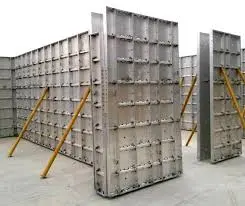
Given proper handling, cleaning, and storage, well-made aluminum alloy building formwork may survive 200–300 concrete pours. 250–300 reuse cycles are included into our 6061-T6 technology. Weld quality, alloy quality, wall thickness, concrete pressure, and site practices affect outcomes. A panel dragged, hammered, or covered with concrete may require repair sooner. I cover drive longevity, panel protection, and pre-purchase checks in this tutorial.
"Lifespan" can mean several things: the number of pours, the years a set stays in service, the condition of panels and accessories, or storage life between projects. Unlike disposable timber or plastic sheets, aluminum systems move from floor to floor and project to project.
What Determines How Long Aluminum Alloy Building Formwork Lasts on Site?
Several factors work together, so no single number tells the whole story.
Alloy Grade, Temper, and Wall Thickness
Material quality first. Aluminium extrusions are covered by ASTM B221, and 6061-T6 minimums are approaching 260 MPa. Our panels are made of 6061-T6 aviation-grade aluminium with a 4 mm plate and 65 mm rib. Thin skins dent with repeated stress, therefore thickness counts as much as grade. If recycled waste or thinner walls concern you, get material certifications and measure a sample profile. To maintain quality, Shandong Xingrui Building Materials Co., Ltd. monitors raw materials and final goods. Our system's main specs:
| Parameter | Specification |
|---|---|
| Material | 6061-T6 aluminum alloy |
| Plate thickness | 4 mm |
| Rib height | 65 mm |
| Tensile strength | ≥260 MPa |
| Webster hardness | ≥15HW |
| Weight | 20–25 kg/m² (about 4.1–5.1 lb/ft²) |
| Lateral pressure capacity | Up to 60 kN/m² (about 1,250 psf) |
| Verticality deviation | ≤1.5 mm/m |
| Flatness tolerance | ≤1.0 mm |
| Dimensional accuracy | ±0.5 mm |
| Reuse cycles | 250–300 |
| Temperature range | -20°C to 60°C |
These figures give you a baseline for comparing quotes line by line.
Design Loads, Welding, and Panel Layout
Design determines panel stress. How to estimate lateral pressure from wall height, pour rate, concrete temperature, and support spacing is in ACI 347R-14. The system can sustain up to 60 kN/m², therefore I verify the project's predicted pressure before accepting a plan. Welds need maintenance too. We use 12 welding robots and 6 automated welding lines to maintain panel seams. Verticality within 1.5 mm/m and flatness within 1.0 mm tighten joints, restrict grout leakage, and decrease subsequent floor rework.
Site Handling and Environment
Even strong panels of aluminum alloy building formwork die from harsh treatment. Dragging them over rebar, dropping them from slab edges, shoving them off with pry bars, and unevenly stacking them bend edges and expand pin holes. Environment matters. Crews that ignore cleaning accelerate surface damage with humidity, salt air, dust, and hardened concrete residue. Our device operates from -20°C to 60°C, suitable for many job-site temperatures. A appropriate release agent and surface oxidation protect the panel face from alkaline new concrete. You can spot damage early with written inspection records after each pour.
How Many Times Can Aluminum Formwork Be Reused?
Reuse count drives both lifespan and cost, so it deserves a closer look.
What 200 to 300 Pours Means in Practice
Quality aluminium systems under control can pour 200–300 times. Our system targets 250-300. One set may cover eight 30-story structures before substantial refurbishing since each panel is utilised 30 times. Some sets surpass the range, while others require early work due to severe workloads, hard handling, or poor maintenance. Our technique works for high-rise shear walls and 4-day-per-floor cycles over 20 storeys. Faster floors imply more pours each year, thus the same set approaches its maximum sooner.
Panels Versus Accessories
Main walls, slabs, beams, corners, staircases, and kicker panels frequently outlive their supporting sections. Pins, wedges, ties, and props wear first each cycle due to impact. A common pin-and-wedge connection with corresponding accessories maintains parts interchangeable across projects in our system. I suggest getting extra pins and wedges with the first shipment and counting them after each strip. Check staircase and special panels more regularly than flat wall panels since they undergo larger loads. The 200–300 range applies to primary panels, not every component.
Cost per Pour
Reuse alters price perception. Aluminium costs more than lumber upfront, but cost models indicate it costs less per use after 50–60 reuses. Reduce secondary plastering using fair-faced concrete. However, the purchasing price is one line. Costs of travel, labour, cleaning, maintenance, storage, and replacement divided by predicted pours. Cheaper sets that require refurbishing at 120 pours might cost more per usage than better-built sets at 250. Request reuse cycle quotes from suppliers.
Construction Process, Maintenance, and Ways to Extend Service Life
Good habits protect panels as much as good manufacturing does.
From Drawings to Panel Layout
Project survey and engineering review begin for aluminum alloy building formwork. MEP, structural, and architectural drawings become panel layouts, drawings for shops, and component schedules. I inspect every drawing set before production since layout errors may block sites. Custom sizing and sample processing are available. Dimensional inspection, flatness, weld evaluation, labelling, and connection-hole correctness are factory tests. Getting a pre-assembly mock-up before shipment shows fit issues at the factory rather than on the slab. Crews matched panels by placement using clear labelling.
Site Cycle and Daily Care
Alignment, levelling, bracing, and controlled concrete placement safeguard panels and maintain the floor cycle on time. After stripping, use plastic scrapers or soft tools to remove concrete residue before it hardens. Keep the face smooth using a water-based or reactive release agent. Check panels for bending, warping, fractured welds, damaged edges, expanded holes, discolouration and missing accessories. Take notes after each pour. Crew training on panel identification, pin and wedge removal, and bracing saves numerous faults.
Storage, Transport, and Refurbishment
Ventilated storage lets panels dry between projects, with components sorted by kind. Pack and secure cargo for shipping. Sort panels before transferring them: fix small edge bends and send broken welds or large holes to the supplier. Replacement a panel when repair costs approach new. Separate broken or project-specific parts from stock to avoid rearranging. Each panel group has a reuse log that highlights reoccurring issues and when sets are retiring.
Aluminum Alloy Building Formwork vs. Timber and Steel: What to Check Before You Buy
Each system suits different work, so compare them on the same terms.
Technical and Cost Comparison
Aluminum alloy building formwork offers consistent dimensions, high reuse potential, and light panels that crews can carry by hand. Timber suits small or irregular work, while steel provides high stiffness for heavy-duty jobs but often needs more lifting equipment and labor. This table summarizes the differences:
| Factor | Aluminum | Timber | Steel |
|---|---|---|---|
| Reuse potential | High; 200–300 pours for quality systems | Lower | High |
| Handling | Light panels, hand carried | Easy to cut on site | Heavier; often needs lifting equipment |
| Concrete finish | Consistent, fair-faced | Varies with sheathing | Smooth, rigid |
| Best fit | Repetitive high-rise | Small, irregular work | Heavy-duty applications |
Project repetition, geometry, labor cost, and expected reuse should decide the winner, not purchase price alone.
When Aluminum Is the Best Choice
Aluminium suits repeating floor patterns, residential towers, high-rises, and concrete wall-and-slab housing constructions. Our method meets the needs of high-rise shear wall constructions with uniform finishes and rapid floor cycles. Reusing a set for several levels and projects improves economies. For uneven geometries, one-time buildings, small projects, frequent design modifications, or locations without qualified personnel, timber or steel may function better. Be realistic: a one-use project cannot justify the increased purchasing price.
What to Verify Before You Order
Compare suppliers using the same list. Check alloy grade, panel thickness, reuse cycles, accessories, and project designs. Request quality documentation; our manufacture is ISO9001, ISO14001, and CE-certified. Review the quote as a comprehensive material list for custom panels, props, packing, goods and supervision. Discuss training, repairs, spare parts, and reference projects. We ship to 100+ countries, give samples, and offer on-call technical assistance. Compare offers by lifespan cost, not lowest initial price.
Conclusion
Aluminum alloy building formwork lasts longer when material, design, handling, and maintenance are coordinated. A 6061-T6 system with solid welds and correct panels can pour 250–300 times, while excellent systems can pour 200–300 under regulated circumstances. Spare parts must be planned since main panels outlive pins, wedges, ties, and props. Rough handling shortens panel life, but daily cleaning, assessment, dry storage, and records maintain accuracy. After 50–60 reuses, cost per use falls below lumber because reuse distributes the purchase price over several pours. Aluminium is good for recurring high-rise construction, whereas lumber or steel are good for one-time jobs. A complete bill of materials and lifespan cost are used for fair comparison.
FAQ
How many times can aluminum alloy building formwork be reused?
Quality systems commonly reach 200 to 300 pours under controlled conditions. Our 6061-T6 system targets 250 to 300 cycles. Handling, cleaning, and concrete pressure affect the final number.
Which parts wear out first?
Pins, wedges, ties, and props usually need replacement before main panels. Keep spares on site and inspect them after each strip.
Is it suitable for high-rise residential construction?
Yes. Our system is designed for high-rise shear wall structures and supports a 4-day-per-floor cycle on buildings above 20 floors. It offers custom sizing and reusable panels.
How does the cost compare with timber and steel?
Aluminum costs more at purchase, but cost per use falls below timber after about 50 to 60 reuses. Steel adds stiffness but may need more lifting equipment and labor. Request a full quotation covering panels, supports, accessories, engineering, packaging, and transport.
Request a Project-Specific Aluminum Alloy Building Formwork Solution from GREEN FORMWORK
Planning a high-rise shear wall project? GREEN FORMWORK is an aluminum alloy building formwork manufacturer with an ISO9001-certified production base, custom sizing, samples, and on-call technical support. Send your drawings, floor count, and schedule to sdxingruiqp@126.com, and our team will review the panel layout and quote the full scope. Visit sdxingrui.com for details.
References
1. Guide to Formwork for Concrete (ACI 347R-14), American Concrete Institute, 2014.
2. Guide for Shoring/Reshoring of Concrete Multistory Buildings (ACI 347.2R-17), American Concrete Institute, 2017.
3. Standard Specification for Aluminum and Aluminum-Alloy Extruded Bars, Rods, Wire, Profiles, and Tubes (ASTM B221), ASTM International, 2021.
4. Aluminum Design Manual, The Aluminum Association, 2020.
5. Concrete Formwork Systems, Awad S. Hanna, Marcel Dekker, 1999.
6. Quality Management Systems — Requirements (ISO 9001:2015), International Organization for Standardization, 2015.
Learn about our latest products and discounts through SMS or email