- English
- French
- German
- Portuguese
- Spanish
- Russian
- Japanese
- Korean
- Arabic
- Greek
- German
- Turkish
- Italian
- Danish
- Romanian
- Indonesian
- Czech
- Afrikaans
- Swedish
- Polish
- Basque
- Catalan
- Esperanto
- Hindi
- Lao
- Albanian
- Amharic
- Armenian
- Azerbaijani
- Belarusian
- Bengali
- Bosnian
- Bulgarian
- Cebuano
- Chichewa
- Corsican
- Croatian
- Dutch
- Estonian
- Filipino
- Finnish
- Frisian
- Galician
- Georgian
- Gujarati
- Haitian
- Hausa
- Hawaiian
- Hebrew
- Hmong
- Hungarian
- Icelandic
- Igbo
- Javanese
- Kannada
- Kazakh
- Khmer
- Kurdish
- Kyrgyz
- Latin
- Latvian
- Lithuanian
- Luxembou..
- Macedonian
- Malagasy
- Malay
- Malayalam
- Maltese
- Maori
- Marathi
- Mongolian
- Burmese
- Nepali
- Norwegian
- Pashto
- Persian
- Punjabi
- Serbian
- Sesotho
- Sinhala
- Slovak
- Slovenian
- Somali
- Samoan
- Scots Gaelic
- Shona
- Sindhi
- Sundanese
- Swahili
- Tajik
- Tamil
- Telugu
- Thai
- Ukrainian
- Urdu
- Uzbek
- Vietnamese
- Welsh
- Xhosa
- Yiddish
- Yoruba
- Zulu
How to Import a Frame Scaffolding System Without Delays Safely
Importing a frame scaffolding system into the United States requires careful planning across documentation, supplier qualification, logistics, and on-arrival inspection. When procurement managers skip any of these steps, they face customs holds, damaged goods, or OSHA non-compliance on the job site. This guide walks you through every stage—from selecting a certified manufacturer to clearing customs without friction—so your masonry and MEP crews get the access equipment they need, on time and in full.
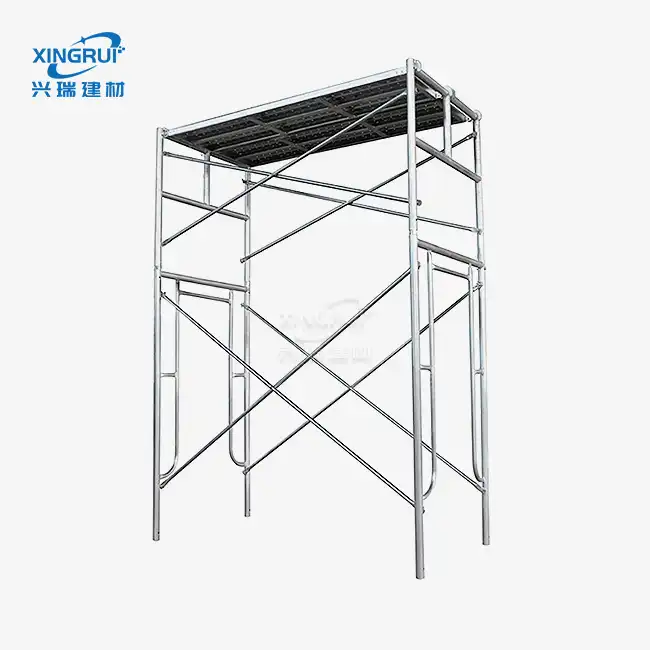
Understanding Common Challenges in Importing Frame Scaffolding Systems
Most of the time, delays in imports are not caused by shipping. There are problems with paperwork and rules that can be fixed, but they cause extra costs once the goods are at sea.
Incomplete or Inaccurate Documentation
Customs officials at ports like Savanna and Jacksonville often mark as suspicious shipments that have HS codes that don't match, certificates of origin that are missing, or business bills that don't match up with packing lists. One mistake can hold up a whole container for five to ten work days, which is long enough to delay a planned building job.
Certification and Regulatory Gaps
All platforms used on building sites in the United States must follow OSHA 29 CFR 1926 Subpart Q. Distributors are at risk of product liability if suppliers can't provide third-party test reports that are in line with these standards or with EN 12811, which is a widely known standard. Anti-dumping duties on some steel goods from China, which are being watched by the Department of Commerce, add another cost that purchasing teams need to include in their landed-cost models before they sign buy orders.
Inconsistent Quality Control Across Production Batches
A frequent gripe among regional wholesalers is that the first sample container meets all the requirements, but later shipments have different surface treatments, different sizes, or missing parts. Without audit rights at the plant level and rules for inspections before shipping, frame scaffolding system wholesalers have to pay for contractor returns and lost rental income.
Essential Steps to Ensure On-Time, Safe Import of Frame Scaffolding Systems
A structured import process takes the guesswork out of the process and makes sure that your procurement team is responsible at every step. People who have bought things before, during, and after shipping usually do these things:
- Qualify the supplier against ISO-certified management systems. Verify ISO 9001 (quality), ISO 14001 (environmental), and ISO 45001 (occupational health and safety) certificates before requesting samples. These certifications indicate that the factory operates repeatable quality controls—not just on paper but in daily production. Shandong Xingrui Building Materials Co., Ltd., for example, holds all three certifications and runs 12 welding robots across 6 automated welding lines to maintain ±1mm dimensional tolerance.
- Standardize your contract terms around lead time, packing specifications, and pre-shipment inspection. Clearly define frame width (e.g., 914mm), height options (1.7m or 1.93m), surface treatment type, coating thickness (≥60μm for HDG), and accessory completeness—cross braces, base plates, casters—in the purchase order, not just in email correspondence.
- Prepare a complete documentation package before the vessel departs. This package must include: commercial invoice, packing list, certificate of origin (Form A or CO), bill of lading, material test reports, and CE or third-party structural test certificates. Work with a licensed customs broker familiar with Section 301 tariff classifications for steel scaffolding.
These steps set up a system of accountability that keeps your supply chain stable even when you have to reorder every three months.
Once you're done getting ready for the package, work with a freight forwarder that lets you watch containers in real time. This means that your warehouse team can plan workers to unload and check without having to wait for them.
Product-Specific Considerations for Frame Scaffolding Systems
Portal support doesn't all ship or check out the same way. How well a frame scaffolding system survives a 25–35 day ocean transit depends on how the parts are put together, the grade of steel used, and how the surface is treated.
Steel Grade and Construction Method
With 42×2.0mm tube measurements (O.D. × wall thickness), Q235 premium carbon steel gives you the tensile strength you need for multi-level masonry work while keeping the unit weight doable for store-level handling. One-piece molded frame construction gets rid of the need for field-welded joints, which often break after being put together and taken apart many times on rental fleets.
Packaging and Transit Protection
Each frame set should come with edge protection on the pin ends that are visible and be banded to wooden pallets that can hold the weight of containers. Loose parts like cross braces, coupling pins, and casters need to be packed separately in cartons that are labeled and have barcodes that work with your warehouse management system. When you package things correctly, the actual inspection process at customs goes faster because inspectors can compare what's inside to the packing list without having to open up whole bundles.
On-Arrival Inspection Protocol
Before sending the product to your distribution network, you should do a structured inspection. This includes comparing the frame's levelness and the distance between its pins to the ±1mm tolerance, using a magnetic thickness gage to check the HDG coating's continuity, and making sure the cross-brace locking mechanism works. Keep records of what you found by attaching pictures to lot numbers. This makes a quality record that can be used as proof if a worker later raises a safety issue.
Case Studies: Successful Imports Without Delays
The above steps don't just sound good in theory; they produce real, measured results in buying.
Case Study 1 – Southeast U.S. Masonry Distributor
A regional wholesaler with 45 sites in the Southeast chose a Chinese walk-through frame scaffolding system supplier after a four-month process that included an audit of the factory, testing of samples, a structural report from a third party, and a review of a trial container. Before shipping, the distributor made sure that the supplier's packing list format was in line with their WMS barcode schema. This cut the time it took to receive each container from 14 hours to 6 hours. Over the next three quarterly shipments, there were no customs holds.
Case Study 2 – Equipment Rental Chain OEM Program
A rental chain with 90 locations wanted door frame scaffolding with their logo printed on the cross-brace tube. They chose a maker whose OEM capabilities had been proven and whose product liability insurance covered their business. Their quality team was able to sign off on digital pre-shipment photos sent to them before the ship was loaded. This meant that they didn't have to send an inspector to Asia for every order cycle. Two full containers were sent out on time for the busiest rental season in the spring.
Summary of Best Practices for Delay-Free and Safe Importing
Consistent results need a method that can be used again and again, not just one time. The important steps that need to be taken during each part of import are shown below:
- Before You Place Your Order: Check for ISO licenses, ask for material test results, make sure the company can do OEM work, and write down the packing requirements.
- Before Vessel Loading: Do or order a pre-shipment inspection, make sure the documentation package is complete, and get a draft of the bill of lading to look over.
- Track the status of the container once a week, make sure the customs broker has all the necessary paperwork, and plan warehouse work based on the estimated arrival time.
- When it arrives: check the tolerances for size, the thickness of the coating, and the completion of the accessories; take pictures and write down what you find by lot number; only after approval can the items be added to the inventory.
When distributors build long-term relationships with suppliers based on yearly supply deals with quarterly call-offs, they get priority production slots during busy shipping times and the CIF cost per unit stays the same over time.
Conclusion
When procurement teams look at documentation, supplier qualification, product specification, and inspection as a whole system instead of separate tasks, they can import frame scaffolding system door frame scaffolding safely and on time. Distributors who spend time on upfront supplier checks, clear contract terms, and organized receiving processes are the ones who avoid delays that cost a lot of money. If you work with the right manufacturer, you can make sure that your brickwork and MEP contractor customers always have safe, OSHA-compliant entry tools.
FAQ
What certifications should I verify before importing scaffolding from China?
At the very least, make sure that the maker has ISO 9001 (quality management), ISO 14001 (environmental management), and ISO 45001 (occupational safety) certifications. Ask for the original papers and make sure the granting body is real. For shipping in the United States, you should also ask for structural test results from a third party that use OSHA 29 CFR 1926 Subpart Q or EN 12810 load guidelines.
How do I minimize customs clearance delays at U.S. ports?
Hire a licensed customs broker before the order ships. Make sure that the HS codes and declared values on your commercial invoice, packing list, certificate of origin, and bill of lading are all the same. Make sure your product is already classified under the right HTS subheading and that the Section 301 tariff rates are correct so that duties are paid quickly when the item arrives.
What causes most transit damage to scaffolding components?
A lot of damage claims are caused by cross braces that are too loose and wheel parts that move around inside containers. Ask the manufacturer to attach all frames to wooden pallets with bands and put edge protectors on the pin ends of any loose parts. Then, make sure they pack these parts in separate, clearly marked boxes. As part of your pre-shipment review package, ask for pictures of the packing process.
Can I order private-label (OEM) scaffolding with my brand printed on the frames?
Yes. There are a lot of companies in China that print OEM on cross-brace tubes and frame weldments. Make sure the provider can do this in writing, and before giving the go-ahead for full production, ask for a pre-production sample with your name on it.
Partner with GREEN FORMWORK for Certified Frame Scaffolding Supply
Distributors in North America can connect with Shandong Xingrui Building Materials Co., Ltd. through GREEN FORMWORK. This is a 40,000-square-meter factory with 180 technical experts working there and certifications for ISO 9001, ISO 14001, and ISO 45001. We can make frame scaffolding systems with full OEM private-label production, full extension kits, and barcode-ready packing that's ready to go in the warehouse. You can get a sample or CIF quote right now by emailing sdxingruiqp@126.com.
References
1. Occupational Safety and Health Administration (OSHA). Scaffolding Standard: 29 CFR Part 1926, Subpart Q. U.S. Department of Labor, 2020.
2. European Committee for Standardization. EN 12810-1: Façade Scaffolding Made from Prefabricated Components. CEN, 2003.
3. U.S. International Trade Commission. Steel Scaffolding from China: Anti-Dumping Duty Orders and Investigations. USITC Publication, 2022.
4. International Organization for Standardization. ISO 9001:2015 Quality Management Systems—Requirements. ISO, 2015.
5. Scaffold & Access Industry Association (SAIA). Scaffolding Safety and Training Manual, 5th Edition. SAIA, 2019.
6. Journal of Construction Engineering and Management. Quality Control Practices in Prefabricated Scaffolding Supply Chains. American Society of Civil Engineers (ASCE), 2021.
Learn about our latest products and discounts through SMS or email