- English
- French
- German
- Portuguese
- Spanish
- Russian
- Japanese
- Korean
- Arabic
- Greek
- German
- Turkish
- Italian
- Danish
- Romanian
- Indonesian
- Czech
- Afrikaans
- Swedish
- Polish
- Basque
- Catalan
- Esperanto
- Hindi
- Lao
- Albanian
- Amharic
- Armenian
- Azerbaijani
- Belarusian
- Bengali
- Bosnian
- Bulgarian
- Cebuano
- Chichewa
- Corsican
- Croatian
- Dutch
- Estonian
- Filipino
- Finnish
- Frisian
- Galician
- Georgian
- Gujarati
- Haitian
- Hausa
- Hawaiian
- Hebrew
- Hmong
- Hungarian
- Icelandic
- Igbo
- Javanese
- Kannada
- Kazakh
- Khmer
- Kurdish
- Kyrgyz
- Latin
- Latvian
- Lithuanian
- Luxembou..
- Macedonian
- Malagasy
- Malay
- Malayalam
- Maltese
- Maori
- Marathi
- Mongolian
- Burmese
- Nepali
- Norwegian
- Pashto
- Persian
- Punjabi
- Serbian
- Sesotho
- Sinhala
- Slovak
- Slovenian
- Somali
- Samoan
- Scots Gaelic
- Shona
- Sindhi
- Sundanese
- Swahili
- Tajik
- Tamil
- Telugu
- Thai
- Ukrainian
- Urdu
- Uzbek
- Vietnamese
- Welsh
- Xhosa
- Yiddish
- Yoruba
- Zulu
Top 5 Benefits of Steel Formwork Construction for B2B Buyers
Steel formwork construction delivers measurable advantages that timber and plastic systems simply cannot match at scale. For procurement directors managing multi-million-dollar infrastructure programs across the Middle East, Southeast Asia, and Africa, choosing the right concrete forming system directly affects project margins, schedule certainty, and long-term supply chain stability. This guide breaks down the five most important reasons why B2B buyers are shifting to modular steel panel systems—and what to look for when selecting a manufacturer that can deliver on every specification.
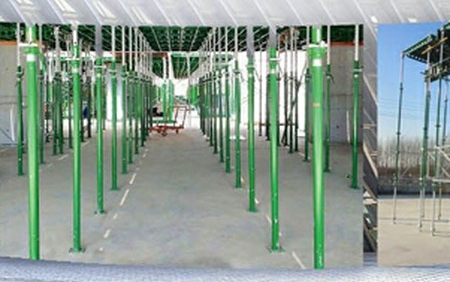
Benefit 1 – Enhanced Durability and Longevity in Steel Formwork
Why Material Grade Determines Lifespan
The base material is the best that can be done in terms of efficiency. Shandong Xingrui Building Materials Co., Ltd. uses Q235 premium carbon steel, which has a high modulus of elasticity and doesn't bend when concrete pressure is applied to it. Panels made to a standard thickness range of 2.3 mm to 3.0 mm keep their shape through multiple pour processes and don't need to be expensively straightened out again and again.
Performance in Harsh Job-Site Environments
The heat in the Middle East, the humidity along the coasts of Southeast Asia, and the dust in Africa's infrastructure routes all speed up the breakdown of materials. When steel panels are treated with an electrostatic spraying method, a uniform anti-corrosion coating sticks directly to the steel surface. These panels last a lot longer than coated or bare steel panels. With this surface treatment, panels can be used many more times than the 50 times that Xingrui's methods are meant to work.
International Compliance as a Procurement Filter
Large EPC companies usually need CE approval and ISO paperwork before a product can be added to the list of approved vendors. There are three types of licenses that Xingrui has: ISO 9001 for Quality Management, ISO 14001 for Environmental Management, and ISO 45001 for Occupational Health and Safety. For Carlos, as procurement director, those papers speed up the process of finding qualified vendors and lower the risk of not following the rules on government-funded projects.
Durable, certified steel formwork construction systems cut down on the total number of panels that are needed over the course of a project's lifecycle. This lowers the cost of forming per cubic meter and reduces the number of emergency re-orders that throw off schedules.
Benefit 2 – Improved Construction Efficiency and Speed
Modular Panel Logic Reduces Installation Time
A flexible steel panel system is made so that any panel that meets the same standards can be used instead of another. Crews on the site can switch out broken units without stopping the pouring process. The normal panel sizes from Xingrui are 1500x300 mm and 1200x200 mm. These sizes are designed to fit typical structure grid plans, so there is less need for field cutting and custom fillers.
Assembly Cycles and Labor Productivity
The Construction Industry Institute says that 40–50% of the total cost of formwork for reinforced concrete structures goes to workers. On a 10,000 m² floor plate, a method that cuts setup time per square meter of made area by even 15% saves a lot of money. The Xingrui panels' stamping-formed frame design lets them be put together and taken apart many times without the bolt holes getting longer or the frame warping. This means that the tight splicing joints stay in place for the full 50+ reuse cycle.
Schedule Certainty for EPC Contractors
When milestone dates are linked to paid fines, it's impossible not to meet the concrete pour schedule. The production area at Xingrui is over 40,000 m² and has four cold roll forming lines and 12 welding robots. This means that the plant can handle big orders within the agreed-upon lead times. For procurement teams that are in charge of multiple projects that are always being worked on, getting steady delivery from a single manufacturer is much better than dealing with a bunch of local sources whose prices and quality vary.
Faster cycle times and stable supply directly improve cash flow by cutting down on the time it takes to move from placing concrete to moving on to other trades.
Benefit 3 – Superior Quality and Precision in Concrete Finishing
Dimensional Accuracy Starts at the Panel Face
Because Xingrui's steel formwork construction panels have a flat face, they can keep their surface flatness within ≤2 mm across the width of the panel. Tight joining joints keep cement slurry from bleeding through when panels are joined on-site. This keeps surface flaws from happening, which needs to be fixed or ground down before the finishing trades can continue.
Robotic Welding for Batch Consistency
Weld quality differences between production batches are always a worry for people who are buying from a new manufacturer. Xingrui's production lines have 12 welding robots. This gets rid of the human error that can lead to uneven weld penetration depth. A 180-person expert team keeps an eye on quality throughout the whole process, from receiving the raw materials to the final inspection. As part of its process for choosing vendors, the company accepts checks by SGS or BV.
Rework Cost Is the Hidden Project Risk
If the concrete surface doesn't meet the engineer's acceptance standard, it will take longer to finish and cost a lot of money to fix. Surface flaws are less likely to happen when steel making panels are used that have been checked for accuracy in their measurements before the concrete is even poured. For project engineers whose job it is to make sure that plans are followed, every pour starts with getting panels that match the approved shop drawings.
Consistent panel quality is directly linked to decisions about procurement and acceptance rates on-site. This is why it's important for the buyer's engineering team and the supplier's production team to align technical specifications from the very beginning.
Benefit 4 – Cost-Effectiveness Through Lifecycle Value
Upfront Price Versus Total Ownership Cost
Each steel panel costs more than a plywood sheet. But that comparison doesn't take into account the reuse factor. A plywood sheet can usually be used 5–10 times before the finish on the surface breaks down below suitable levels. A steel panel method that can be used more than 50 times spreads the initial cost over a much bigger formed area, which makes the actual cost per square meter of formed surface a thousand times lower.
Custom Fabrication Eliminates Waste Inventory
If you order panels that are exactly the size shown on the structural drawings for the project, you won't have to cut as many filler pieces or store extra materials at the end of the project. Xingrui can make things to order based on drawings provided by the customer. This lets procurement managers choose panel layouts that work with the actual pour sequence instead of forcing site teams to change standard sizes to fit non-standard shapes.
Reduced Ancillary Costs Across the Supply Chain
When someone switches from wood to steel forming methods, these straight cost categories get better:
- Replacement frequency: Steel panels do not warp from moisture exposure or split from mechanical damage the way timber does, so mid-project re-orders become far less common.
- Release agent consumption: The non-absorbent steel surface requires less release agent per pour cycle compared to plywood, which absorbs product into the grain.
- Transportation volume: Higher reuse per panel means fewer total panels shipped per project, reducing freight cost per formed square meter.
- Storage and handling: Steel panels stack uniformly and do not require the moisture-controlled storage that treated timber demands in humid climates.
Because these saves add up over the course of several years, companies in the Middle East and Africa are starting to see steel forming systems more as an investment than a cost that needs to be repaid.
Benefit 5 – Sustainability and Eco-Friendly Advantages
Steel Is One of the Most Recyclable Construction Materials
When their useful life is over, steel formwork construction panels are worth a lot as scrap and go back into the process of making steel. The Ellen MacArthur Foundation says that steel's ability to be recycled almost infinitely is a key factor in making circular economy models possible in building. Documented material recyclability is a procurement argument in and of itself for companies that report against ESG targets or put in bids on green-rated projects.
Waste Reduction on Site
A lot of solid waste is made by timber formwork, like broken boards, offcuts, and contaminated plywood that can't be separated cleanly to be recycled. During normal operations, a steel panel system doesn't make a lot of waste. This lowers the cost of dumping trash in landfills and helps make sure that garbage management plans are followed on many government-funded building projects.
Alignment With ISO 14001 Environmental Standards
With its ISO 14001 certification, Xingrui shows that its manufacturing processes follow clear rules for environmental management. If a purchasing team's company already has its own environmental standards, buying from a seller that is ISO 14001-certified can help with reporting on the sustainability of the supply chain.
Conclusion
Durability, speed, quality, lifetime cost, and environmental performance are the five benefits that make the case for steel formwork construction on large-scale infrastructure projects. Each benefit builds on the last. For example, panels that last longer mean that they don't have to be replaced as often, which means less trash, lower costs, and fewer problems in the supply chain.
The evaluation factors are clear for business-to-business buyers who need a manufacturer that can deliver large quantities of custom-made panels that are CE-certified and come with third-party testing support. The next step is to ask for samples and compare the technical specs to the project plans.
FAQ
How many times can steel forming panels be reused?
Panels manufactured from Q235 carbon steel with a stamping-formed frame and electrostatic anti-corrosion coating are rated for over 50 reuse cycles under standard site conditions. Actual service life depends on handling practices, release agent application, and cleaning protocol between pours.
What thickness options are available?
Standard thickness options are 2.3 mm, 2.5 mm, 2.75 mm, and 3.0 mm. Thicker panels suit higher pour rates and taller wall sections where hydrostatic pressure is greater.
Can panels be manufactured to non-standard dimensions?
Yes. Xingrui accepts production orders based on customer-supplied drawings and samples, allowing the panel geometry to match specific structural grid layouts without requiring site modification.
What certifications should I request from a steel formwork supplier?
At a minimum, request ISO 9001 for quality management, CE certification for structural safety compliance, and ISO 14001 if your project has environmental reporting requirements. Third-party inspection reports from SGS or BV provide additional batch-level verification.
What is the typical lead time for a large batch order?
Lead time depends on order volume and current production loading. Xingrui's automated production lines—four cold roll forming lines and 12 welding robots—support large batch fulfillment. Contact the team directly to confirm lead times against your project schedule.
Get a Quote From GREEN FORMWORK — Your Steel Formwork Construction Supplier
The Shandong Xingrui Building Materials Co., Ltd. company GREEN FORMWORK makes steel formwork construction panels from Q235 premium carbon steel that are CE-certified and ISO-compliant. We back up every order with examples and dedicated technical advice. Each panel can be used over 50 times, is made to order, and is inspected by a third party. To get a price right away, email your project plans to sdxingruiqp@126.com or go to sdxingrui.com.
References
1. Construction Industry Institute. Benchmarking & Metrics: Formwork Cost and Labor Productivity in Reinforced Concrete Construction. 2019.
2. Ellen MacArthur Foundation. Towards a Circular Economy: Business Rationale for an Accelerated Transition. 2015.
3. British Standards Institution. BS EN 12812: Falsework – Performance Requirements and General Design. 2008.
4. International Organization for Standardization. ISO 9001:2015 Quality Management Systems – Requirements. 2015.
5. Global Construction Review. Steel Formwork Adoption Trends in Emerging Market Infrastructure Programs. 2022.
6. World Highways. Procurement Strategies for Large-Scale Concrete Forming Systems in EPC Contracting. 2021.
Learn about our latest products and discounts through SMS or email