- English
- French
- German
- Portuguese
- Spanish
- Russian
- Japanese
- Korean
- Arabic
- Greek
- German
- Turkish
- Italian
- Danish
- Romanian
- Indonesian
- Czech
- Afrikaans
- Swedish
- Polish
- Basque
- Catalan
- Esperanto
- Hindi
- Lao
- Albanian
- Amharic
- Armenian
- Azerbaijani
- Belarusian
- Bengali
- Bosnian
- Bulgarian
- Cebuano
- Chichewa
- Corsican
- Croatian
- Dutch
- Estonian
- Filipino
- Finnish
- Frisian
- Galician
- Georgian
- Gujarati
- Haitian
- Hausa
- Hawaiian
- Hebrew
- Hmong
- Hungarian
- Icelandic
- Igbo
- Javanese
- Kannada
- Kazakh
- Khmer
- Kurdish
- Kyrgyz
- Latin
- Latvian
- Lithuanian
- Luxembou..
- Macedonian
- Malagasy
- Malay
- Malayalam
- Maltese
- Maori
- Marathi
- Mongolian
- Burmese
- Nepali
- Norwegian
- Pashto
- Persian
- Punjabi
- Serbian
- Sesotho
- Sinhala
- Slovak
- Slovenian
- Somali
- Samoan
- Scots Gaelic
- Shona
- Sindhi
- Sundanese
- Swahili
- Tajik
- Tamil
- Telugu
- Thai
- Ukrainian
- Urdu
- Uzbek
- Vietnamese
- Welsh
- Xhosa
- Yiddish
- Yoruba
- Zulu
How to Select the Right Ringlock Scaffolding System Supplier
This is the order of six things you should check to find the right ringlock scaffolding system supplier. First, make sure that the technical fit is right for your project. Second, check the records for steel and certification. Third, get a quote that list all the parts. Fourth, look over your experience with exporting and documenting. Fifth, check how much can be made. Sixth, agree on clear rules for the inspection. Get samples from different suppliers before you place a big order, and don't just look at the price per ton when you compare them. A reliable partner quickly answers technical questions, sends materials and load records, and ships parts that can be put together on site. This guide shows you how to do each thing.
The company that makes GREEN FORMWORK (Shandong Xingrui Building Materials Co., Ltd.) hired me to write this guide. Since 2007, we've been making scaffolding and formwork, and we ship to more than 100 countries and regions. A low quote doesn't mean much if the parts don't come with records or don't fit your layout. For years, the supplier choice affects worker safety, the speed of assembly, and the cost of maintenance, so it needs just as much thought as the design itself.
Start With Your Project Requirements and Technical Fit
When you talk to suppliers, having a clear project brief saves time. You can make one with these three checks.
Write a Clear Brief Before You Ask for Quotes
A good brief is the first step to a good quote. Write down the number of bays, the height of the lift, the layout of the platform, and the amount of weight that you need to move before you email any suppliers. Include things about the site like the air near the coast, chemical exposure, changes in temperature, and how stable the ground is. Keep in mind whether you need wall protection for the outside, full scaffolding for the inside, or a working platform, as each layout has different parts.
Then write down the finish you want, when you need it, and what documents the inspector will need. When a supplier gets this information, they can give you a quote for the whole package. A supplier who only gets "ringlock, 100 tons" has to guess what else is in the order, which often leaves out accessories. You can also compare quotes side by side after getting a full brief.
Check the Supplier's Engineering Knowledge
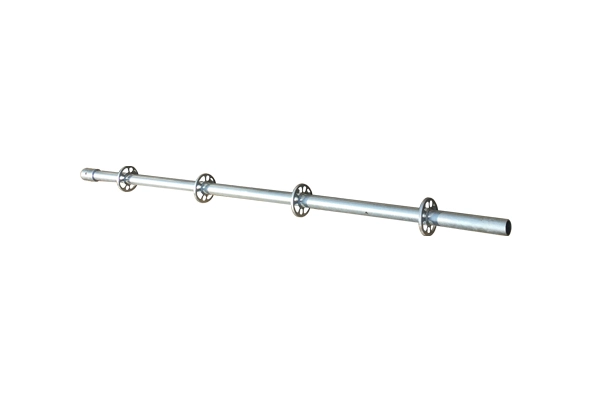
A good supplier doesn't have to read from a brochure to explain how the system works. Every vertical standard in a ringlock scaffolding system has a fixed number of rosette disks placed on it. There are eight slots in a rosette, and a wedge pin holds each ledger or brace in place. Our self-locking joints get tighter when they are loaded or shaken, which keeps the connection safe at height. If you want to know about load transfer, bracing patterns, and base adjustment, talk to the supplier.
Find out who makes the layouts and checks them. In the US, OSHA's scaffold rule (29 CFR 1926.451) says that the scaffold must be designed by a qualified person. It also says that the structure has to be able to hold its own weight plus four times the maximum load that it was designed to hold. The company you work with should know what you want.
Confirm the Full System and Accessories
The system as a whole, not just standards and ledgers, should be sold by the supplier. There must also be diagonal braces, platforms, access stairs, guardrails, and jacks for the scaffold to work. We sell supporting parts like foot planks, baffles, fasteners, and tools, and we can also make other parts based on the plans you give us. Our standard set-up has ledgers that are 0.9 m, 1.2 m, and 1.5 m long and a step distance of 1.5 m. A small set of parts can be used to make many bay sizes. The same parts can be used for wall protection on the outside, full scaffolding inside, and working platforms, which makes it easier for your site team to keep track of their inventory. Make sure that every part you need is on the list of parts that each supplier gives you.
Verify Manufacturing Quality, Materials, and Certification
Once the fit doesn't seem too bad, check out how the factory makes and records its parts.
Look at Steel Grade and Traceability
Controlling the material comes first. The Q235 steel used in our ringlock scaffolding system has 48 × 3.2 mm vertical standards and a 10 mm rosette disk. What does the number 235 mean in the grade name Q235? It means that the minimum yield strength is 235 MPa. For each supplier, ask them to name the grade of steel, show you the material certificates, and connect each batch to the production records.
When raw materials come in, we keep track of them and test products at every stage of production. This way, quality can be tracked from the raw material to the finished part. Ask for welding instructions, records of dimensional inspections, and steps for corrective action as well. Parts from one batch need to fit with parts from the next batch and any stock you already have, so tight rosette sizes are important.
Check Certificates Against the Real Factory
As long as the factory and the product match, the certificate is only useful. ISO 9001 certification for quality management and ISO 14001 certification for environmental management have been given to our company. Our products have also been given CE certification. When looking at a supplier's paperwork, make sure you check the name of the holder, the production address, the scope, and the date it expires.
Then, find out what standards the load data follows and if there are calculation reports for the setup you want to use. For European-style scaffolds, EN 12810-1 and EN 12811-1 are common references. In the United States, ANSI/ASSP A10.8 is used for scaffolding safety. A factory audit or inspection by a third party adds more proof for orders worth more money. There is always someone on call from our tech team to answer questions about records.
Choose Between Galvanized and Painted Finishes
Finish affects how long something lasts and how much it costs to maintain. A zinc layer is bonded to the steel during hot-dip galvanizing, which keeps it from rusting. The surface of our ringlock scaffolding system has been hot-dip galvanized. Painting costs less at first, but it chips when you touch it and needs to be fixed. Think about the weather, how often the parts will be moved, how they will be stored, and how they will be exposed to corrosion. Most of the time, galvanizing is needed at coastal sites, refineries, and chemical plants. Short jobs inside might not. Ask for records of the coating thickness and compare them to ISO 1461, which is the standard for hot-dip galvanized coatings on fabricated steel, no matter what finish you choose.
Compare Suppliers Beyond the Quoted Price
After making sure the quality is good, the next step is to compare the systems and deals fairly.
Compare System Types for Your Project
You don't have to use Ringlock, so make sure the system fits the job. Tube-and-clamp scaffolding can be bent into odd shapes, but it takes more work and each coupler needs to be checked by a crew. Frame scaffolding is easy to set up quickly on flat, repeating facades, but it doesn't give you as many layout options. A rosette can have up to eight parts, such as diagonal braces at different angles, while a cuplock node can only hold four ledgers.
That ability to bend in any direction works well for pipe networks, curved tanks, and shoring. We make HK, frame, ringlock, cuplock, banana-type, and ringlock scaffolding, so we can talk about which system works best for your shape instead of pushing one product. Ask erectors in your area which system they know how to use best. Being familiar with something speeds up work and reduces mistakes.
Calculate Total Cost of Ownership
The unit price only shows a small part of the total cost. Include shipping costs, taxes, labor for setting up, repairs, spare parts, storage, and downtime. The cost of buying reusable ringlock scaffolding is spread out over many projects. This means that durability and finish quality are very important from a financial point of view.
By the third project, a cheaper set that bends, rusts, or needs to be fixed all the time costs more. Make sure that all of the quotes include the same information about the goods and services being offered, how much they cost, how they will be shipped, how they will be inspected, their warranty, and what they do not cover. Two quotes only really compare when they talk about the same things. When you add back missing braces or planks in a quote, they can hide a big hole.
Score Suppliers With a Weighted Scorecard
A scorecard turns your thoughts into numbers. Here are the categories I think you should use. You can change the sample weights.
- Quality and compliance (35%): Score steel grade control, weld and dimension records, coating data, certificates, and test reports. Set a minimum score for this category, and drop any supplier that falls below it, no matter how low its price looks. Treat load criteria, dimensions, finish, and compatibility as pass-or-fail items on every order.
- Capacity and delivery (25%): Check factory size, welding and forming equipment, peak-season output, and past export performance. Ask for a phased delivery plan for large projects. A supplier that can promise dates and then meets them protects your schedule better than one that quotes the shortest lead time on paper.
- Cost, customization, and support (40%): Compare total cost, drawing-based customization, sample availability, and technical response speed. Fast, accurate answers during quoting predict how a supplier will behave when a problem appears after shipment. Test this early by sending one detailed technical question, and note how long the reply takes and how specific it is.
With this kind of scorecard, the choice stays in line with the priorities of your project. Before you commit, ask for samples and try putting them together.
Check Export Capability, Capacity, and Quality Control
A good product still needs to be shipped well and have easy-to-use order controls. The rest of the supply chain is checked too.
Confirm Documents, Packing, and Logistics
It takes skill to export work. Ask the seller of ringlock scaffolding system for customs paperwork, invoices, packing lists, certificates of origin, bills of lading, and certificates of origin. During the unloading process, it takes longer, costs more, and causes more damage if the team doesn't explain how they load the containers. Rizhao, Shandong, is where our company is located. It is a city with its own seaport, airport, and high-speed rail hub, all of which help ship goods out of China.
We send our goods to more than 100 places in Asia, Europe, the Americas, Oceania, and Africa. For projects in the US, agree ahead of time on the port of entry and delivery terms, as well as who is responsible for each step of the transit. Your customs broker can get to work right away if you give them clear documents.
Match Production Capacity to Your Schedule
Capacity tells you if a supplier can keep a delivery date during a busy time of the year. Our Rizhao site is 79,800 square meters big, and there are standard workshops on more than 40,000 square meters of it. We have 920 employees, and 180 of them are technicians. There are 4 cold roll forming sets, 12 welding robots, 6 automatic welding lines, and 5 semi-automatic forging lines that make things. Robot and automatic welding help make sure that the positions of the joints and rosettes are the same from batch to batch.
Parts that are the same help construction crews work faster on-site. When you look at a supplier, you should ask for a list of their equipment, their monthly output numbers, and a plan for shipping in stages. Also, find out how the supplier handles urgent replacement orders for things like standards, ledgers, wedges, and jacks. These items are often just as important as the first shipment.
Set Purchase Order Controls and Inspect on Arrival
Write down what you need. A good purchase order spells out the sizes and tolerances of the parts, as well as the steel and coating needs, markings, packaging, acceptance criteria, warranty terms, and how to file a claim. Plan staged inspections of raw materials, production in progress, final sizes, coatings, and container loading for large orders. Samples are useful here. We give you samples so that your engineers can check the fit and finish before you place a pilot order.
When the goods arrive, you should count each one and look for parts that are bent, broken, or labeled wrong. Then, give your crew written instructions on how to set up the structure, including how to prepare the ground, brace it, tie it in, gain access, control the load, set weather limits, and take it apart. If anyone on your team needs help with any of them, our tech support is available by phone.
Match the Supplier Type to Your Buying Needs
The best supplier profile changes based on your role because each buyer has a different risk.
Different Buyers Need Different Strengths
Most of the time, general contractors want standard parts, fast delivery, and all the accessories they need. For energy and industrial projects, better engineering support, load documentation, corrosion protection, and thorough inspection records are all things that are needed. Rental companies and distributors care about batch consistency, durability, spare parts, good packaging, and the ability to place repeat orders.
OEM and custom buyers want to work together on designs, keep things secret, have their own brands, get approved samples, and have tight control over the drawings. Our scaffolding is made when you order it, and we can work from drawings and samples provided by you. Rental fleets and contractors can plan for repeated use because the parts can be used on different projects. Pick a group and then adjust the weights on your scorecard to match.
Why Buying Direct From a Manufacturer Can Help?
When you buy directly from a manufacturer, you can talk to the person who can answer your question faster. You have better control over the specifications, can see how the production is going, can make changes more easily, and can handle problems and spare parts more quickly. Orders that last a long time or a lot of them may also get better terms. Still, check the claim. Check the address of the factory, the equipment, the engineering staff, the quality systems, the history of exports, and the way the sales office and the factory are connected. A trading company can also help you if it is clear about what it does. In Rizhao, we have our own workshops for cold bending, welding, steel casting, forging, and electrostatic spraying, so you can ask us directly about any step of the process.
Run a Final Checklist Before You Order
Check a few things before you place your order. The supplier gets what you're asking for. The quote lists all of its parts. The supplier keeps records of the steel grade, dimensions, load data, and inspections for welding, coating, and painting. The finish looks good on your site. The quote spells out the terms of delivery, warranty, and acceptance. The factory can work with your schedule and send you spare parts at a later time. If you are buying something expensive or risky, you should add a factory audit, a sample review, a pilot order, or an inspection by a third party. It's safer to order from a supplier if they answer all of your questions in writing and in a clear way.
Conclusion
It's risky to pick a ringlock scaffolding system supplier, and price is only one factor that matters. Next, check your technical knowledge, the grade of the steel, its ability to be tracked, and your certificates. Finally, compare your work to what was done in the real factory. With the same scope, compare suppliers based on total cost, which includes freight, maintenance, and reusing parts for different projects. Make sure that the export documents, production capacity, and inspection terms are all confirmed in writing. Also, make sure that the type of supplier fits your role as a contractor, rental company, distributor, or OEM buyer. With a scorecard, samples, and a pilot order, claims can be turned into proof. These steps will help you choose a partner that will support the system after it's delivered and lower the risks to safety, quality, and time.
FAQ
How do I verify a supplier's certificates?
Check the name, factory address, scope, and expiration date of the holder. Get batch inspection reports for the goods you want to buy.
Should I buy galvanized or painted ringlock scaffolding?
The hot-dip galvanizing method works well for long-term, chemical, and coastal use. Hot-dip galvanization is what our system does. Painting parts might work for quick, dry jobs.
Can a supplier make parts to my drawings?
We can do custom work based on drawings and samples provided by the customer. We also give you samples to make sure they fit before you order more.
How do I compare two quotes fairly?
Line by line, match the scope: parts, quantities, finish, Incoterms, payment terms, lead time, packaging, inspection, warranty, and so on. Then look at the total cost.
Can I mix ringlock parts from different makers?
Rosette tolerances are different for each manufacturer. Before you mix brands, compare sample parts to what you already have in stock.
Request a Ringlock Scaffolding System Quotation From GREEN FORMWORK
Send GREEN FORMWORK your layout, size, load needs, quantity, destination, and choice of finish, and our team will get back to you with a quote based on the parts you send. As an ISO 9001-certified company that makes ringlock scaffolding systems, we cut parts to order, give samples, and offer technical support 24 hours a day, 7 days a week. Our goods have been approved by the CE. To begin, send an email to sdxingruiqp@126.com.
References
1. Occupational Safety and Health Administration, Safety and Health Regulations for Construction: Scaffolds (29 CFR 1926 Subpart L), 1996
2. European Committee for Standardization, EN 12811-1: Temporary Works Equipment – Scaffolds – Performance Requirements and General Design, 2003
3. European Committee for Standardization, EN 12810-1: Façade Scaffolds Made of Prefabricated Components – Products Specifications, 2003
4. International Organization for Standardization, ISO 9001: Quality Management Systems – Requirements, 2015
5. International Organization for Standardization, ISO 1461: Hot Dip Galvanized Coatings on Fabricated Iron and Steel Articles – Specifications and Test Methods, 2022
6. American Society of Safety Professionals, ANSI/ASSP A10.8: Scaffolding Safety Requirements, 2019
Learn about our latest products and discounts through SMS or email