- English
- French
- German
- Portuguese
- Spanish
- Russian
- Japanese
- Korean
- Arabic
- Greek
- German
- Turkish
- Italian
- Danish
- Romanian
- Indonesian
- Czech
- Afrikaans
- Swedish
- Polish
- Basque
- Catalan
- Esperanto
- Hindi
- Lao
- Albanian
- Amharic
- Armenian
- Azerbaijani
- Belarusian
- Bengali
- Bosnian
- Bulgarian
- Cebuano
- Chichewa
- Corsican
- Croatian
- Dutch
- Estonian
- Filipino
- Finnish
- Frisian
- Galician
- Georgian
- Gujarati
- Haitian
- Hausa
- Hawaiian
- Hebrew
- Hmong
- Hungarian
- Icelandic
- Igbo
- Javanese
- Kannada
- Kazakh
- Khmer
- Kurdish
- Kyrgyz
- Latin
- Latvian
- Lithuanian
- Luxembou..
- Macedonian
- Malagasy
- Malay
- Malayalam
- Maltese
- Maori
- Marathi
- Mongolian
- Burmese
- Nepali
- Norwegian
- Pashto
- Persian
- Punjabi
- Serbian
- Sesotho
- Sinhala
- Slovak
- Slovenian
- Somali
- Samoan
- Scots Gaelic
- Shona
- Sindhi
- Sundanese
- Swahili
- Tajik
- Tamil
- Telugu
- Thai
- Ukrainian
- Urdu
- Uzbek
- Vietnamese
- Welsh
- Xhosa
- Yiddish
- Yoruba
- Zulu
Light-Duty Formwork Benefits for Residential Concrete Applications
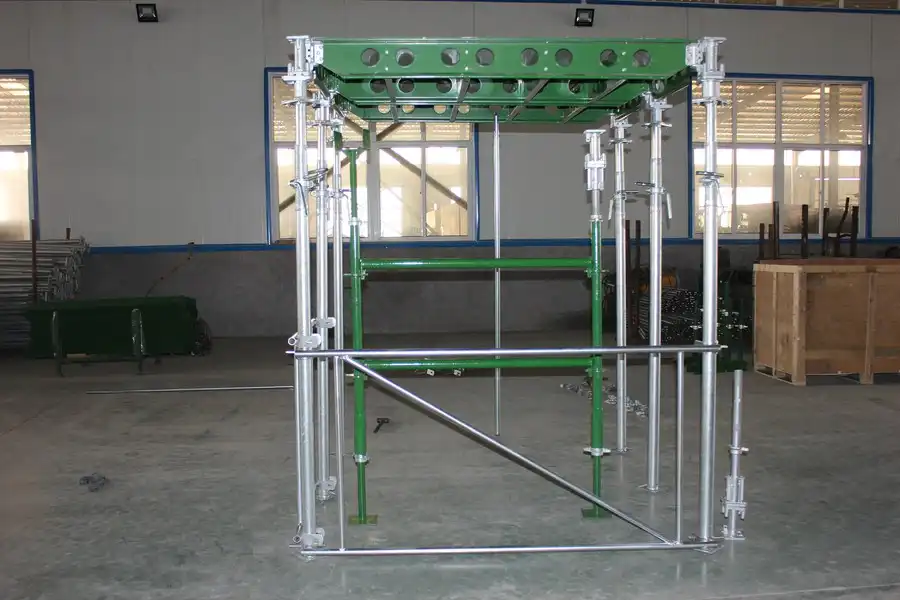
When contractors ask what makes residential concrete pours run faster and cheaper, the answer often points to one system: light-duty formwork. Designed specifically for low-rise buildings, general civil structures, and small concrete applications, this type of shuttering system prioritizes manual handling, quick assembly, and cost-per-pour efficiency. Available in both steel and aluminum panel variants, these systems carry rated load capacities up to 35 kN/m², making them well-matched to the structural demands of residential foundations, columns, and walls—without the overhead cost of heavy industrial equipment.
Understanding Light-Duty Formwork and Its Advantages in Residential Construction
When it comes to residential concrete work, load limits aren't as important as they are for bridge decks or high-rise cores. Still, a lot of builders waste money by using heavy devices. That problem is fixed right away by using lightweight concrete forms.
What Defines a Light-Duty System?
A light-duty shuttering panel usually weighs between 15 and 25 kg/m², which means that one person can move it and carry it without any help from machines. The steel plates are 2.2 mm thick, while the aluminum sides are 3.5 mm thick. The standard for homes is a Class 2–3 concrete finish, which is what both of them get.
Load Capacity vs. Residential Demand
Fresh concrete pressures on residential slabs and walls are usually well below 35 kN/m². DIN 18218 says that a pour rate of 0.5 m/h at 20°C creates about 12–18 kN/m² of atmospheric pressure, which is well within the rated limit of light-duty formwork. This means that home builders aren't putting building safety at risk; they're just making sure that their tools are the right size.
Cost Efficiency Over a Project Lifecycle
When one crew can put together wall forms in half a day without using cranes or trucks, work hours go down by a lot. The cost-per-pour ratio goes down a lot with each reuse because steel can be used more than 100 times and aluminum can be used up to 150 times. That return is important for small companies who do a lot of short-term jobs.
Types and Material Composition of Light-Duty Formwork for Residential Use
Choosing between steel and aluminum panel systems is not merely a material preference—it reflects job-site conditions, budget cycles, and frequency of reuse.
Steel Panel Formwork
Steel shuttering panels with a thickness of ≤2.2 mm offer high rigidity at a lower initial unit cost. The welded frame construction resists deformation under vibration during concrete consolidation. Dimensional tolerance is held to ±1 mm per panel, which prevents grout leakage at joints and reduces finishing labor. Steel panels are well-suited to contractors who prioritize initial purchase price and expect moderate reuse volumes.
Aluminum Panel Formwork
Aluminum alloy panels at ≤3.5 mm thickness deliver a comparable strength-to-weight ratio with superior corrosion resistance. This material choice extends service life on sites exposed to moisture or repeated washdowns between pours. The non-stick surface characteristic of aluminum simplifies cleaning and reduces release agent consumption. For distributors supplying humid climates in Southeast Asia or coastal Middle Eastern markets, aluminum panels offer a longer shelf life in warehouse storage.
Modular Panel Design Principles
Both material types share a modular locking mechanism that connects panels through wedge slots or pin holes. This system creates tight seams that prevent concrete bleed while allowing one worker to assemble a wall form without secondary fasteners. Universal adapter clamps allow integration with existing timber or steel framing, so contractors do not need to replace entire inventories when adopting these panels.
Installation Process and Safety Guidelines for Effective Use
A residential form system that is put properly keeps workers safe, cuts down on rework, and gives you a clean concrete surface. In real life, this is how the startup process works.
Site Preparation and Panel Inspection
Before putting the panels of light-duty formwork together, use a straightedge to check each one for stability in size. Make sure that the pin holes and wedge slots haven't been changed by previous use. Spread the release agent out evenly on the front of each panel. Get rid of any hardened concrete that is stuck on the locking pins. This pre-assembly check takes about 15 minutes per set and stops the two most common problems that happen during pours: panels coming apart and grout leaking.
Assembly Sequence and Alignment
Line up the base panels straight on a chalk line. Use the built-in wedge device to lock panels that are next to each other. A spirit level should be used every three panels to check the vertical line. Kicker braces should be put in at set times, usually every 1.2 m for walls taller than 2.4 m. With this method, a two-person crew can usually build a normal 6 m residential wall piece in less than two hours.
PPE Requirements and Maintenance Schedule
When working with the edges of steel panels, workers must wear gloves that won't cut them and shoes with steel toes during assembly. Within 30 minutes of stripping, wash panels with water after each pour to keep the face of the concrete from getting hard. Every 20 rounds, check the closing pins for wear. To keep panels from warping, store them horizontally on wooden bearers. Steel panels can last more than 100 cycles, and aluminum panels can last between 100 and 150 cycles if you stick to this maintenance schedule.
Comparison and Decision-Making: Selecting the Optimal System
Three things determine whether light-duty or heavier formwork methods are better: the amount of work that needs to be done, how easy it is to get to, and the total size of the job.
Before making an order, buying managers should think about these main factors:
- Load requirement alignment: Residential structures rarely exceed 35 kN/m² of fresh concrete pressure. Specifying a system rated for 80 kN/m² adds cost without adding safety margin for this application.
- Site access constraints: Urban infill lots, interior renovations, and basement work often prohibit crane entry. Panels in the 15–25 kg/m² weight range pass through standard doorways and narrow corridors without mechanical assistance.
- Reuse volume and cost-per-pour: A contractor running 40 residential pours per year recovers initial panel cost within the first season when reusability exceeds 100 cycles. Heavy steel systems at lower reuse rates do not produce the same return on the same budget.
- Certification and compliance: For import distributors, sourcing from a manufacturer holding ISO 9001, ISO 14001, and ISO 45001 certifications reduces compliance documentation burden and supports local regulatory approval in target markets.
— Reuse amount and cost per pour: When used more than 100 times, the initial panel cost is recovered within the first season for a builder who does 40 home pours a year. When heavy steel systems are reused less often, they don't give the same return for the same cost.
Certification and following the rules: For import wholesalers, buying from a company with ISO 9001, ISO 14001, and ISO 45001 certifications makes it easier to keep up with regulations and helps target markets get approval from local authorities.
Procurement Guide: How to Source Light-Duty Formwork for Residential Projects
For B2B buyers who place regular orders, the stability of the source is just as important as the price per unit. This is how the procurement process usually works:
Evaluating Suppliers and MOQ Flexibility
A good light-duty formwork maker should give samples before big orders, keep the same size tolerances between batches of production, and be able to handle small trial orders before committing to full containers. The factory at Shandong Xingrui Building Materials Co., Ltd. covers 79,800 m² and has 12 welding robots and 4 cold roll forming lines. The company can handle both small-batch samples and large-scale foreign orders.
Packaging, Rust Prevention, and Container Load Rate
Anti-rust packaging and high container load density lower the landed cost per unit for import distributors who manage warehouse stock. Steel pieces should be shipped with a coating that stops rust and a moisture shield. Standardized panel sizes make stacking more efficient, which has a direct effect on the cost of freight per piece, which is a big deal when combining smaller shipments.
After-Sales Support and Technical Assistance
When distributors go into new markets, they need professional support from the seller to help train local teams and answer questions that come up on the ground. Technical support is available by phone from GREEN FORMWORK, and product samples are available so that purchasing managers can make sure the fit is right before committing to a full import order.
Conclusion
One thing that both residential concrete contractors and import distributors want is a shuttering system that always works and doesn't cost too much or be too hard to use. That standard is directly met by light-duty formwork panels that weigh 15–25 kg/m², are rated to 35 kN/m², and can be used 100–150 times. These systems cut down on work hours, cost-per-pour, and shipping time to markets around the world because they can be handled by one person, are put together in modules, and are made in an ISO-certified factory. Right-sizing the formwork design is the best way to protect margins without affecting the quality of the concrete for low-rise or general building projects.
FAQ
How many times can these panels realistically be reused?
With proper cleaning after each pour and correct release agent application, steel panels achieve 100+ cycles and aluminum panels reach 100–150 cycles. The key is washing panel faces within 30 minutes of stripping and inspecting locking pins every 20 cycles.
Can these panels integrate with existing timber or steel framing on site?
Yes. Universal adapter clamps and transition fillers allow direct connection between these modular panels and conventional timber or steel framing systems already on site.
What surface finish do these panels produce?
Both steel and aluminum variants produce a Class 2–3 concrete surface finish, which meets standard residential specification and reduces the need for post-pour plastering or grinding.
Is specialized crew training required?
Minimal training is needed. The interlocking wedge mechanism allows a standard labor crew to become proficient within one working day on site.
What certifications does the steel formwork carry?
The light-duty steel formwork from Shandong Xingrui holds ISO 9001 (Quality Management), ISO 14001 (Environmental Management), and ISO 45001 (Occupational Health and Safety) certifications.
Get Your Light-Duty Formwork Quote from GREEN FORMWORK
GREEN FORMWORK sells certified light-duty formwork straight from Shandong Xingrui's 79,800 m² factory. We offer free samples, flexible order sizes, and technical support on call as a trusted light-duty formwork manufacturer that works with over 100 countries. Email our team at sdxingruiqp@126.com right now to get product details and prices for your next home project.
References
1. European Committee for Standardization. EN 12812: Falsework — Performance Requirements and General Design. CEN, 2008.
2. Deutsches Institut für Normung. DIN 18218: Pressure of Fresh Concrete on Vertical Formwork. DIN, 2010.
3. International Organization for Standardization. ISO 9001: Quality Management Systems — Requirements. ISO, 2015.
4. Hurd, M.K. Formwork for Concrete. 7th ed., American Concrete Institute (ACI SP-4), 2005.
5. Peurifoy, R.L., and Oberlender, G.D. Formwork for Concrete Structures. 4th ed., McGraw-Hill, 2011.
6. Chandrakeerthy, S.R. de S. "Suitability of Aluminum Formwork for Building Construction." Journal of the Institution of Engineers Sri Lanka, 2014.
Learn about our latest products and discounts through SMS or email