- English
- French
- German
- Portuguese
- Spanish
- Russian
- Japanese
- Korean
- Arabic
- Greek
- German
- Turkish
- Italian
- Danish
- Romanian
- Indonesian
- Czech
- Afrikaans
- Swedish
- Polish
- Basque
- Catalan
- Esperanto
- Hindi
- Lao
- Albanian
- Amharic
- Armenian
- Azerbaijani
- Belarusian
- Bengali
- Bosnian
- Bulgarian
- Cebuano
- Chichewa
- Corsican
- Croatian
- Dutch
- Estonian
- Filipino
- Finnish
- Frisian
- Galician
- Georgian
- Gujarati
- Haitian
- Hausa
- Hawaiian
- Hebrew
- Hmong
- Hungarian
- Icelandic
- Igbo
- Javanese
- Kannada
- Kazakh
- Khmer
- Kurdish
- Kyrgyz
- Latin
- Latvian
- Lithuanian
- Luxembou..
- Macedonian
- Malagasy
- Malay
- Malayalam
- Maltese
- Maori
- Marathi
- Mongolian
- Burmese
- Nepali
- Norwegian
- Pashto
- Persian
- Punjabi
- Serbian
- Sesotho
- Sinhala
- Slovak
- Slovenian
- Somali
- Samoan
- Scots Gaelic
- Shona
- Sindhi
- Sundanese
- Swahili
- Tajik
- Tamil
- Telugu
- Thai
- Ukrainian
- Urdu
- Uzbek
- Vietnamese
- Welsh
- Xhosa
- Yiddish
- Yoruba
- Zulu
Rosette Ringlock Scaffolding Installation Guide for Safe Worksites
Rosette ringlock scaffolding is a modular support system designed for high-load, geometrically complex construction environments. Its defining feature — the eight-hole daisy-type rosette disk welded at 0.5m intervals along vertical standards — allows workers to connect ledgers, diagonal braces, and transoms at virtually any angle without bolts or loose hardware. This bolt-free, wedge-locking mechanism speeds up assembly considerably while keeping connection points secure under dynamic and static loads. For rental fleet operators, general contractors, and procurement managers evaluating scaffold systems, this guide covers everything from component basics and installation steps to supplier selection and long-term asset care.
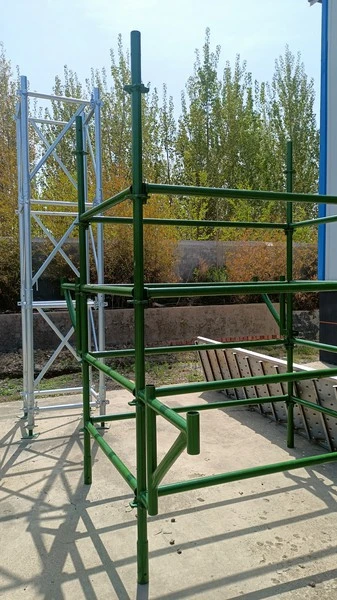
Understanding Rosette Ringlock Scaffolding: Components and Working Principles
Core Components You Need to Know
There are four main parts to the system: base plates, vertical standards (uprights), horizontal ledgers, and diagonal braces. At its core is the rosette disk, which is also known as a chrysanthemum disk. It has four small holes for connecting ledgers at 90° angles and four big holes for diagonal bracing at different angles. Together, these eight connection points make a node that is structurally stable and moves loads through the frame efficiently.
How Load Transfer Works?
Load moves up and down through the uprights and across and down through the ledger grid. The joint doesn't move when it's turned because the wedge-head locks straight into the rosette disk under gravity. Ringlock systems are different from older tube-and-clamp systems because each joint needs to be tightened by hand and checked again and again.
Material and Coating Standards
Quality rosette ringlock scaffolding systems use Q235B or Q355B steel that is 48.3 mm in diameter and 3.0–3.25 mm thick on the walls. Corrosion can't happen for 15 years or more after hot-dip galvanization (HDG) at 65–80 microns, even in chemical or marine settings. At GREEN FORMWORK, our factory in Shandong Xingrui uses HDG in line with EN 12811, AS/NZS 1576, and ANSI/SSFI SC100 policies.
Step-by-Step Installation Guide for Safe and Efficient Use
Pre-Installation Preparation
Start by making a map of the ground. Before putting down the base plate, the bearing ability of the floor or dirt must be checked. All new parts should be checked against dimensional tolerances. For example, the wedge-head geometry and rosette hole diameter must match exactly to keep the joint from moving. As stated in OSHA 1926 Subpart Q, the installation process should be supervised by a competent person. People working above 6 feet must wear fall-arrest harnesses that are connected to separate anchor points the whole time they are putting it together.
Erection Sequence
To build quickly and safely, follow these steps:
Step 1: Prepare the base plates and sole boards. Place the adjustable base jacks on the sole boards at the grid points that have been marked. To keep the column stable, keep extensions within the recommended limit set by the maker, which is usually 300 mm for the largest exposed thread.
Step 2: Lift the standards and ledgers for the first time. Place the bottom standard into the base jack spigot, then use your hands to drive the ledger wedge-heads into the rosette holes and finish with a single hammer blow. Before moving on, make sure the plumb is correct on two straight sides.
- Step 1 — Base plates and sole boards: Place adjustable base jacks on sole boards at marked grid points. Keep extensions within the manufacturer's rated limit (typically 300mm maximum exposed thread) to maintain column stability.
- Step 2 — First lift of standards and ledgers: Insert the bottom standard into the base jack spigot, then drive ledger wedge-heads into the rosette holes by hand and finish with a single hammer blow. Check plumb on two perpendicular faces before proceeding.
- Step 3 — Diagonal bracing: Attach face bracing at the first lift before adding the second lift of uprights. This step prevents racking during assembly. Bracing angles between 35° and 55° from horizontal give the best geometric stability.
- Step 4 — Decking and edge protection: Lay certified steel or aluminum planks onto the ledger grid. Fix toe boards and guardrails at 0.95m and 1.1m heights, meeting EN 12811 handrail requirements.
Before the next tier starts, a second qualified person must check that every wedge is fully placed and that no part is visibly deformed or corroded after each lift is finished.
Common Pitfalls to Avoid
Site mistakes like under-driven wedges, missing diagonal bracing on end bays, and base jacks that are too heavy happen a lot. According to data from separate load tests done by European scaffold research institutes, a wedge that is only partly driven can lower the joint shear capacity by as much as 40%. Use chalk or tape to mark each confirmed connection so inspectors can quickly see if the job is done.
Comparing Rosette Ringlock Scaffolding With Other Systems
Ringlock vs. Cuplock
Cuplock devices work with a rotating top cup that can lock up to four horizontals at the same time. They work quickly on patterns that repeat and are orthogonal. When the plan isn't straight, ringlock works better than cuplock because the eight-hole rosette can accept diagonals at any of four angles. This makes it the better choice for curved walls, tank scaffolding, and bridge soffit shoring.
Ringlock vs. Kwikstage
Rosette ringlock scaffolding Kwikstage works with a V-shaped blade that is pressed into a pressed steel cup. For low-rise residential projects, it's easy to put together, but it can only hold a smaller amount of weight. Ringlock systems can usually handle vertical loads of 60–80 kN per upright, which means they can be used for big civil shoring jobs where Kwikstage would need more uprights to make up for it.
Deciding Which System Fits Your Fleet
Ringlock's ability to work with parts from different manufacturers' 48.3mm-diameter systems can help rental companies manage fleets of vehicles that are used for different tasks. This can help them keep more inventory in one place, as long as they make sure that the wedge-head geometry and rosette thickness are the same before mixing inventory.
Maintenance Tips and Longevity Best Practices
Routine Inspection Protocol
Every upright should be checked for longitudinal straightness within a 0.2% tolerance (2mm per 1,000mm of length) after every rental cycle. Look for metal cracks, impact damage, and zinc covering loss on rosette disks. Bent wedges should not be used at all, because a deformed wedge won't be able to lock properly under gravity, which could cause the joint to fail without being noticed.
Cleaning and Storage
After being in a chemical or ocean area, wash the parts with clean water. Standards should be stacked horizontally on racks that keep them off the ground. This will keep water from pooling inside the pipe bore. Putting ledgers in labeled bays by length will cut down on picking mistakes during outbound shipping, which is something that warehouse managers always say is very important for efficiency.
Component Replacement Thresholds
Any upright that is deformed more than 0.5% from straight, any rosette disk that has cracks visible at the weld toe, and any wedge that can't be driven flush with a single hammer blow should all be replaced. Having a reliable supply chain for spare parts is important here; work with a supplier that keeps replacement parts in stock and doesn't have high minimum order quantities for restocking runs.
Procurement and Supplier Considerations for Quality and Reliability
Certification Verification
Not just a license number, but full test results with EN 12810/12811 load capacity data should be asked for. Ask for raw material mill certificates that say the chemistry is Q235B or Q355B and a galvanization inspection report that shows the thickness of the zinc coating at several test points across the batch.
Evaluating a Manufacturer's Production Capability
A reputable company that makes rosette ringlock scaffolding should have automatic welding lines that keep the depth of the welds the same from one production run to the next. On our 79,800 m² facility at GREEN FORMWORK (Shandong Xingrui Building Materials Co., Ltd.), we have 12 welding robots and 6 automatic welding lines. We are fully certified under ISO 9001, ISO 14001, and ISO 45001 for our quality, environmental, and occupational health management systems. Before a large order is approved, you can get samples with all the technical information.
Total Cost of Ownership vs. Unit Price
If you use a thin HDG covering (less than 45 microns) and charge less per unit, your fleet will last 5–7 years instead of 15+ years. When rental asset managers figure out how much insurance and depreciation costs are per renting cycle, the quality of the zinc finish is a direct factor in how profitable the fleet is. Documented HDG thickness should be given more weight than the headline price per piece.
Conclusion
A scaffold system can be an asset for a long time instead of a liability if it is set up correctly, maintained regularly, and bought in a smart way. The rosette ringlock system works better on complicated job sites because it has a bolt-free wedge connection, a multi-angle rosette shape, and is made of high-quality steel. If a procurement manager is building a rental fleet or updating an old one, the best way to lower operational risk and get better asset returns over time is to match the technical strengths of the fleet with a verified, approved rosette ringlock scaffolding maker.
FAQ
What is the maximum safe height for a ringlock scaffold?
Height is project-specific and requires a structural engineer's calculation. In practice, freestanding ringlock structures regularly reach 50m+ when diagonal bracing and tie patterns follow manufacturer engineering guidelines. Beyond that, a detailed scaffolding design drawing is mandatory.
Can I mix ringlock components from different suppliers?
Mixing is possible only if the wedge-head geometry, rosette disk thickness, and hole diameter are confirmed identical through physical go/no-go gauge testing. Do not assume compatibility based on pipe diameter alone.
How often should the scaffold be inspected on site?
Inspect before first use, after any modification, after adverse weather events, and at intervals not exceeding seven days during a project, per EN 12811 guidance.
Is HDG better than pre-galvanized coating?
Yes. HDG covers internal pipe surfaces and weld seams with 65–80 microns of zinc, providing approximately ten times the corrosion protection of pre-galvanized sheet, which typically deposits 10–20 microns only on the outer surface.
What welding standard applies to rosette disk attachment?
The rosette-to-pipe weld must withstand shear forces defined in EN 12810. Ultrasonic or radiographic weld testing is recommended for production batches destined for high-load applications.
Request a Quote from GREEN FORMWORK — Rosette Ringlock Scaffolding Supplier
Green Formwork sells industrial-grade ringlock support systems that are made to EN 128010 and ISO standards and have ISO 9001, ISO 14001, and ISO 45001 certifications to back them up. Our Q235 steel parts have an HDG coating that is 65 microns thick and will last for 15 years or more in a rental fleet. You can email our team at sdxingruiqp@126.com to ask for samples, technical information, or a cost plan for large orders that fits your timeline.
References
1. Scaffolding Industry Association (SIA) — Scaffold Erection and Safety Manual, 2021.
2. European Committee for Standardization — EN 12811-1: Temporary Works Equipment, Performance Requirements and General Design, 2003.
3. European Committee for Standardization — EN 12810-1: Facade Scaffolds Made of Prefabricated Components, 2003.
4. International Organization for Standardization — ISO 9001: Quality Management Systems Requirements, 2015.
5. OSHA — Scaffolding Safety Standards 29 CFR 1926 Subpart Q, U.S. Department of Labor, 2011.
6. Construction Industry Research and Information Association (CIRIA) — Temporary Works: An Introduction to Their Design, Use and Management, 2017.
Learn about our latest products and discounts through SMS or email