- English
- French
- German
- Portuguese
- Spanish
- Russian
- Japanese
- Korean
- Arabic
- Greek
- German
- Turkish
- Italian
- Danish
- Romanian
- Indonesian
- Czech
- Afrikaans
- Swedish
- Polish
- Basque
- Catalan
- Esperanto
- Hindi
- Lao
- Albanian
- Amharic
- Armenian
- Azerbaijani
- Belarusian
- Bengali
- Bosnian
- Bulgarian
- Cebuano
- Chichewa
- Corsican
- Croatian
- Dutch
- Estonian
- Filipino
- Finnish
- Frisian
- Galician
- Georgian
- Gujarati
- Haitian
- Hausa
- Hawaiian
- Hebrew
- Hmong
- Hungarian
- Icelandic
- Igbo
- Javanese
- Kannada
- Kazakh
- Khmer
- Kurdish
- Kyrgyz
- Latin
- Latvian
- Lithuanian
- Luxembou..
- Macedonian
- Malagasy
- Malay
- Malayalam
- Maltese
- Maori
- Marathi
- Mongolian
- Burmese
- Nepali
- Norwegian
- Pashto
- Persian
- Punjabi
- Serbian
- Sesotho
- Sinhala
- Slovak
- Slovenian
- Somali
- Samoan
- Scots Gaelic
- Shona
- Sindhi
- Sundanese
- Swahili
- Tajik
- Tamil
- Telugu
- Thai
- Ukrainian
- Urdu
- Uzbek
- Vietnamese
- Welsh
- Xhosa
- Yiddish
- Yoruba
- Zulu
Scaffolding Steel Pipe vs Aluminum: Which Is Best for Projects?
When choosing between a scaffolding steel pipe and an aluminum pipe for your next project, the short answer depends on load requirements, site conditions, and total cost over the pipe's working life. Steel delivers higher yield strength—Q235 carbon steel reaches ≥235 MPa—making it the default choice for heavy-duty building, bridge, and municipal work. Aluminum weighs roughly one-third as much, which helps on projects where speed of assembly and frequent relocation matter more than raw load capacity. Read on for a full breakdown.
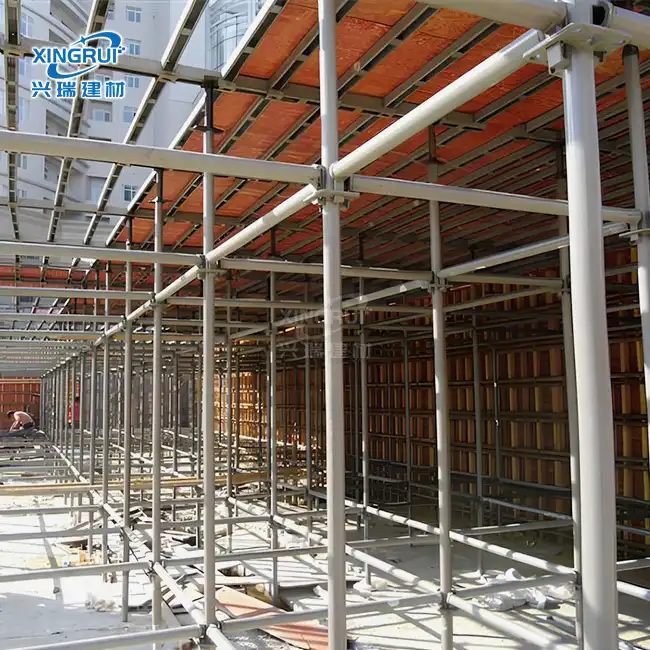
Understanding Scaffolding Materials – Steel Pipe and Aluminum Pipe
What Makes Steel Pipe a Go-To Structural Material?
Carbon steel tube scaffolding, with walls that are usually between 2.5 mm and 4 mm thick and an outer width of 48 mm, has been the standard around the world for decades. The tensile strength and weldability of Q235 grade steel stay the same over time. This means that producers can keep the chemical makeup and tight tolerances on sizes throughout every production run. Hot-dip galvanized (HDG) finishes add a 40–60 micron layer of zinc that covers weld seams and internal holes. This makes the finish last longer in industrial and coastal settings.
What Makes Aluminum Pipe a Competitive Option?
Aluminum alloy scaffolding steel pipe tube is usually 6000-series alloy and weighs about 2.7 kg/m, while steel at the same diameter weighs about 4.4 kg/m. That difference in weight makes it easier on workers' bodies and speeds up the assembly process. Aluminum also makes an inactive oxide layer that keeps it from rusting even if the surface isn't treated. Because of these qualities, it's good for fitting out interiors, repair platforms, and event stages where loads aren't too heavy.
Key Material Standards to Know
Both products have to follow well-known worldwide rules. EN 39, BS 1139, and AS 1576 are often used when talking about steel scaffolding pipe. The rules for aluminum tubes are EN 1298 and ANSI/SSFI SC100. If a supplier has ISO 9001 certification, and even better if they have ISO 14001 and ISO 45001 certification as well, that means that a third party has checked their quality management, environmental controls, and health and safety procedures at work.
Key Performance and Safety Comparisons Between Steel and Aluminum Pipes
Performance data is the clearest way to separate marketing claims from field reality.
Load-Bearing Capacity
Steel wins this category by a wide margin. A standard Q235 steel tube at Φ48mm × 3.5mm wall can carry an allowable axial compressive load well above what most aluminum equivalents achieve at the same diameter. For high-rise facade scaffolding or bridge shoring where pipes carry both vertical and lateral forces simultaneously, this structural margin is non-negotiable. Aluminum tubes are generally rated for lighter distributed loads and work best where single-story or low-elevation access is required.
Durability and Maintenance Demands
Galvanized steel tube scaffolding, when managed well, can cycle through 10–15 years of reuse in moderate climates. The main maintenance task is periodic inspection for corrosion at cut ends and mechanical damage from repeated assembly. Aluminum needs far less corrosion management but is more susceptible to surface denting and scratching, which can affect coupler grip over time. On high-turnover rental fleets, steel's repairability—ends can be re-cut cleanly—gives it a practical edge.
Safety and Compliance
Both materials must meet site-specific safety codes, but steel scaffolding tube has deeper regulatory coverage in the United States under OSHA 29 CFR 1926 Subpart Q. Dimensional consistency is a safety requirement, not a preference: circularity within ±0.5 mm ensures right-angle and swivel couplers seat correctly without slippage. Manufacturers who run automated welding lines and computerized cutting systems are better positioned to hold these tolerances batch after batch.
Economic Considerations and Procurement Insights
Upfront Price vs. Total Cost of Ownership
Scaffolding steel pipe currently trades at a lower per-kilogram price than aluminum alloy in most global markets. For procurement teams buying by the ton—especially those tracking billet futures on platforms like Mysteel—the raw material cost differential is significant at scale. However, aluminum's lighter weight reduces freight cost per linear meter and lowers labor hours per assembly cycle. Over a multi-year rental fleet, those savings can partially offset the higher purchase price.
Supply Chain and Lead Time Factors
Steel scaffolding pipe is produced at scale by manufacturers with large automated production bases, which supports stable lead times for bulk orders. Shandong Xingrui Building Materials Co., Ltd. operates from a 79,800 m² production base in Rizhao, Shandong, with 12 welding robots and 6 automatic welding lines, enabling consistent output for large-volume orders across more than 100 countries. Aluminum tube suppliers tend to have shorter production runs and less inventory depth, which can create procurement risk during peak construction seasons.
Custom Sizing and Order Flexibility
Here are the order customization factors that matter most to procurement managers:
- Wall thickness options (2.5 mm to 4.0 mm) allow buyers to match structural specifications without over-engineering—and overpaying—for lighter-duty applications.
- Custom cut lengths reduce on-site waste and simplify logistics for projects with non-standard bay dimensions.
- Surface treatment choice—galvanized versus anti-rust oil treatment—lets rental companies balance upfront cost against long-term corrosion protection based on their storage conditions.
These options make it practical to align each order precisely with project scope, which is especially useful for rental companies managing asset replenishment at different inventory turnover rates.
Application-Specific Guidance: When to Choose Steel or Aluminum Pipes?
The right material choice follows directly from what the project actually demands.
Heavy Construction: Steel Is the Default
For building construction, municipal infrastructure, and bridge shoring, steel tube scaffolding is the standard choice because it handles combined axial compression and lateral support without deformation. Its compatibility with tube-and-coupler and frame scaffolding systems means it integrates with existing rental fleet inventory, reducing the need for specialized connectors. Projects that require high turnover of scaffolding assets—assembled, stripped, and reused across multiple floors—benefit from steel's repairability and reusability over many cycles.
Lightweight and Modular Applications: Aluminum Earns Its Place
Scaffolding steel pipe tube is well-suited for interior renovation, facade maintenance on low-rise structures, and temporary event platforms where workers move equipment frequently. Its weight advantage cuts physical fatigue and speeds up erection times, which directly reduces labor costs on projects where daily relocation is the norm. In chemical plants or offshore facilities where atmospheric corrosion is aggressive, aluminum's natural oxide layer provides protection that standard (non-galvanized) steel cannot match without additional treatment.
Hybrid Systems: Using Both Materials Together
Some large-scale projects use steel for primary vertical standards and aluminum for horizontal transoms or working platforms, balancing structural strength with weight savings where each matters most. This approach is gaining traction in modular scaffolding systems and requires suppliers who can deliver both materials to consistent dimensional standards so connections remain secure across the full assembly.
Installation, Maintenance, and Safety Best Practices
It doesn't matter how well you choose to buy something if you don't follow the instructions for installation and upkeep on the job site.
Handling and Assembly Protocols
For large bundles of steel tube, you need the right tools and to store them carefully so that the ends don't get damaged. Computerized cutting systems make pipes with square-cut ends that don't have any burrs. These pipes connect to couplers cleanly and lower the risk of the "mushrooming" effect that happens when pipes are hit over and over again while they are being taken apart. Aluminum tube is easier to move by hand, but you have to be careful not to damage it when you drop it, because that can change the shape of the pipe.
Corrosion Prevention and Inspection Schedules
Scaffolding made of steel should be checked after each big project cycle. Some important things to look for during a check are wall thickness loss at the ends, surface rust that goes through the galvanizing, and bend damage along the length of the pipe. Cold galvanizing solution should be used to treat the ends of galvanized lines that have been cut on-site. Even though aluminum tube doesn't rust in the usual sense, it can be cleaned every so often to get rid of salt layers that build up in coastal areas.
Certification and Training Requirements
OSHA and most foreign safety codes say that people who put up scaffolding must get official training and that scaffolding parts must have paperwork that can be used to find out when they were made. With every package, buyers should ask for mill test reports that prove the yield strength, chemical makeup limits for phosphorus and sulfur, and records of dimensional inspections. Suppliers with ISO 9001, ISO 14001, and ISO 45001 certifications keep track of the written steps needed to make sure this information is always correct and on time.
Conclusion
Aluminum and scaffolding steel pipe support lines are both useful, but they do different things. Q235 steel tube is still the most cost-effective, structurally proven choice for heavy building, bridge shoring, and rental companies with a lot of vehicles coming and going. It is also widely supported by regulators. Aluminum is useful in applications that need to be light, modular, and resistant to corrosion. This is because it saves weight, which means lower costs for labor and shipping. You shouldn't always use the same material. Instead, you should match the material's properties to the load, environment, and budget needs of the project. When buying in bulk, it's just as important for buyers to work with a maker who can show proof of material quality at every stage of production as it is to choose the right material.
FAQ
Is steel scaffolding pipe stronger than aluminum?
Yes. The minimum yield strength of Q235 carbon steel is 235 MPa, while the minimum yield strength of common 6061-T6 aluminum alloy is about 276 MPa. However, because aluminum is less dense, a steel tube with the same diameter and wall thickness can hold more weight when compressed in most scaffolding configurations. Steel is still the best material for building structures that need to hold heavy horizontal loads.
How do I compare lifecycle costs between the two materials?
Not only the buying price, but also the total cost per use cycle. Include freight (aluminum is lighter, so the cost per linear meter is lower), labor hours for putting it together and taking it apart, costs for repairs and replacements, and the value of the scrap that is left over. Because steel is cheaper per ton and can be reused a lot, it is often a better choice for a 10-year rental fleet.
Can I order custom lengths and wall thicknesses?
Yes. Shandong Xingrui is a reputable company that makes scaffolding steel pipes. They can take unique orders for any length, with wall thicknesses ranging from 2.5 mm to 4.0 mm and galvanized or non-galvanized surface processes as options. Before you place a bulk order, send us your engineering plans or project specs to make sure the product will work.
What documents should I request from a supplier?
Ask for the mill test certificate (MTC) that shows the chemical make-up and mechanical test results, as well as a report on the dimensions, and copies of the supplier's ISO 9001 and CE certifications. These papers make it possible to compare quality checks that come in with the stated requirements.
Partner with GREEN FORMWORK for Your Next Scaffolding Steel Pipe Order
With help from Shandong Xingrui Building Materials Co., Ltd., GREEN FORMWORK sells enterprise-grade scaffolding steel pipe to people in over 100 countries. At our Rizhao production base, we ship our Q235 welded tube, which has a diameter of 48mm and walls that are 2.5 mm to 4 mm thick. It is ISO 9001 and CE approved and has stable lead times and full batch documentation. You can get samples, and our technical team is ready 24/7 to help you meet specifications. To get a price from a reliable scaffolding steel pipe seller, email our team at sdxingruiqp@126.com.
References
1. Construction Industry Research and Information Association (CIRIA) – Scaffolding Safety Guide, CIRIA, 2019.
2. OSHA Technical Manual: Scaffolding, Occupational Safety and Health Administration, U.S. Department of Labor, 2021.
3. EN 39: Loose Steel Tubes for Tube and Coupler Scaffolds – Technical Delivery Conditions, European Committee for Standardization (CEN), 2001.
4. Steel Structures: Practical Design Studies, MacGinley, T.J., Taylor & Francis, 2018.
5. Aluminum Structures: A Guide to Their Specifications and Design, Kissell, J.R. & Ferry, R.L., Wiley, 2002.
6. ISO 9001:2015 Quality Management Systems – Requirements, International Organization for Standardization, 2015.
Learn about our latest products and discounts through SMS or email