- English
- French
- German
- Portuguese
- Spanish
- Russian
- Japanese
- Korean
- Arabic
- Greek
- German
- Turkish
- Italian
- Danish
- Romanian
- Indonesian
- Czech
- Afrikaans
- Swedish
- Polish
- Basque
- Catalan
- Esperanto
- Hindi
- Lao
- Albanian
- Amharic
- Armenian
- Azerbaijani
- Belarusian
- Bengali
- Bosnian
- Bulgarian
- Cebuano
- Chichewa
- Corsican
- Croatian
- Dutch
- Estonian
- Filipino
- Finnish
- Frisian
- Galician
- Georgian
- Gujarati
- Haitian
- Hausa
- Hawaiian
- Hebrew
- Hmong
- Hungarian
- Icelandic
- Igbo
- Javanese
- Kannada
- Kazakh
- Khmer
- Kurdish
- Kyrgyz
- Latin
- Latvian
- Lithuanian
- Luxembou..
- Macedonian
- Malagasy
- Malay
- Malayalam
- Maltese
- Maori
- Marathi
- Mongolian
- Burmese
- Nepali
- Norwegian
- Pashto
- Persian
- Punjabi
- Serbian
- Sesotho
- Sinhala
- Slovak
- Slovenian
- Somali
- Samoan
- Scots Gaelic
- Shona
- Sindhi
- Sundanese
- Swahili
- Tajik
- Tamil
- Telugu
- Thai
- Ukrainian
- Urdu
- Uzbek
- Vietnamese
- Welsh
- Xhosa
- Yiddish
- Yoruba
- Zulu
How to Import a Cuplock Scaffolding System Without Costly Delays
Importing a cuplock scaffolding system for large-scale infrastructure projects—bridges, elevated highways, power plants—demands more than finding a low price. You need verified steel grades, consistent node geometry, full certification packages, and a supplier who can ship hundreds of tonnes on schedule. This guide walks procurement managers and regional rental operators through every stage of the import process, from supplier qualification to port clearance, so your modular shoring system arrives on time, on spec, and ready to carry load.
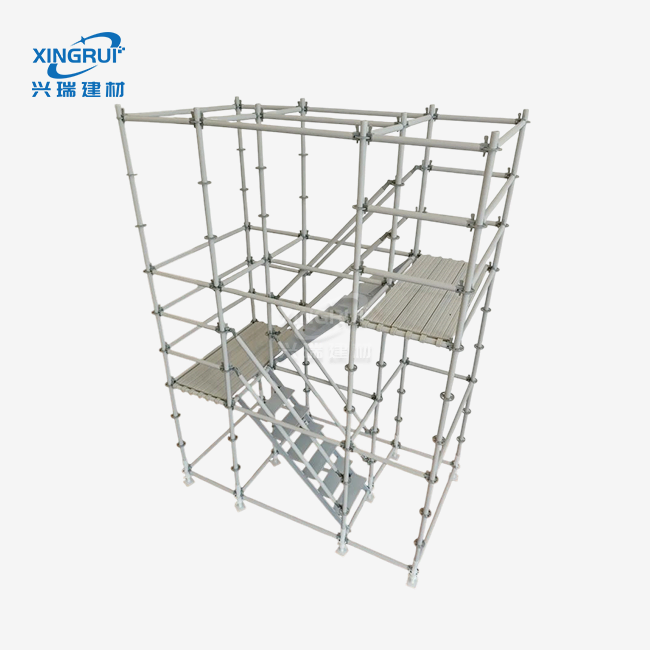
Understanding the Common Challenges in Importing Cuplock Scaffolding Systems
It's not always easy to get a large shipment of bowl-lock scaffolding across foreign lines. There are three types of problems that cause the most expensive delays.
Documentation Gaps and Certification Compliance
In the Middle East, Africa, and Southeast Asia, customs officials often hold shipments that don't have all of the necessary paperwork. A business invoice, packing list, bill of lading, Certificate of Origin, mill test results for Q235 steel, and third-party inspection certificates are some of the documents that are usually needed. If you miss even one paper, your goods could be held up at the port for weeks.
Logistical Bottlenecks in Heavy-Equipment Shipping
The parts of a scaffold are thick and heavy. About 20–22 tons of upright tubes and ledgers can fit in a standard 20-foot container. It takes skilled freight management to coordinate booking a ship, getting an overland truck to the job site, and unloading a crane all at the same time. When you book too late during busy shipping times, freight costs go up and lead times get two to four weeks longer.
Inconsistent Supplier Reliability and Order Specification Errors
Parts from off-brand sources often come with casting specs that aren't tight for a cuplock scaffolding system. It is very dangerous for people when the upper and lower bowl buckles don't have the same diameter. This is because the friction-lock will break under load. If you don't give full details when you place your order, like the lengths of the ledgers or the sizes of the base jack threads, production will have to be changed in the middle of the run, which will delay your shipping date.
Key Principles for a Smooth Cuplock Scaffolding Import Process
Stopping delays starts before you even send out a buy order. If you are buying 50 tons or 500 tons, the following rules still apply.
Validate Supplier Certifications Before Committing
As a minimum, you should ask for ISO 9001 quality control certificates, ISO 14001 environmental certificates, and CE approval. Ask for the real certificate numbers and check them with the organization that issued the certificates. A reputable company that makes cuplock scaffolding will also give you BS EN 12811-1 compliance test reports that show how well the scaffolding handles both vertical and horizontal loads.
Align Order Specifications with Engineering Requirements
Your structural engineer should tell you the exact diameter of the upright tube (¥48×3.0mm is the standard), the wall thickness, the bowl buckle spacing (600mm welded intervals are normal), and the surface treatment. For coastal and tropical areas, hot-dip galvanizing at 60–80 microns is enough to protect against corrosion. Before production starts, make sure that these details are written into the purchase order.
Partner with Freight Specialists Who Handle Construction Materials
Most general freight forwarders don't know how to use heavy modular scaffolding. Pick a forwarder who knows about HS code 7308.20, the rules at the place where your goods will be sent, and the paperwork that the customs office in the country you want to send them to needs. A specialist cuts down on the time it takes to clear goods and knows which pre-shipment inspection companies are accepted in the area.
Step-by-Step Guide: How Does Cuplock Scaffolding Work and How to Import It Efficiently
The bowl-lock device is beautiful because it is so simple. A set bottom cup is welded to the pole every 600 mm. A top cup slides over the ledger end fitting, and one hammer blow rotates and locks up to four horizontal members at the same time. There are no bolts, wedges, or loose fittings left on the job site. This single-action lock is what makes the system up to 40% easier to put together than tube-and-clamp ways.
Place the Order with Complete Component Lists
Make a list of all the different types of parts for a cuplock scaffolding system, such as diagonal braces, base jacks, top jacks, U-head plates, and uprights by length and width. Give amounts in both tons and pieces. This helps the plant plan when to get the raw materials, set up the robotic welding lines, and check the number of containers. All of these things directly affect when you ship your package.
Conduct Pre-Shipment Inspection Before Loading
Get a third-party testing company like SGS, Bureau Veritas, or something similar to look over the finished batch before the container is shut. Check the sample load test results, galvanized thickness, node weld quality, and the limits for size. It is much cheaper to catch a nonconformance before shipping than to reject goods at the port of destination.
Plan Post-Arrival Storage and Component Segregation
When the uprights are delivered, they should be stored horizontally on wooden carriers to keep them from bending. Sort bowl-lock cups by type and name the bins where they are kept. A quick check of 5–10% of the pieces for surface coating and cup movement during the incoming inspection makes sure that the shipment matches the pre-shipment report and immediately reports any damage that happened during transit.
Comparing Cuplock Scaffolding with Other Systems for Procurement Decisions
Procurement teams in the Middle East and Southeast Asia regularly evaluate bowl-lock systems against ringlock and frame scaffolding. Each system has a legitimate application range; the decision comes down to project type, rental market demand, and import logistics.
Cuplock vs. Ringlock: Load-Bearing and Rental Value
Ringlock allows connections at eight angles, which suits complex geometric access structures. Cuplock concentrates load through a centralized node point, making it the preferred choice for heavy formwork shoring under concrete slabs and bridge decks. In markets like the UAE, East Africa, and Southeast Asia, cuplock components circulate widely in the rental fleet, sustaining strong residual value for regional rental operators.
Cuplock vs. Frame Scaffolding: Modularity and Transport Efficiency
Frame systems are faster to erect for simple façade access but their fixed-bay geometry limits adaptability. Cuplock's variable ledger lengths adjust to irregular column grids and sloped terrain. Frame scaffolding also nests poorly in containers, reducing packing density and raising freight cost per tonne compared to tube-based modular systems.
Choosing a Certified OEM Manufacturer
Mixing components from different manufacturers is an acknowledged industry risk for a cuplock scaffolding system. Per BS 5975 guidance, compatibility testing is required when cup castings from different sources are combined, because minor casting variances compromise locking integrity. Sourcing a complete system from a single certified OEM eliminates this risk and simplifies customs documentation by presenting a single country of origin.
Best Practices to Avoid Costly Import Delays for Cuplock Scaffolding Systems
After handling hundreds of international shipments, there is a set of steps that always work to keep deadlines.
These steps will always keep the buying of bulk scaffolding from being delayed:
- Lock specifications at the contract stage. Ambiguous specs cause mid-production changes. Include tube OD, wall thickness, cup spacing, surface treatment type, and galvanizing micron requirement in the signed purchase agreement.
- Request a production schedule with milestones. A credible supplier provides a rolling production plan showing raw material cutting, welding completion, galvanizing bath dates, and QC sign-off. Review this weekly for the first shipment.
- Arrange the Letter of Credit or T/T terms early. LC preparation typically takes five to ten business days at your bank. Delays in payment instrument issuance push back production start dates and, consequently, your vessel booking.
- Use digital shipment tracking from the factory gate. Request container seal numbers and booking confirmations the day containers are loaded. Live vessel tracking tools let your site team plan unloading equipment and labour in advance.
When these steps are used regularly for future orders, the learning curve from the first shipment is turned into a low-risk, repeatable buying cycle. When procurement teams write down the due date for each shipment, they create an internal measure that finds differences early on and keeps big moving contracts on track.
Conclusion
You can import a cuplock scaffolding system quickly if you base the process on three things: confirmed source credentials, clear order specs, and experienced logistics coordination. Before production starts, write down all the parameters, make sure that all pre-shipment inspections happen, and make sure that the plan for your Letter of Credit matches the schedule for production at the factory. When regional rental companies and infrastructure contractors follow these steps, they consistently report fewer holds at the port, fewer problems on-site, and better long-term relationships with their suppliers.
FAQ
What documents are essential before importing a cuplock scaffolding system?
You should make a business invoice, a packing list, a bill of lading, a Certificate of Origin, steel mill test reports (that prove the Q235 grade), and a third-party pre-shipment inspection certificate at the very least. There are also ports in Africa and the Middle East that need a SONCAP or PVOC certificate. Before production starts, make sure you and your customs broker understand the specific needs of the destination.
How do I verify that a supplier's bowl-lock nodes meet load requirements?
Ask for BS EN 12811-1 or an equivalent load test report from a recognized lab. Not just a promise of compliance; ask for real test load numbers. A reputable company that makes cuplock scaffolding keeps test records on file and can give them to you within one business day.
What causes node slip, and how do I screen for it?
Node slip happens when the top cup casting diameter isn't right or when the cup lug is curved. Tell the tester to do a hammer-lock test on a random sample of 50 nodes during the pre-shipment check. If a cup doesn't fully seat and hold up against a 50 kg side test load, the whole batch should be thrown out.
Which delivery terms reduce port clearance risk?
FOB (Free On Board) lets your chosen forwarder handle both freight and customs, so your team can work directly with the shipping line. CIF is good for buyers who want the seller to handle the freight, but make sure that the carrier the seller chooses is a good one for getting to your destination port.
Connect with GREEN FORMWORK for Your Next Bulk Scaffolding Order
Shandong Xingrui Building Materials Co., Ltd. is behind GREEN FORMWORK. They are a confirmed maker of cuplock scaffolding systems that covers 79,800 m² and has 12 welding robots, ISO 9001, ISO 14001, and CE certifications, as well as a track record in more than 100 countries. If you ask, we can send you samples of our Q235 steel bowl-lock systems along with full paperwork packages and third-party testing support. To get a quote right away, email our team at sdxingruiqp@126.com.
References
1. British Standards Institution. BS EN 12811-1: Temporary Works Equipment — Scaffolds: Performance Requirements and General Design. BSI, 2003.
2. International Organization for Standardization. ISO 9001: Quality Management Systems — Requirements. ISO, 2015.
3. Standards Australia / Standards New Zealand. AS/NZS 1576: Scaffolding — General Requirements. SAI Global, 2010.
4. Health and Safety Executive (HSE). Working at Height: A Brief Guide. HSE Books, 2014.
5. International Chamber of Commerce. Incoterms® 2020: ICC Rules for the Use of Domestic and International Trade Terms. ICC Publishing, 2019.
6. Construction Industry Research and Information Association (CIRIA). Temporary Works: An Introduction to Their Procurement and Management. CIRIA Report C760, 2016.
Learn about our latest products and discounts through SMS or email