- English
- French
- German
- Portuguese
- Spanish
- Russian
- Japanese
- Korean
- Arabic
- Greek
- German
- Turkish
- Italian
- Danish
- Romanian
- Indonesian
- Czech
- Afrikaans
- Swedish
- Polish
- Basque
- Catalan
- Esperanto
- Hindi
- Lao
- Albanian
- Amharic
- Armenian
- Azerbaijani
- Belarusian
- Bengali
- Bosnian
- Bulgarian
- Cebuano
- Chichewa
- Corsican
- Croatian
- Dutch
- Estonian
- Filipino
- Finnish
- Frisian
- Galician
- Georgian
- Gujarati
- Haitian
- Hausa
- Hawaiian
- Hebrew
- Hmong
- Hungarian
- Icelandic
- Igbo
- Javanese
- Kannada
- Kazakh
- Khmer
- Kurdish
- Kyrgyz
- Latin
- Latvian
- Lithuanian
- Luxembou..
- Macedonian
- Malagasy
- Malay
- Malayalam
- Maltese
- Maori
- Marathi
- Mongolian
- Burmese
- Nepali
- Norwegian
- Pashto
- Persian
- Punjabi
- Serbian
- Sesotho
- Sinhala
- Slovak
- Slovenian
- Somali
- Samoan
- Scots Gaelic
- Shona
- Sindhi
- Sundanese
- Swahili
- Tajik
- Tamil
- Telugu
- Thai
- Ukrainian
- Urdu
- Uzbek
- Vietnamese
- Welsh
- Xhosa
- Yiddish
- Yoruba
- Zulu
Steel Formwork Construction: How to Import Quality Systems Safely
Importing steel formwork construction systems for large-scale infrastructure projects demands more than a competitive price. It requires verified supplier credentials, compliance documentation, and a procurement strategy that protects your project timeline. Whether you are managing a government highway project in the Middle East or a commercial high-rise in Southeast Asia, the quality of your modular formwork panels directly determines concrete finish, cycle efficiency, and overall structural integrity. This guide walks procurement professionals through every critical decision point—from supplier evaluation to customs clearance—with practical, field-tested insight.
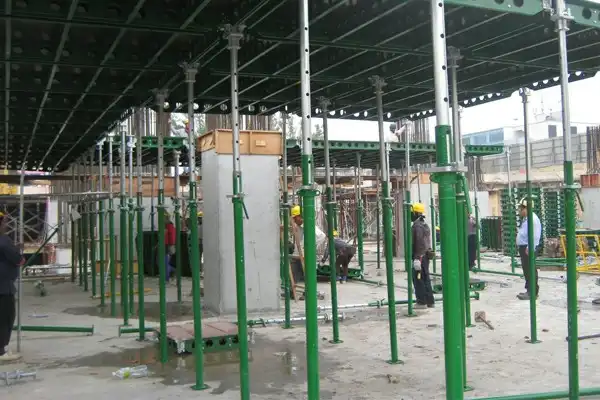
Understanding Steel Formwork Construction Essentials
Steel formwork is a temporary mold system made of stiffeners and high-strength steel plates that hold new concrete in place until it reaches the right level of compressive strength. It mostly took the place of wood and plywood in heavy infrastructure because it doesn't absorb water, has fewer surface flaws, and keeps its measurements even when there is a lot of hydraulic pressure.
Key Structural Characteristics
The best things about a good steel panel system are how hard and smooth the surface is. Panels made from Q235 quality carbon steel have a high amount of elasticity, which means they don't bend too much during dips. A surface flatness limit of ≤2mm makes sure that the joints are tight, stops slurry leaks, and gives the concrete a smooth finish that doesn't need much post-processing. Standard panel sizes, like 1500x300mm and 1200x200mm, allow for modular assembly in wall sections, columns, slabs, and beams.
Construction Workflow and Safety Protocols
As important as the materials are, the way they are installed is also very important. Before the concrete is put down, the panels are lined up, locked together with bolts, checked to make sure they are straight and square, and supported. For non-load-bearing parts, stripping usually happens when the concrete hits a minimum strength of 1.2 MPa. This is checked by strength tests on-site instead of at set times. To keep the surface covering in good shape and make the panels last longer than 50 uses, they need to have cement dust cleaned off, deformation checked, and a release agent reapplied after each use.
How to Import Quality Steel Formwork Systems Safely
Buying concrete formwork systems around the world comes with some risks, such as inconsistent batches, late shipments, and suppliers who can't support technical drawing reviews. These risks are greatly reduced by using a structured import framework, steel formwork construction being a prime example of a system that benefits from such disciplined procurement practices.
Supplier Credential Verification
The first step is to get licensing paperwork. Steel formwork suppliers you can trust should have ISO 9001 for quality control, ISO 14001 for environmental compliance, and ISO 45001 for health and safety at work. For projects in places that need European building standards, CE certification under EN 12812 is just as important. Before placing a trial order, buyers should ask SGS or Bureau Veritas for inspection reports from a third party. A factory audit, which can be done in person or through a video walkthrough, makes sure that the production equipment listed in technical papers exists and works at the capacity that was stated.
A real-life example from a European EPC contractor shows how important this is. The procurement team put in an order for two containers after asking for a video factory audit and looking over full weld quality NDT reports. The panels showed up on time and passed load tests on-site. Within 60 days, the builder increased the size of the job to its full size. Systematic checks were needed before the first dollar was paid.
Logistics and Customs Planning
When buying a lot of formwork, the terms of the freight are very important. Talk about FOB terms at the starting port so that you can choose the freight and ship insurance. Make sure the plant is close to a port that has direct shipping lines to where you want to go. Shandong Xingrui Building Materials Co., Ltd. is based in Rizhao, Shandong Province. Rizhao has its own seaport, which lowers the risk of shipping goods through the inland area and helps keep loading schedules for ships consistent. Pre-shipment checks of the packing and photographic records help protect against damage claims and make it easier to clear customs in the target country.
Comparing Steel Formwork with Other Formwork Solutions
Picking between steel, aluminum, wood, and plastic formwork relies on how often the job needs to be done, how much weight needs to be carried, and the total cost of ownership, not just the price per unit.
Here is a useful review of the most common types of formwork used in business-to-business building projects:
- Steel vs. Timber: Wood absorbs water, bends after being used many times, and usually only lasts for 10 uses. Steel plates that can be used more than 50 times have a much lower cost-per-pour on high-rise or building projects that are done over and over again.
- Steel vs. Aluminum: Aluminum is lighter and easier to work with by hand, but it doesn't hold up as well against heavy concrete loads. For very thick pours in bridge piers, core walls, and deep supporting structures, steel formwork is better.
- Steel vs. Plastic: Plastic panel systems work well for light domestic pours but aren't strong enough for government building projects where pour rates are high and hydrostatic pressures are very high.
There is a meaningful difference between these differences and procurement strategy. Steel formwork construction always gives better value for money over the course of a project, especially for projects that have to be repeated a lot and have strict structural tolerances. This is exactly the type of work that most EPC contractors in the Middle East and Africa do.
Navigating the Procurement Process for Steel Formwork
Finding a good steel formwork maker takes more than just looking at prices on a worksheet. It needs to look at production capacity, the ability to support drawing, and the stability of the supply chain.
Evaluating Manufacturer Capability
Look for companies that have automatic production lines and make sure quality control is done at every step of the production process. Shandong Xingrui has a workshop that is more than 40,000 square meters and has 4 cold roll forming lines and 12 welding robots. They are helped by 180 skilled techs. This infrastructure allows for consistent batch quality and the ability to meet large orders in short amounts of time, which is a must when project windows get smaller after the contract is awarded.
Custom Fabrication and Sample Testing
Most of the time, standard panel sizes are fine, but custom profiles are often needed for big infrastructure projects. A good steel formwork provider will take customer plans and make manufactured panels that meet the needs of the customer, even if those needs non-standard radii for cylindrical poles or tapered sections for bridge pylons. Before committing to a bulk order, you should always ask for physical samples. Checking diagonal symmetry, weld depth, bolt hole alignment, and coating adhesive on samples in three dimensions is a much more reliable way to find out about batch quality than just looking at catalogs.
Purchase vs. Rental Considerations
When procurement teams are working on multiple projects at once, it's usually cheaper to buy instead of rent, especially if they can find a trusted source that offers more than 50 pours of reuse. Cleaning, labor, storage, and maintenance costs should be added up and compared to the purchase price that was spread out over each pour cycle. Steel formwork construction fits squarely into this calculation, as its exceptional durability and high reuse potential make the buy-versus-rent decision heavily favor purchasing when long-term project portfolios are involved.
Ensuring Long-Term Value: Maintenance and Safety Standards
A modular panel system that is well taken care of will keep its shape and structural integrity for many reuses. Maintenance practices are necessary to protect the investment, so you can't skip them.
After the pour, the surface should be checked for deformation, weld cracks should be found, and cut edges should be inspected for corrosion. Panels with dings that are bigger than the allowed limits need to be fixed or taken out of service where they can carry weight. In humid tropical or seaside areas, electrostatic powder coating sprayed in Xingrui's special spraying workshop is much more resistant to rust than regular paint.
Safety at every level is based on following the rules. In places where EN 12812 compliance is needed, projects need both documented load test certificates and CE markings. The ISO 9001 certification shows that the production quality management system has been checked by a third party. This is now a requirement that many foreign project owners make their formwork suppliers follow by contract.
Conclusion
When procurement professionals follow a methodical approach, they can import reliable concrete forming systems for infrastructure projects: they check licenses, check output capacity, test samples, and plan logistics through a source close to the port. Steel formwork construction systems made from Q235 carbon steel, produced under ISO 9001, ISO 14001, and ISO 45001 guidelines, and backed up by real technical drawing capabilities, are the standard that suppliers should follow. Investing in due diligence during the sourcing stage always pays off more than the cost of mistakes, delays, or poor quality on site.
FAQ
What certifications should a steel formwork supplier hold for international projects?
At the very least, sellers should have ISO 9001, ISO 14001, and ISO 45001 certificates, as well as CE certificates in cases where European building standards apply. An extra layer of security is added by a third-party inspection from SGS or Bureau Veritas.
How many times can quality steel formwork panels be reused?
Panels made from Q235 carbon steel that have been properly electrostatically coated and maintained usually last longer than 50 times. If the maintenance instructions are always followed, high-quality systems from well-known brands can work reliably for a lot longer than that.
Can suppliers fabricate panels from customer drawings?
Yes, reputable steel formwork providers will work with drawings given by the customer to make custom panels for non-standard column sizes, curved surfaces, and unique infrastructure shapes. Before placing bulk orders, you should always make sure that this is possible by producing a sample.
What FOB terms should buyers negotiate?
FOB starting port is the norm. This gives the buyer power over marine insurance and freight selection, which lowers the range of landed costs and makes it easier to handle claims if damage happens during shipping.
How can I check a Chinese manufacturer's production capacity remotely?
Ask for a live video check of the plant that includes the production floor, quality control stations, robotic welding lines, and storage for finished goods. Extra paperwork like equipment lists, production schedules, and audit reports from a third party provide proof that what was said is true.
Partner with GREEN FORMWORK for Reliable Steel Formwork Construction Supply
GREEN FORMWORK, which is backed by Shandong Xingrui Building Materials Co., Ltd., sends certified steel formwork construction systems to EPC companies in more than 100 countries. Our Q235 panels are made by 12 welding robots and have a smoothness accuracy of ≤2mm. They are certified by ISO 9001, ISO 14001, and ISO 45001, and they are CE compliant. We also offer samples and full technical support. You can email our team at sdxingruiqp@126.com or go to sdxingrui.com to get project details or a quote right away.
References
1. American Concrete Institute. ACI 347R-14: Guide to Formwork for Concrete. ACI, 2014.
2. British Standards Institution. BS EN 12812: Falsework — Performance Requirements and General Design. BSI, 2008.
3. Construction Industry Research and Information Association. CIRIA Report C633: Formwork — A Guide to Good Practice. CIRIA, 2012.
4. International Organization for Standardization. ISO 9001:2015 Quality Management Systems — Requirements. ISO, 2015.
5. Hurd, M.K. Formwork for Concrete. 7th ed., American Concrete Institute, 2005.
6. Peurifoy, R.L., and Oberlender, G.D. Formwork for Concrete Structures. 4th ed., McGraw-Hill, 2011.
Learn about our latest products and discounts through SMS or email