- English
- French
- German
- Portuguese
- Spanish
- Russian
- Japanese
- Korean
- Arabic
- Greek
- German
- Turkish
- Italian
- Danish
- Romanian
- Indonesian
- Czech
- Afrikaans
- Swedish
- Polish
- Basque
- Catalan
- Esperanto
- Hindi
- Lao
- Albanian
- Amharic
- Armenian
- Azerbaijani
- Belarusian
- Bengali
- Bosnian
- Bulgarian
- Cebuano
- Chichewa
- Corsican
- Croatian
- Dutch
- Estonian
- Filipino
- Finnish
- Frisian
- Galician
- Georgian
- Gujarati
- Haitian
- Hausa
- Hawaiian
- Hebrew
- Hmong
- Hungarian
- Icelandic
- Igbo
- Javanese
- Kannada
- Kazakh
- Khmer
- Kurdish
- Kyrgyz
- Latin
- Latvian
- Lithuanian
- Luxembou..
- Macedonian
- Malagasy
- Malay
- Malayalam
- Maltese
- Maori
- Marathi
- Mongolian
- Burmese
- Nepali
- Norwegian
- Pashto
- Persian
- Punjabi
- Serbian
- Sesotho
- Sinhala
- Slovak
- Slovenian
- Somali
- Samoan
- Scots Gaelic
- Shona
- Sindhi
- Sundanese
- Swahili
- Tajik
- Tamil
- Telugu
- Thai
- Ukrainian
- Urdu
- Uzbek
- Vietnamese
- Welsh
- Xhosa
- Yiddish
- Yoruba
- Zulu
TOP 5 Benefits of Lightweight Steel Formwork for Contractors
Lightweight steel formwork has become one of the most practical choices for contractors working on civil buildings, mid-rise structures, and municipal projects. At its heart, the system employs cold-rolled steel panels, each weighing no more than 22 kg, which can be carried and installed by a single person without the need for crane support. The steel shuttering systems provide real advantages in labour efficiency, project cost management, worker safety and environmental performance, with over 40 reuse cycles per panel, clean surface finishes and tight joint sealing. This article discusses the five advantages that are most important to procurement managers and site engineers making sourcing choices today.
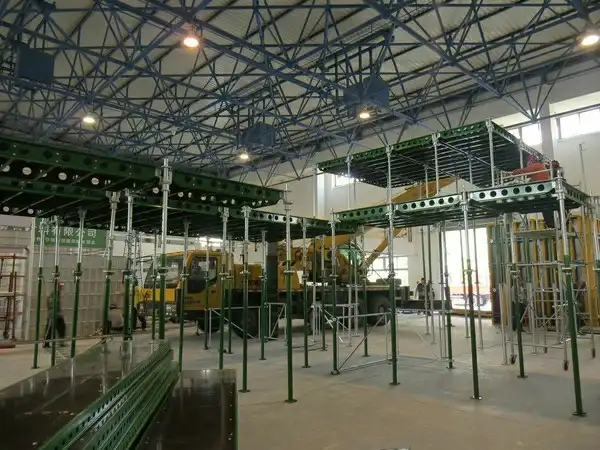
Enhanced Construction Efficiency and Speed
Time spent on the work site equals money. When your team doesn’t have to wait for lifting equipment or battle with large panels for as long, pour cycles run quicker and project timetables grow tighter. Steel form panels weigh just 22 kg so they can be moved by one person without mechanical assistance, reducing downtime.
Here are the main things that make this method efficient:
- Single person handling: Each panel weighs ≤22 kg, therefore a worker may carry, place and strip panels via stairwells and restricted urban settings where a crane cannot access. This eliminates a big schedule constraint for high-rise residential and utility tunnel constructions.
- Quick-lock assembly: The modular design uses a tight-fit connection system that clicks panels into alignment rapidly. Crews complete more concrete pours per month, which compresses the overall construction program without adding headcount.
- Prefabricated compatibility: Standard sizes of 1000×300 mm and 1500×200 mm integrate cleanly with modular and prefabricated construction methods. Site supervisors spend less time on custom cutting and ad hoc adjustments during each cycle.
These efficiencies accumulate during the life of a project. “If a contractor is doing 10 or more pours per floor, they can save hours that add up to weeks back on the overall program.” This offers them a direct competitive edge when they compete for projects with short deadlines.
Superior Durability and Reusability
Formwork made of plywood usually lasts between five and eight uses before it starts to bend or separate. Buying disposable wood panels regularly costs money and creates waste on the job site. Lightweight steel formwork panels, on the other hand, keep their shape over many cycles. It is proven that Shandong Xingrui Building Materials Co., Ltd. panels have been utilised more than 40 times. The plate is 2mm thick and the frame is 2.5mm thick. Both are composed of Q235/Q345 steel. Protection against alkaline conditions in concrete is provided by hot-dip galvanising or powder coating of the surface. Under typical site circumstances, this provides a service life of 5 to 10 years without rust.
The frame flatness is within ±2 mm tolerance between cycles. Because the proportions are the same, the final concrete surface needs less repair patching, saving time and effort on the finishing project. For firms renting out formwork, the residual value of each panel is considerable, since the steel structure can be rectified by welding, something aluminium panels can't do.
Cost-Effectiveness Over the Project Lifecycle
When they buy something, procurement managers often compare unit prices. Cost per pour is a better way to compare things. The cost of steel form panels is spread out over more than 40 uses, while plywood alternatives may need to be replaced after less than ten.
Take a look at how the savings are spread out in a typical mid-rise apartment building:
- Lower labor expenditure: Single-person handling eliminates crane rental and reduces the required crew size per floor, cutting direct labor costs on each formwork cycle.
- Reduced finishing costs: The smooth panel surface and tight-fit joint design minimize concrete honeycombing and surface defects. Less patching and grinding after stripping means lower finishing material and labor spend.
- Fewer replacement orders: Because the panels resist warping and corrosion, purchasing managers place fewer emergency reorder cycles. This also reduces freight spend and supply chain disruption risk.
You can actually save money with these tips for lightweight steel formwork. According to the Concrete Forming Contractors Association, 40 to 60 percent of the overall cost of formwork in the U.S. construction sector is labour. Any technology that reduces down the time it takes to process forms and rectify errors gets to the one that costs the most: forms. Steel shuttering is utilised 40 times and always costs less than wood or plastic shuttering during its life.
Improved Safety and Ergonomics for Workers
Injuries can happen on construction sites and the use of moving formwork is a major reason individuals make claims for musculoskeletal strain. Panels weighing 40 to 60 kg need two workers and are commonly transported using makeshift and informal techniques that increase the risk of back and arm injuries. That equation changes when panels weigh 22 kg.
Here are the safety benefits that come from losing weight:
- Reduced physical strain: Workers carry panels through floor openings and stairwells without awkward two-person coordination. Lower repetitive load weight decreases cumulative fatigue across a shift, which reduces injury frequency.
- Accessible to a broader workforce: Lighter panels allow female workers and older tradespeople to participate in formwork installation without physical disadvantage. This matters in labor markets where skilled worker availability is tight.
- Compliance with occupational safety standards: The panel weight and handling design align with manual handling guidelines published under OSHA 29 CFR 1926 and equivalent international frameworks, supporting site safety audits and reducing liability exposure for contractors.
Shandong Xingrui Building Materials Co., Ltd. has ISO 45001 workplace health and safety management system approval for its lightweight steel formwork, which shows that the company is committed to protecting workers from the time the product is being made until it is used.
Environmental Sustainability and Compliance
About 11% of the world's carbon emissions come from the construction industry, and the use of formwork timber makes up a big part of that number. If you switch from low-cycle or single-use plywood to a steel system with 40 cycles or more, you will use a lot less wood for each project. Also, steel is one of the most recycled things in the world. When their time is up, steel form pieces are recycled instead of being thrown away. This circular flow of materials helps project teams get LEED or BREEAM credits for reducing construction waste and getting materials in a way that doesn't harm the environment.
Shandong Xingrui's panels are certified by the ISO 14001 environmental management system. This shows that the process of making them meets clear goals for environmental performance. The ISO 9001 quality management standard covers consistent production, and the ISO 45001 standard covers worker safety. These certifications can be used by contractors who work with clients who care about the environment or on public sector projects to show that they are accountable in the supply chain.
Conclusion
Lightweight steel formwork panels made from Q235/Q345 steel and hot-dip galvanized or powder-coated on the outside can help keep job sites clean, lower the cost of labor, and make assets last longer. Speed, durability, lifecycle cost control, worker safety, and environmental compliance are the five benefits we'll talk about here. Each one solves a real problem that procurement managers and site engineers face on both residential and commercial projects. With three ISO certifications, free samples, and the ability to make products to order, Shandong Xingrui Building Materials Co., Ltd. gives buyers all the proof they need to place their first order with confidence.
FAQ
Q1: How does steel formwork compare to aluminum in terms of cost?
A: Aluminum panels typically cost more per unit than equivalent steel panels. Steel also offers field repairability through welding, which aluminum does not. Over a long project, the lower acquisition cost combined with on-site repair capability makes steel the more economical choice for most contractors.
Q2: What maintenance does the system require between pours?
A: After stripping, workers remove residual concrete using a scraper, then apply a standard form release agent before the next pour. The hot-dip galvanized surface resists staining and corrosion, so no specialist treatment is needed. This routine takes minutes and keeps panels in service for 40-plus cycles.
Q3: Can the panels be customized to non-standard dimensions?
A: Yes. Shandong Xingrui Building Materials Co., Ltd. accepts custom sizing orders based on client drawings. Standard lead times for custom-engineered panels are approximately four to six weeks. Standard module sizes—1000×300 mm and 1500×200 mm—are typically available from current stock.
Q4: Are free samples available before committing to a bulk order?
A: The company offers sample supply so procurement teams can inspect plate thickness, surface finish, joint sealing quality, and dimensional accuracy before placing a production order. This removes the uncertainty around batch quality consistency.
Q5: Is the system suitable for slab casting as well as walls?
A: Yes. With adjustable shoring props and early-stripping heads, the modular panels work efficiently on horizontal decking applications as well as vertical walls and columns.
Get a Quote from GREEN FORMWORK — Trusted Lightweight Steel Formwork Supplier
GREEN FORMWORK, which is backed by Shandong Xingrui Building Materials Co., Ltd., sells lightweight steel formwork that is approved by ISO 9001, ISO 14001, and ISO 45001 to builders in more than 100 countries. Each panel has been tested to be ≦22 kg, and it can be used over and over again. It can also be made to any size. Email sdxingruiqp@126.com to get a free sample or bulk quote right now. Our technical team gets back to you quickly to help with your procurement process.
References
1. American Concrete Institute. ACI 347R-14: Guide to Formwork for Concrete. American Concrete Institute, 2014.
2. Concrete Forming Contractors Association. Formwork Cost Analysis and Labor Benchmarking Report. CFCA, 2021.
3. International Organization for Standardization. ISO 9001:2015 Quality Management Systems — Requirements. ISO, 2015.
4. International Organization for Standardization. ISO 14001:2015 Environmental Management Systems — Requirements. ISO, 2015.
5. Occupational Safety and Health Administration. OSHA 29 CFR 1926 Subpart Q: Concrete and Masonry Construction. U.S. Department of Labor, 2020.
6. U.S. Green Building Council. LEED v4 Building Design and Construction Reference Guide. USGBC, 2019.
Learn about our latest products and discounts through SMS or email