- English
- French
- German
- Portuguese
- Spanish
- Russian
- Japanese
- Korean
- Arabic
- Greek
- German
- Turkish
- Italian
- Danish
- Romanian
- Indonesian
- Czech
- Afrikaans
- Swedish
- Polish
- Basque
- Catalan
- Esperanto
- Hindi
- Lao
- Albanian
- Amharic
- Armenian
- Azerbaijani
- Belarusian
- Bengali
- Bosnian
- Bulgarian
- Cebuano
- Chichewa
- Corsican
- Croatian
- Dutch
- Estonian
- Filipino
- Finnish
- Frisian
- Galician
- Georgian
- Gujarati
- Haitian
- Hausa
- Hawaiian
- Hebrew
- Hmong
- Hungarian
- Icelandic
- Igbo
- Javanese
- Kannada
- Kazakh
- Khmer
- Kurdish
- Kyrgyz
- Latin
- Latvian
- Lithuanian
- Luxembou..
- Macedonian
- Malagasy
- Malay
- Malayalam
- Maltese
- Maori
- Marathi
- Mongolian
- Burmese
- Nepali
- Norwegian
- Pashto
- Persian
- Punjabi
- Serbian
- Sesotho
- Sinhala
- Slovak
- Slovenian
- Somali
- Samoan
- Scots Gaelic
- Shona
- Sindhi
- Sundanese
- Swahili
- Tajik
- Tamil
- Telugu
- Thai
- Ukrainian
- Urdu
- Uzbek
- Vietnamese
- Welsh
- Xhosa
- Yiddish
- Yoruba
- Zulu
How Is Crab System Scaffolding Installed, Inspected, and Maintained?
Crab system scaffolding follows a disciplined three-phase lifecycle: systematic insthttps://www.sdxingrui.com/scaffolding-system/crab-system-scaffoldingallation from base plates upward, structured inspection at defined intervals, and proactive maintenance to preserve load capacity. This modular disc-lock framework uses wedge-locking connections at eight-way nodes, allowing vertical standards, ledgers, and diagonal braces to lock together without loose fittings. When each phase is executed correctly, the system delivers rated load capacities up to 200kN per tower and a service life exceeding 15 years — making it a dependable choice for bridges, tunnels, and high formwork shoring.
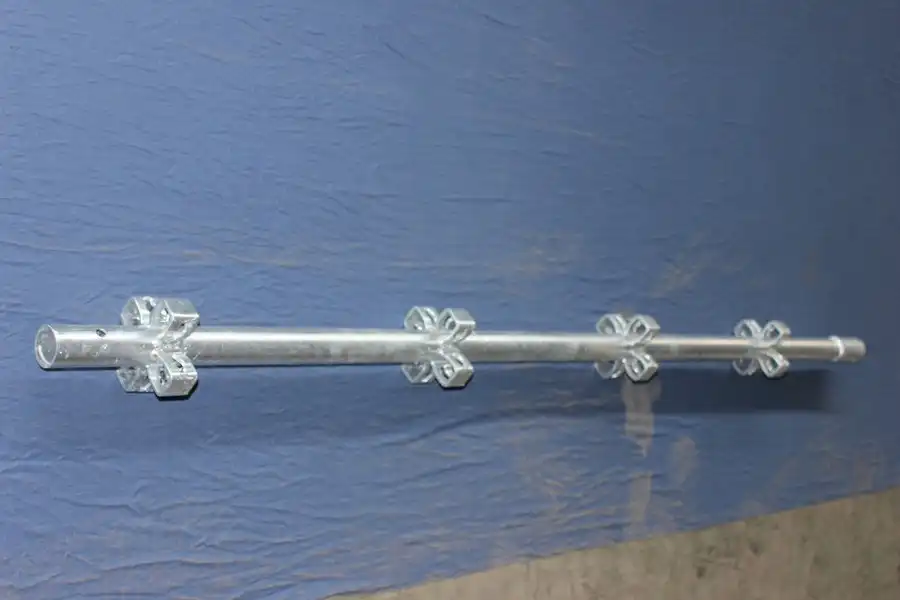
Understanding Crab System Scaffolding
What Defines This System?
The crab-type scaffold is made up of separate support structures that are locked together with wedges. Each vertical standard has a disc-node connection plate welded to it. There are eight holes in the disk, so ledgers, diagonal bars, and tie bars can be attached at any angle. Because of this design, one system can be used for flat concrete deck shoring, bridge piers with odd shapes, or tunnel profiles in the shape of an arch. This is possible without cutting pipes or adding special fabricators.
How It Compares to Traditional Methods
When compared to tube-and-clamp support, the disc-lock node doesn't need a spinning coupler at all. Field data from bridge shoring projects shows that workers can speed up assembly by about 50% by just inserting wedge pins and striking them into place. Less hardware being dropped is also a benefit of fewer loose parts, which is important when a crew is working 10 meters above a riverbed.
Key Technical Parameters
Shandong Xingrui's 60-series is made of 3.2 mm thick walls made of Q235 quality carbon steel. According to ISO 1461, hot-dip galvanization makes a zinc layer 60–80εm thick that is meant to last for 15 years. The system is certified by ISO 9001, ISO 14001, and ISO 45001, and it meets the structural requirements of EN 12810/12811, which is the minimum standard that most European EPC contractors look for before they approve a shoring design.
Step-by-Step Installation Process
Phase 1 — Site Preparation and Layout
The engineering team has to confirm the load-path design, ground bearing capacity, and setout dimensions for crab system scaffolding before any part touches the ground. Put the base plates on pads or sole boards that are firm and level. Heavy-duty screw base jacks can level out uneven ground and keep vertical standards level within a certain range. The most common reason for differential settlement under load is skipping this step.
Phase 2 — Frame Assembly
Here is the right way to put together a normal tower bay:
- Set base plates and screw jacks at grid intersections defined in the shoring drawing.
- Insert vertical standards into the base jack sockets and confirm plumb with a spirit level.
- Lock horizontal ledgers into the disc nodes at the correct lift height by inserting wedge pins and driving them home with a hammer blow.
- Add diagonal bracing across alternate bays in both plan directions to resist lateral sway under wind and concrete pour pressure.
- Install U-head jacks at the top of each standard to receive primary beams or formwork stringers.
Phase 3 — Decking and Pre-Pour Checks
Install the secondary stringers after the main beam layer is in place in the U-head jacks. Then, put down steel or wood floor panels. Check that every wedge pin is fully driven, that all screw jack extensions stay within the manufacturer's maximum, and that tie-back links to the permanent structure are in place where the plan says they should be.
Inspection Protocols for Crab System Scaffolding
Inspection Frequency Schedule
How often an inspection is done for crab system scaffolding depends on how busy the place is. Active concrete-pour sites need to be inspected every day before each shift. The whole tower system is checked formally once a week. Before work can start again after a storm with winds over 40 mph or a major impact event, the whole structure must be inspected.
What Inspectors Look For
On each walk, a trained inspector should look at the following things:
- Disc nodes and wedge pins — confirm pins are fully seated with no cracking at the weld toe.
- Vertical plumb — standards should not deviate more than H/200 (where H is the tower height) from true vertical.
- Screw jack extensions — no extension should exceed the manufacturer's stated maximum, typically 300–450mm depending on the series.
- Galvanized surface — note any areas where zinc coating has been mechanically damaged, exposing bare steel to moisture.
It takes about 20 minutes to do these checks on each tower bay, and they create the records that EN 12811 and most project quality plans need.
Documentation and Sign-Off
For each inspection, there must be a written record that includes the tower ID, the date of the inspection, the results, and what needs to be done to fix the problem. Before the concrete is poured on big EPC jobs, these records are often countersigned by third-party inspectors. Keep records on-site so that they can be accessed during the job, and store them for at least as long as the guarantee lasts.
Maintenance Strategies to Extend Service Life
Routine Cleaning and Lubrication
Clean all parts with water pressure after each project cycle to get rid of concrete splatter, dirt, and organic waste. Pay close attention to the holes in the disk node—concrete dust in the holes keeps the wedge pins from fully sitting on the next deployment. Applying a small amount of anti-corrosion oil to screw jack threads before putting them away keeps them from stopping and increases their useful life by several rounds.
Component Sorting and Replacement
Put the returned parts into three piles: serviceable, repairable, and scrap. Any standard or ledger that has obvious bending, weld-toe cracking, or zinc covering loss that covers more than 20% of the pipe surface should be replaced. One broken standard on a 200kN-loaded tower can cause the tower to slowly fall apart, and the price of replacing a single tube is very low compared to the cost of project downtime or incident liability.
Scheduled Overhauls
Set up an overhaul trigger for crab system scaffolding that is based on the number of deployments instead of just the date and time. After every 15–20 project rounds, most makers say you should do a full inspection. Replace old wedge pins, re-galvanize parts that have lost their protective coating, and make sure that the disk nodes stay concentric during the overhaul. Shandong Xingrui helps customers through this process and gives them detailed paperwork to make sure they stay in line with ISO management standards.
Making the Right Procurement Decisions
Certifications to Require
Any modular shoring system bought for a project governed by EN must have CE marking, a Declaration of Performance (DoP), and calculation reports in line with EN 12810/12811. Ask for quality control records for each batch, such as records of ultrasonic weld tests and zinc covering sticking tests. As long as the factory is ISO 9001 certified, you can be sure that these records are made in a planned way and not just randomly.
Customization and Sample Trials
Complex projects, like viaduct piers with tapered shapes or power plant platforms with irregular column grids, often need ledger lengths that aren't standard or head plates that aren't set up in the usual way. Before a full order is placed, engineering risk is greatly reduced when working with a manufacturer that takes custom orders based on drawings and sends samples within 7–14 days. Shandong Xingrui has a factory that covers 40,000 square meters and has 12 robots that do welding. They can also make products to specific needs by giving customers samples and full technical drawings.
Total Cost of Ownership
When purchasing something, deciding based only on the unit price, the cost of high damage rates, slow assembly labor, and short reuse life are often not taken into account. When compared to uncoated tube-and-clamp options, a Q235 hot-dip galvanized system pays for itself in two to three project cycles because it lasts 15 years and is 50% faster to install.
Conclusion
A good modular shoring system using crab system scaffolding is different from a bad one because it needs to be installed correctly, inspected regularly, and maintained regularly. The wedge-lock disk node design cuts down on mistakes made by people during assembly. The galvanized Q235 steel can handle the conditions on the job site, and regular inspections find problems early on before they get worse. When purchasing teams look at crab-type scaffold suppliers, licenses, the ability to make changes, and proof of quality control are just as important as price. A well-kept system can complete 15 or more project cycles, turning the initial investment in capital into an asset that can be used for a long time.
FAQ
Q1: How often should disc-lock scaffolding be inspected on an active site?
A: When concrete is being poured, the shoring towers should be checked at least once a day, before each pour shift. Every week, do a full official check. If there is wind above 40 mph or an accident that damages the structure, it needs to be looked at carefully before work can begin again. Most project quality plans and EN 12811 call for written inspection records to be kept for each event.
Q2: What is the primary structural advantage over tube-and-clamp systems?
A: The eight-way disk node gets rid of the need for rotating couplers, which are where most traditional systems break down. The wedge-lock connection aligns itself and stays in place with the help of gravity, even when the part moves. Tests by outside groups show that disc-lock towers keep their rated capacity (up to 200kN per tower) more consistently over many assembly cycles than coupler-based systems.
Q3: Can the system be customized for irregular project geometries?
A: Yes. The eight-hole disk node lets ledgers and diagonals join at different angles, so it can be used for structures that are bent or tapered, like bridge piers and tunnel profiles. Shandong Xingrui can make unique orders from client plans for ledger lengths or head plates that aren't standard. Within 7–14 days, physical samples are sent to make sure they fit before full production starts.
Partner with GREEN FORMWORK for Certified Crab System Scaffolding
GREEN FORMWORK, which is backed by Shandong Xingrui Building Materials Co., Ltd., sells CE- and ISO-approved crab system scaffolding to contractors and rental companies in more than 100 countries. Our Rizhao port facility's 60-series crab system scaffolding manufacturer line can handle custom orders, sample trials, and large-scale orders with consistent lead times. You can email our technical team at sdxingruiqp@126.com to get a product datasheet, sample, or quote that is tailored to your project.
References
1. European Committee for Standardization. EN 12811-1: Temporary Works Equipment — Scaffolds — Performance Requirements and General Design. CEN, 2003.
2. European Committee for Standardization. EN 12810-1: Facade Scaffolding Made of Prefabricated Components — Part 1: Product Specifications. CEN, 2003.
3. International Organization for Standardization. ISO 1461: Hot Dip Galvanized Coatings on Fabricated Iron and Steel Articles — Specifications and Test Methods. ISO, 2009.
4. Health and Safety Executive (HSE). Scaffolding — Safety in Construction: HSG150. HSE Books, 2006.
5. Peng, J. L., Pan, A. D., & Chen, W. F. Approximate Analysis Method for Modular Tubular Falsework. Journal of Structural Engineering, ASCE, 2001.
6. Construction Industry Research and Information Association (CIRIA). Temporary Works: Principles of Design and Construction — C703. CIRIA, 2017.
Learn about our latest products and discounts through SMS or email