- English
- French
- German
- Portuguese
- Spanish
- Russian
- Japanese
- Korean
- Arabic
- Greek
- German
- Turkish
- Italian
- Danish
- Romanian
- Indonesian
- Czech
- Afrikaans
- Swedish
- Polish
- Basque
- Catalan
- Esperanto
- Hindi
- Lao
- Albanian
- Amharic
- Armenian
- Azerbaijani
- Belarusian
- Bengali
- Bosnian
- Bulgarian
- Cebuano
- Chichewa
- Corsican
- Croatian
- Dutch
- Estonian
- Filipino
- Finnish
- Frisian
- Galician
- Georgian
- Gujarati
- Haitian
- Hausa
- Hawaiian
- Hebrew
- Hmong
- Hungarian
- Icelandic
- Igbo
- Javanese
- Kannada
- Kazakh
- Khmer
- Kurdish
- Kyrgyz
- Latin
- Latvian
- Lithuanian
- Luxembou..
- Macedonian
- Malagasy
- Malay
- Malayalam
- Maltese
- Maori
- Marathi
- Mongolian
- Burmese
- Nepali
- Norwegian
- Pashto
- Persian
- Punjabi
- Serbian
- Sesotho
- Sinhala
- Slovak
- Slovenian
- Somali
- Samoan
- Scots Gaelic
- Shona
- Sindhi
- Sundanese
- Swahili
- Tajik
- Tamil
- Telugu
- Thai
- Ukrainian
- Urdu
- Uzbek
- Vietnamese
- Welsh
- Xhosa
- Yiddish
- Yoruba
- Zulu
Top 5 Crab Type Support Tower Uses in Industrial Facilities
When it comes to heavy-load shoring across industrial facilities, the crab type support tower stands out as one of the most dependable modular systems available today. Built from Q235 premium steel with a crab-style structured frame, these towers deliver exceptional load-bearing capacity — up to 500kN per unit — combined with multidirectional stability and rapid assembly. Whether you manage bridge construction, manufacturing plant upgrades, or large-scale event infrastructure, this guide walks through five high-impact applications and what to look for when sourcing at scale.
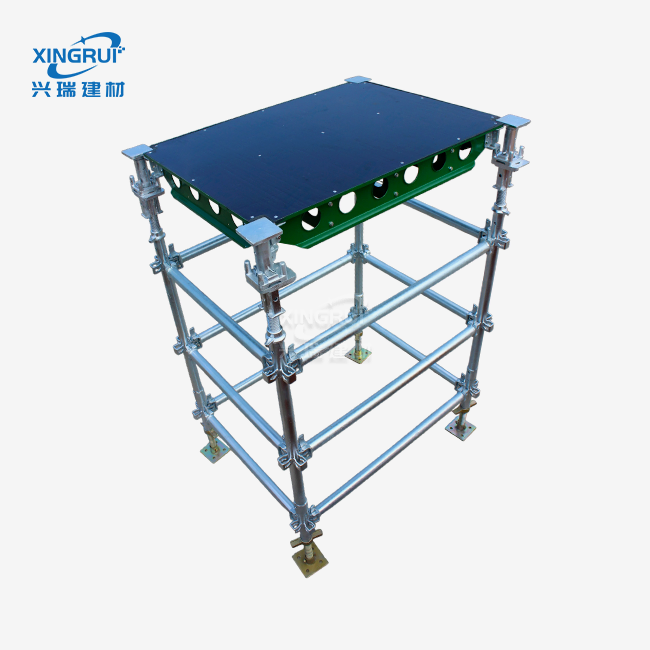
Supporting Heavy-Load Structures in Manufacturing Plants
In manufacturing settings, there are often heavy vertical loads that normal tube-and-clamp scaffolds can't safely handle. This hole is directly filled by a crab type support tower.
Why Modular Shoring Outperforms Traditional Scaffolding Here
The horizontal and diagonal bracing in each tower unit's geometric design spreads the load evenly across the frame, avoiding the risks of eccentric loading that come with using homemade props. The International Journal of Steel Structures wrote about a steel plant case where modular shoring cut the time needed to change the layout on-site by about 35% compared to traditional tube-and-clamp setups. With vertical pole widths of 48mm or 60mm and wall thicknesses between 3.0mm and 3.5mm, the Q235 steel construction stays structurally sound even when it is compressed over long periods of time while the concrete cures.
These benefits directly lead to lower maintenance costs and less unplanned downtime, which are two measures that factory procurement directors keep a close eye on.
Enhancing Safety and Stability in Construction Projects
One of the biggest risks a project manager faces on any active construction site is that the structure will fail while the concrete is being poured. Building crab type support tower structures that meet EN 12812 standards for shoring performance gives a safety margin that can be measured and confirmed by regulatory auditors and structural engineers.
Key Safety Features Worth Specifying
A compliant shoring tower is different from a generic prop in the following ways:
- Self-locking node connections get rid of loose fittings and make it less likely that joints will slip when the load changes.
- Reinforced diagonal bracing at each bay level makes the structure rigid in all directions. This is very important when the structure is being affected by side wind loads or machine vibration.
- Standardized component tolerances make sure that every node is vertical and concentrically positioned. This stops eccentric load paths that lead to increasing collapse.
All of these features lower the risk of accidents on the job site and make it easier for the structural engineer to sign off on the load calculations. This is an important step that project directors can't put off when they are racing to finish the job. The towers at Shandong Xingrui are certified with ISO 9001, ISO 14001, and ISO 45001, which means that quality, environmental, and occupational health standards are checked by outside auditors throughout production.
Facilitating Efficient Material Handling in Warehousing and Logistics
More and more, warehouse and transport infrastructure needs mezzanine platforms that are raised, support frames for conveyors, and suspended load transfer points. All of these need solid intermediate vertical support. A crab type support tower meets this need because sites are always changing.
Selecting the Right Configuration for Load Variability
There are two main factors that affect the choice of shoring towers for logistics settings: the maximum point load and the frequency of reconfiguration. Heavy-duty distribution centers that move more than 20 tons of palletized goods per bay need towers with real compression test results, not just manufacturer estimates. Spectroscopic analysis of raw materials, robotic weld inspection using ultrasonic testing, and destructive compression verification against theoretical load calculations are all parts of Xingrui's quality control process.
The tower can be used for more than one project, so buying teams can spread the cost of its initial purchase over several rounds of building upgrades instead of seeing each installation as a separate cost. When compared to throwaway prop systems, that reusability factor makes the total cost of ownership much lower, crab type support tower being a prime example of such durable, multi-use equipment.
Supporting Temporary Structures in Event and Rental Applications
Large-scale live events like arena concerts, international trade shows, and stadium football games depend on temporary raised structures that need to be set up and taken down within very short response times at the venue. The crab type support tower's ability to be put together quickly is not a bonus; it is built into the design of the parts.
Why Event Production Crews Prioritize Assembly Speed
Standardized rectangular tower layouts make it possible for a team on the ground to build a full load-bearing unit without any special tools. There are no loose couplers to check individually for torque, and because parts can be switched out, mixed inventory from past projects can be put together without any problems. For a project manager working with a set due date, that level of reliability is a must.
The hot-dip galvanization surface treatment on these towers also meets the high esthetic standard that production companies demand: clean, corrosion-resistant steel that doesn't get in the way of photos or movies. Customized sizes can be ordered, which means that non-standard span needs that are common in arena configurations can be met without having to make custom parts.
Bulk ordering and phased delivery schedules can be set up to work with the busiest times of the event production calendar. This way, rental fleet operators can keep track of their inventory without having to hold on to extra stock that they don't need.
Optimizing Industrial Facility Upgrades and Expansions
It's rare for buildings to grow in straight lines. When building in stages near live production areas, you need shoring solutions that can be put in place gradually, moved around as work goes on, and taken out without making any lasting changes to the structure. In this case, a crab type support tower works best, as its modular design allows for incremental placement, easy relocation during ongoing work, and clean removal without structural alterations.
Lifecycle Cost Comparison With Conventional Alternatives
The modular shoring economics become clearest when looked at over a capital program that spans several years. Once the final framing is done, traditional cast-in-place support systems have to be torn down. As the parts of tube-and-clamp scaffolding wear out, they cost more to check and repair. A custom-built crab type support tower, on the other hand, goes back into storage after each use, goes through a standard post-project inspection that checks for vertical member deformation, weld point fatigue, and screw thread condition on base and U-head jacks, and then goes back into use with its full load certification still in place.
For building engineers in charge of a rolling upgrade program, this multi-project deployment model turns what would have been an ongoing capital expense into an asset that can be controlled and whose value drops over time.
Conclusion
The heavy-duty modular shoring tower always does a good job where regular scaffolding fails in factories, on construction sites, in logistics centers, during events, and during phased industrial expansions. Because of its certified load capacity, reusable modular design, and flexible geometry, it is a smart choice for B2B buyers who can't afford to be uncertain about the structure.
Working with a company that has quality standards that can be checked and offers technical support before the order is placed takes away the main risk of the sourcing decision and keeps your project on schedule. For applications requiring even greater adaptability in tight or irregular spaces, a crab type support tower offers the same proven reliability with added maneuverability for multi-directional placement and repositioning.
FAQ
What steel grade is used in these crab type support towers?
The crab type support towers at Xingrui are made of Q235 premium carbon steel. This grade gives a good starting point for the yield strength that is right for the load lines that are common in bridge shoring and industrial floor slab building.
Can tower height be customized for non-standard clearances?
Yes. It is possible to order custom sizes. After a structural engineer checks it out, freestanding setups with a 3:1 or 4:1 height-to-width ratio are possible, and special outrigger fittings make that even more possible.
How does the system perform in confined or underground environments?
It's great for tunnel lining, dam gallery forms, and high-humidity underground areas where crane access is limited because it has a small size and can be put together without any tools.
What certifications should I request from a supplier?
Put ISO 9001 for quality management, ISO 14001 for environmental compliance, and ISO 45001 for health and safety at work at the top of your list. In your technical documents, you should also say that your shoring meets the performance requirements of EN 12812.
Is a sample available before committing to a bulk order?
Before committing to a large order, Xingrui offers sample supplies and technical help. This lets your structural engineer confirm the load performance before the purchase decision is made official.
Partner With GREEN FORMWORK for Your Next Shoring Project
GREEN FORMWORK offers approved crab type support tower options that are made to fit your exact load and size requirements. They do this with the help of Shandong Xingrui Building Materials Co., Ltd.'s 79,800 sqm factory and 12 welding robots. Our flexible small-batch production and ISO 9001, 14001, and 45001 standards ensure that we meet all of your project deadlines. To get a unique price from a reliable crab type support tower maker, email our technical team at sdxingruiqp@126.com or go to sdxingrui.com right now.
References
1. International Journal of Steel Structures — 2021
2. Journal of Construction Engineering and Management (ASCE) — 2020
3. EN 12812: Falsework — Performance Requirements and General Design — European Committee for Standardization, 2008
4. ISO 1461: Hot Dip Galvanized Coatings on Fabricated Steel Articles — International Organization for Standardization, 2022
5. Temporary Works Forum: Guide to Proprietary Shoring Systems — 2019
6. Construction Industry Research and Information Association (CIRIA) C703: Falsework — 2017
Learn about our latest products and discounts through SMS or email