- English
- French
- German
- Portuguese
- Spanish
- Russian
- Japanese
- Korean
- Arabic
- Greek
- German
- Turkish
- Italian
- Danish
- Romanian
- Indonesian
- Czech
- Afrikaans
- Swedish
- Polish
- Basque
- Catalan
- Esperanto
- Hindi
- Lao
- Albanian
- Amharic
- Armenian
- Azerbaijani
- Belarusian
- Bengali
- Bosnian
- Bulgarian
- Cebuano
- Chichewa
- Corsican
- Croatian
- Dutch
- Estonian
- Filipino
- Finnish
- Frisian
- Galician
- Georgian
- Gujarati
- Haitian
- Hausa
- Hawaiian
- Hebrew
- Hmong
- Hungarian
- Icelandic
- Igbo
- Javanese
- Kannada
- Kazakh
- Khmer
- Kurdish
- Kyrgyz
- Latin
- Latvian
- Lithuanian
- Luxembou..
- Macedonian
- Malagasy
- Malay
- Malayalam
- Maltese
- Maori
- Marathi
- Mongolian
- Burmese
- Nepali
- Norwegian
- Pashto
- Persian
- Punjabi
- Serbian
- Sesotho
- Sinhala
- Slovak
- Slovenian
- Somali
- Samoan
- Scots Gaelic
- Shona
- Sindhi
- Sundanese
- Swahili
- Tajik
- Tamil
- Telugu
- Thai
- Ukrainian
- Urdu
- Uzbek
- Vietnamese
- Welsh
- Xhosa
- Yiddish
- Yoruba
- Zulu
How Does Steel Formwork Construction Improve Concrete Quality on Site?
Steel formwork construction directly improves concrete quality by providing a rigid, dimensionally accurate mold that holds fresh concrete precisely in shape throughout the pouring and curing process. Unlike timber or plywood alternatives, steel panels resist deformation under high hydrostatic pressure, eliminate slurry leakage at joints, and deliver a consistently smooth surface finish. The result is concrete that meets tight structural tolerances, reduces post-pour remediation, and holds up under long-term load demands — a critical advantage for EPC contractors managing high-stakes infrastructure projects in demanding environments.
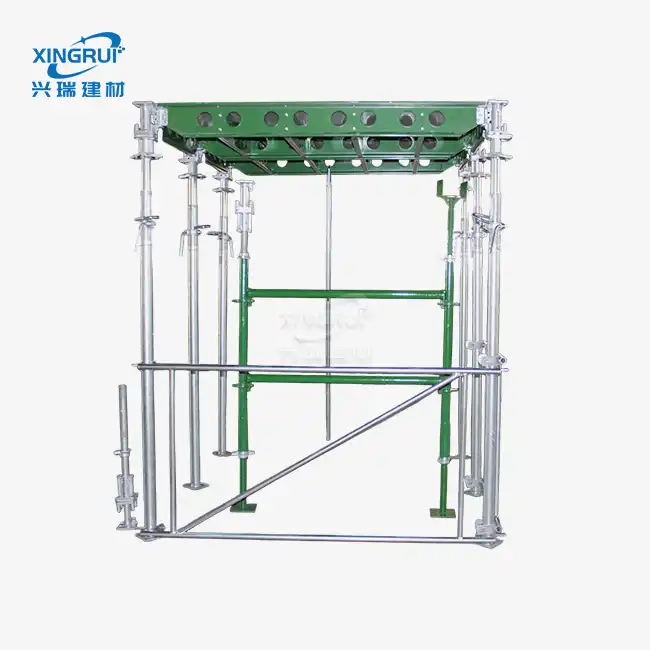
Understanding Steel Formwork and Its Role in Concrete Quality
The quality of the concrete is not just decided at the mixing plant. A lot of what makes the difference is the mold that holds it. If a steel formwork construction panel bends, leaks, or isn't lined up right, the structure will show that failure in a way that can be seen and measured.
What Sets Steel Apart from Timber and Plywood Systems
The modulus of elasticity of steel formwork construction panels made from Q235 carbon steel is about three times that of structural wood. Because they are stiff, panels don't bend outward during a high-rate pour. Instead, they hold their shape under pressure. Tight joining joints stop cement slurry from leaking out, which gets rid of surface honeycombing, which is a common problem with concrete on big construction sites. Because the face doesn't take water, moisture doesn't move from the concrete to the panel. This makes the drying environment more even from the first few hours after placement.
These benefits grow over time when you can reuse something. A well-kept steel formwork construction system keeps its measurements even after 50 or more uses, while plywood usually starts to lose its shape after 5 to 8 uses. For B2B procurement teams that are in charge of rolling project schedules, that difference in lifespan means lower annualized cost per pour and fewer interruptions in the supply chain.
Steel Formwork Construction Process and Its Impact on Concrete Quality
How consistently good the work is on site depends on the process, not just the materials. The final structure is the result of careful installation, close attention during pouring, and a set of checks after stripping.
Alignment, Rigidity, and Leak Prevention During Pouring
The most important part of the steel formwork construction process is aligning the panels before the concrete is poured. Even a 3 mm difference in where panels are placed can make wall surfaces out of tolerance, which may need to be ground down, patched, or even torn down in the worst cases. Steel formwork construction systems with frames made by stamping and consistent bolt holes make alignment repeatable instead of craft-dependent. This makes it easier for new and experienced teams to learn from each other.
Thermal Behavior and Its Effect on Concrete Curing
Steel is a better thermal conductor than wood, which changes how the temperature is managed in early-age concrete. In hot places, like the Middle East, where temperatures often rise above 40°C, the panel's ability to remove surface heat can lower thermal differences in the pour, which delays early micro-cracking. In cold weather, steel formwork construction panels with insulated caps can keep heat in while still being managed. Both of these situations show why experienced project engineers choose steel formwork construction systems for jobs that require proof of the strength of the concrete.
On sites that follow the rules, quality control measures include checking pre-pour panels for bending, measuring joint gaps, and making sure the release agent was applied correctly. Post-strip reviews check the finish on the surface, look for any damaged panels, and keep track of the number of times the panel has been used. This way, a quality record can be found throughout the whole project.
Advantages of Using Steel Formwork to Improve Site Efficiency and Concrete Performance
Beyond the concrete itself, the choice of steel formwork construction system has big effects on how the job is done. Here are the main performance benefits that make steel formwork construction modular systems stand out in high-volume building settings:
- Extended service life with consistent output: steel formwork construction panels that can be used more than 50 times keep their shape within ≤2mm error the whole time they're working. Consistent geometry across cycles means that each pour has the same level of accuracy in terms of dimensions as the last. This stops the quality from getting worse over time that happens with panels made of organic materials.
- Faster assembly and disassembly: standard-sized modular steel formwork construction panels, like 1500×300mm and 1200×200mm formats, let installers follow the same steps over and over again. Less time spent on assembly cuts down on floor cycle times on tall buildings and lowers the cost of labor per pour.
- Reduced material waste: steel formwork construction systems don't need to be replaced after a certain number of uses like plywood does. If you switch from plywood to steel formwork construction for a 12-month project with 30 pours, you can save hundreds of square meters of waste formwork. This helps meet the project sustainability goals that are becoming more common in government infrastructure contracts.
All of these benefits make the case for steel formwork construction stronger in terms of return on investment over the course of the project. The initial unit cost is higher than plywood, but by the sixth or seventh pour cycle, the cost-per-use figure completely changes the picture.
Addressing Common Challenges and Maintenance of Steel Formwork
Steel formwork construction only works at its best when the level of care given to it meets the quality of the engineering that went into making it. Any kind of neglect leads to quality problems that show up in the concrete.
Corrosion and Deformation Management
Long-term, corrosion is the main thing that can go wrong with steel formwork construction panels. If you don't protect the surface of panels that are exposed to alkaline concrete slurry, they start to pit, which makes the concrete face uneven. When electrostatic powder coating processes are used in a special spraying workshop, they make a chemically linked barrier that sticks better and lasts longer than paint. After the concrete is stripped off, the panels should be cleaned of any leftover concrete, checked for damage to the surface, and re-coated where the protective layer is worn.
Deformation, which is usually caused by bad storage (like stacking without enough support) or damage from impacts on site, makes it harder to seal joints and make panels flat. To keep panels from bending, storage rules should say that they must be stacked flat on level supports that are spaced out evenly. Any panel that is more than 2 mm off from being flat should be saved and looked at again before it is used again.
Safety rules for handling heavy steel formwork construction parts are also important. Injury risk and panel damage during mobility can be cut down by using the right lifting tools, teaching the crew, and being aware of the weight of the panels.
Choosing the Right Steel Formwork System for Your Project
When you match the system to the type of structure, you avoid both over-engineering and under-performance. Repeated floor and wall pours work well with modular steel formwork construction systems. Solutions that are made to order can handle curved surfaces, non-standard structure geometry, or load needs that are specific to the project. Panel-based systems with a full range of accessories can be used to build any type of cast-in-place concrete building, from bridge supports to foundations.
When EPC procurement teams look at foreign providers, they have to start with certification documents. Not only do CE certification and ISO compliance make sure that individual samples pass inspection, they also make sure that the manufacturing processes meet certain quality standards. Suppliers that allow quality checks by outside groups like SGS or Bureau Veritas add an extra layer of security that lowers the risk of buying things across borders.
The ability to customize is also very important. Standard steel formwork construction panels can't be added to projects that have specific structural drawings because they would change the shape of either the formwork or the concrete. There is less chance of technical problems on the job site when suppliers have in-house engineering teams that read and respond to customer sketches instead of just giving catalog sizes.
Conclusion
The quality of the concrete on-site depends on the choice of materials, the order of the process, and the dependability of the system. Steel formwork construction helps with all three: its dimensional stability protects structural tolerances, its reusability keeps performance consistent across project cycles, and its ability to work with strict quality control protocols helps with the paperwork needed for international infrastructure contracts. Finding a steel formwork construction provider with certified production, custom fabrication, and proven shipping capacity is just as important for buying teams in the Middle East, Southeast Asia, or Africa as choosing the concrete mix itself.
FAQ
What thickness of steel formwork panel is appropriate for standard wall pours?
Pour rate and concrete pressure affect how thick a panel is. Panels between 2.5 mm and 3.0 mm thick are rigid enough for most standard cast-in-place wall applications. It doesn't matter how thick the panel is; higher pour rates or self-compacting concrete mixes may need more waler support.
How many times can a steel formwork panel realistically be reused?
Cleaning after each use, re-coating the surface when needed, and storing the panels correctly are all things that can help panels made from Q235 carbon steel last 50 or more times while still being sufficiently flat.
Does steel formwork require special release agents?
Yes. Using the right chemical release agent before each pour keeps the concrete from sticking to the steel formwork construction panel face, protects it, and makes it easier to strip. To keep the panel's surface coating from wearing away, the type of agent should work with it.
What certifications should a steel formwork supplier hold?
ISO 9001 verifies that a quality management system is working properly. ISO 14001 is about managing the environment. ISO 45001 talks about health and safety at work. Projects that follow European standards need to have CE approval. Third-party inspection acceptance by SGS or Bureau Veritas is another sign of how transparent the manufacturing process is.
Can steel formwork panels be fabricated to custom drawing specifications?
Reliable providers will work with drawings given by the customer to make panels that fit the needs of the project. This includes panels for non-standard wall shapes, column shapes, and infrastructure uses.
Partner With GREEN FORMWORK — Trusted Steel Formwork Construction Supplier
Shandong Xingrui Building Materials Co., Ltd. backs GREEN FORMWORK, which makes precision-engineered steel formwork construction systems built from Q235 carbon steel, certified under ISO 9001, ISO 14001, and ISO 45001, with CE compliance. Our 79,800 m² facility — equipped with 12 welding robots and 4 cold roll forming lines — guarantees batch consistency and on-time delivery for large-scale global orders. Samples and full technical support are available. Contact our team at sdxingruiqp@126.com or visit sdxingrui.com to request a custom quote.
References
1. Concrete Society. Formwork: A Guide to Good Practice. 3rd ed. The Concrete Society, 2012.
2. American Concrete Institute. ACI 347R-14: Guide to Formwork for Concrete. ACI, 2014.
3. Hurd, M.K. Formwork for Concrete. 7th ed. American Concrete Institute, 2005.
4. British Standards Institution. BS EN 12812: Falsework — Performance Requirements and General Design. BSI, 2008.
5. Peurifoy, R.L., and Oberlender, G.D. Formwork for Concrete Structures. 4th ed. McGraw-Hill, 2011.
6. Ratay, R.T. (ed.). Handbook of Temporary Structures in Construction. 3rd ed. McGraw-Hill, 2012.
Learn about our latest products and discounts through SMS or email