- English
- French
- German
- Portuguese
- Spanish
- Russian
- Japanese
- Korean
- Arabic
- Greek
- German
- Turkish
- Italian
- Danish
- Romanian
- Indonesian
- Czech
- Afrikaans
- Swedish
- Polish
- Basque
- Catalan
- Esperanto
- Hindi
- Lao
- Albanian
- Amharic
- Armenian
- Azerbaijani
- Belarusian
- Bengali
- Bosnian
- Bulgarian
- Cebuano
- Chichewa
- Corsican
- Croatian
- Dutch
- Estonian
- Filipino
- Finnish
- Frisian
- Galician
- Georgian
- Gujarati
- Haitian
- Hausa
- Hawaiian
- Hebrew
- Hmong
- Hungarian
- Icelandic
- Igbo
- Javanese
- Kannada
- Kazakh
- Khmer
- Kurdish
- Kyrgyz
- Latin
- Latvian
- Lithuanian
- Luxembou..
- Macedonian
- Malagasy
- Malay
- Malayalam
- Maltese
- Maori
- Marathi
- Mongolian
- Burmese
- Nepali
- Norwegian
- Pashto
- Persian
- Punjabi
- Serbian
- Sesotho
- Sinhala
- Slovak
- Slovenian
- Somali
- Samoan
- Scots Gaelic
- Shona
- Sindhi
- Sundanese
- Swahili
- Tajik
- Tamil
- Telugu
- Thai
- Ukrainian
- Urdu
- Uzbek
- Vietnamese
- Welsh
- Xhosa
- Yiddish
- Yoruba
- Zulu
What are the safety and load capacity ratings for all-round scaffolding
All-round scaffolding—also called a ringlock modular system—delivers load capacities up to 50kN per vertical standard, making it one of the highest-rated access systems available for heavy industrial and construction work. Built from Q235 premium carbon steel with hot-dip galvanization, the system meets EN 12810/12811 structural requirements and carries ISO 9001, ISO 14001, and ISO 45001 certifications. Each rosette node supports up to eight simultaneous connections, distributing force evenly across the matrix. These ratings are verified through controlled laboratory testing and batch-traceable documentation, giving HSE engineers and procurement managers the hard data they need before signing off.
Understanding All-Round Scaffolding: Overview and Key Specifications
What Is a Ringlock Modular System?
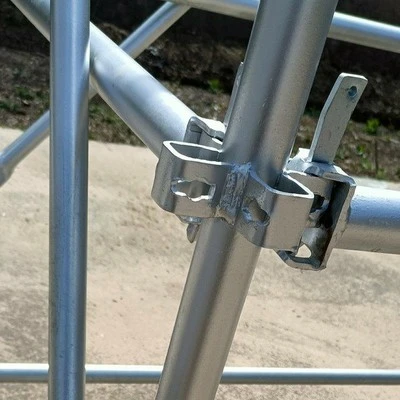
A ringlock modular system is a ready-made entry structure with a rosette disk welded to each vertical standard in the middle. The wedge-lock principle completely replaces loose fittings. Workers place the wedge head into the rosette and push it downward, which locks it at a perfect right angle. This shape makes the building much more rigid when it is put together than regular tube-and-clamp setups.
Core Material and Surface Treatment
The ringlock parts that GREEN FORMWORK makes are made from high-grade carbon steel Q235, and each one is then hot-dip galvanized according to ISO 1461. The layer of zinc that forms is 60–80 microns thick. This coating has been proven by independent magnetic induction testing, and all batch records can be tracked from the time the raw materials are received until the finished product is shipped. This is something that many European HSE auditors require before approval.
Standard Technical Parameters
These are the main requirements that procurement engineers look at when choosing a system:
- Material: Q235 premium carbon steel
- Zinc coating: 60–80 microns (ISO 1461)
- Load capacity: Up to 50kN per vertical standard
- Rosette connections: Up to 8 directions per node
- Verticality tolerance: ≤ 0.2%
- Compatible tube diameters: 48mm and 60mm series
- Certifications: ISO 9001, ISO 14001, ISO 45001; CE-marked
- Service life: 15–20 years under standard site conditions
These numbers are not marketing guesses; they come from tested, documented performance data that can be looked at by a third party.
Safety Features and Compliance of All-Round Scaffolding
Built-In Structural Safety Mechanisms
The rosette connection makes sure that every node is automatically aligned at a right angle. This gets rid of the measurement drift that happens with hand-tightened fitting systems. When you connect diagonal braces to the same rosette disk, you make a stiff truss that can stand up to side wind loads without any extra hardware. Guardrail posts and toe board brackets that are built into the system and lock into place at deck level meet the fall protection geometry requirements of EN 13374 without the need for any extra parts.
EN and CE Compliance Standards
The rules for buying scaffolding in Europe are EN 12810 for facade scaffolding and EN 12811 for temporary works equipment. These rules spell out how to classify loads, how to track materials, and how much a structure can bend. Products made by GREEN FORMWORK have CE certification and meet these requirements. Every batch of production is recorded so that it can be tracked. This meets the audit needs of HSE engineers in both the EU and Middle Eastern markets.
Real-World Performance in Industrial Environments
Ringlock shoring towers taller than 40 meters and thick pipe racks were used to shut down a petroleum plant in the Middle East. Over the course of 12 weeks in temperatures above 45°C, the self-locking wedge links of the all-round scaffolding kept the structure in place. An check after the project was done showed that the rosette welds had not changed shape and there was no noticeable loss of zinc layer. This directly lowers the costs of re-certification for the next planned maintenance cycle.
Load Capacity and Structural Integrity: What Procurement Managers Need to Know?
Load Classification Breakdown
Base loads for scaffolding in EN 12811 range from Class 1 (light-duty, 0.75 kN/m²) to Class 6 (heavy-duty, 6.0 kN/m²). The ringlock system can support up to 50kN per vertical standard, which is enough for Class 5 and Class 6 configurations that are common in shipyard dry-dock work, refinery turnarounds, and bridge deck pours. If you know the load class of your project before you buy anything, you can avoid both wasteful over-specification and risky under-specification mistakes.
Factors That Determine Actual Load Rating
Real-world load performance is based on three factors: the grade of the steel, the depth of the weld entry at the rosette joint, and the accuracy of the lengths of the components. Q235 steel has a minimum yield strength of 235 MPa, which gives engineers a safe area to work with when they figure out working loads. Tensile and shear tests are done in our facility on rosette welds to make sure they are strong. We use 12 robotic welding units that keep the same penetration depth during high-volume production runs. To keep errors from adding up in tall buildings, length limits are kept to within ±1mm.
Ringlock vs. Other Modular Systems
Ringlock scaffolding has a wider range of angles at each node than cuplock and frame scaffolding. It can go up to 8 directions, while cuplock designs can only go in 4. This is very important for workers who have to turn ledgers around bent ship hulls or round storage tanks. Frame scaffolding is faster for building flat facades over and over, but it can't change to the complicated shapes needed in industrial settings.
Choosing the Right All-Round Scaffolding for Your Projects
Evaluating Project Requirements First
Make a map of your project's load class, height limit, and environmental exposure for all-round scaffolding before you compare products. Heavy-duty HDG finish and proven salt-spray resistance are needed for shipyard and offshore applications. petrochemical sites need proof that each lot of a component can be tracked. For concrete pours inside, high formwork support needs to be backed up by verified node shear strength data. By setting these parameters, the buying team quickly narrows down the list of suppliers and avoids specification mismatches.
Customization and Compatibility Options
GREEN FORMWORK accepts orders built to customer drawings and sample-matching requests. The system works with both 48mm and 60mm tube series, which means it meets most device standards around the world. With proven wait times, you can get custom bay widths, deck layouts, and stairway tower sections. The cost per use goes down a lot over a 15–20-year service life because the system can be used for multiple projects. This is important for operations directors who are figuring out the long-term value of an asset.
Verifying Supplier Qualifications
Before placing a trial order with any ringlock scaffolding supplier, make sure they have the following: a CE declaration of conformity, ISO certification documents, batch-traceable test reports for galvanization thickness, rosette weld shear data, and references from similar industrial projects. All of these are available in English from GREEN FORMWORK, and they also offer sample units for testing by a third party. This is a step that often turns cautious procurement teams into long-term partners.
Step-by-Step Installation and Safety Tips for All-Round Scaffolding
Pre-Assembly Site and Equipment Checks
Before you start any installation of all-round scaffolding, you should check the ground's bearing capacity. Make sure the base plates and screw jacks are the right size for the load rating of the soil or floor. Check every part when it's delivered: look at the rosette welds, check the wedge heads for deformation, and use a magnetic gage to make sure the zinc coating is still in good shape. Before erection starts, parts that have mechanical damage or spots of coating loss should be thrown away.
Safe Assembly and Load Distribution Practices
Put up vertical standards straight, and after every two lifts, make sure they are lined up with the 0.2 percent verticality error. Put the ledgers and diagonal braces into the rosettes, and then fully drive the wedges in before putting any work on them. Do not go over the maximum load class for the bay span that has been set up. Tie the structure to the fixed building or structure at the times stated in the structural calculation. This is especially important for towers that are taller than 8 meters and can stand on their own.
Dismantling Safely and Preserving Components
Take it apart from the top down, taking out the deck units first and then the ledgers. To keep the weld from getting damaged, use a brush to clean out the rosette holes instead of a hammer. After cleaning, put parts on pallets that are labeled by type and store them off the ground to avoid corrosion in one area. If you take good care of a ringlock system after the project is done, it can be used again and again for 15 to 20 years.
Conclusion
Ratings for all-round scaffolding safety and load capacity are not just numbers; they are based on careful material choice, weld stability, dimensional control, and coating proof. A Q235 steel system with an HDG coating of 60–80 microns, a node capacity of 50kN, and full EN/CE compliance gives purchasing managers and health and safety engineers the proof they need to approve a supplier's qualification. GREEN FORMWORK helps with this process by providing traceable paperwork, technical support in English, factory audit readiness, and sample supplies before a large order is made.
FAQ
Q1: What is the maximum load capacity per vertical standard?
A: Our ringlock system has been tried and proven to meet the standards of EN 12811, and it can hold up to 50kN per vertical standard. This works with Class 5 and Class 6 load configurations for heavy industrial tasks like pouring concrete and maintaining refineries.
Q2: How often should ringlock components be inspected?
A: Check all of the parts before each project launch and at least once every seven days on busy sites during the project. The project must also be inspected after it's done before it can be stored. These frequencies are set as minimum compliance levels in EN 12811 and most national HSE frameworks.
Q3: Can the system be mixed with components from other manufacturers?
A: Mixing is usually not a good idea unless load testing has been done to make sure they are technically compatible. Rosette shape and wedge thickness are different for each manufacturer. We give your tech team full dimensional data so they can check compatibility on their own before any trials.
Q4: Is customization available for non-standard configurations?
A: Yes, GREEN FORMWORK takes orders based on plans provided by the customer and gives test units for approval before mass production. It is possible to have custom bay widths, stairway modules, and deck configurations that aren't the norm.
Partner with GREEN FORMWORK for Certified Ringlock Scaffolding
GREEN FORMWORK sells all-around scaffolding that is made to EN and ISO standards and comes with CE certification, full batch traceability, and technical documentation written in English. Our team reacts quickly and accurately, whether you need a trial shipment to make sure the product works or a yearly supply plan for big industrial projects. Get in touch with our experts right away at sdxingruiqp@126.com to get specs, sample arrangements, or a quote from a reliable all-around scaffolding maker.
References
1. European Committee for Standardization. EN 12811-1: Temporary Works Equipment — Part 1: Scaffolds — Performance Requirements and General Design. CEN, 2003.
2. European Committee for Standardization. EN 12810-1: Façade Scaffolding Made of Prefabricated Components — Part 1: Product Specifications. CEN, 2003.
3. International Organization for Standardization. ISO 1461: Hot Dip Galvanized Coatings on Fabricated Iron and Steel Articles — Specifications and Test Methods. ISO, 2009.
4. Health and Safety Executive (HSE). A Guide to Scaffold Inspection and Maintenance. HSE Books, 2017.
5. Occupational Safety and Health Administration (OSHA). Scaffolding Standards: 29 CFR 1926 Subpart Q. U.S. Department of Labor, 2020.
6. Milojkovic, B., Beale, R. G., & Godley, M. H. R. "Analysis of Scaffold Structures Using a New Modelling Approach." Proceedings of the Institution of Civil Engineers — Structures and Buildings, 2009.
Learn about our latest products and discounts through SMS or email