- English
- French
- German
- Portuguese
- Spanish
- Russian
- Japanese
- Korean
- Arabic
- Greek
- German
- Turkish
- Italian
- Danish
- Romanian
- Indonesian
- Czech
- Afrikaans
- Swedish
- Polish
- Basque
- Catalan
- Esperanto
- Hindi
- Lao
- Albanian
- Amharic
- Armenian
- Azerbaijani
- Belarusian
- Bengali
- Bosnian
- Bulgarian
- Cebuano
- Chichewa
- Corsican
- Croatian
- Dutch
- Estonian
- Filipino
- Finnish
- Frisian
- Galician
- Georgian
- Gujarati
- Haitian
- Hausa
- Hawaiian
- Hebrew
- Hmong
- Hungarian
- Icelandic
- Igbo
- Javanese
- Kannada
- Kazakh
- Khmer
- Kurdish
- Kyrgyz
- Latin
- Latvian
- Lithuanian
- Luxembou..
- Macedonian
- Malagasy
- Malay
- Malayalam
- Maltese
- Maori
- Marathi
- Mongolian
- Burmese
- Nepali
- Norwegian
- Pashto
- Persian
- Punjabi
- Serbian
- Sesotho
- Sinhala
- Slovak
- Slovenian
- Somali
- Samoan
- Scots Gaelic
- Shona
- Sindhi
- Sundanese
- Swahili
- Tajik
- Tamil
- Telugu
- Thai
- Ukrainian
- Urdu
- Uzbek
- Vietnamese
- Welsh
- Xhosa
- Yiddish
- Yoruba
- Zulu
A Complete Guide to Importing Combined Steel Formwork Safely
Importing combined steel formwork from China is one of the smartest procurement moves a construction company or EPC contractor can make right now. This guide walks you through everything you need to know — from understanding what this modular steel panel system actually does on a job site, to verifying certifications, managing customs, and choosing a supplier you can trust for repeat orders. Whether you manage infrastructure projects across Latin America or the Middle East, the steps here will help you reduce procurement risk and get your shipment delivered on time and on spec.
Understanding Combined Steel Formwork and Its Benefits
What It Actually Is?
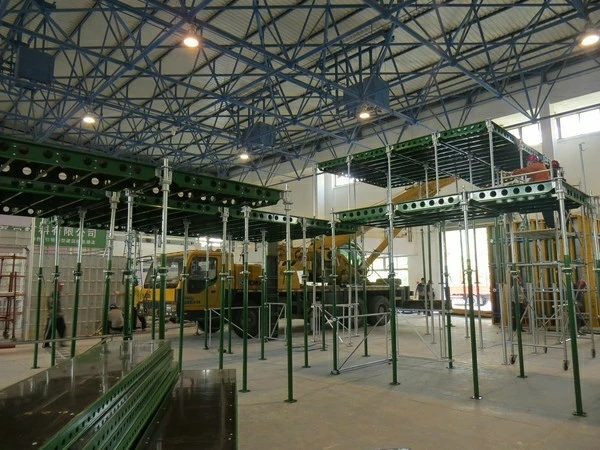
Most modular steel formwork systems have panels made of 2.5 mm to 3 mm thick Q235 carbon steel. These panels are made in a workshop. Together with U-clips and L-shaped nuts, they make molds that can be used to fill walls, columns, beams, and floor slabs. Not like site-cut wood boards, each piece is the same size. This means that your crew can fill without having to fit as much.
Why It Outperforms Traditional Materials?
When made of wood or plywood, forms only last a few pour cycles before they start to bend or break. With proper care, a modular steel panel system can be used 200 to 300 times or more on a regular job site. That one number changes the whole formula for figuring out how much it costs to own a building with more than two floors or parts of the building that are used more than once.
Sustainability and Safety Advantages
Steel panels make a lot less waste on the job site than wood shutters that are thrown away. It's not that bad for the environment when you think about how little stuff is used over the course of a project's life. Manufacturers pay a lot of attention to environmental management standards like ISO 14001 when they are making things. Government clients and EPC contractors who care about ESG issues are becoming more interested in this.--- Before you place an order, get the full technical data sheet. When comparing panels, it's important to look at how thick they are, how much weight they can hold (60–80 KN/m² is good), how flat they are (≤2 mm per GB/T 50214), and how accurate their measurements are (±0.5 mm). You can't send goods abroad from a seller who won't write down these numbers.
Importing Combined Steel Formwork: Key Considerations for B2B Clients
Technical Specifications You Must Verify
Before you place any order for combined steel formwork, request the full technical data sheet. Key parameters to cross-check include panel thickness, load-bearing capacity (look for 60–80 KN/m²), flatness tolerance (≤2 mm per GB/T 50214), and dimensional accuracy (±0.5 mm). A supplier who cannot provide these figures in writing is not ready for export.
Certifications and Compliance Documentation
ISO 9001 quality management certification is the baseline. For projects in regulated markets, also request ISO 14001 and ISO 45001 documentation, plus CE certification and batch-level quality inspection reports. European clients specifically need EN 12811-compliant load calculation reports and a Declaration of Performance (DoP). U.S. clients should verify that the steel grade and weld specifications align with applicable OSHA and ACI requirements.
Supplier Evaluation and Factory Auditing
Third-party factory audits are standard practice among serious EPC procurement teams. Assess production capacity — a facility with over 40,000 m² of standardized workshop space, 12 welding robots, and 6 automatic welding lines tells you something meaningful about consistency. Ask for salt spray test certificates showing corrosion resistance above Grade 8, and confirm that the supplier exports to at least 50 countries, which indicates established customs and logistics experience.
Comparing Combined Steel Formwork with Alternative Systems
Steel vs. Aluminum vs. Timber: What the Numbers Show
Here is a straightforward breakdown across the three most common systems:
- Timber/plywood: Low upfront cost, very low reuse rate (5–10 cycles), high site waste, poor dimensional consistency for structural concrete.
- Aluminum formwork: Lightweight and fast to handle, suited to repetitive residential floors, but purchase cost runs 30–50% higher than steel, and repair after impact is more complex.
- Combined steel panel system: Higher initial investment than timber, lower than aluminum, with 200–300+ reuse cycles that deliver the best cost-per-pour figure for mid- to large-scale infrastructure and commercial work.
These three systems each fit different project profiles. For high-rise shear walls, bridge piers, and tunnel linings — where load pressure is high and surface finish matters — the steel modular system is frequently the most practical answer.
Logistics and Lead Time Considerations
Aluminum panels are lighter per square meter, which reduces freight cost per shipment. Combined steel formwork panels, however, pack more consistently into standard 20- or 40-foot containers without special handling. A supplier located close to a major port — such as Rizhao Port in Shandong Province — shortens the inland leg and reduces the risk of transit damage before loading.
Return on Investment for Rental and Leasing Companies
For formwork rental companies, the asset turnover rate is everything. A system that lasts 300 cycles without requiring panel replacement or significant repair keeps maintenance costs low and rental revenue per unit high. That is why regional rental fleet operators in the Middle East and Latin America increasingly move away from timber and toward modular steel panels when refreshing their inventory.
Step-by-Step Guide to Importing Combined Steel Formwork Safely
Step 1 — Supplier Qualification and Sample Request
Start with a formal RFQ that includes your building plans. Suppliers who are good should give you a price and a sample in 7 to 14 days. Check the seam quality, panel smoothness, coating adhesion, and P-hole spacing on a real sample before making a trial order. You can do this yourself or with the help of a local inspection agent.
Step 2 — Contract, Payment Terms, and Documentation
If you're good at logistics, you can talk about FOB or CIF terms. Before production starts, most companies need a 30% to 50% TT deposit. The rest of the money is paid when the shipping papers are ready. Make sure the seller can give you a full business invoice, a packing list, a certificate of origin, a quality certificate, and, if needed, CE paperwork and test results for the materials.
Step 3 — Shipping, Customs Clearance, and On-Site Verification
Hire a customs broker who is licensed and works with combined steel formwork all the time. These are the HS numbers that are used in different places for steel formwork panels. Check early to see what import taxes are due. When the panels arrive, compare each one to the packing list and look for damage on the surface from transport. Also, make sure the measurements are correct to within 0.5 mm before your crew starts putting it together.
Risk Management and Safety Standards
Common Import Risks and How to Prevent Them
These are the three problems that procurement managers talk about most often: late shipments, inconsistent batches, and lack of licensing. Before you start working on your project, make sure you get written confirmation of production lead times (15–30 days for normal orders). This will keep you from having to wait. Have a third-party company, like SGS or Bureau Veritas, check the goods before they are shipped. This will fix any problems that happen between batches. There won't be any breaks in certification if you ask for papers before the order is confirmed instead of after.
Building a Resilient Supplier Relationship
If you only use one source, there is a risk in the production chain. You should try to find two good sources for your main panel sizes. Also, call your main seller often, even when you're not making an order. Things that go wrong at the destination port are more likely to be fixed quickly by suppliers who have dedicated export teams and more than one way to reach them, like email, WhatsApp, and video calls.
Warranty, After-Sales Support, and Maintenance
Check with your service provider to make sure that the terms of the guaranty are written into the contract. If modular steel panels have a fair guarantee, it should cover flaws in the way they were made and finish failure within a certain amount of time. Taking the right care of your panels on-site, like adding release agents before each pour and storing them off the ground and flat, will make them last much longer and protect your per-cycle cost estimate.
Conclusion
Importing combined steel formwork safely comes down to three things: choosing a manufacturer with verifiable certifications and real production capacity, building your procurement process around documentation and third-party inspection, and maintaining an active supplier relationship that lets you respond quickly when issues arise. When those three factors align, you get a formwork system that performs across hundreds of pour cycles, ships reliably, and clears customs without costly delays.
FAQ
Q1: How many times can combined steel formwork panels be reused?
A: The right way to store Q235 steel panels flat and using release agents before each pour are some of the care steps that should be taken to make sure they last 200 to 300 times or more. Instead of plywood or wood, this works much better and costs less per pour over the course of the project.
Q2: What certifications should I request from a steel formwork supplier?
A: Check to see if they have at least ISO 9001 quality control approval. For foreign jobs, you should also look for ISO 14001, ISO 45001, and CE certification. For European projects, you also need a Declaration of Performance and records that follow EN 1281 on how much weight the structure can hold. Every business shipment should come with a material test report for the whole batch.
Q3: Can steel formwork panels be customized for non-standard structural geometry?
A: Yes. A person who knows how to use CAD can use your building plans to make corner modules, filler panels, and bent parts. Lengths range from 900 mm to 1800 mm and widths from 100 mm to 300 mm. You can get different sizes, but samples take 7 to 14 days to get to you.
Q4: What is the typical import lead time from China?
A: From the time you first ask about your order, most of them don't get there for 60 to 120 days. This includes making sure the sample is right, making the product (15–30 days), sending it by sea, and getting it through customs. If you want to tool and mark an OEM or unique brand, it may take an extra 30 to 45 days.
Get Your Steel Formwork Quote from GREEN FORMWORK
GREEN FORMWORK is the business name of Shandong Xingrui Building Materials Co., Ltd. They sell combined steel formwork to contractors and procurement teams in over 100 countries. ISO 9001, ISO 14001, and ISO 45001 have all approved our Q235 steel panels. We back up every order with examples, thorough plans, and help on-site. Our export team can be reached at sdxingruiqp@126.com for prices or technical information.
References
1. American Concrete Institute. ACI 347R: Guide to Formwork for Concrete. ACI, 2014.
2. British Standards Institution. BS EN 12811-1: Temporary Works Equipment — Scaffolds. BSI, 2003.
3. International Organization for Standardization. ISO 9001: Quality Management Systems — Requirements. ISO, 2015.
4. International Organization for Standardization. ISO 45001: Occupational Health and Safety Management Systems. ISO, 2018.
5. Construction Industry Research and Information Association. CIRIA C703: Formwork — A Guide to Good Practice. CIRIA, 2012.
6. Hurd, M.K. Formwork for Concrete, 7th ed. American Concrete Institute, 2005.
Learn about our latest products and discounts through SMS or email