- English
- French
- German
- Portuguese
- Spanish
- Russian
- Japanese
- Korean
- Arabic
- Greek
- German
- Turkish
- Italian
- Danish
- Romanian
- Indonesian
- Czech
- Afrikaans
- Swedish
- Polish
- Basque
- Catalan
- Esperanto
- Hindi
- Lao
- Albanian
- Amharic
- Armenian
- Azerbaijani
- Belarusian
- Bengali
- Bosnian
- Bulgarian
- Cebuano
- Chichewa
- Corsican
- Croatian
- Dutch
- Estonian
- Filipino
- Finnish
- Frisian
- Galician
- Georgian
- Gujarati
- Haitian
- Hausa
- Hawaiian
- Hebrew
- Hmong
- Hungarian
- Icelandic
- Igbo
- Javanese
- Kannada
- Kazakh
- Khmer
- Kurdish
- Kyrgyz
- Latin
- Latvian
- Lithuanian
- Luxembou..
- Macedonian
- Malagasy
- Malay
- Malayalam
- Maltese
- Maori
- Marathi
- Mongolian
- Burmese
- Nepali
- Norwegian
- Pashto
- Persian
- Punjabi
- Serbian
- Sesotho
- Sinhala
- Slovak
- Slovenian
- Somali
- Samoan
- Scots Gaelic
- Shona
- Sindhi
- Sundanese
- Swahili
- Tajik
- Tamil
- Telugu
- Thai
- Ukrainian
- Urdu
- Uzbek
- Vietnamese
- Welsh
- Xhosa
- Yiddish
- Yoruba
- Zulu
All-Round Scaffolding vs Frame Systems: Which Is Best for Projects
When comparing all-round scaffolding and frame systems, the right choice depends entirely on your project's complexity, load requirements, and compliance obligations. All-round scaffolding—built on the ringlock modular principle—gives contractors multi-directional connection points, high load capacity, and CE-certified performance suited for industrial and large-scale construction. Frame scaffolding offers fast setup for simpler layouts. For refineries, shipyards, and complex civil projects where flexibility and EN-standard compliance are non-negotiable, the ringlock system consistently delivers superior results.
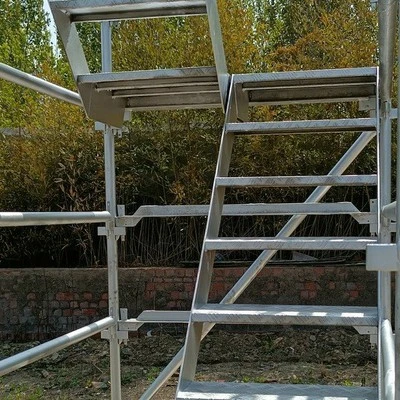
Understanding All-Round Scaffolding and Frame Systems
What Is All-Round Scaffolding?
A rosette connection soldered to vertical standards is the foundation of the all-round scaffolding modular system. Each rosette disk can handle up to eight ledger or diagonal links at the same time, which means that a single node can be configured in any way possible. Crews can build around curved ship hulls, dense pipe networks, and uneven facades without having to cut or make do. Shandong Xingrui Building Materials Co., Ltd. makes its system from Q235 premium carbon steel that has been hot-dip galvanized. It can hold up to 50kN per vertical standard.
What Is Frame Scaffolding?
Frame scaffolding is made up of rectangular frames that are stacked upright and connected with cross-braces. The system is easy to put together—no special skills are needed—and it can be used quickly on flat, open areas. But set frame geometry makes it harder to change. You can't tilt or move a frame to fit a curved wall or an uneven slope without adding non-standard parts, which can be dangerous on regulated sites where compliance is important.
Where Each System Fits
Frame scaffolding is good for building walls on homes, warehouse interiors, and straight-run jobs that need to be done quickly and don't need to be able to bend in any way. Ringlock systems are used for bridge falsework, shipbuilding dry docks, petrochemical shutdowns, and any other project that needs to be able to track loads and get to them from different angles. All-round scaffolding is another option that offers broad flexibility for projects requiring access from multiple directions. The two systems don't always compete with each other; some contractors keep both fleets and choose which one to use based on the type of project.
Performance, Safety, and Compliance Comparison
In Europe and the Middle East, safety experts and buying managers have to follow strict rules. Before you place an order, you need to know how each system meets those standards for all-round scaffolding.
Load Capacity and Structural Integrity
The ringlock link moves weight through a cast wedge head that is locked into the rosette disk. This keeps the structure's verticality within a 0.2% range. This level of accuracy is important for shoring towers that are very tall—some setups go over 50 meters when properly attached to permanent buildings. Frame scaffolding has lower distributed load ratings and is more likely to become unstable when frames are loaded unevenly or when the ground is soft.
EN Standard and CE Certification Compliance
European procurement rules say that working and exterior scaffolds must comply with EN 128010 and EN 128111. When parts are certified by CE, it means they've been checked to meet those standards. Frame scaffolding from reputable makers can meet these needs for basic tasks, but ringlock systems usually have more complete paperwork, such as batch tracking records, weld penetration test results, and galvanization thickness certificates. Shandong Xingrui is certified by ISO 9001, ISO 14001, and ISO 45001, and all of their products are CE certified.
Corrosion Resistance in Aggressive Environments
When ISO 1461 standards are followed for hot-dip galvanization, a 60–80 micron zinc covering is put on all the parts' sides. This layer is the main defense against rust in places like saltwater shipyards or industrial sites with a lot of chemicals. Frame scaffolding that has been coated with electrostatic spray paint breaks down much more quickly in the same conditions, which means it needs to be replaced more often and costs more over its lifetime.
Practical Project Applications and Efficiency
In the end, which of these two systems you choose depends on how well each one works with the conditions your crews face every day on the job site for all-round scaffolding.
Assembly Speed and Labor Requirements
The wedge-lock connection gets rid of the need for separate couplers and loose bolts. The link is made by having a crew member put the wedge head into the rosette and hit it down with a hammer. Field data from contractor deployments show that this method cuts assembly time by about 50% compared to tube-and-clamp options. All-round scaffolding is easier to set up when the runs are straight, but it's slower when the layout calls for offsets or heights that aren't standard.
Adaptability on Complex Sites
The shape of the ringlock system gives measured benefits in the following situations:
- Exterior wall protection: When diagonal bracing is connected directly to rosette nodes, rigid truss structures are made that can withstand lateral wind loads at any building height.
- Indoor high formwork support: For indoor high formwork support, vertical shoring towers can be set up to be longer than 50 meters when they are attached to a fixed structure and have the same node load values all the way through.
- Industrial maintenance access: In refineries, dense pipe networks and petrochemical plants, spherical tank shapes need 360° access angles that a set frame geometry can't provide.
- Shipbuilding and offshore platforms: HDG-finished parts work reliably in saltwater, and the system's modular design lets it be quickly rearranged between contracts for vessels.
Because of these features, the ringlock system is the best choice when the shape of the site isn't always expected or when strict cleanliness rules apply. Frame scaffolding is still a good choice when the site plan is regular and speed of completion is the most important factor.
Reusability and Long-Term Durability
With the right cleaning and checking after the job is done, ringlock parts usually last between 15 and 20 years. The initial buy cost is spread out over many projects, which is called amortization. When used in heavy-duty industrial settings, frame scaffolding parts, especially the welded frame units, are more likely to bend when hit and don't last as long.
Cost Analysis and Procurement Insights
When purchasing managers are planning fleets for more than one year, the upfront unit price isn't usually the deciding factor for all-round scaffolding.
Total Cost of Ownership
A ringlock system that costs more up front but is used on 20 or more projects has a lower cost per use than cheaper frame equipment that needs to be replaced every 5–7 years. Due to their long service life (15–20 years), ability to be reused, and low maintenance needs, hot-dip galvanized parts make the lifecycle cost case easy for high-frequency industrial contractors.
Customization and Order Flexibility
Shandong Xingrui will take orders that are based on samples and plans provided by the customer. The 79,800-square-meter building has 12 welding robots and 6 automatic production lines, so it can handle big orders while keeping the accuracy of the dimensions to within ±1mm per part. Before placing a large order, the company offers samples and full technical documentation in English. This fits with the standard sample-test-small-batch-framework-agreement procurement cycle used by European scaffolding contractors.
Verifying Supplier Credibility
When looking at any all-round scaffolding manufacturer or supplier, ask for batch-traceable test certificates for rosette weld shear strength, HDG layer thickness measurements per ISO 1461, and EN 12810/12811 load test reports. In European and Middle Eastern markets where HSE checks are common, a seller who can't show these papers when asked does pose a compliance risk.
Making the Right Choice for Your Project: Decision Support
| Criterion | All-Round Ringlock System | Frame Scaffolding |
|---|---|---|
| Complex geometry | Excellent | Limited |
| Load capacity | Up to 50kN/standard | Lower, project-specific |
| Assembly speed | ~50% faster than tube-and-clamp | Fast on straight runs |
| Corrosion resistance | 60–80 micron HDG, 15–20 years | Paint coating, shorter life |
| EN/CE compliance documentation | Comprehensive batch traceability | Variable by manufacturer |
| Reusability | High | Moderate |
| Best applications | Industrial, shipyard, bridge, high-rise | Residential, straight facades |
Conclusion
Both systems have real benefits, and neither is better for every project than the other. Frame framing is good for places where speed and ease of use are important. The all-round scaffolding modular system is used on industrial sites, in complex structures, and on any project that needs to meet EN standards, have entry from more than one way, and last a long time. When buying teams are choosing a provider, the best way to meet regulations and keep the value of their fleet over time is for the vehicles to be made of Q235 steel, be hot-dip galvanized, have CE certification, and have full batch traceability paperwork.
FAQ
What are the main advantages of all-round scaffolding over frame systems?
The ringlock system can handle up to eight links at a single rosette node, which lets it be set up in any direction, which is something that frame scaffolding can't do. It can also hold more weight—up to 50kN per vertical standard—and its hot-dip galvanized finish lasts for 15–20 years, even in harsh conditions for all-round scaffolding.
Is all-round scaffolding suitable for high-rise construction?
In fact, ringlock shoring towers are taller than 50 meters when they are properly attached to a fixed building. It is possible to mix parts from different makers as long as the structural verticality stays within a 0.2% tolerance. Each node also has a load value that can be predicted and is written down.
Can components from different manufacturers be mixed?
Mixing is usually not a good idea. The 48.3mm OD tube standard is used by many makers, but the shape of the rosette and the thickness of the wedge can be different. Before mixing parts on a regulated site, certified load testing must be done to make sure they are technically compatible.
What maintenance does the system require?
For upkeep after a project is finished, concrete scraps need to be cleaned off of rosettes, wedges need to be checked for deformation, and galvanized surfaces need to be checked for mechanical damage that could let localized rust start.
How do I verify that a supplier meets EN compliance requirements?
Ask for test certificates that can be tracked by batch, HDG thickness measurement reports that follow ISO 1461, and EN 12810/12811 load test paperwork. These papers are usually given by a reliable supplier.
Request a Quote from GREEN FORMWORK — Trusted All-Round Scaffolding Manufacturer
Shandong Xingrui Building Materials Co., Ltd. runs GREEN FORMWORK and sells CE-certified all-round scaffolding to builders and industrial service providers in Europe, the Middle East, and around the world. We help you buy things by offering Q235 steel construction, ISO 9001/14001/45001 certifications, and full technical paperwork in English. We can help you with everything from sample supply to yearly framework agreements. You can email our team at sdxingruiqp@126.com or go to sdxingrui.com to get pricing and more information.
References
1. Construction Industry Research and Information Association (CIRIA). (2022). Scaffolding Safety and Compliance Guidance for Industrial Projects.
2. European Committee for Standardization. (2004). EN 12811-1: Temporary Works Equipment — Scaffolds — Performance Requirements and General Design.
3. International Organization for Standardization. (2009). ISO 1461: Hot Dip Galvanized Coatings on Fabricated Iron and Steel Articles — Specifications and Test Methods.
4. Health and Safety Executive (HSE), UK. (2020). Work at Height: A Brief Guide for Contractors and Scaffolding Operatives.
5. American National Standards Institute / Scaffolding, Shoring & Forming Institute (ANSI/SSFI). (2019). SC100: Safety Requirements for Scaffolding.
6. Hadipriono, F. C., & Wang, H. K. (1986). Analysis of Causes of Falsework Failures in Concrete Structures. Journal of Construction Engineering and Management, ASCE, 112(1), 112–121.
Learn about our latest products and discounts through SMS or email