- English
- French
- German
- Portuguese
- Spanish
- Russian
- Japanese
- Korean
- Arabic
- Greek
- German
- Turkish
- Italian
- Danish
- Romanian
- Indonesian
- Czech
- Afrikaans
- Swedish
- Polish
- Basque
- Catalan
- Esperanto
- Hindi
- Lao
- Albanian
- Amharic
- Armenian
- Azerbaijani
- Belarusian
- Bengali
- Bosnian
- Bulgarian
- Cebuano
- Chichewa
- Corsican
- Croatian
- Dutch
- Estonian
- Filipino
- Finnish
- Frisian
- Galician
- Georgian
- Gujarati
- Haitian
- Hausa
- Hawaiian
- Hebrew
- Hmong
- Hungarian
- Icelandic
- Igbo
- Javanese
- Kannada
- Kazakh
- Khmer
- Kurdish
- Kyrgyz
- Latin
- Latvian
- Lithuanian
- Luxembou..
- Macedonian
- Malagasy
- Malay
- Malayalam
- Maltese
- Maori
- Marathi
- Mongolian
- Burmese
- Nepali
- Norwegian
- Pashto
- Persian
- Punjabi
- Serbian
- Sesotho
- Sinhala
- Slovak
- Slovenian
- Somali
- Samoan
- Scots Gaelic
- Shona
- Sindhi
- Sundanese
- Swahili
- Tajik
- Tamil
- Telugu
- Thai
- Ukrainian
- Urdu
- Uzbek
- Vietnamese
- Welsh
- Xhosa
- Yiddish
- Yoruba
- Zulu
How to install lightweight steel formwork without a crane
Installing lightweight steel formwork without a crane is achievable when panels weigh ≤22 kg each—light enough for a single worker to carry and position. The process involves ground-level panel assembly, manual alignment using wedge pins and clamps, and sequential stacking supported by adjustable jacks or pulley systems. Proper site preparation, clear crew assignments, and panel-by-panel verification of joint seals ensure structural integrity throughout. This approach works well on confined urban sites, mid-rise residential floors, and municipal projects where crane access is restricted or cost-prohibitive.
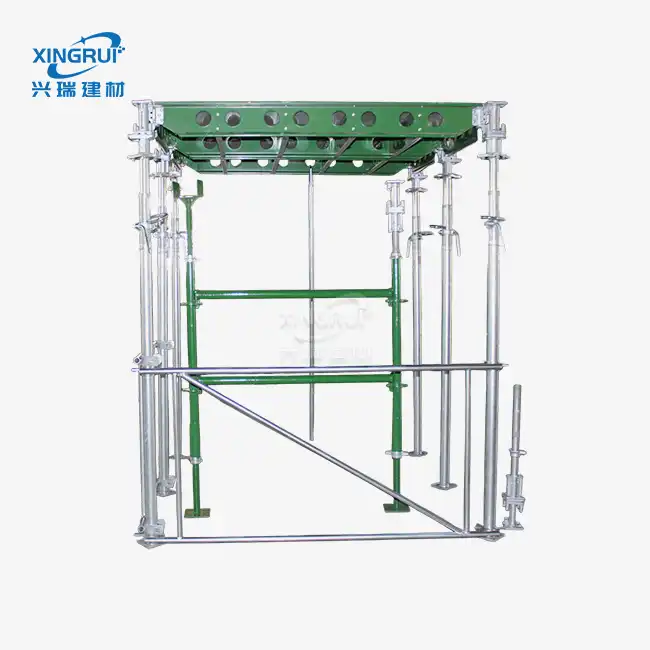
Understanding the Challenges of Installing Steel Formwork Without a Crane
It's not easy to decide not to use crane support. It has effects on the whole project schedule because it deals with things like safety, scheduling, and planning the work force.
Site Access Constraints
Many job sites in places like Houston, Chicago, and Los Angeles can't use cranes because the lots are too narrow, there are things hanging over them, or there are busy pedestrian zones. Workers have to move panels through stairwells, narrow hallways, and floor spaces, so they have to be designed to be as light as possible.
Precision Alignment Without Mechanical Aids
Because they don't have a crane to hold the panels in place, crews have to work together to hold and line up each unit. Any frame smoothness difference greater than ±2 mm makes gaps that let concrete leak, surface honeycombing, and expensive repair happen. This alignment risk is directly lowered by selecting a formwork system with tight-fit joint design.
Labor Demand and Fatigue Risk
Moving panels by hand puts more stress on workers' bodies, especially when they have to do the same thing over and over on different floors. About 35% of construction injuries in the U.S. are caused by overwork and moving heavy objects by hand. Choosing panels that weigh less than 22 kg each makes it much less likely that anyone on the team will get tired or hurt.
Principles and Core Techniques for Crane-Free Installation
If the formwork system is made to be operated by hand, the installation process is planned and can be repeated, instead of being haphazard.
Site Preparation and Safety Checks
Clear the deck of any loose materials, mark the pour zones, and make sure that the working platforms meet OSHA 1926 Subpart Q standards before any panel goes up. At least one crew member should be in charge of every two panels, and all wedge pins, clamps, and tie rods should be on hand before starting to put the lightweight steel formwork panels together. Hours of mid-pour correction can be avoided with a five-minute check before the task.
Ground-Level Assembly and Sequential Lifting
The best way to do it without a lift starts at grade. Flatten the wall or column panels on the ground and use the quick-lock mechanism to lock the frames together. Then, have two people tilt the assembled section up and use adjustable props or shore braces to keep it stable. For floors above grade, panels are brought up one at a time by stairwells or material hoists and then joined together on the deck. This step-by-step method keeps the pour cycle going and the weight loads doable.
Mechanical Aids: Pulleys, Jacks, and Props
Even if you don't have a crane, small mechanical tools can help keep workers safe and speed up the building process. Heavy custom panel runs are taken care of by a chain block or beam trolley that can hold 500–1,000 kg. Screw jacks and vertical sides keep wall forms stable against the 60–80 kN/m² of horizontal concrete pressure that can happen during a normal pour. You can rent these tools for a lot less than a crane, and you don't need a professional user on site.
Comparing Crane-Free Installation With Traditional Crane-Assisted Methods
There is no doubt about what the numbers mean. This is a direct comparison of the three things that procurement managers care about the most.
The numbers below show normal mid-rise domestic project data from field reports from contractors and industry standards:
- Labor cost per floor cycle: Crane-assisted setup averages $1,800–$2,500 in equipment rental alone. Manual installation using a modular steel system with panels under 22 kg reduces that line item to near zero, directing savings back into materials or crew wages.
- Setup time per pour: Crane-dependent workflows require scheduling coordination with the crane operator, signal person, and rigging crew. Manual assembly of modular panels by a four-person team typically completes a standard wall form in 3–4 hours—comparable to crane-assisted times when scheduling delays are factored in.
- Regulatory compliance: OSHA requires specific certifications, signal person training, and lift plans for crane operations. Crane-free installation eliminates this compliance layer, reducing paperwork and third-party inspection costs on smaller projects.
These saves add up over a rental fleet. For businesses that rent out lightweight steel formwork, not having to rely on cranes means that panels can be used on more job sites at the same time, which increases the rental revenue per panel set and the number of times that assets are used.
Preparing Your Procurement Strategy for Crane-Free Installation
Whether crane-free building is possible or not depends on how well the formwork panels are chosen. Before you place an order, here are the most important things to think about:
- Panel weight: Any system over 30 kg per panel creates manual handling risk regardless of design features. Xingrui's standard panels weigh ≤22 kg each, verified by third-party production testing.
- Certification: ISO 9001, ISO 14001, and ISO 45001 certifications confirm that quality control, environmental management, and occupational health standards are embedded in production—not just claimed in a brochure.
- Dimensional tolerance: Frame flatness within ±2 mm is a documented technical requirement for leak-free joints. Always request a mill certificate or inspection report, not just a spec sheet.
- Reuse cycles: Systems delivering 40+ documented reuse cycles offer lower cost per pour over the asset's working life. This matters especially for rental operators managing a rotating inventory.
- Sample availability: Request a physical sample before committing to a batch order. GREEN FORMWORK provides samples on request so buyers can verify plate thickness (2.0 mm face, 2.5 mm frame) and joint fit before purchase.
Formwork is usually bought in rounds of two to six weeks, from the time of the first question to the time of delivery. That schedule can be kept steady by building a connection with a provider that includes technical help and custom sizing.
Maintenance, Safety, and Environmental Considerations
If you take good care of your steel formwork panel after each pour, it will last as long as it's supposed to, which is often more than one project season.
Routine Inspection and Cleaning
Before the concrete residue hardens, use a scraper and wire brush to get rid of it all after the lightweight steel formwork layer has been stripped. Before putting the face panels away, put a thin layer of form-release agent on them. Every five cycles, check the weld lines and frame corners for warping. If you find any, fix small bends on the spot using common tools. This protocol makes sure that panels work within the acceptable range without having to be sent back to the maker.
Manual Handling Safety Protocols
When pulling panels over and over, workers should wear gloves that won't cut, steel-toed boots, and back-support belts. Set a two-person lift rule for any panel that needs to be moved while it is raised, and use panel carts or dollies on flat decks to cut down on the lengths that need to be carried from the floor. These steps are in line with NIOSH lifting guidelines and lower the number of incidents that can be recorded.
Sustainability Benefits of Crane-Free Workflows
Lifting heavy things with cranes uses a lot of diesel fuel. In cities, crane engines can use 4 to 8 gallons of diesel per hour if they are not in use. When their time is up, steel formwork panels can be recycled in full, which means less building trash ends up in landfills. These things are known to be important for builders who want to get LEED credits or meet the environmental needs of their owners.
Conclusion
When the system is designed to be operated by hand from the start, installing lightweight steel formwork panels without a crane is a practical and cost-effective option. With panels that weigh less than 22 kg, tight-fitting joints, and flexible connections, small teams can quickly build walls, columns, and slabs without having to pay for crane rentals or wait for schedule changes.
This method helps with project budgets, worker health, and sustainability goals all at the same time, as long as proper maintenance schedules and clear safety rules are followed. When purchasing managers look at different formwork choices, the most reliable ways to tell if a supplier is a good long-term value are by looking at their technical specs and certifications.
FAQ
Can lightweight steel formwork handle high lateral concrete pressure?
Yes, lateral pressures of up to 60–80 kN/m² can be handled by Q235/Q345 steel panels with a frame width of 2.5 mm. This is enough for normal wall and column pours. The supplier's technical guide tells you how far apart the tie rods should be so that the structure keeps working well during the pour.
What is the standard lead time for custom-sized panels?
Standard sizes, like 1000x300 mm and 1500x200 mm, are usually in stock. Custom-engineered panels usually need 4–6 weeks to be made and checked for quality before they can be shipped.
Is steel formwork compatible with existing rental inventory?
Most steel modular systems use wedge-pin connections that work with standard Euro-style accessories. When you ask for a sample or quote, include the specifications of the accessory you already have to make sure it will work.
How many reuse cycles can buyers expect?
GREEN FORMWORK panels can be used more than 40 times in average site circumstances as long as they are maintained properly. This grade comes from testing in production, not from guessing how long it will last.
Do you offer technical support after the order is placed?
Yes, GREEN FORMWORK offers expert support that can be reached at any time to help buyers plan installations, lay out panels, and deal with any quality issues that come up during a job.
Get a Quote from GREEN FORMWORK — Lightweight Steel Formwork Supplier
Shandong Xingrui Building Materials Co., Ltd. makes GREEN FORMWORK, which is certified lightweight steel formwork panels that can be used on job sites without cranes. We provide buying managers with the information they need to make an informed decision. Our panels weigh less than 22 kg, can be used over 40 times, and we offer free samples. To get a sample or project quote right away, email us at sdxingruiqp@126.com or go to sdxingrui.com.
References
1. Bureau of Labor Statistics, U.S. Department of Labor. Employer-Reported Workplace Injuries and Illnesses. 2022.
2. U.S. Energy Information Administration. Fuel Oil and Kerosene Sales Annual Report. 2023.
3. Occupational Safety and Health Administration (OSHA). Concrete and Masonry Construction Standard: 29 CFR 1926 Subpart Q. U.S. Department of Labor, 2021.
4. National Institute for Occupational Safety and Health (NIOSH). Applications Manual for the Revised NIOSH Lifting Equation. Centers for Disease Control and Prevention, 2021.
5. American Concrete Institute. ACI 347R-14: Guide to Formwork for Concrete. ACI Committee 347, 2014.
6. International Organization for Standardization. ISO 9001:2015 Quality Management Systems — Requirements. ISO, 2015.
Learn about our latest products and discounts through SMS or email