- English
- French
- German
- Portuguese
- Spanish
- Russian
- Japanese
- Korean
- Arabic
- Greek
- German
- Turkish
- Italian
- Danish
- Romanian
- Indonesian
- Czech
- Afrikaans
- Swedish
- Polish
- Basque
- Catalan
- Esperanto
- Hindi
- Lao
- Albanian
- Amharic
- Armenian
- Azerbaijani
- Belarusian
- Bengali
- Bosnian
- Bulgarian
- Cebuano
- Chichewa
- Corsican
- Croatian
- Dutch
- Estonian
- Filipino
- Finnish
- Frisian
- Galician
- Georgian
- Gujarati
- Haitian
- Hausa
- Hawaiian
- Hebrew
- Hmong
- Hungarian
- Icelandic
- Igbo
- Javanese
- Kannada
- Kazakh
- Khmer
- Kurdish
- Kyrgyz
- Latin
- Latvian
- Lithuanian
- Luxembou..
- Macedonian
- Malagasy
- Malay
- Malayalam
- Maltese
- Maori
- Marathi
- Mongolian
- Burmese
- Nepali
- Norwegian
- Pashto
- Persian
- Punjabi
- Serbian
- Sesotho
- Sinhala
- Slovak
- Slovenian
- Somali
- Samoan
- Scots Gaelic
- Shona
- Sindhi
- Sundanese
- Swahili
- Tajik
- Tamil
- Telugu
- Thai
- Ukrainian
- Urdu
- Uzbek
- Vietnamese
- Welsh
- Xhosa
- Yiddish
- Yoruba
- Zulu
Aluminum Building Formwork vs Timber: Which System Saves More?
If you're managing a high-rise residential project and deciding between formwork systems, the answer matters enormously to your bottom line. Aluminum building formwork consistently outperforms timber across total project lifecycle costs. While timber carries a lower purchase price upfront, its limited reuse cycles, higher labor demands, and waste disposal costs erode that advantage quickly. A quality aluminum panel system rated for 300+ cycles spreads its cost far thinner per pour, making it the financially stronger choice for any project running 20 or more standard floors.
Understanding Aluminum Building Formwork and Timber Formwork
What Is Aluminum Panel Formwork?
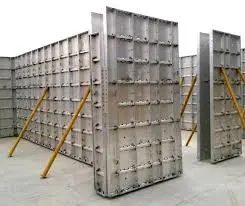
Extruded aluminum alloy panels are used to make aluminum panel formwork, which is a modular system for shaping concrete. These panels are made by Shandong Xingrui Building Materials Co., Ltd. from 6061-T6 aviation-grade aluminum. They come in widths of 100, 200, 300, and 400 mm and lengths of 2400, 2700, and 3000 mm. Each panel is accurate to within ±1 mm in size, can hold up to 60kN/m² of weight, and weighs only 20–25 kg/m², which is light enough to move by hand without a crane.
What Is Timber Formwork?
Timber formwork is a way to make temporary molds for concrete using plywood sheets and timber joists. You can easily find it, cut it on-site, and start using it for a low cost. Standard plywood panels, on the other hand, only last 5–10 reuse cycles before the surface wears down and needs to be replaced. Each reuse cycle requires inspection, repair, and re-oiling.
Key Material Differences at a Glance
These two methods are different from the material level up. Aluminum building formwork is anodized, which makes it resistant to rust, and it doesn't need to be plastered after being stripped. Wood soaks up water, bends in hot weather, and leaves rough concrete surfaces that need more work to smooth them out. In high-rise construction, that finishing work adds up to a big hidden cost for floor plans that are used over and over again.
Cost Efficiency Analysis: Aluminum Formwork vs Timber Formwork
The real financial picture only appears when you look at total cost of ownership, not just the purchase invoice.
Upfront Procurement Costs
Aluminum panel formwork carries a higher initial purchase price than timber. A typical project procurement for a high-rise residential block may cost 30–50% more per square meter upfront. However, that investment is spread across 300+ pour cycles, bringing the per-use cost well below $2/m² over the system's working life.
Labor and Installation Costs
This is where aluminum formwork changes the calculation significantly. The modular quick-lock connection design reduces skilled labor requirements by approximately 40% compared to timber systems. Workers without specialized carpentry training can assemble panels correctly, and the 4-day floor cycle common in aluminum formwork projects is simply not achievable with timber, where cutting, fitting, bracing, and stripping take considerably longer.
Lifecycle and Maintenance Comparison
Here is a direct comparison across the lifecycle factors that matter most to project managers:
- Timber formwork averages 5–10 reuse cycles per panel set. After each use, crews must inspect for delamination, replace damaged sheets, and re-apply release agents. Disposal costs for degraded timber add further expense, and in many U.S. markets, landfill fees for construction wood waste are rising.
- Aluminum panel systems from certified manufacturers deliver 300+ cycles with standard maintenance. The anodized surface resists corrosion without additional coating, and panels that sustain damage can be repaired individually rather than replaced in full sets. Residual resale value of aluminum scrap also offsets end-of-life costs.
- Plastering elimination with aluminum systems removes an entire trade package from your project schedule. Concrete surfaces stripped from anodized aluminum panels meet finish tolerances directly, saving both materials and labor on every floor.
These lifecycle differences shift the total cost of ownership decisively in aluminum's favor on any project beyond roughly 15 repetitive floor cycles.
Operational and Performance Benefits That Drive Savings
Aluminum building formwork cost is only part of what determines project profitability. Construction speed and concrete quality affect your schedule, your penalties, and your reputation with general contractors.
Faster Floor Cycles
Aluminum panel formwork supports a 4-day construction cycle per standard floor in high-rise projects. The Early Stripping System built into the Xingrui panel design allows slab and beam panels to strip within 36–48 hours after pouring, while vertical prop supports remain in place. This accelerates form turnover without compromising structural integrity and directly improves project cash flow.
Superior Concrete Surface Quality
Dimensional accuracy within ±1mm across all panels means walls, columns, beams, and slabs align consistently without correction pours. This precision matters especially when curtain wall systems or mechanical service integrations require tight tolerances. Timber formwork, by contrast, is subject to swelling, shrinkage, and joint gaps that regularly produce surface defects requiring repair before subsequent trades can proceed.
Environmental and Safety Advantages
Aluminum formwork generates near-zero construction waste compared to timber, which produces significant cut-off waste on every project. From a safety standpoint, lighter panels reduce manual handling injuries, and the rigid panel system eliminates the risk of formwork blow-out under concrete lateral pressure — a documented cause of serious site accidents. Fewer injuries mean lower insurance exposure and fewer project delays.
Decision Criteria for Choosing Between Aluminum and Timber Formwork
The right method for your job will depend on its details. Here is a useful framework for making that choice.
Project Scale and Repetition
When there are 20 or more identical floor plans, aluminum panel formwork is the most cost-effective option. Putting money into unique panel design pays off quickly when the same panels are used on every standard floor. For a one-time low-rise building or a project with very strange shapes, wood may still be more flexible.
Budget Structure and Cash Flow
If subcontractors don't have a lot of money up front, they should look into leasing or financing options for buying aluminum building formwork, if they are available. The per-cycle cost advantage is real, but you need to have enough money to cover the original expense. Full lifetime saves are most likely to happen on projects where the general contractor pays directly for the formwork.
Supplier Capability: Design and Logistics
A very important thing that many buyers forget to check is whether or not the supplier can provide full panel configuration design, not just raw panels. The engineers at Xingrui can make a unique panel layout design based on your structural plans. They make sure that every connection point, pin hole, and brace position is planned out before the order is delivered. This gets rid of the need to improvise on-site and the expensive fix that comes after design mistakes.
Implementation Case Studies Demonstrating Savings
High-Rise Residential Project with Aluminum Panel System
Standard floors on a 32-story apartment building made of modular aluminum panels were finished every four days. When compared to the project's previous timber-based method, the cost of forming each floor was cut by about 60% when panels were reused across all stories. Getting rid of the plaster on the inside walls saved about 18 work days per floor.
Low-Rise Commercial Project with Timber Formwork
A commercial building with six floors and plywood and wood joists needed new panels every six to eight uses because the surface was coming apart. Rework on concrete surfaces took up 12% of the budget for finishing labor. The project team said that the two biggest unexpected costs were getting rid of the scrap wood and buying new sheets over and over again.
Conclusion
On any job involving repeated floor cycles, aluminum building formwork saves more money than wood. The initial cost difference goes away quickly when you consider the 300+ reuse cycles, up to 40% less labor, no plastering needed, and almost no construction waste. Wood is still a good choice for small, one-time jobs, but when it comes to high-rise residential and commercial buildings, the numbers always favor aluminum panel systems. When purchasing choices are based only on price, the total savings that can be gained from moving to aluminum are often not taken into account.
FAQ
How many times can aluminum panels be reused compared to timber?
Quality aluminum panels rated to ISO 9001 and ASTM B209 standards deliver 300 or more reuse cycles with proper maintenance. Standard timber plywood formwork averages 5–10 cycles before surface degradation forces replacement. That difference alone accounts for most of the lifecycle cost advantage aluminum holds.
Does aluminum formwork work in both residential and commercial construction?
Yes. The modular panel system fits standard residential floor layouts and adapts to commercial structures including columns, beams, walls, and slabs within the same system. Custom panel configurations designed from your structural drawings cover both building types without requiring separate system procurement.
Is aluminum formwork safer than timber on-site?
Aluminum panels weigh 20–25kg/m², which workers handle manually without crane assistance. The rigid panel system also prevents concrete blow-out incidents that occur with under-braced timber forms. Both factors contribute to measurably lower site injury rates.
What happens to aluminum panels after the project ends?
Panels retain significant resale or scrap value as aluminum metal. Suppliers including Xingrui also offer refurbishment services to prepare panels for redeployment on subsequent projects, recovering residual value that timber systems simply cannot match.
Can aluminum panel layouts accommodate design changes mid-project?
Yes. Supplementary panels can be manufactured and delivered to address architectural changes without scrapping the original panel set. Pre-project configuration design by the supplier reduces the frequency of mid-project modifications considerably.
Request a Custom Aluminum Formwork Quote from GREEN FORMWORK
Shandong Xingrui Building Materials Co., Ltd.'s GREEN FORMWORK sells aluminum building forms made from 6061-T6 alloy. They offer full panel layout design, model supply, and expert help on-site. We ship to more than 100 countries from our 40,000m² plant, which has 12 welding robots. To get a price for your project from a reliable aluminum building formwork maker, email our team at sdxingruiqp@126.com.
References
1. Hurd, M. K. Formwork for Concrete (7th ed.). American Concrete Institute, 2005.
2. Peurifoy, R. L., & Oberlender, G. D. Formwork for Concrete Structures. McGraw-Hill, 2010.
3. Chandrakeerthy, S. R. D. S. "Suitability of Aluminum Formwork for Use in Tropical Climates." Construction and Building Materials, 1994.
4. Tam, C. M., Tong, T. K. L., & Chan, W. K. W. "Reducing Construction Waste by Prefabrication." International Journal of Construction Management, 2005.
5. European Concrete Platform. Good Concrete Guide: Formwork and Falsework. European Concrete Platform, 2008.
6. Construction Industry Institute. Formwork Systems and Labor Productivity in High-Rise Construction. University of Texas at Austin, 2016.
Learn about our latest products and discounts through SMS or email