- English
- French
- German
- Portuguese
- Spanish
- Russian
- Japanese
- Korean
- Arabic
- Greek
- German
- Turkish
- Italian
- Danish
- Romanian
- Indonesian
- Czech
- Afrikaans
- Swedish
- Polish
- Basque
- Catalan
- Esperanto
- Hindi
- Lao
- Albanian
- Amharic
- Armenian
- Azerbaijani
- Belarusian
- Bengali
- Bosnian
- Bulgarian
- Cebuano
- Chichewa
- Corsican
- Croatian
- Dutch
- Estonian
- Filipino
- Finnish
- Frisian
- Galician
- Georgian
- Gujarati
- Haitian
- Hausa
- Hawaiian
- Hebrew
- Hmong
- Hungarian
- Icelandic
- Igbo
- Javanese
- Kannada
- Kazakh
- Khmer
- Kurdish
- Kyrgyz
- Latin
- Latvian
- Lithuanian
- Luxembou..
- Macedonian
- Malagasy
- Malay
- Malayalam
- Maltese
- Maori
- Marathi
- Mongolian
- Burmese
- Nepali
- Norwegian
- Pashto
- Persian
- Punjabi
- Serbian
- Sesotho
- Sinhala
- Slovak
- Slovenian
- Somali
- Samoan
- Scots Gaelic
- Shona
- Sindhi
- Sundanese
- Swahili
- Tajik
- Tamil
- Telugu
- Thai
- Ukrainian
- Urdu
- Uzbek
- Vietnamese
- Welsh
- Xhosa
- Yiddish
- Yoruba
- Zulu
What Is Lightweight Steel Formwork? A Practical B2B Guide for Builders
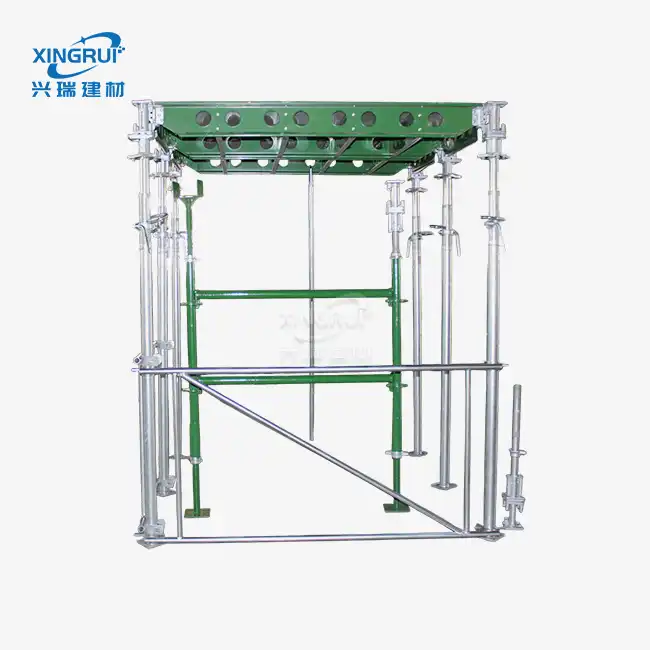
Lightweight steel formwork is a modular concrete forming system built from thin-walled, high-strength steel panels. Engineered to replace both heavy traditional steel shutters and short-lived plywood boards, it gives contractors a reusable, dimensionally accurate solution that workers can handle without cranes or hoisting gear. Each panel supports significant lateral concrete pressure while keeping individual unit weight at or below 22 kg. For procurement managers sourcing across civil, mid-rise, or municipal project types, this system delivers a measurable return across labor, material, and equipment cost lines.
Understanding Lightweight Steel Formwork: Definition and Core Concepts
What the System Actually Is?
At its core, steel formwork is just a stand-in mold that is used to pour new concrete. "Lightweight" refers to panels made with cold-rolled steel skins that are very thin (about 2.0 mm plate thickness) and are attached to rigid frames that are 2.5 mm thick. This shape makes each panel stiff enough to withstand hydrostatic pressure while keeping the weight of the whole thing low enough for one person to carry.
Material Grades and Surface Treatment
Most panels made for businesses are made of Q235 or Q345 steel. The surface is protected against the strongly alkaline environment of new concrete by hot-dip galvanization or powder coating. This gives the steel a rust-free service window of five to ten years under normal site circumstances. The tolerance for surface flatness is kept to within ±2 mm, which has a direct effect on how smooth the finished concrete faces are.
Common Panel Configurations
There are standard module sizes like 1000x300 mm and 1500x200 mm that are kept in stock, and companies like Shandong Xingrui Building Materials Co., Ltd. also make custom-cut panels for buildings with odd shapes. The panels are joined together with tight-fitting joints that keep grout from leaking. The modular grid can be used with walls, columns, beams, and blocks in a lot of different building plans.
Key Benefits and Applications of Steel Panel Formwork
Labor and Equipment Cost Reduction
Each lightweight steel formwork panel weighs about 22 kg, so one person has to carry and set it up without any help from machines. This directly speeds up the schedule on small urban sites where tower cranes are shared or not available. The total cost per square meter poured goes down when crew sizes are smaller and equipment rental days are shorter. This is a number that buying managers keep a close eye on for both multi-floor home and business projects.
These are the main performance benefits of this system that make it worth the money:
- Single-person operation: Panels under 22 kg allow any worker — regardless of physical stature — to install and strip without lifting aids, cutting hoisting costs and speeding up each floor cycle.
- 40+ reuse cycles guaranteed: Q235/Q345 steel with galvanized coating outlasts plywood boards by a wide margin, spreading the unit capital cost across dozens of concrete pours.
- ±2 mm frame flatness: Tight dimensional tolerances produce smooth formed surfaces that reduce plastering and patching labor on walls and columns.
- Tight-fit joint sealing: The close-tolerance joint design stops grout bleed, which eliminates honeycombing defects and the rework costs that follow.
Lower cost-per-use and faster floor cycles are directly related to these four features. Both of these are important for contractors who are managing multiple busy project sites at the same time.
Application Sectors
Steel panel formwork works well for high-rise residential projects in cities, mid-rise business buildings, and small government projects like utility tunnels and box culverts. Heavy machinery can't move through underground areas that are too small for it, so the movable panels have to be put together and taken apart by hand. The system can also be used for retrofits that strengthen buildings against earthquakes when exact geometry is needed around existing structural members.
Lightweight Steel Formwork vs. Other Formwork Types
Steel vs. Aluminum
While aluminum plates are lighter per unit, they cost more per kilogram, get scratched more easily, and can't be fixed by field welding when they get broken. Steel panels can take hits without breaking, and the same day, a site welder can fix a frame that has been dented. Over the course of a project's dozens of pours, steel systems often have a lower initial cost and are easier to fix, which leads to a better total cost outcome.
Steel vs. Plywood and Timber
Plywood shuttering is cheap per sheet, but it wears down quickly. Most site data shows that it can be used four to eight times before the quality of the surface drops below what is acceptable. Steel formwork that can be used more than 40 times spreads out its higher cost over a lot more concrete sides. Wood also bends when it gets wet, which leads to joint leaks and surface flaws that raise the cost of fixing the problem.
Steel vs. Plastic Modular Systems
But even though plastic formwork is light and doesn't rust, it can't hold as much weight as steel of the same thickness. Steel is better at meeting the side pressure needs of walls that will hold full-height concrete pours. Plastic systems also break easily in cold places, which limits when they can be used.
Procurement and Installation Guide for B2B Buyers
Choosing a Qualified Supplier
The fastest objective filter is a certification. Shandong Xingrui Building Materials Co., Ltd. has all three: ISO 9001 (quality management), ISO 14001 (environmental management), and ISO 45001 (occupational health and safety) for lightweight steel formwork. CE certification shows that the building meets European standards and gives buyers confidence when shipping goods across borders. Before committing to a large order, find out if the seller gives real samples. Having samples available takes away any doubts about the thickness and finish of the plates.
Pricing and Order Structure
Prices are usually given per piece or per metric ton, depending on how much you order. Because galvanized steel panels are heavier than aluminum, freight weight is important. CIF shipping costs should be estimated for each project batch. Rental companies usually like yearly contracts with deliveries that happen in stages to match the busiest times of the year for projects. This keeps cash flow smooth and keeps them from having too much inventory between projects.
Installation and Maintenance
The steps for assembly are clear: base panels are put in place, wedge pins or quick-lock clamps are used, and tie rods keep the faces that are facing each other at the right distance apart. Once the concrete gets the required early strength, it should be stripped. After each use, clean up any leftover concrete and put on a thin layer of release agent. Then, stack again. This process keeps the surface flat within the specs and saves the galvanized coating, which extends the panel's useful life.
Why Modern B2B Builders Choose Steel Formwork Systems
Traditional wood and heavy-steel systems have problems that are easy to predict: they require a lot of work, the finish on the outside isn't always even, and the cost of replacement keeps going up. All three can be met by a steel panel system with tight tolerances on dimensions and a proven cycle of reuse. The 79,800 m² facility that Shandong Xingrui uses is in Rizhao, Shandong, which is a port city with direct train, air, and sea links. The company ships to more than 100 countries. That logistics infrastructure means that lead times and batch quality are always stable, which are two things that procurement managers look at very carefully when they are looking for new sources.
Conclusion
Lightweight steel formwork has been useful in civil home, mid-rise industrial, and public building projects. Its manageable unit weight, accurate dimensions, and long service life of more than 30 years make it a good investment for both builders and renting companies. When B2B procurement teams compare suppliers, the things that make the difference are consistent plate thickness, certified quality systems, and the dependability of logistics. In all of these areas, a well-known manufacturer with proven production capacity has a clear advantage over alternatives that haven't been checked out. Check certifications, look at samples, and figure out the total cost per pour instead of just the purchase price.
FAQ
How many times can steel formwork panels realistically be reused?
Panels made to the Q235/Q345 grade and hot-dip galvanized usually last 40 or more times under normal site conditions. The actual lifespan relies on how it is stored, how carefully it is handled, and how quickly any leftover concrete is cleaned up after each pour. The anti-corrosion layer and the panel surface stay in good shape when they are properly maintained.
Can panels be ordered in custom sizes?
Yes, standard modules can be used for most household and business layouts. However, manufacturers offer custom-cut panels for column grids with odd shapes, curved walls, and retrofitting. Custom fabrication usually adds time to the production lead time, so make sure you know the sizes early on in the buying process.
How does installation time compare to plywood shuttering?
Skilled workers can put together steel modular panels faster than site-cut wood boards with quick-lock or wedge-pin connection methods. No nails or saws are needed, and the places of the panels can be used on different floors, which cuts down on the time needed to lay out the upper stories.
What quality checks should a buyer request?
Ask for proof of the plate thickness (make sure it's really 2.0 mm, not just the nominal value), weld integrity test records, zinc coating thickness measurements, and load test reports. A common concern is consistency from batch to batch. To address this, certified suppliers keep in-process quality records that can be linked to each production lot.
Are samples available before placing a bulk order?
Reliable manufacturers let you see real samples of their products before you buy them. GREEN FORMWORK clearly offers sample supplies, which let purchasing teams check the surface finish, weight, and accuracy of the joints before deciding on the final order quantities.
Get a Direct Quote from GREEN FORMWORK — Trusted Lightweight Steel Formwork Manufacturer
With help from Shandong Xingrui Building Materials Co., Ltd., GREEN FORMWORK sells lightweight steel formwork panels that are approved by ISO 9001, ISO 14001, and ISO 45001 to builders and rental companies in more than 100 countries. Panels are 22 kg each, can be used more than 40 times, and can be shipped from our facility at the Rizhao port with reliable lead times. Contact our team at sdxingruiqp@126.com to start your order and get a free sample or bulk quote today.
References
1. American Concrete Institute (ACI). ACI 347R-14: Guide to Formwork for Concrete. ACI, 2014.
2. Construction Industry Research and Information Association (CIRIA). Formwork — A Guide to Good Practice, 3rd ed. CIRIA, 2012.
3. Hurd, M.K. Formwork for Concrete, 7th ed. American Concrete Institute, 2005.
4. International Organization for Standardization. ISO 9001:2015 — Quality Management Systems: Requirements. ISO, 2015.
5. Peurifoy, R.L., and Oberlender, G.D. Formwork for Concrete Structures, 4th ed. McGraw-Hill, 2011.
6. Steel Construction Institute (SCI). Design of Temporary Works: Formwork and Falsework. SCI Publication P375, 2018.
Learn about our latest products and discounts through SMS or email