- English
- French
- German
- Portuguese
- Spanish
- Russian
- Japanese
- Korean
- Arabic
- Greek
- German
- Turkish
- Italian
- Danish
- Romanian
- Indonesian
- Czech
- Afrikaans
- Swedish
- Polish
- Basque
- Catalan
- Esperanto
- Hindi
- Lao
- Albanian
- Amharic
- Armenian
- Azerbaijani
- Belarusian
- Bengali
- Bosnian
- Bulgarian
- Cebuano
- Chichewa
- Corsican
- Croatian
- Dutch
- Estonian
- Filipino
- Finnish
- Frisian
- Galician
- Georgian
- Gujarati
- Haitian
- Hausa
- Hawaiian
- Hebrew
- Hmong
- Hungarian
- Icelandic
- Igbo
- Javanese
- Kannada
- Kazakh
- Khmer
- Kurdish
- Kyrgyz
- Latin
- Latvian
- Lithuanian
- Luxembou..
- Macedonian
- Malagasy
- Malay
- Malayalam
- Maltese
- Maori
- Marathi
- Mongolian
- Burmese
- Nepali
- Norwegian
- Pashto
- Persian
- Punjabi
- Serbian
- Sesotho
- Sinhala
- Slovak
- Slovenian
- Somali
- Samoan
- Scots Gaelic
- Shona
- Sindhi
- Sundanese
- Swahili
- Tajik
- Tamil
- Telugu
- Thai
- Ukrainian
- Urdu
- Uzbek
- Vietnamese
- Welsh
- Xhosa
- Yiddish
- Yoruba
- Zulu
Aluminum Formwork for Construction: Complete Buying Guide Tips
Selecting the right aluminum formwork for construction can determine whether your project finishes on time, within budget, or with costly overruns. This guide walks procurement professionals, rental company founders, and EPC contractors through everything that matters — from material specs and system comparisons to supplier vetting and long-term ROI. Whether you're sourcing a modular concrete forming system for high-rise residential towers or large-scale social housing, the decisions you make at the procurement stage shape every pour that follows.
Understanding Aluminum Formwork and Its Benefits
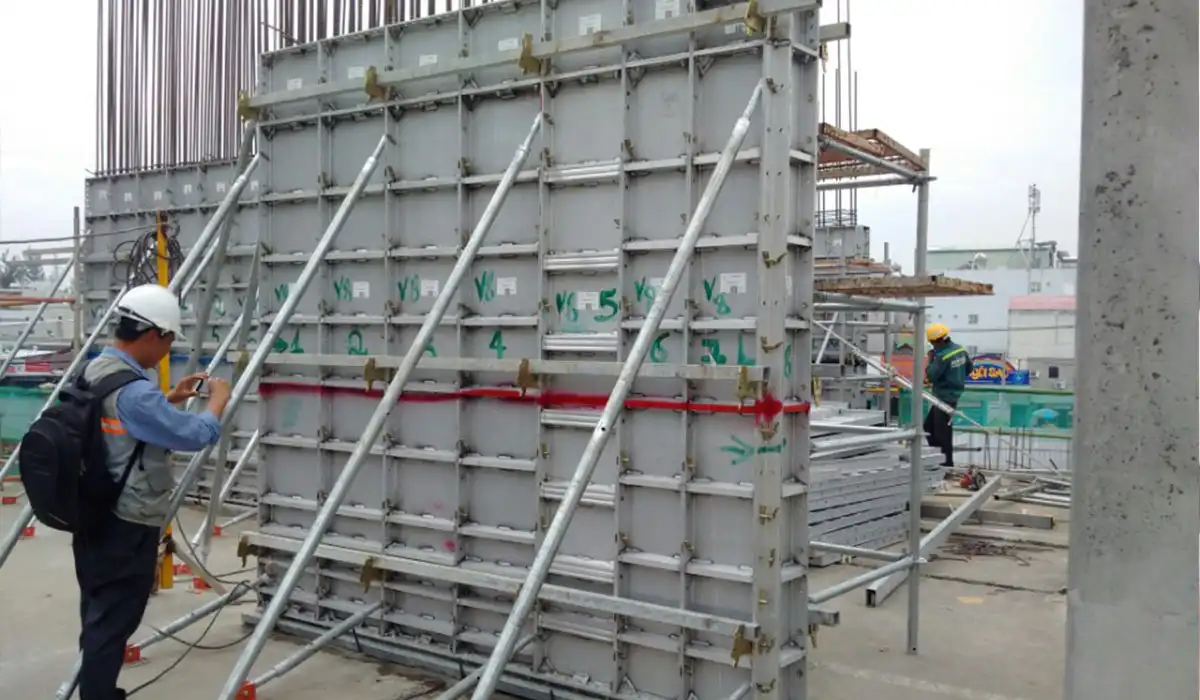
Aluminum formwork is a modular system for casting concrete that is made from high-strength aluminum alloy profiles. Walls, columns, slabs, and beams are shaped on it temporarily, and it is then stripped cleanly so it can be used again on the next floor cycle.
Material Science Behind the System
The best systems on the market are made of 6061-T6 aluminum alloy, which is the same grade that is used in spacecraft. This substance has a tensile strength of at least 265 MPa and a yield strength of at least 245 MPa. This means that panels can withstand up to 60 KN/m² of lateral concrete pressure without deforming. A panel doesn't weigh more than 18–25 kg, so workers can move them by hand without help from a crane.
On-Site Efficiency Gains
A typical floor cycle can be cut down to 4–5 days with a well-designed aluminum panel system. The pin-and-wedge connection method doesn't need much training, and even people who have never put together forms before can correctly put together a whole floor plan. That speed cuts the number of hours worked on each floor directly and keeps milestone dates the same.
Surface Quality and Finishing Savings
Panels leave a smooth, even-faced concrete finish that meets no-plaster standards after they are stripped. In a 30-story apartment building, getting rid of the plaster on each floor saves a lot of money on finishing—usually 15–20% of the budget for interior finishing, according to standards used in Southeast Asia and Latin America.
Comparing Aluminum Formwork with Traditional and Alternative Systems
Teams in charge of buying things often compare metal to plywood shuttering and steel formwork before deciding on a system. Cost, effort, and lifespan value are all things that each choice has pros and cons.
Aluminum vs. Plywood Shuttering
Plywood is cheap at first, but it breaks down quickly. It can usually be used 8–15 times before it starts to warp, swell, or leak slurry. With proper care, aluminum formwork for construction plates can be used more than 200 times, and the method from Shandong Xingrui Building Materials Co., Ltd. has been tested and proven to work for 300 to 500 times. When you add up the costs of replacing hundreds of floors with metal, the cost per use drops much lower than the cost of replacing boards over and over again.
Aluminum vs. Steel Formwork
Number 3: Steel formwork has a high carrying capacity, but it's very heavy—usually 40–60 kg per panel—so it has to be lifted by hand every floor. Aluminum has a similar bearing capacity (up to 60 KN/m²) but is only about half as heavy. This saves money on labor and lowers the risk of getting hurt while lifting. It costs less to move smaller items from one job site to another for rental companies like Diego's in Latin America or Southeast Asia.
Lifecycle Cost and Rental Economics
Most of the time, this is how the cost math works for B2B buyers:
- Break-even point: ROI is generally reached after 50–60 reuse cycles, after which each additional cycle generates net savings against timber alternatives.
- Reusability range: A quality aluminum panel system reliably serves 300–500 reuses, meaning a single procurement can support years of project rotations.
- Panel adaptability: Approximately 70–80% of standard panels transfer across different project layouts; only project-specific filler pieces require redesign.
These numbers make metal systems very appealing to rental companies that need to quickly replace their assets and spend little on repairs. The economics only get better when buying teams choose a maker that offers 100% factory trial assembly. This way, expensive fitting changes don't have to be made on-site.
Step-by-Step Aluminum Formwork Installation and Operational Guide
When you set up a concrete forming system correctly from the start, you avoid waste and protect your investment. The steps in the process are clear.
Site Assessment and Layout Planning
Before the panels come, the project engineer has to compare the floor plan's measurements to the modular grid. Standard modulus increments for aluminum systems are usually 50 mm, so making sure the drawings are correct makes sure that standard panels cover 70–80% of the plan with few custom cuts. At this stage, the prop spacing, pour order, and backprop needs are also confirmed based on the structural load estimates.
Assembly Sequence and Tooling
Panels in the corners for aluminum formwork for construction are put together first, then panels inside. The pin-and-wedge locking system doesn't need any special tools—just a hammer and some adjustment pins. A limit of ≤2 mm for panel smoothness across all surfaces stops slurry from leaking between joints. Before pouring, workers should make sure that each course is lined up correctly. A quick 15-minute check can save hours of work that needs to be redone after the concrete has set.
Safety Standards and Common Challenges
All formwork systems should meet the structural safety codes and ASTM standards that apply to your market. Pre-pour checklists can help with the most common problems that happen on-site, like panels that aren't lined up right, wedges that come loose during vibration, and props that settle. Shandong Xingrui's technical support team helps site managers fix problems without slowing the pour schedule by giving them assembly instructions and being available for advice.
Procurement and Supplier Selection Guide for Aluminum Formwork
Picking a source for a concrete forming device is a choice that will last for a long time. Not just one project is affected by the wrong pick; dozens of them are.
Certifications and Quality Documentation
You should look for a supplier that is certified in both the ISO 9001 Quality Management System and the ISO 14001 Environmental Management System. All of their products should also have CE certification. Shandong Xingrui Building Materials Co., Ltd. has all three and keeps an eye on quality at every step of the production process, from testing arriving 6061-T6 metal with a spectrometer to making sure finished panels are the right size. Full batch traceability means that procurement teams can make records for client compliance needs or audits by a third party.
Production Capacity and Delivery Reliability
For big EPC firms and rental companies that are working on a lot of projects at once, the production ability of the supplier is just as important as the quality of the products. Shandong Xingrui has a 40,000-square-meter factory in Rizhao, Shandong. Rizhao is a coastal city with its own airport, seaport, and high-speed rail. The factory has 4 cold roll forming lines, 12 welding robots, and 6 automatic welding lines that work together to make sure that big orders are always filled on time. Standard orders have a 15–30-day production lead time, and the whole process of buying things, from the first inquiry to receiving the goods, usually takes 60–120 days.
Customization, OEM, and After-Sales Support
Suppliers of aluminum formwork for construction should be able to make things from plans given by the customer, and samples should be ready in 7–14 days. Shandong Xingrui can make OEM and custom panel configurations, and they have a team that handles export paperwork, FOB/CIF terms, and expert conversation in multiple languages. After-sales support includes finding replacement panels and giving technical advice for repairs that need to be done in the field. These are important things to have when your assets are working in more than one country at the same time.
Maximizing ROI and Sustainability with Aluminum Formwork
Beyond the financial case, sustainability is becoming a procurement requirement rather than a preference. Aluminum formwork addresses both.
Environmental Performance
Aluminum is 100% recyclable at end of service life. Unlike timber shuttering, which generates construction waste at every project, an aluminum system produces near-zero material waste across its 200+ cycle lifespan. For projects pursuing green building certifications such as LEED or EDGE, documenting the recyclability and low-waste profile of the forming system contributes directly to certification scoring.
Labor Productivity and Project Speed
The weight advantage of aluminum — panels averaging 18–25 kg versus 40–60 kg for steel — directly reduces physical strain and fatigue on site. Research published by the International Labour Organization links reduced physical loading to lower injury rates and higher daily output per worker. On a 30-floor project, compressing each floor cycle from 7–8 days (typical with timber) to 4–5 days saves weeks of schedule time.
Market Trends Supporting Adoption
Aluminum forming systems are gaining ground in high-rise residential, social housing, and mixed-use developments across Southeast Asia, Latin America, and the Middle East — markets where repetitive floor layouts and tight delivery timelines favor the system's strengths. Procurement teams that build supplier relationships now, before project demand peaks, gain pricing and allocation advantages during busy construction seasons.
Conclusion
For modern cast-in-place concrete construction, aluminum formwork for construction has been used successfully and is a cost-effective option. It is made of 6061-T6 alloy, is put together with pins and wedges, and can be used more than 200 times. This makes it a good choice for EPC contractors, rental companies, and housing developers. The best results will be achieved across all of a procurement team's projects if they focus on certified providers with strong production capacity, paperwork support, and the ability to make custom parts. The data backs up the move away from wood; now the question is which supplier can deliver consistently on a large scale.
FAQ
Q1: How much does aluminum formwork cost compared to plywood?
A: Aluminum formwork costs more up front than plywood shuttering. But after 50 to 60 reuse cycles, the device starts to break even, and it keeps working for another 300 to 500 rounds. When used for a number of projects, the total cost per use drops well below the cost of buying plywood over and over again.
Q2: How many times can aluminum panels be reused?
A: A well-kept aluminum panel system from a good manufacturer can usually be used 200 to 500 times. Shandong Xingrui's system is rated for 200+ cycles, and it has been shown to work up to 300–500 times with normal maintenance.
Q3: What certifications should I verify before purchasing?
A: Check that the company has at least ISO 9001, ISO 14001, and CE approval. Ask for EN 12811 calculation reports and a Declaration of Performance (DoP) to make sure you're in line with the rules for the European market. For countries that are close to the US or that follow ASTM standards, check the structural load paperwork against the relevant codes.
Q4: Can panels be customized for non-standard layouts?
A: Yes. About 70–80% of standard panels can be used in a variety of project layouts. Filler panels are made to order based on customer drawings, and samples are sent out within 7–14 days for most configurations.
Q5: What is the typical lead time for a large order?
A: Normal production takes 15–30 days after the order is confirmed. From the first question to the delivery on site, the whole process usually takes between 60 and 120 days, which includes sampling, technical agreement, and ocean freight.
Request a Quote from GREEN FORMWORK — Your Aluminum Formwork for Construction Supplier
With help from Shandong Xingrui Building Materials Co., Ltd., GREEN FORMWORK sells approved metal formwork for building projects to people in more than 100 countries. We give buying teams the paperwork, freedom, and dependability they need with ISO 9001, ISO 14001, and CE certification, 40,000 m² of production space, and full custom manufacturing support. You can email us at sdxingruiqp@126.com to get samples or a price for your job right away.
References
1. International Labour Organization. Safety and Health in Construction. ILO, 2020.
2. American Concrete Institute. ACI 347R-14: Guide to Formwork for Concrete. ACI, 2014.
3. British Standards Institution. BS EN 12811-1: Temporary Works Equipment — Scaffolds. BSI, 2003.
4. U.S. Green Building Council. LEED v4 Reference Guide for Building Design and Construction. USGBC, 2019.
5. Construction Industry Institute. Formwork Systems Benchmarking Report. CII, 2021.
6. McGraw-Hill Construction. SmartMarket Report: Prefabrication and Modularization in Construction. McGraw-Hill, 2011.
Learn about our latest products and discounts through SMS or email