- English
- French
- German
- Portuguese
- Spanish
- Russian
- Japanese
- Korean
- Arabic
- Greek
- German
- Turkish
- Italian
- Danish
- Romanian
- Indonesian
- Czech
- Afrikaans
- Swedish
- Polish
- Basque
- Catalan
- Esperanto
- Hindi
- Lao
- Albanian
- Amharic
- Armenian
- Azerbaijani
- Belarusian
- Bengali
- Bosnian
- Bulgarian
- Cebuano
- Chichewa
- Corsican
- Croatian
- Dutch
- Estonian
- Filipino
- Finnish
- Frisian
- Galician
- Georgian
- Gujarati
- Haitian
- Hausa
- Hawaiian
- Hebrew
- Hmong
- Hungarian
- Icelandic
- Igbo
- Javanese
- Kannada
- Kazakh
- Khmer
- Kurdish
- Kyrgyz
- Latin
- Latvian
- Lithuanian
- Luxembou..
- Macedonian
- Malagasy
- Malay
- Malayalam
- Maltese
- Maori
- Marathi
- Mongolian
- Burmese
- Nepali
- Norwegian
- Pashto
- Persian
- Punjabi
- Serbian
- Sesotho
- Sinhala
- Slovak
- Slovenian
- Somali
- Samoan
- Scots Gaelic
- Shona
- Sindhi
- Sundanese
- Swahili
- Tajik
- Tamil
- Telugu
- Thai
- Ukrainian
- Urdu
- Uzbek
- Vietnamese
- Welsh
- Xhosa
- Yiddish
- Yoruba
- Zulu
Crab 60 Series Scaffolding vs Ringlock: Which Is Better for Builders
When comparing the crab 60series scaffolding and ringlock systems, the answer depends on what your project actually demands. For heavy-load, large-span, or high-rise construction, the 60-series heavy-duty crab-style system wins on load capacity, rigidity, and long-term durability. Ringlock performs well in medium-load and faster-cycle scenarios. This guide breaks down the technical differences, cost factors, and real-world application fit so procurement managers and engineers can make a confident, data-backed decision before placing an order.
Understanding Crab 60 Series and Ringlock Scaffolding Systems
What Is Crab 60 Series Scaffolding?
Heavy-duty modular shoring system Crab 60 series is made up of 60.3 mm outer diameter uprights with 3.2 mm wall thickness. These uprights are made from Q235 premium steel. It has an eight-hole rosette disk that lets you join in multiple directions at exact angles. It has a step distance of 1.5 meters and a standard span of 1.2 meters. Each leg of a vertical standard holds 70–80 kN. It has a 60–80 micron hot-dip galvanized coating that makes it last longer than 20 years, even in coastal or industrial settings.
What Is Ringlock Scaffolding?
Ringlock scaffolding has uprights with a diameter of 48.3 mm and a standard rosette plate at set distances, usually 500 mm. Z-braces and ledgers fit into the rosette with the help of wedge pins. It is commonly used in mid-rise apartment buildings, business fit-outs, and bridge access projects. The system is easier to move around on-site because the tubes are smaller and lighter, and the flexible shape makes it easy to set up in the same way over and over again. Its standard load, on the other hand, is much lower than what a 60mm system can offer.
Key Design Differences at a Glance
The wedge-lock connection on the crab 60 series ties itself up. As the vertical load or ground vibration increases, the wedge seats deeper into the rosette. This makes the connection more rigid without the need for any extra fasteners. A hammer-driven wedge is what holds ringlock systems together, but it can come loose after a while of vibration if it isn't checked every so often. This basic difference in engineering is very important in high-clearance shoring towers or concrete casting platforms where loads are constantly changing.
Performance and Durability Comparison
Load-Bearing Capacity
A single crab 60 series standard can hold between 6 and 8 metric tons, depending on the distance between the ledgers. This is a lot more than a regular 48.3mm ringlock standard can handle. In order to follow BS EN 12811-1, the design load for working scaffolds needs to include both dead loads and construction loads. The 60mm system is designed to meet these needs in high-load situations without the need for extra diagonal support. This saves money on materials and time during building.
Certification and Compliance
Shandong Xingrui Building Materials Co., Ltd.'s crab 60series scaffolding has ISO 9001, ISO 14001, and ISO 45001 certifications, which cover things like quality management, environmental responsibility, and health and safety at work. All of the parts meet the standards for CE approval, and the maker gives quality reports that can be used to track quality reports from each batch. Ringlock systems from trustworthy sellers also have CE marks, but not all sellers keep up with the full ISO triple-certification stack or offer EN 12810/EN 12811 math reports for engineers to sign off on.
Service Life and Maintenance
The 60-series system has a 60–80 micron hot-dip galvanized covering that protects against rust and usually lasts 20 years or more, even in harsh chemical or marine settings. When rented out for 8–12 years, ringlock systems that are painted or galvanized thinly may need to be re-coated. A 60-series fleet usually requires less maintenance over the course of 20 years, which is important for rental companies that keep track of asset turn rates.
Cost and Procurement Considerations
Initial Price vs. Total Cost of Ownership
Because it is made of heavier steel and has more precise rosette machining, the crab 60 series costs more per unit than standard ringlock. Price per kilogram of load capacity, on the other hand, tells a different story. Overall material amounts go down and crane lifts per floor cycle go down because fewer standards are needed to hold the same total load. For big EPC companies with tight deadlines, the time saved on labor often makes up for the higher cost within the first two or three floor rounds.
Customization and Supply Chain Flexibility
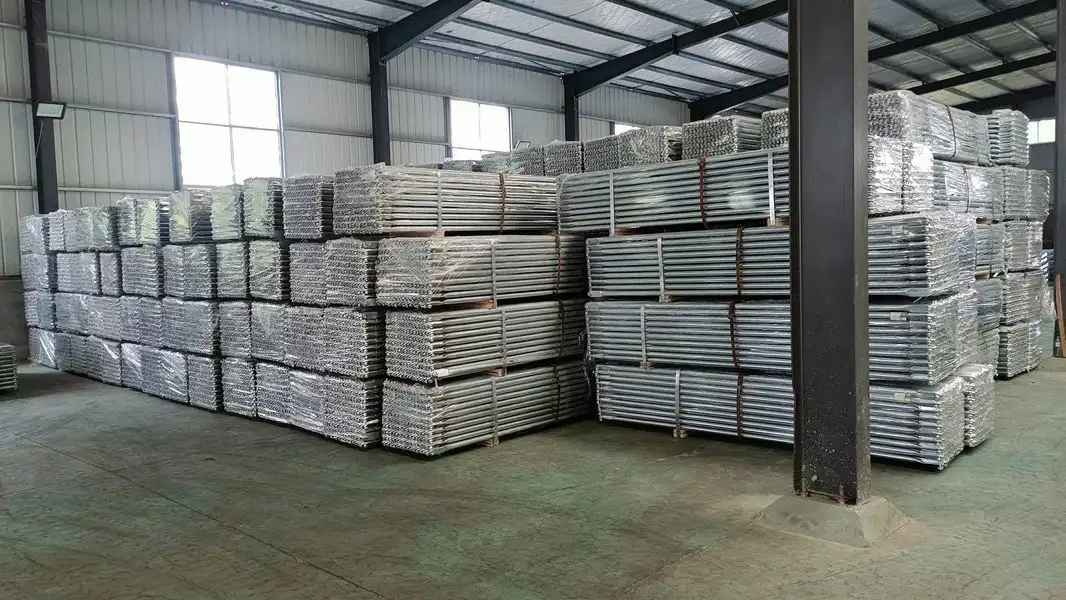
If you need unique tube lengths, span configurations, or OEM marking, Shandong Xingrui can take your order. Sample fabrication from drawings sent in usually takes 7–14 days to finish. The company's production center is 79,800 square meters and has 12 robotic welding lines and 6 automatic welding lines. This allows for high volume production without long wait times during busy construction seasons. Ringlock can be bought from a lot of different places, but custom sizes and fabrication based on drawings aren't as common and don't happen as quickly.
Sourcing Verified Suppliers
Buyers of crab 60series scaffolding from outside of Europe should ask for CE declarations of performance (DoP), batch mill certificates for steel, and inspection reports from a third party. Shandong Xingrui ships go through Rizhao Port in Shandong Province. This port has direct sea freight routes to Southeast Asia, the Middle East, Europe, and the Americas, which makes logistics in the interior of the country easier. The company has a track record of doing well in a wide range of governing settings because its products are sent to more than 100 countries.
Application Scenarios and User Recommendations
Where Crab 60 Series Excels
For the following types of projects, the 60-series system is the best choice:
- Bridge deck shoring and viaduct construction: High-clearance towers with concentrated vertical loads require the 70–80 kN per-leg capacity the 60mm standard delivers.
- Industrial plant and power station erection: Equipment installation in refineries or turbine halls places irregular point loads that 48.3mm systems cannot safely absorb.
- High-rise concrete formwork: Cast-in-place cores and slab soffit shoring for buildings above 20 stories benefit from the reduced number of standards and faster floor-to-floor cycle.
All of these situations have one thing in common: they all involve predictable, high-magnitude vertical loading where failure of the structure would have serious safety and financial consequences.
Where Ringlock Performs Well
Ringlock is a good choice for mid-rise residential construction, facade access scaffolding, and temporary event structures where the 48.3mm tube's ease of use and speed of assembly are more important than its peak load capacity. Rental fleets that work with general builders on a number of small to medium-sized jobs also like ringlock because it is easy to switch out parts and costs less per unit to repair.
Decision Framework for Procurement Managers
Choose the crab 60series scaffolding if your project has heavy or concentrated loads, spans longer than 6 meters, high formwork clearance, or rules that need EN-compliant calculation reports. Choose ringlock when the project loads are in the middle range, the choice is based on erection speed and crew training time, and the main limit is the budget per square meter of access.
Assembly, Safety, and Compliance Guidance
Safe Assembly Practices
Always start putting things together on a flat, pressed-down base plate, and make sure each upright is level before locking the ledgers. Tighten all of the wedge pins to the value recommended by the manufacturer. Do not use hammer blows of unknown force instead. Shandong Xingrui helps with the first-time setup of the 60-series system by providing technical guidance documents and on-site engineering consultation.
Regulatory Standards to Reference
EN 12810-1 sets performance requirements for wall scaffolding, and EN 12811-1 sets structure and design requirements for work scaffolds in a more general way. Safety rules for scaffolding in the US are set by OSHA 29 CFR 1926 Subpart Q. Any structural calculation report that is sent in for a permit should include load diagrams, base reaction values, and tie spacing schedules, as well as a reference to the relevant national standard.
Preventative Maintenance Checklist
After every 50 rounds of assembly, check the rosette welds for cracks. Compare the wear on the wedge to the manufacturer's range table. For projects that are put away outside, clean and re-grease the wedge interfaces. Any upright that has obvious distortion greater than L/500 of its length should be replaced.
Conclusion
Both the crab 60series scaffolding and ringlock scaffolds are useful tools for building, but they are designed to handle different types of loads. The 60-series heavy-duty crab-style system is the better technical and financial choice when a project needs a traceable certification chain, high vertical capacity, and structural rigidity. This is especially true for high-rise, bridge, or industrial work. Ringlock can still be used for lighter-duty and faster-cycle tasks. The best way to keep costs and safety risks under control is to know exactly how much load your project needs before you buy it.
FAQ
Q1: What is the main technical difference between crab 60 series and ringlock scaffolding?
A: For the crab 60 series, the uprights are 60.3 mm wide and have a self-tightening wedge-lock rosette. For ringlock, the tubes are 48.3 mm wide and have a wedge pin that is driven by a hammer.
Q2: How much weight can a single crab 60 series standard support?
A: One upright can safely hold between 6 and 8 metric tons, depending on how far apart the ledgers are. This is more than the usual 48.3mm ringlock standards, so the 60-series can be used for high-rise concrete formwork, shoring up bridges, and putting up industrial plants.
Q3: Is the crab 60 series compatible with existing ringlock components?
A: Because of the difference in width, the core uprights can't be used in place of each other. If mixed use is needed on bigger sites, though, transition couplers let 48.3mm ledgers connect to 60mm standards for access sections that don't carry weight.
Q4: Where can I source a certified crab 60 series scaffolding supplier?
A: The 60-series system is made by Shandong Xingrui Building Materials Co., Ltd., which is certified by ISO 9001, ISO 14001, and ISO 45001, as well as CE. The company also has export paperwork for over 100 countries.
Q5: Can the system be customized to project-specific dimensions?
A: Yes, Shandong Xingrui can make things based on drawings. Samples are usually ready in 7–14 days. It is possible to have custom tube lengths, span configurations, and OEM branding.
Request a Quote from GREEN FORMWORK — Your Crab 60 Series Scaffolding Manufacturer
With the help of Shandong Xingrui Building Materials Co., Ltd., GREEN FORMWORK offers approved crab 60series scaffolding that is made to handle big loads and high heights. We can help you with the whole procurement process because we are certified to ISO 9001, ISO 14001, and ISO 45001, and we offer custom sizes, reusable parts, and samples. For detailed sheets, calculation results, and a custom price, email our team at sdxingruiqp@126.com.
References
1. British Standards Institution. BS EN 12811-1: Temporary Works Equipment — Scaffolds — Performance Requirements and General Design. BSI, 2003.
2. European Committee for Standardization. EN 12810-1: Facade Scaffolding Made of Prefabricated Components — Part 1: Product Specifications. CEN, 2003.
3. Occupational Safety and Health Administration. OSHA 29 CFR 1926 Subpart Q: Scaffolding Standards for the Construction Industry. U.S. Department of Labor, 2021.
4. International Organization for Standardization. ISO 9001: Quality Management Systems — Requirements. ISO, 2015.
5. Whitaker, S. Scaffolding: The Ultimate Reference Guide for Construction Professionals. Construction Press, 2019.
6. Peng, J. L., et al. "Structural Behavior of Steel Scaffolding Systems Under High-Load Conditions." Journal of Constructional Steel Research, Vol. 189, 2022.
Learn about our latest products and discounts through SMS or email