- English
- French
- German
- Portuguese
- Spanish
- Russian
- Japanese
- Korean
- Arabic
- Greek
- German
- Turkish
- Italian
- Danish
- Romanian
- Indonesian
- Czech
- Afrikaans
- Swedish
- Polish
- Basque
- Catalan
- Esperanto
- Hindi
- Lao
- Albanian
- Amharic
- Armenian
- Azerbaijani
- Belarusian
- Bengali
- Bosnian
- Bulgarian
- Cebuano
- Chichewa
- Corsican
- Croatian
- Dutch
- Estonian
- Filipino
- Finnish
- Frisian
- Galician
- Georgian
- Gujarati
- Haitian
- Hausa
- Hawaiian
- Hebrew
- Hmong
- Hungarian
- Icelandic
- Igbo
- Javanese
- Kannada
- Kazakh
- Khmer
- Kurdish
- Kyrgyz
- Latin
- Latvian
- Lithuanian
- Luxembou..
- Macedonian
- Malagasy
- Malay
- Malayalam
- Maltese
- Maori
- Marathi
- Mongolian
- Burmese
- Nepali
- Norwegian
- Pashto
- Persian
- Punjabi
- Serbian
- Sesotho
- Sinhala
- Slovak
- Slovenian
- Somali
- Samoan
- Scots Gaelic
- Shona
- Sindhi
- Sundanese
- Swahili
- Tajik
- Tamil
- Telugu
- Thai
- Ukrainian
- Urdu
- Uzbek
- Vietnamese
- Welsh
- Xhosa
- Yiddish
- Yoruba
- Zulu
Best Fast Cuplock Scaffolding Guide for Safer, Faster Projects
If you manage equipment procurement for large infrastructure projects, you already know that choosing the wrong scaffolding system costs more than money — it costs time, safety records, and client trust. Fast cuplock scaffolding has become the preferred modular support system for bridge construction, industrial maintenance, and heavy-duty shoring across more than 100 countries. This guide walks through everything you need to know: how the system works, how it compares to alternatives, what to look for when sourcing, and how to stay compliant on site.
Understanding Fast Cuplock Scaffolding: Features and Benefits
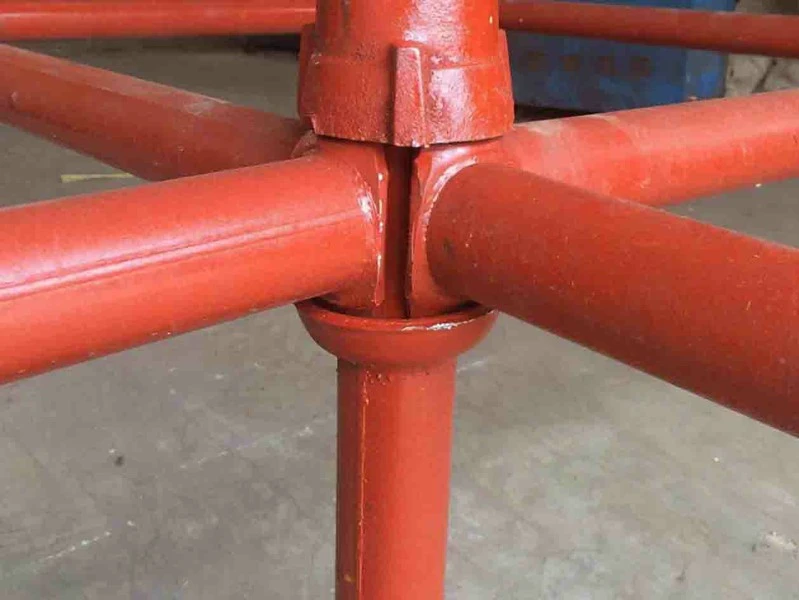
It is simple to understand how this method works. Every half a meter, a set bottom cup is welded straight to the vertical standard. The cup on top can be opened and closed by sliding it. A worker drops the top cup and puts the ledger blades into the node. The built-in spring locks all four connections at the same time. There's no need for a hammer, nuts, or screws that move around and get lost.
Self-Locking Node Technology
Bowl-buckle scaffolding isn't the same as this system because it has an auto-locking device made of springs. Putting together frames this way takes about 40% less time than traditional methods and up to 35% less labor than tube-and-clamp methods. Since the link is mechanical and not human, the torque that is put on it is always the same.
Material Grade and Durability
Steel Q235 high-strength is used to make the cup-lock system by Shandong Xingrui Building Materials Co., Ltd. The tubes that go up and down are 48.3 mm across and 3.2 mm to 3.5 mm thick on the inside. At 65–85 microns, hot-dip galvanization is used on the surface to meet ASTM A123 guidelines. With this finish, the item will last longer than 15 years in coastal or industrial areas where painted finishes need to be fixed every two to three years.
Load Capacity and Tower Height
Each standard can hold up to 60kN of weight, depending on how it is set up. With the right support and building, towers can be higher than 50 meters. These numbers show that the system can be used for jobs with a lot of falsework where structural margin is important.
There are fewer accidents on the job site, fewer replacements of materials, and faster project turnover because of these performance traits. These are all important things for equipment managers who are in charge of many jobs at once.
Fast Cuplock Scaffolding vs Other Scaffolding Systems: Making the Right Choice
People who are in charge of equipment often want to know how fast cuplock scaffolding systems compare to ringlock, frame, and tube-and-clamp systems. It depends on the job, how much work needs to be done, and how important speed is to your crew.
Cup-Lock vs. Ringlock Scaffolding
A rosette-shaped node can hold up to eight links in ringlock systems. This helps put things in order on structures that aren't round or straight. On the other hand, the wedge-pin link still needs a hammer hit and more time to work with each node. Because each node can lock four links at once without any extra tools, cup-lock assembly works faster on straight-shoring grids with a lot of nodes.
Cup-Lock vs. Traditional Tube-and-Clamp
For a tube-and-clamp system, every point where two tubes connect needs its own connection. Couplers can get lost or rust, and they need to be tightened regularly with a wrench to make sure they meet load standards. Cup-lock gets rid of this for good. This way of putting things together is always 3 to 5 times faster than tube-and-clamp setups for the same height and load, as shown by data from bridge and refinery projects.
When Frame Scaffolding Makes More Sense
When the plan is easy and the loads are light, frame scaffolding is a good way to get to low-rise houses. Cup-lock is better for safety on the job site and for jobs that involve putting concrete, doing upkeep on machinery, or building spans that are longer than two stories.
Most of the time, facts like load charts, erection timelines, and lifecycle cost per cycle help people make the right choice. In all of these ways, cup-lock always wins for big, common building projects.
Procurement Insights: How to Source and Manage Fast Cuplock Scaffolding?
Getting the right fast cuplock scaffolding system from the right company will help your project stay on track and keep your clients happy. They should look at these key things before deciding to work with a seller.
- Certifications and traceability: Look for suppliers holding ISO 9001 (Quality Management), ISO 14001 (Environmental Management), and ISO 45001 (Occupational Health and Safety) certifications. Xingrui holds all three. Every component should carry a traceable batch number linking it back to raw material mill test certificates.
- Custom order capability: Projects with non-standard spans or load requirements need made-to-order components. Xingrui accepts custom processing based on customer-provided drawings and samples, with sample delivery in 7–14 days.
- Reusability and lifecycle cost: A well-maintained Q235 galvanized system can complete hundreds of assembly cycles. Procurement managers at rental companies should factor cycle count and refurbishment cost into total cost of ownership, not just unit price.
- Compliance documentation: European and North American clients typically require calculation reports aligned with BS EN 12811-1 or ANSI/SSFI SC100-5/05. Confirm these documents are available before signing a purchase agreement.
All of these things can make or break a relationship with a seller, from being long-lasting and helpful to a source of delays. Look at each one before you place an order for samples.
Safety and Compliance: Ensuring Risk-Free Use on Site
Inspection and compliance protocols are not optional. Construction authorities in the United States, EU, and across Africa increasingly require documented load calculations and third-party inspection records tied to specific product batches.
Pre-Use Inspection Protocol
Before each deployment cycle, inspectors should check for seized top cups that no longer slide freely, deformed ledger blades resulting from overloading, and weld cracks around the bottom cup. These three failure points account for the majority of load-bearing incidents in cup-lock systems worldwide.
Galvanization and Corrosion Verification
Verify coating thickness on fast cuplock scaffolding using a magnetic gauge. ASTM A123 specifies a minimum of 65 microns for structural steel components. Components falling below this threshold should be tagged, removed from service, and replaced before the next lift.
International Standards Alignment
Xingrui's system complies with BS EN 12811-1, ANSI/SSFI SC100-5/05, and AS/NZS 1576. For projects where clients require a Declaration of Performance (DoP) under CE marking, confirm this documentation is available from your supplier before shipment clears customs. Consistent compliance documentation protects the contractor, satisfies the project owner's requirements, and simplifies insurance claims in the event of an incident.
Case Studies and Future Outlook
Modular cup-lock systems are used by industrial workers on bridge and refinery projects. They say that setting up the scaffolding always takes less time than with tube-and-clamp systems, usually 40% to 50% less time. Companies that rent out a lot of items say that hot-dip galvanized parts last longer and don't require as many replacements because they don't come loose.
As we learn more about high-strength low-alloy steels and water-based protection layers, systems will become lighter without losing their load values. Teams that buy things will be able to handle changes in specifications faster if they work with manufacturers that can follow those changes. Teams that are stuck on a single line of products will take longer to deal with these changes.
Conclusion
Fast cuplock scaffolding support systems are definitely better than other choices because they are made from Q235 carbon steel, are hot-dip galvanized, and meet EN and ANSI standards. It is easier to keep track of lifetime costs when you look at cost per cycle instead of cost per unit. It is also faster to put together and the load performance is more consistent. When procurement managers buy systems for bridges, factories, or other large industrial buildings, they follow a clear set of rules: they check the certifications, ask for a sample, make sure the system can be customized, and find out how much it will cost in total over its lifetime before signing.
FAQ
Q1: How does the locking mechanism work without a hammer?
A: When the ledger blades are put into the node, the spring that is built into the sliding top cup starts to move. The weight is on the spring, which holds the link in place. With this plan, you don't need tools to put together each node, and it takes a lot less time.
Q2: What is the maximum load per standard?
A: Each vertical standard can hold up to 60kN, but this depends on its shape, the way it is braced, and the way the tower was designed. Before you use someone else's load estimate, make sure they are a trained structural expert.
Q3: Is the system compatible with components from other manufacturers?
A: For most makers, the space between the cups is 0.5 meters, but ledger blades come in different sizes. Putting together parts from different places can hurt the framework of a node. It is recommended that parts from the same company be used in all certified setups.
Q4: How long does the galvanized finish last?
A: In seaside or industrial areas, hot-dip galvanization at 65–85 microns can make things last up to 15 years or more. Systems that are painted usually need to be painted again every two to three years if they are in the same amount of light.
Q5: Can Xingrui manufacture to custom specifications?
A: Yes, Xingrui can take orders based on pictures and models that the customer gives them. Between 7 and 14 days, examples can be sent. For both OEM and ODM deals, there are agreements that keep everything secret.
Get a Direct Quote from GREEN FORMWORK — Your Fast Cuplock Scaffolding Supplier
GREEN FORMWORK sells certified fast cuplock scaffolding to builders and rental companies in over 100 countries with the help of Shandong Xingrui Building Materials Co., Ltd. We can keep an eye on the quality of our goods from the raw steel to the finished part thanks to our 79,800-square-meter building, 12 welding robots, and ISO 9001, 14001, and 45001 standards. You can email us at sdxingruiqp@126.com right now to get a sample or a special price.
References
1. British Standards Institution. BS EN 12811-1: Temporary Works Equipment — Scaffolds. BSI, 2003.
2. Scaffold & Access Industry Association. ANSI/SSFI SC100-5/05: Safety Requirements for Scaffolding. SAIA, 2005.
3. Standards Australia / Standards New Zealand. AS/NZS 1576: Scaffolding — General Requirements. SAI Global, 2010.
4. American Galvanizers Association. ASTM A123: Standard Specification for Zinc Coatings on Iron and Steel Products. AGA, 2017.
5. International Organization for Standardization. ISO 9001: Quality Management Systems — Requirements. ISO, 2015.
6. Construction Industry Institute. Benchmarking and Metrics: Scaffolding Productivity in Industrial Construction. CII, 2019.
Learn about our latest products and discounts through SMS or email