- English
- French
- German
- Portuguese
- Spanish
- Russian
- Japanese
- Korean
- Arabic
- Greek
- German
- Turkish
- Italian
- Danish
- Romanian
- Indonesian
- Czech
- Afrikaans
- Swedish
- Polish
- Basque
- Catalan
- Esperanto
- Hindi
- Lao
- Albanian
- Amharic
- Armenian
- Azerbaijani
- Belarusian
- Bengali
- Bosnian
- Bulgarian
- Cebuano
- Chichewa
- Corsican
- Croatian
- Dutch
- Estonian
- Filipino
- Finnish
- Frisian
- Galician
- Georgian
- Gujarati
- Haitian
- Hausa
- Hawaiian
- Hebrew
- Hmong
- Hungarian
- Icelandic
- Igbo
- Javanese
- Kannada
- Kazakh
- Khmer
- Kurdish
- Kyrgyz
- Latin
- Latvian
- Lithuanian
- Luxembou..
- Macedonian
- Malagasy
- Malay
- Malayalam
- Maltese
- Maori
- Marathi
- Mongolian
- Burmese
- Nepali
- Norwegian
- Pashto
- Persian
- Punjabi
- Serbian
- Sesotho
- Sinhala
- Slovak
- Slovenian
- Somali
- Samoan
- Scots Gaelic
- Shona
- Sindhi
- Sundanese
- Swahili
- Tajik
- Tamil
- Telugu
- Thai
- Ukrainian
- Urdu
- Uzbek
- Vietnamese
- Welsh
- Xhosa
- Yiddish
- Yoruba
- Zulu
Best Frame Scaffolding System for High-Rise Construction Projects
When it comes to high-rise construction, selecting the right frame scaffolding system can make or break your project's safety record and profit margin. A properly engineered modular scaffold delivers structural reliability, OSHA compliance, and measurable labor savings — all critical factors for purchasing managers sourcing at scale. This guide walks through what separates a high-performance portal scaffold from an average one, how to evaluate suppliers, and why GREEN FORMWORK's offering from Shandong Xingrui Building Materials Co., Ltd. deserves serious consideration in your next procurement cycle.
Understanding Frame Scaffolding Systems for High-Rise Projects
What Makes a Portal Scaffold Reliable at Elevation?
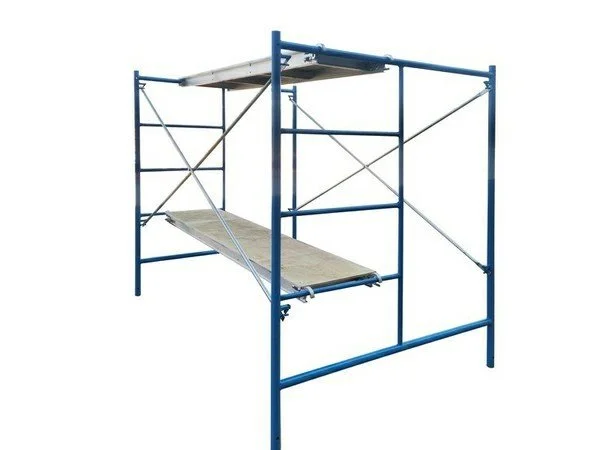
A frame scaffolding system is a temporary structure that is made up of vertical door frames, horizontal cross-braces, and decking platforms. It is flexible and manufactured. Its walk-through portal design lets people and things move horizontally without having to climb over things that are in the way, which is very helpful for getting work done on crowded urban sites. Under 29 CFR 1926 Subpart L, OSHA allows standard configurations up to 125 feet (38m) in length. Anything longer needs to be designed specifically for the site by a licensed professional engineer and have structural tie-ins to the building facade.
Long-term performance depends on the choice of materials. Q235 carbon steel tubing has a tensile strength of about 370–500 MPa, which makes it the best raw material for high-cycle rental and delivery stocks. This is the same standard that is used in certified structural applications. Hot-dip galvanization (HDG) with a coating layer of ≥60μm makes things more corrosion-resistant for over 15 years. This is important in coastal Southeast U.S. markets where salty air speeds up the surface degradation of powder-coated options.
New digital monitoring technologies are making their way into the scaffolding industry, including frame scaffolding system integration, as well as embedded load sensors and inspection workflows that use drones. These tools make it easier to keep an eye on facades with more than one story and cut down on the need for manual plumbness checks after storms, which is very helpful as project schedules get tighter.
How to Choose the Best Frame Scaffolding System for High-Rise Construction
Key Procurement Criteria That Actually Move the Needle
Finding scaffolding to distribute is not the same as finding scaffolding for a single job. A regional distributor that serves between 20 and 200 sites needs regular standards for size and quality, as well as a supplier that can meet quarterly orders for full containers. Here are the main things that buyers look for to tell the difference between trustworthy and untrustworthy suppliers:
- Dimensional precision: The accuracy of vertical stacking is controlled within ±1mm of the pin-to-pin distance, which stops eccentric loading during multi-tier assembly. This tolerance is always met by suppliers with 12 welding robots and automatic welding lines; batches that are joined by hand rarely do.
- Surface treatment consistency: HDG works better than powder coating in wet or salty settings because it protects the inside of tubes while powder coating only covers the outside. In your buy order, you should list the covering thickness as well as the process name.
- Full accessory availability: A scaffold frame that doesn't have matching cross-braces, base plates, wheels, and foot planks causes delays on the job site and customer complaints. Make sure that the company you're buying from sends whole sets and not just frames.
- OSHA and EN 12810 compliance documentation: U.S. wholesalers need compliance records that can be tracked. Suppliers with ISO 9001, ISO 14001, or ISO 45001 certifications show that they have a written quality management system, not just a promise to do so.
- OEM and private-label capability: If the logo on a product is important to your brand, make sure that the manufacturer can print or emboss your label on frames, packaging, and barcodes. Also, make sure that their minimum order quantity fits your seasonal demand cycle.
Together, these criteria lower the number of customer complaints, returns, and damage to your reputation that happen further down the supply chain.
Best Practices for Frame Scaffolding Installation & Maintenance
Site Protocols That Protect Your End Users
It's important to do the right thing before the first frame even leaves the ground. Base surfaces must be level and packed before vertical building can begin. Base plates or screw jacks must be set. A spirit level should be used to check the level of each tier. For the frame scaffolding system, OSHA and best practices in the industry call for a re-inspection after any weather event with winds over 40 mph or heavy rain. This is called a "Green Tag" re-inspection, and it checks for verticality, base plate subsidence, and connection tightness.
Routine maintenance focuses on four wear points: the locking pins, the cross-brace pivot couplers, the base plate threads, and the bottom rail weld. Any frame that has obvious deformation, weld breaking, or pin seizure should be marked and pulled by the operators. Because Q235 steel frames with HDG treatment are very durable, a well-kept inventory can usually go through 30 to 50 project deployments before they need to be replaced. This is a big return on investment for both rental fleets and resale inventories.
Comparing Frame Scaffolding Systems with Alternative Solutions
Where Portal Scaffolding Outperforms Competing Systems
Ringlock and cuplock systems can be used on more irregular surfaces because they allow for more geometric freedom. However, each unit component costs more and is harder to put together. A door-type portal scaffold is 50–70% faster to set up than a tube-and-clamp configuration for standard masonry walls, exterior stucco applications, and MEP rough-in work, which is what most masonry contractors in the Southeast U.S. do for a living. That speed immediately means fewer hours of work needed to reach each square foot of facade.
Aluminum alloy frames are lighter and don't rust without being galvanized, but they can't hold as much weight as Q235 steel frames, and they cost a lot more per unit. Steel doorway scaffolding treated with HDG is the most cost-effective option for wholesalers who keep stock for different types of job sites.
From a practical point of view, if a masonry contractor saves two hours of labor per setup over the course of a year with 40 setups and a crew rate of $75/hour, that's $6,000 in annual labor savings per scaffold set, which is a lot more than the difference in price between a certified steel frame scaffolding system and one that isn't.
Procurement Guide — Buying Frame Scaffolding for High-Rise Projects
Supplier Evaluation and Container-Load Sourcing
Supplier approval is the first step to reliable buying. Check to see if the manufacturer you're considering has up-to-date third-party certifications, product liability insurance, and records of spectrochemical analyzes for incoming steel batches. It's important to check the factory's capacity. A factory that's over 40,000 square meters and has automatic welding lines can handle big orders every three months without any delays caused by capacity.
Shipping goods by sea from factories in China to ports in the Southeast U.S. usually takes 30 to 45 days after production. Include that in your yearly plans, especially before the busiest building times in the spring and summer, when ships can't hold as many people. Talk to your supplier about CIF pricing to make sure they are responsible for the freight and to make calculating landed costs easier for planning your margins.
Before signing a yearly supply deal, you have to get a sample to test. Ask for a set of physical samples, use digital calipers to make sure the measurements are correct, and send one frame to a third party to be loaded according to EN 12810 or ANSI/SSFI SC100 standards. Reliable sellers like this process because it shows that they trust the quality of the production.
Conclusion
When building tall buildings, scaffolding needs to work the same way in hundreds of different setups, be able to handle the conditions of the job site, and meet all safety standards without any problems. That's exactly what a well-designed frame scaffolding system—made from Q235 steel with an HDG surface treatment and produced under ISO 9001 quality rules—gives you. When distributors buy a certified, all-accessories system from a reputable maker, they protect their profit margin, cut down on customer returns, and build a product image that keeps contractors coming back.
FAQ
What certifications should a frame scaffolding supplier hold?
Look for ISO 9001 (quality management), ISO 14001 (environmental management), and ISO 45001 (workplace safety) at the very least. Make sure that the structure meets the performance standards set by OSHA 29 CFR 1926 Subpart L and ANSI/SSFI SC100-5/05 for U.S. distribution.
How many times can steel portal scaffolding be reused?
With the right HDG treatment and regular upkeep, a Q235 steel frame can likely last 30 to 50 deployment rounds before it needs to be replaced. This high reusability cuts down on project costs and increases rental fleets' return on investment.
Can I mix scaffold components from different manufacturers?
Technically, a lot of BJ-type and Mason-type frames have the same stated measurements. However, it is not a good idea to mix brands without an engineer's approval. Small changes in the places of the locking pins and the outer width of the tube can cause eccentric loading conditions that make the structure less safe.
What is the maximum height for a standard portal scaffold?
Standard portal scaffolding setups up to 125 feet (38m) are allowed by OSHA rules. Any installation taller than that needs an engineering plan made just for the site and structural connections to the building.
What surface treatment performs best in coastal climates?
When it comes to marine and high-humidity environments, hot-dip galvanization with a coating thickness of 60µm or more always works better than powder coating. It protects against corrosion for more than 15 years through metallurgical bonding instead of surface-only coverage.
Partner with GREEN FORMWORK — Your Trusted Frame Scaffolding System Supplier
Shandong Xingrui Building Materials Co., Ltd. backs GREEN FORMWORK, which sells OSHA-compliant and ISO-certified portal scaffolding with the option to private label, full accessory sets, and container-load pricing designed for serious distributors. With a production area of 40,000 m², 12 welding robots, and a ±1mm limit on dimensions, your goods will be ready to put on the shelf when it gets to you. Contact our team at sdxingruiqp@126.com or visit sdxingrui.com right away to get samples or a CIF price.
References
1. Occupational Safety and Health Administration (OSHA). Scaffolding Safety Standards: 29 CFR 1926 Subpart L. U.S. Department of Labor, 2023.
2. Scalzi, J. B., & Boresi, A. P. Structural Steel Design. Wiley, 2019.
3. European Committee for Standardization. EN 12810-1: Facade Scaffolds Made from Prefabricated Components. CEN, 2018.
4. Scaffold & Access Industry Association (SAIA). ANSI/SSFI SC100-5/05: Safety Requirements for Scaffolding. SAIA, 2020.
5. International Organization for Standardization. ISO 9001:2015 — Quality Management Systems: Requirements. ISO, 2015.
6. Construction Industry Institute (CII). Temporary Structures in Construction: Productivity and Safety Benchmarks. University of Texas at Austin, 2021.
Learn about our latest products and discounts through SMS or email