- English
- French
- German
- Portuguese
- Spanish
- Russian
- Japanese
- Korean
- Arabic
- Greek
- German
- Turkish
- Italian
- Danish
- Romanian
- Indonesian
- Czech
- Afrikaans
- Swedish
- Polish
- Basque
- Catalan
- Esperanto
- Hindi
- Lao
- Albanian
- Amharic
- Armenian
- Azerbaijani
- Belarusian
- Bengali
- Bosnian
- Bulgarian
- Cebuano
- Chichewa
- Corsican
- Croatian
- Dutch
- Estonian
- Filipino
- Finnish
- Frisian
- Galician
- Georgian
- Gujarati
- Haitian
- Hausa
- Hawaiian
- Hebrew
- Hmong
- Hungarian
- Icelandic
- Igbo
- Javanese
- Kannada
- Kazakh
- Khmer
- Kurdish
- Kyrgyz
- Latin
- Latvian
- Lithuanian
- Luxembou..
- Macedonian
- Malagasy
- Malay
- Malayalam
- Maltese
- Maori
- Marathi
- Mongolian
- Burmese
- Nepali
- Norwegian
- Pashto
- Persian
- Punjabi
- Serbian
- Sesotho
- Sinhala
- Slovak
- Slovenian
- Somali
- Samoan
- Scots Gaelic
- Shona
- Sindhi
- Sundanese
- Swahili
- Tajik
- Tamil
- Telugu
- Thai
- Ukrainian
- Urdu
- Uzbek
- Vietnamese
- Welsh
- Xhosa
- Yiddish
- Yoruba
- Zulu
Best Light-Duty Formwork for Fast, Safe Project Installation
When speed, safety, and cost control matter on a job site, light-duty formwork is often the answer. Designed for manual handling without cranes or heavy machinery, these modular shuttering systems work across residential foundations, low-rise buildings, and small structural work. Whether you are a renovation contractor placing frequent small orders or an import distributor building warehouse stock, choosing the right lightweight concrete formwork system cuts labor time, reduces per-pour cost, and keeps your crew safe from the first panel to the last.
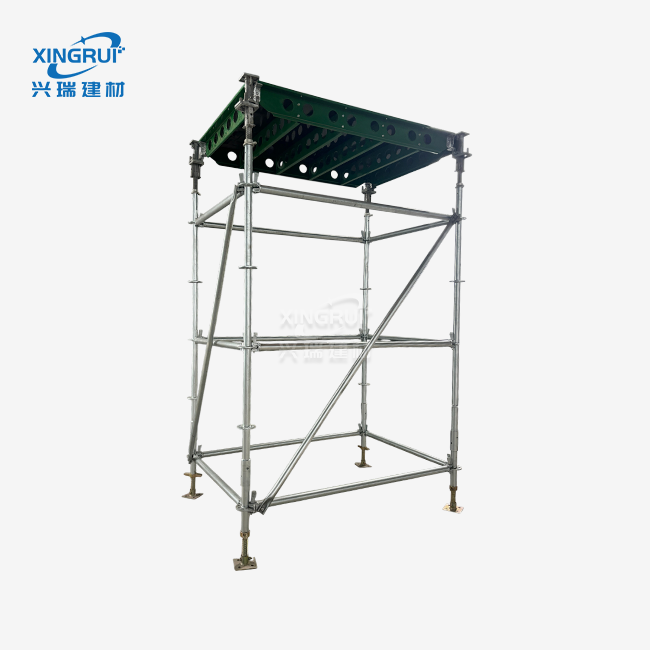
Understanding Light-Duty Formwork: Types, Materials, and Benefits
Before you can choose the right method, you need to know what makes lightweight shuttering different from heavy options and why that difference is important in real life.
Steel vs. Aluminum Panel Systems
Light-duty formwork is usually made of one of two materials. Steel panels that are 2.2 mm thick are very rigid and don't cost as much per unit, so they are a good choice for builders who want to save money without losing structural performance. Aluminum panels that are ≤3.5 mm thick cut down on overall weight even more, which is important for projects with multiple floors where workers have to carry panels up and down stairs many times during the day.
Modular Kits and Panel Configuration
Both types of materials are designed in a flexible way. Standard panel sizes join with built-in locking pins, so putting them together is more like putting together a puzzle than a difficult engineering job. It usually takes a standard labor crew one working day to get good at putting things together, which is important when project deadlines are tight and training budgets are low, especially for light-duty formwork.
Core Benefits for Procurement Buyers
It's easy to see and measure why lightweight concrete formwork is better than heavy methods for real-world use. Here are the main benefits that have a direct effect on decisions about procurement:
- Single-person carrying and installation: Panels weighing between 15–25 kg/m² allow one worker to handle and position each unit without mechanical assistance, reducing labor headcount per pour cycle.
- 100+ reuse cycles: Steel panels exceed 100 cycles; aluminum panels reach 100–150 cycles with proper release agent application, delivering a lower cost-per-pour over the system's service life.
- Class 2–3 concrete surface finish: Tight dimensional tolerance of ±1 mm across both material types prevents grout leakage and reduces post-pour surface treatment work.
Panels that weigh between 15 and 25 kg/m² can be carried and installed by a single person. This means that one worker can move and handle each unit without any mechanical help, which lowers the number of workers needed per pour cycle.- 100+ reuse cycles: Steel panels can be used more than 100 times, and aluminum panels can be used 100–150 times with the right release agent. This means that the system will cost less per pour over its lifetime.
How Light-Duty Formwork Enhances Construction Speed and Safety
Speed and safety don't have to be at odds with each other; the right panel system can do both at the same time.
Faster Pour Cycles Without Crane Dependency
Pour cycles are not affected by crane schedules because workers move and carry panels by hand. This freedom directly means fewer delays on urban infill sites or interior renovation jobs where crane access is physically limited. Formwork-to-floor cycle times are shorter on projects that use manual-handling systems than on projects that use traditional steel systems that need lifting tools.
Safety Standards and Worker Protection
The 35 kN/m² load capacity is enough for normal home and low-rise structural pours. Under the pressure of the concrete, the modular locking system keeps the panels in place, which lowers the risk of blowouts. Workers don't have to deal with the physical strain of heavy steel parts, which lowers the risk of joint injuries on the job site. This is important for project managers who are keeping track of safety incident rates, especially when using light-duty formwork.
Practical Installation Protocol
A clean installation process cuts down on mistakes and extends the life of the panel. These steps should be taken in this order:
- Prepare and level the base surface before setting the first panel row.
- Connect panels using the integrated locking pins and verify alignment against the ±1 mm dimensional tolerance.
- Apply release agent evenly before each pour to prevent adhesion and protect surface flatness.
- Inspect connection points after each pour cycle for deformation before moving panels to the next position.
By doing things in this order, you can protect both the quality of the concrete finish and the number of times the panel can be used.
Comparing Light-Duty Formwork Solutions: Making an Informed Procurement Decision
Over-specifying formwork is one of the most common ways builders spend more than they need to. Not every job needs a heavy-duty system.
Light-Duty vs. Heavy-Duty: Where Each Fits
Heavy-duty systems can hold more than 60 kN/m² of weight and are good for building tall buildings, bridges, and large slabs. A load value of 35 kN/m² is enough for most public buildings, low-rise residential buildings, and small concrete parts like columns or base walls. Buying a heavy-duty system for small tasks raises the cost of acquisition, adds weight to carry, and takes more work than it needs to be done.
Cost-Benefit Analysis for Distributors and Contractors
When comparing suppliers, importers who want to sell goods in Southeast Asia, the Middle East, or Eastern Europe should look at how quickly containers can be loaded. The number of units that can fit in a container is directly related to the standard panel measurements and uniform batch tolerances. This in turn affects the landed unit cost. When contractors focus on making lots of small orders, sellers with flexible minimum order amounts and quick stock availability are most helpful, since project deadlines rarely have time to wait for long lead times.
Supplier Reliability Indicators
In real life, the following things are the most important to look at when choosing a lightweight shuttering supplier:
- Certification coverage: ISO 9001 (quality management), ISO 14001 (environmental management), and ISO 45001 (occupational health and safety) together indicate a supplier with documented process controls across all major risk areas.
- Batch consistency: Dimensional tolerance held at ±1 mm across production batches prevents the mismatch problems that drive up rework costs on site.
- Sample availability: Suppliers who offer product samples before bulk orders give buyers a direct way to verify surface finish, panel weight, and connection fit before committing to a full container.
Maintenance and Long-Term Use of Light-Duty Formwork
Cleaning Protocol After Each Pour
As soon as the panels are stripped, remove any concrete residue that is still on them. Hardened concrete deposits make it harder to clean and can damage the flatness of the surface that is needed for good concrete finishes. For most types of light-duty formwork panels, a non-abrasive scraper and a water rinse are all that's needed.
Inspection Before Redeployment
Check the locking pin holes and wedge slots for deformation before moving the panels to the next pour position. If panels are put down more than their maximum load, vibrations during the concrete pour cause stress that gradually widens the connection points. If you notice distortion early, the link won't break in the middle of the pour.
Storage and Stacking Practices
Place panels flat on flat surfaces and stack protected blocks between them. When you store things vertically against walls, they might bend, especially if they are made of metal and the room is hot. If the temperature is higher than 35°C, leave a 1–2 mm expansion gap between panels that are connected. This will allow for thermal expansion and keep the seams tight.
How to Successfully Procure and Deploy Light-Duty Formwork for Your Projects
Getting buying right the first time stops the little issues that add up to delays that cost a lot of money.
Choosing Between Direct Purchase and Bulk Import
Most of the time, renovation workers find it helpful to buy panel kits directly that are the right size for their most frequent projects. When import distributors order in bulk, they save money on the cost of each unit, and it's common practice to test one container before placing more orders. This is a safe way to make sure that the supplier is reliable. Shandong Xingrui Building Materials Co., Ltd. can make custom configurations based on drawings provided by customers. This is good for distributors who need panel sizes that are specific to their region.
Customization and Technical Support
When you're selling to people who have non-standard building sizes, being able to define panel sizes, surface treatments, or accessory arrangements is important. When project deadlines are getting close, having technical support on call means that your purchasing team can get answers to questions about specifications right away, instead of having to wait days for answers.
GREEN FORMWORK as a Sourcing Partner
GREEN FORMWORK, which is backed by Shandong Xingrui Building Materials Co., Ltd., ships goods to more than 100 countries from a 79,800-square-meter factory in Rizhao City, Shandong Province. Twelve welding robots and four sets of cold roll forming equipment are used at the plant, and 180 trained technicians are in charge of production. You can get free samples before you decide to buy in bulk, and the product line includes both steel and metal panel systems with all the necessary licensing paperwork.
Conclusion
Light-duty formwork is useful for builders and wholesalers who need to work quickly, carry a light load, and keep the cost per pour low. Rated at ≤35 kN/m², steel and aluminum panel systems can be used for all kinds of household and low-rise building projects without having to buy expensive equipment that is over-specified. Due to its consistent size tolerance, ability to be reused over 100 times, and ability to be installed by a single person, lightweight concrete formwork is a good choice for all types of projects and markets. That value will be kept safe over time by good maintenance habits and careful evaluation of suppliers.
FAQ
What is the difference between light-duty and heavy-duty formwork?
Light-duty systems can handle loads of up to 35 kN/m² and are made to be moved by hand without cranes. For large-span or high-rise building work, heavy-duty systems that can handle more than 60 kN/m² are best. It is better and cheaper to use light-duty panels for low-rise residential and small industrial building projects.
How many times can steel and aluminum panels be reused?
Steel panels can usually be used over and over again 100 times or more. Aluminum panels can be used 100–150 times if they are cleaned regularly and a recommended release agent is used after each pour.
Can these panels connect to existing timber or steel frameworks?
Yes. Universal adapter clamps let traditional steel or wood systems connect, so contractors can use existing formwork to make more of it instead of buying new ones.
Is specialized crew training required?
Not much training is needed. Because the panels fit together, a normal crew can get good at putting them together in one working day.
What certifications should I request from a formwork supplier?
Ask for ISO 9001 for managing quality, ISO 14001 for protecting the environment, and ISO 45001 for health and safety at work. All three of these certifications cover the most important process controls that affect the safety of workers and the consistency of the food.
Request a Quote From GREEN FORMWORK — Trusted Light-Duty Formwork Manufacturer
Shandong Xingrui Building Materials Co., Ltd. makes GREEN FORMWORK, which is made of steel and aluminum and is certified to ISO 9001, ISO 14001, and ISO 45001 standards. You can get free samples. You can email our team at sdxingruiqp@126.com or go to sdxingrui.com to get a straight quote for your next project, talk about order amounts, or ask for specs.
References
1. American Concrete Institute. ACI 347R-14: Guide to Formwork for Concrete. ACI, 2014.
2. Concrete Society. Formwork: A Guide to Good Practice. 3rd ed. The Concrete Society, 2012.
3. European Committee for Standardization. EN 12812: Falsework — Performance Requirements and General Design. CEN, 2008.
4. Hurd, M.K. Formwork for Concrete. 7th ed. American Concrete Institute, 2005.
5. Peurifoy, R.L., and Oberlender, G.D. Formwork for Concrete Structures. 4th ed. McGraw-Hill, 2011.
6. Construct. National Formwork Training: Best Practice Guide for Formwork Safety. CITB / Construct, 2019.
Learn about our latest products and discounts through SMS or email