- English
- French
- German
- Portuguese
- Spanish
- Russian
- Japanese
- Korean
- Arabic
- Greek
- German
- Turkish
- Italian
- Danish
- Romanian
- Indonesian
- Czech
- Afrikaans
- Swedish
- Polish
- Basque
- Catalan
- Esperanto
- Hindi
- Lao
- Albanian
- Amharic
- Armenian
- Azerbaijani
- Belarusian
- Bengali
- Bosnian
- Bulgarian
- Cebuano
- Chichewa
- Corsican
- Croatian
- Dutch
- Estonian
- Filipino
- Finnish
- Frisian
- Galician
- Georgian
- Gujarati
- Haitian
- Hausa
- Hawaiian
- Hebrew
- Hmong
- Hungarian
- Icelandic
- Igbo
- Javanese
- Kannada
- Kazakh
- Khmer
- Kurdish
- Kyrgyz
- Latin
- Latvian
- Lithuanian
- Luxembou..
- Macedonian
- Malagasy
- Malay
- Malayalam
- Maltese
- Maori
- Marathi
- Mongolian
- Burmese
- Nepali
- Norwegian
- Pashto
- Persian
- Punjabi
- Serbian
- Sesotho
- Sinhala
- Slovak
- Slovenian
- Somali
- Samoan
- Scots Gaelic
- Shona
- Sindhi
- Sundanese
- Swahili
- Tajik
- Tamil
- Telugu
- Thai
- Ukrainian
- Urdu
- Uzbek
- Vietnamese
- Welsh
- Xhosa
- Yiddish
- Yoruba
- Zulu
Can Aluminum Alloy Building Formwork Be Reused on Multiple Projects?
Yes. When the panels are well-made, cleaned after each pour, and matched to the wall thicknesses and floor heights of the next building, aluminum alloy building formwork can be used on more than one project. If you handle our 6061-T6 system correctly, it can be used 250–300 times, and those times can come from more than one job instead of just one tower. Walls and slabs that are straight are easiest to reuse, while features that aren't straight are harder. Here are some things you should ask a supplier before placing an order: how does reuse work? How much does it cost? How can I protect my panels?
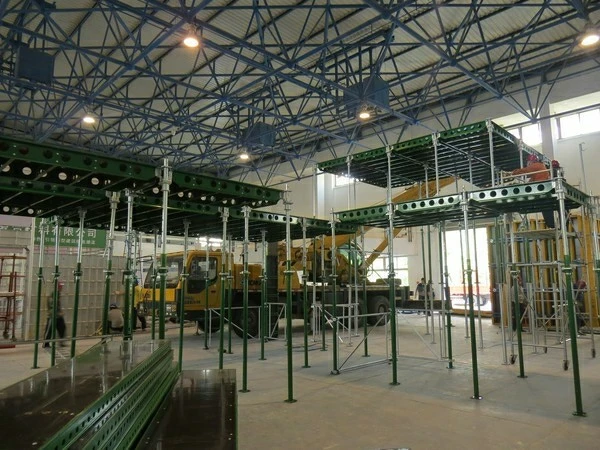
Reuse Potential of Aluminum Alloy Building Formwork
Three Kinds of Reuse
A lot of the time, buyers mix three ideas together. The first is use more than once in the same project, like casting floor after floor in a tower. When walls are the same thickness, floors are the same height, and slabs are the same size, this is called reuse. The third is full reconfiguration, which means that the layout needs to be changed and new filler pieces need to be added. The first two are very easy for aluminum forms to handle. The third one also works, but you should plan to make some changes. The way this is split is important for a leasing company because standard inventory makes the most money when a lot of projects use the same grid.
What Controls Reuse Life
How long it can be used again depends on the crew and the panel. We use an aviation-grade aluminum alloy called 6061-T6 for our panels. It has a tensile strength of at least 260 MPa and a Webster hardness of at least 15 HW. The plate has ribs that are 65 mm long and 4 mm thick. It's also important to have good welds, and our plant has 12 welding robots and 6 automatic welding lines. As a common structural alloy, 6061-T6 is talked about in the Aluminum Design Manual, so engineers know what its properties are. The picture is finished with the surface treatment, release agent, stripping method, storage, and transport. If crews pry it apart with steel bars or stack it on uneven ground, even a strong panel will fail quickly.
Setting Realistic Cycle Targets
250–300 cycles should only be used as a rough guide for your own projects and not as a promise for every site. Impacts, pours that are too heavy, bad bracing, cutting without permission, and careless stacking all shorten life. Check the dimensions, welds, corners, pins, props, coatings, and flatness of the structure before each redeployment. Also, clean up any concrete buildup that you find. We allow no more than 1 mm of flatness, so a quick test with a straightedge lets you know right away if a panel still works. Make a list of how many times each panel has been used. You can use that record to see which panels should be retired, which ones need to be fixed, and which ones should be made available again.
How an Aluminum Alloy Formwork System Works
Components and Load Path
Pins, wedges, props, tie rods, and bracing hold the wall, slab, beam, column, and corner panels of aluminum alloy building formwork together. Wall panels are pushed outward by new concrete. That force is sent by the panels to the ribs, connectors, and tie rods. The slab loads are carried down by the props. Up to 60 kN/m², or 1,250 psf, of lateral pressure can be applied to our panels. In the US, ACI 347 tells us how to design formwork, and OSHA 1926.703 says that formwork must be able to handle all expected vertical and horizontal loads. For each project, a qualified engineer should check the pour rate, the temperature of the concrete, and the bracing.
From Drawings to Site
It's not enough to just have good panels. Drawings of buildings and structures are the first step in everything. Our technicians look them over and make a layout and list of parts. We can do custom work based on samples and drawings provided by the customer. After the factory inspection and test assembly, the unit will be installed, stripped, and maintained on-site. Because pin-and-wedge joints are standardized, crews don't need to know a lot about woodworking. Teams must follow the approved order and check props and connections before each pour, so training is still important. We need full drawings up front because a mistake in the drawing costs a lot more than a day of review.
Precision and Finish
How well panels fit together on later jobs depends on how accurate they are. Our system keeps the difference in height between objects to 1.5 mm/m or less, the flatness to 1 mm or less, and the accuracy of the measurements to ±0.5 mm. Tight tolerances stop grout from leaking at joints and make the concrete surface smooth, so it can be used without additional plastering. It helps high-rise shear wall structures the most, since small mistakes add up over many floors. In buildings with more than 20 floors, the system can handle a 4-day-per-floor cycle, though this depends on the floor plan and the size of the crew. Precise panels also make it easy to mix old and new stock.
Benefits and Cost of Reusing Aluminum Formwork
Practical Benefits
Many good things come from reusing things. Standard panels make installation faster and require less cutting on-site. Panels stay light enough to be moved by hand at 20–25 kg/m², which is about 4–5 lb/ft². Plastering and rework may be less necessary on smooth surfaces. Less trash is made because panels are put back in stock instead of being thrown away. The Aluminum Association says that recycling aluminum only uses about 5% of the energy that is needed to make new aluminum. This means that old panels can still be used as scrap metal. The biggest gains are seen in high-rise apartment, hotel, and student housing buildings with floor plans that are used over and over again.
Calculating Cost per Use
Aluminum costs more up front than wood, so you need to look at the whole lifecycle. Include the cost of the system itself, as well as any engineering, accessories, packaging, freight, labor for installation, upkeep, storage, changes, and replacement parts. Take away the residual value and divide by the number of deployments that are expected. As an example, let's use made-up numbers: a $100,000 set that can be used 200 times and still has $20,000 in value is worth $400 each time. Based on our reference data, we think that after 50 to 60 uses, the cost per use drops below the cost of wood. That number will change based on your labor rates and the way the project is planned, so make your own.
When Aluminum Is Not the Best Fit
Aluminum might not be the best choice for one-off, very irregular, or low-volume projects using aluminum alloy building formwork. If the design is different on each floor, it may cost more to redesign and ship the items again than to reuse them. Transfer structures, curved walls, balconies, and stairs may need panels that are made just for that project. I think you should start with a short review of your portfolio. If you are planning a lot of projects with walls and floors that are all about the same height and thickness, aluminum might be a better choice. You can save money by using a mix of materials: aluminum for floors that are the same and other materials for areas that aren't the same.
Aluminum Formwork on Different Projects and Against Other Materials
Cross-Project Compatibility
When wall thicknesses, floor heights, slab dimensions, and openings stay the same from one job to the next, aluminum formwork is often moved to the new one. It's easy to move standard wall, slab, beam, corner, prop, and connector pieces to different places. Height changes are handled by extension panels and adjustable prop heads. Our product data say that 70–80% of the parts can be used in different projects, but your layouts determine the exact number. Facades, core walls, and openings that aren't straight often need new infill panels. We can make things to fit your needs, so you don't have to buy a whole new set to add those pieces. Before you order, look over your whole pipeline.
Aluminum vs. Timber and Steel
Wood is cheaper to buy and easy to cut on-site, which is good for small or odd jobs. For as long as it is used, its plywood faces will wear out. Steel can handle tough conditions and heavy loads, but aluminum is only about a third as dense as steel, which means that crews have to lift less weight and freight loads fall. Some of our forms are made of steel, so I can honestly say that steel is better for heavy loads or rough use, while aluminum is better for repeating shear wall floors where speed and ease of use are important.
Aluminum vs. Plastic
Formwork made of plastic is light and won't rust, but some plastics become less stiff when the temperature changes. No matter how cold or hot it is, our aluminum panels will keep their shape. This works for the whole United States. You can also fix aluminum. Edges, ribs, and accessories that are broken can be fixed or replaced, which makes the product last longer. Aluminum is better for large systems that need to repeat a lot of times and stick to very tight tolerances. Plastic is better for smaller wall and column work.
Maintenance, Supplier Checks, and Multi-Project Planning
Maintenance Routine
Maintenance protects both the quality of the finish and the rental value of aluminum alloy building formwork. As soon as the paint is off, use tools that won't damage the surface, edges, or coating to quickly remove any concrete residue. To get a smooth, bubble-free finish, use a water-based or reactive release agent before the next pour. Check and clean the contact areas, pins, wedges, tie rods, and props. Take apart the damaged panels, write down what they are, and then repair or replace them according to the right steps. Keep the panels dry and stack them on level supports to store and ship them. Then, sort them by size and type. Crews can avoid common damage with the help of short training sessions and inspection checklists.
Choosing a Manufacturer or Supplier
Never just take a supplier's word for it; ask for proof. Check their skills in structural design, load calculations, custom manufacturing, trial assembly, training, and support after the sale. Check the type of alloy, the thickness of the plate, the welding methods, the tolerances, the surface treatment, and the test records. Our GREEN FORMWORK factory in Rizhao, Shandong, is 79,800 square meters big and has 920 workers, 180 of whom are technicians. For full quality traceability, we keep track of raw materials and finished goods as they are made. These are the certificates we have: ISO9001, ISO14001, and CE for our products. Panels, accessories, design fees, packaging, shipping terms, spare parts, lead time, and warranty are some of the things that you should compare quote by quote.
Implementing Multi-Project Reuse
Review your whole portfolio first, before placing an order for just one building. Look at the shared wall thicknesses, floor heights, slab dimensions, and openings in current and future projects side by side. Then you'll move on to system engineering, business planning, approval of shop drawings, manufacturing inspection, trial assembly, packaging, and training on the job site. On-site, check the inventory, follow the approved order, and check the supports before each pour. Once you're done stripping, you should clean, sort, fix, and record each panel. Then you should update your inventory database. We offer samples and technical support by phone, so your layout team can make sure the pieces fit well before you place a full order.
Conclusion
If the panels are of good quality, the engineering is good, the handling is good, and the projects are similar, the aluminum alloy building formwork can be used again and again. With a 4 mm plate, 65 mm ribs, and 60 kN/m² lateral capacity, this 6061-T6 system is designed to last between 250 and 300 cycles. However, the actual life depends on how well it is maintained and the conditions at the site. Standard walls, slabs, and connectors are easiest to reuse. On the other hand, irregular features need new infill panels.
Some benefits are faster installation, less waste, and finishes that don't need as much plastering. But the cost per use, including residual value, should be used to decide how valuable something is. It's better for aluminum to be used for repeating high-rise work than for one-time or irregular projects. Panels can be used from one building to the next as long as they are cleaned, inspected, recorded, and quality control can be tracked.
FAQ
How many times can the formwork be reused?
If you handle our 6061-T6 system correctly, it can go through 250 to 300 cycles. In real life, bracing, stripping methods, cleaning, storage, and transport all change, so use the number as a rough idea of the project.
Can I change floor heights between projects?
Yes. You can change the height with extension panels and prop heads that can be adjusted. A lot of the standard parts will also work. We can cut new infill panels to the size of your drawings to fit areas that aren't straight.
Is aluminum cheaper than timber?
Not when you buy. Based on the data we have, the cost per use drops below the cost of wood after 50 to 60 uses. That depends on your labor rates and how your shop is set up.
What do you need for a quotation?
Send building type, location, floor repetition, schedule, plans for future reuse, architectural and structural drawings, and delivery needs. We also offer free samples and technical help over the phone.
Get a Reusable Aluminum Formwork System Designed for Your Project
Creating a fleet for multiple projects? GREEN FORMWORK can look over your drawings and suggest a layout that can be used again and again. We are an aluminum alloy building formwork company backed by Shandong Xingrui Building Materials Co., Ltd., and we offer 6061-T6 panels, samples, and technical support that you can call for. Send your reuse plans and drawings to sdxingruiqp@126.com by email, for more information. We'll get back to you with a practical proposal that fits your project.
References
1. ACI Committee 347, Guide to Formwork for Concrete (ACI 347R-14), 2014
2. Hurd, M.K., Formwork for Concrete (ACI SP-4, 8th Edition), 2014
3. The Aluminum Association, Aluminum Design Manual, 2020
4. ASM International, ASM Handbook Volume 2: Properties and Selection: Nonferrous Alloys and Special-Purpose Materials, 1990
5. The Aluminum Association, Aluminum: The Element of Sustainability, 2011
6. International Organization for Standardization, ISO 9001: Quality Management Systems – Requirements, 2015
Learn about our latest products and discounts through SMS or email