- English
- French
- German
- Portuguese
- Spanish
- Russian
- Japanese
- Korean
- Arabic
- Greek
- German
- Turkish
- Italian
- Danish
- Romanian
- Indonesian
- Czech
- Afrikaans
- Swedish
- Polish
- Basque
- Catalan
- Esperanto
- Hindi
- Lao
- Albanian
- Amharic
- Armenian
- Azerbaijani
- Belarusian
- Bengali
- Bosnian
- Bulgarian
- Cebuano
- Chichewa
- Corsican
- Croatian
- Dutch
- Estonian
- Filipino
- Finnish
- Frisian
- Galician
- Georgian
- Gujarati
- Haitian
- Hausa
- Hawaiian
- Hebrew
- Hmong
- Hungarian
- Icelandic
- Igbo
- Javanese
- Kannada
- Kazakh
- Khmer
- Kurdish
- Kyrgyz
- Latin
- Latvian
- Lithuanian
- Luxembou..
- Macedonian
- Malagasy
- Malay
- Malayalam
- Maltese
- Maori
- Marathi
- Mongolian
- Burmese
- Nepali
- Norwegian
- Pashto
- Persian
- Punjabi
- Serbian
- Sesotho
- Sinhala
- Slovak
- Slovenian
- Somali
- Samoan
- Scots Gaelic
- Shona
- Sindhi
- Sundanese
- Swahili
- Tajik
- Tamil
- Telugu
- Thai
- Ukrainian
- Urdu
- Uzbek
- Vietnamese
- Welsh
- Xhosa
- Yiddish
- Yoruba
- Zulu
Traditional Steel Tube Scaffolding Safety: Standards Buyers Must Know
For traditional steel tube scaffolding to be safe, it needs to have four things: tubes and couplers that meet standards; a load rating that is right for your layout; a stable base with the right clamps and braces; and an inspection before every shift. Material certificates, coupler test reports, and load data should be asked for before an order is placed, as size alone does not show strength. OSHA rules in the US say that a scaffold must be able to hold at least four times its own weight. You can avoid cutting corners by following this guide's advice on what to look for and what to ask suppliers.
This is for yard owners, contractors, and purchasing managers who keep a close eye on every dollar per ton. A site doesn't want to use a cheap tube because it costs more than it saves.
What Is Traditional Steel Tube Scaffolding, and Which Standards Apply?
How Steel Tube and Coupler Scaffolding Works
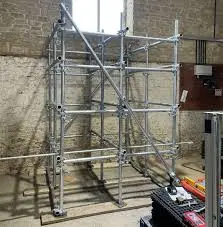
Get steel tubes and couplers to build a frame. Two or more tubes can be linked together with couplers. V-shaped supports move the weight to the base plates. There are ledgers running along the front of the building, and platforms are held up by transoms that cross them. The frame is held together by ties, and lateral braces keep the racks from moving. With a right-angle coupler, you can connect two tubes at a right angle. With a swivel coupler, you can connect them at any angle. This lets the system go over stairs, walls that curve, and ground that isn't level. Before you place your order, make sure the tube ID, wall thickness, length, bay spacing, lift height, platform width, and coupler fit all match. US crews are used to working with tubes that are 1.90 inches in diameter, which is 48.3 mm.
Standards Buyers Should Recognize
Rules should be changed based on the project site because they can't be used for every job. In the US, OSHA 29 CFR 1926 Subpart L sets the rules, and ANSI/ASSP A10.8 tells businesses what they should do. Most of the time, suppliers list European standards in their specs. When it comes to steel tubes, EN 39 is for them, EN 74-1 is for couplers, and EN 12811-1 lists performance requirements and load classes. Our tubes and fasteners are based on BS 1139, EN 39, and EN 74. It's not enough for a product to be OSHA-approved for a US project to be safe. Before the plan can move forward, it may also need to be approved by a qualified engineer. Write down the answer to the question "What standard was used to test each item?"
Documents to Request Before You Pay
Paper can show things that you can't see. For each configuration, ask for load tables, coupler test reports, zinc coating records, and instructions on how to set up the mill. The mill test certificate should be linked to the heat number. We look for differences of no more than 0.5 mm in size, flattening, chemical make-up, tensile and elongation strength, and zinc adhesion. For rental yards, this step works best. You can quickly get past a site safety manager with a certificate, and it will protect you if a customer disputes a shipment that was turned down. By putting each certificate in with the batch record, you can find the tubes in your yard that go with it.
How Load Capacity and Core Safety Requirements Work
Why Traditional Steel Tube Scaffolding Has No Single Load Rating?
The diameter of a tube doesn't tell you anything about its size in traditional steel tube scaffolding. It depends on how thick the walls are, how long the bays are, how high the lifts are, the brakes, the ties, the foundation, and how the platforms are set up. When a designer builds something, they add a dead load, a worker and material load, wind, impact, and any other loads that come from things like hoists or sheets. The classes in EN 12811-1 range from 0.75 kN/m² to 6.0 kN/m². Most bays can hold up to 2.0 kN/m², or about 42 pounds per square foot. Heavy-duty bays can hold up to 3.0 kN/m², or about 63 pounds per square foot. Both numbers depend on how things are laid out. It is important to get a load table and calculation that are made for your setup. You should never use a number that is based on the distance between bays.
Foundations, Bracing, and Ties
What holds the frame to the building and what sits under the first lift decide how stable it is. By OSHA, the footings must be level, strong, and rigid so the scaffold doesn't fall over while it's being used. Place base plates on sole boards over soft ground. Spans that are supported and have a height-to-base-width ratio greater than 4:1 need to be held in place with braces, ties, or guys. Since there are diagonal braces, the frame doesn't rack, and the ties stay in place until you take that level apart. Don't take off your tie until someone tells you it's okay. When the tube is thin or the coupler is loose, all of these controls don't work as well.
Platforms, Fall Protection, and Site Hazards
If a scaffold platform is more than 10 feet above a lower level, OSHA says it needs to have fall protection. To keep people safe, platform top rails should be 38 to 45 inches high and fully planked between the uprights and guardrail supports. Add midrails and toe boards where people work below. Keep the building away from power lines and have a qualified person check it out after any change, storm, or impact. Before you add sheets and nets, let the designer know that they will raise the wind loads. A ladder or stair tower should also be set aside because workers sometimes climb the frame when there is no safe way to do so.
Traditional Steel Tube Scaffolding Erection Procedure and Inspection Checklist
Plan Before You Erect
First, make plans that show how much weight is expected, the condition of the ground, tie points, no-go zones, power lines, and traffic routes. After that, make sure every part is okay before it leaves the yard. Don't take couplers that have broken ends, welds that are cracked, tubes that are bent, or bolts or threads that are stripped or wonky. First, get the base ready. Once that is done, set the standards and base plates. The ledgers and transoms should then be added. Put the bracing and ties in place as you rise. Finally, put down the platforms, guardrails, and stairs. Last but not least, do a release inspection. The scaffold should be checked by someone who knows what they're doing before anyone uses it. If crews follow this order, they won't have to cut corners when time is short.
Daily Inspection Checklist
OSHA says that a qualified person must check before every shift. Here are the checks I believe should be done before every shift.
- Foundation and alignment: Look for settlement, undermined sole boards, leaning standards, and gaps under base plates. Confirm that standards stay plumb and ledgers stay level, because small shifts push couplers sideways and load joints in ways the original design never counted on. Fix any change before anyone climbs again.
- Connections and bracing: Check that every coupler is tight, that bolts show no stripped threads, and that tubes extend past each joint. Confirm that diagonal braces and ties remain in place. Replace any coupler with sand holes, cracks, or deformation right away, since a damaged fastener can slip under load.
- Platforms and access: Confirm full decking, secure supports, guardrails, midrails, toe boards, and a clear access route. Look for overloaded bays, stored material, and unauthorized changes such as removed braces or added sheeting. Tag the scaffold clearly as safe or unsafe, and record the inspection date and the inspector's name.
These checks find bugs early on, when they are still simple and inexpensive to fix.
Records, Tagging, and Defective Parts
Your employees and business will be safe if you keep written records. Record each inspection, the issues found, and the repairs or replacements carried out. Take broken tubes and couplers out of service instead of putting them back in the yard pile. This is to keep the pile from getting mixed up and sending a cracked coupler to the next job. Many rental yards have bins for pass, repair, and scrap items. They can also check the wall thickness of any tube that looks like it has a lot of corrosion or dents in it. Hot-dip galvanizing slows down corrosion, but deep pits, heavy surface rust, or bent ends are still signs that the metal has been rejected. Keeping consistent records can also help you settle damage claims from customers.
Comparing Systems and Evaluating a Traditional Steel Tube Scaffolding Supplier
Tube-and-Coupler vs. Ringlock, Frame, and Aluminum
Steel tubes can be joined together at any point and cut to any length. This means that traditional steel tube scaffolding can be used on uneven ground, in odd shapes, and at every height. It costs more to fit and do more work. Tracks that are used over and over again can have Ringlock and other system scaffolds set up faster because the connection points are fixed. Normal jobs that don't go too high can be done with frame scaffolding. Aluminum is lighter, but it has different limits on how tall it can be and how strong it can be. Check the load tables. A lot of the time, crews mix systems and use right-angle and swivel couplers to fill in gaps around system scaffolding. We have ringlock, cuplock, and frame scaffolding, so you can compare systems based on the job you need to do.
Galvanized vs. Painted Steel
Our hot-dip galvanized tubes have a zinc coating that is more than 40 microns thick, which is around 300 g/m². Based on the specs, our items can be used outside for at least 10 years. Steel that has been painted often costs less at first, but the paint chips where the couplers touch, and rust forms. This makes it harder to do maintenance. Those who live near the coast, rent homes that are used a lot, or store things outside should choose galvanizing. Paint tubes can be used for short, dry jobs inside. You can tell the difference between hot-dip and cold-galvanized by looking at the outside. It has a thin, shiny layer that doesn't resist corrosion as well as hot-dip, which has a layer that looks duller and more crystalline. Check the certificate's coating for both color and thickness.
How to Evaluate a Supplier
Check out the company that made the quote. The Shandong Xingrui Building Materials Co., Ltd. is a part of the Shandong Xingrui Group. It started in 2007 in Rizhao, a port city that can be reached by train and plane. About 920 people work at our 79,800 m² site, and 180 of them are technicians. The site has 12 welding robots and 6 automatic welding lines. We have ISO 9001, ISO 14001, and ISO 45001 certifications, and CE certifications for our products. We send packages to over 100 different countries. We can also get plans and samples from you to use. When you look at different suppliers, find out how they make tubes, finish them, pack them, load containers, and how long the lead time is. Ask for samples that come with help with how to use them.
Cost, Common Mistakes, and a Step-by-Step Buyer Method
Cost Factors and Total Ownership Cost
To understand the price per ton, you need to know how thick the walls are. A ton can buy different things. A 48.3 mm tube with a 3.0 mm wall weighs about 3.35 kg per meter, since steel has a density of 7.85 g/cm³. On the other hand, a 2.5 mm walled tube weighs about 2.82 kg per meter, which is about 16% less steel. You can go farther with a ton of thin tube, but it's not as strong, and the gate is more likely to return it. Also think about the coupler's length, finish, testing, packaging, freight, duties, and any custom lengths you may need. Then add up all the costs, such as buying, shipping, labor, inspection, storage, replacement, and downtime. Most of the time, a cheap Q235 tube that bends is worse than a cheap one that can be used again.
Mistakes That Cost Money and Safety
Watch out for these four mistakes. First, buying something based only on price without checking the roof, the coating, and the certificates. The second thing that makes the grip less strong is putting together tubes and couplers that aren't the same size or tolerances. Third, using standard sizes to show that a building is safe. Fourth, using old parts again without first making sure they work. Before you use or fix up used parts, make sure they are free of damage like cracks, bends, dents, broken threads, couplers that don't fit right, and weld flaws. Adding or removing ties, braces, sheets, or putting too much on platforms can also cause problems when changes are made to the site. Make a list of the steps that need to be taken before something can change, and make another list of the steps that need to be taken before something can enter or leave your yard.
A Step-by-Step Method for Selecting Safe Scaffolding
- Step 1: Write down what it will be used for, its height, shape, loads, exposure, and access needs. Then, make a plan for how it will be used again.
- Step 2: Check the documents, standards, tube specs, coupler types, coatings, load classes, and make sure they are correct. Our Q235 tubes are welded to the standard ¥48×3.0 mm and can be used with cast iron fasteners that can be bent.
- Step 3: Compare suppliers based on price, lead time, quality, engineering help, export experience, and complying with the rules.
- Step 4: Look over the samples, and for orders that are more risky, get approval or verification from a third party before production.
- Step 5: Read and agree to the bill of materials, drawings, certificates, materials list, packaging, delivery schedule, and packaging.
Conclusion
Traditional steel tube scaffolding is secure to use when the entire system is in place. The rules that matter on the job site are different. Ohsha and ANSI/ASSP A10.8 are the ones in the US. Other places have supplier requirements that talk a lot about EN 39, EN 74-1, and EN 12811-1. The load capacity is not a single number. It is based on the foundations, the length of the bays, the bracing, and the strength of the walls. There aren't many main risks because the foundations are stable, the frames are tied and braced, the platforms are full, and a qualified person checks them every shift. Paperwork from suppliers, such as mill certificates, coupler reports, and load tables, show how good the product is. While the price per ton alone doesn't show the cost, things like thinner walls, broken couplers, and rejected tubes all add to it.
FAQ
Can I estimate load capacity from tube diameter?
Not at all. What determines the capacity is also the foundation, couplers, bracing, lift height, wall thickness, and the space between bays. Use an exact load table and engineering calculations to figure out how to set up your building. If you use a different layout, the end result will be different. Don't take a picture from someone else's project and use it your own.
How does it compare with ringlock scaffolding?
It takes more work and time to fit a tube and coupler, but it works better with structures that are curved or not level. Because the connection points are always in the same place, layouts that are used a lot of times set up faster. Many crews do both on the same project to get the best of both speed and flexibility.
Should I choose galvanized or painted tubes?
Choose hot-dip galvanized tubes for outdoor, coastal, or rental use that will be used a lot and needs to be resistant to corrosion. Painting tubes is a good way to finish quick, dry jobs that you won't need again. Check the certificate to see how thick the coating is.
Which documents should a manufacturer provide?
Ask for coupler test reports, coating records, load tables, proof of compliance, quality records, installation instructions, and data that can be used to keep track of the product. A mill test certificate with heat numbers is also helpful. Before they are sent to a job site, you can look over each group of these papers.
Request a Compliant Traditional Steel Tube Scaffolding Quotation
Are you going to add to, rebuild, or restock your rental fleet? Send GREEN FORMWORK the sizes of the tubes, the wall thickness, the number of tubes, the coupler types, the finish, the schedule, and the places you want the tubes to go. We're a traditional steel tube scaffolding supplier that makes Q235 products and has management systems that are ISO-certified. We also offer samples that come with technical support. We'll check your list for errors and give you a clear quote. You can email sdxingruiqp@126.com to find out more.
References
1. Occupational Safety and Health Administration, 29 CFR 1926 Subpart L: Scaffolds, 1996
2. European Committee for Standardization, EN 39: Loose Steel Tubes for Tube and Coupler Scaffolds, 2001
3. European Committee for Standardization, EN 74-1: Couplers, Loose Spigots and Baseplates for Use in Working Scaffolds and Falsework, Part 1: Couplers for Tubes, 2005
4. European Committee for Standardization, EN 12811-1: Temporary Works Equipment, Part 1: Scaffolds, Performance Requirements and General Design, 2003
5. American Society of Safety Professionals, ANSI/ASSP A10.8: Scaffolding Safety Requirements, 2019
6. International Organization for Standardization, ISO 45001: Occupational Health and Safety Management Systems, 2018
Learn about our latest products and discounts through SMS or email