- English
- French
- German
- Portuguese
- Spanish
- Russian
- Japanese
- Korean
- Arabic
- Greek
- German
- Turkish
- Italian
- Danish
- Romanian
- Indonesian
- Czech
- Afrikaans
- Swedish
- Polish
- Basque
- Catalan
- Esperanto
- Hindi
- Lao
- Albanian
- Amharic
- Armenian
- Azerbaijani
- Belarusian
- Bengali
- Bosnian
- Bulgarian
- Cebuano
- Chichewa
- Corsican
- Croatian
- Dutch
- Estonian
- Filipino
- Finnish
- Frisian
- Galician
- Georgian
- Gujarati
- Haitian
- Hausa
- Hawaiian
- Hebrew
- Hmong
- Hungarian
- Icelandic
- Igbo
- Javanese
- Kannada
- Kazakh
- Khmer
- Kurdish
- Kyrgyz
- Latin
- Latvian
- Lithuanian
- Luxembou..
- Macedonian
- Malagasy
- Malay
- Malayalam
- Maltese
- Maori
- Marathi
- Mongolian
- Burmese
- Nepali
- Norwegian
- Pashto
- Persian
- Punjabi
- Serbian
- Sesotho
- Sinhala
- Slovak
- Slovenian
- Somali
- Samoan
- Scots Gaelic
- Shona
- Sindhi
- Sundanese
- Swahili
- Tajik
- Tamil
- Telugu
- Thai
- Ukrainian
- Urdu
- Uzbek
- Vietnamese
- Welsh
- Xhosa
- Yiddish
- Yoruba
- Zulu
Can Modular Aluminum Formwork Be Reused Across Multiple Projects?
Yes — modular aluminum formwork can absolutely be reused across multiple projects. Built from high-strength 6061-T6 aluminum alloy, these systems are engineered specifically for repeated deployment. With proper maintenance, a single set of panels can complete 300+ reuse cycles while maintaining dimensional accuracy within ±1mm. Unlike timber or plywood alternatives that degrade quickly, aluminum panel systems resist corrosion, hold structural geometry, and transfer cleanly between job sites. For rental operators and procurement teams managing assets across several developments, this reusability is what drives the return on investment.
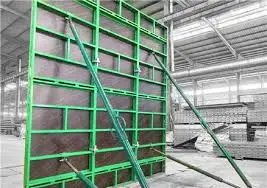
Understanding Modular Aluminum Formwork and Its Reusability
What the System Actually Consists Of?
Standard panels, non-standard panels, and tools like pins, wedges, and back-braces are the three types of parts that make up a modular aluminum panel system. Standard panels cover structure areas that are used over and over, like walls, floor slabs, beams, and columns. Non-standard panels can work with bay windows, core walls, and sides that aren't straight. Precision-machined joints let all the parts fit together, making a tight, stable structure that doesn't need a lot of complicated matching work to be done on-site.
Why Aluminum Holds Up Better Than Alternatives?
These panels are 20–25 kg/m², which is light enough to move by hand but strong enough to hold up to 60 KN/m² of concrete pressure. The 6061-T6 alloy has a yield strength of 210 MPa and a tensile strength of 250 MPa. Formwork made of steel rusts, while wood warps and soaks up water. Since aluminum doesn't rust or swell, the shape of the surface stays the same from cycle one to cycle three hundred. That uniformity is important when you need concrete finishes that will look the same on different places.
Reusability Designed Into the Engineering
This asset can be stripped early—panels come off within 48 hours, but props stay in place—which keeps it moving. Panels can go to the next floor or project faster if they are freed up faster. This design choice directly helps rental owners who need high change rates to get their money's worth. This speed is planned into every panel size and connection detail by Shandong Xingrui Building Materials Co., Ltd.
Evaluating the Reusability: Performance and Cost Benefits
The 300-Cycle Math
The cost of buying one modular aluminum formwork set that can do 300 cycles is spread out over hundreds of floors. Compared to plywood shuttering, which usually lasts 5–8 uses before the surface wears down and lowers the quality of the concrete. After 30 to 50 cycles, most operators have already made back the money they spent on the machine just by saving time and money on labor. In a high-rise building, the lack of plastering costs per floor adds up quickly.
Monolithic Pouring Saves Time
The method lets walls, blocks, columns, and beams all be cast at the same time in a single pour. Traditional ways take 7–10 days for the floor cycle, but this one-piece technique cuts it down to 4–5 days. For rental companies that bill by floor cycle, this speeding up means that they will be able to sell more assets each year and make more money.
Cost-Per-Use Decreases With Every Project
An metal panel system costs more to buy up front than a wood system. There is a short time left. After being used on three or four different projects, the cost per floor drops well below that of any disposable option. When purchasing things, teams that look at how much they're used instead of how much they cost always choose aluminum systems for use on multiple projects.
Best Practices for Managing Reusable Modular Aluminum Formwork
Handling During Installation and Stripping
When pins and wedges are put together in the right order, stress peaks that distort panel edges are avoided. To keep panel faces from getting damaged by impacts, the stripping should be done in the right order, with the props coming last. A three- to five-day course on connection routines for the crew pays for itself by avoiding cracked welds and bent edges that wear out assets faster.
Maintenance Between Projects
Panels need to be cleaned of any leftover concrete every time they are used and then put away. Light surface oxidation is common and won't affect performance, but if you don't clean up the concrete growth, it will cause pressure points when you put the modular aluminum formwork piece back together. Checking pin holes and joint seams often finds wear early. During its service life, the system stays up to code by replacing worn-out parts before the next launch.
Storage and Logistics Management
Panels won't warp if they are stacked flat on clean, dry racks. When panels are stored vertically against walls in damp places, surface dirt gets transferred to the concrete finishes. Clear panel marking by size and project assignment cuts down on picking mistakes and delays for rental companies that manage goods in more than one storage. Logistics planning that keeps people from having to do the same thing twice between sites also lowers the number of dents and scratches, which drives up the cost of repairs.
How to Choose and Procure Reusable Modular Aluminum Formwork Systems?
Verify Material and Dimensional Standards
Ask sellers for mill papers that prove the composition of the 6061-T6 alloy. Make sure you get proof of the dimensional tolerances. Normal guidelines are for flatness to be within 2mm, verticality to be within 3mm, and overall tolerance to be within 1mm. Shandong Xingrui Building Materials Co., Ltd. follows ISO 9001 and ASTM-B209 guidelines and does pre-assembly trials in the factory to make sure panels fit properly before they are shipped. This way, there are no surprises when changes need to be made on-site.
Evaluate System Compatibility and Supplement Supply
For rental companies that want to add to their current inventory, new modular aluminum formwork panels must be able to work with panels that are already there. When suppliers' pin systems don't work with each other, separate asset groups can't be put together, which wastes a lot of time and money. Make sure that the seller can handle small-batch orders in between large purchases. This is because replacing lost items is an ongoing cost of running a rental fleet.
Negotiate for Long-Term Supply Terms
Even though bulk price is important, supplement MOQ and wait time are often more important in the long run. A seller who is ready to take on small restocking orders on fair terms will protect your working capital and keep your fleet running at full capacity. Before choosing a main provider, you should agree on payment terms, lead times, and how samples will be checked.
Environmental and Economic Impact of Reusing Modular Aluminum Formwork
Reduced Construction Waste
When a project is over, traditional timber formwork leaves behind a lot of waste. A concrete construction site that uses plywood shuttering may have to get rid of several tons of old wood per building. Over the course of their useful life, aluminum panel systems produce almost no formwork waste. At the end of its useful life, 95% of aluminum can be recycled, giving it value again instead of costing money to put in a landfill.
Lower Carbon Footprint Over Time
The upfront cost of energy used to make metal is high. After it is made, the material can be used 300 times without needing any new resources. When you look at the total number of cycles, life cycle assessment studies in the construction industry consistently show that reusable concrete forming systems produce much lower per-pour emissions than single-use timber alternatives.
Increasing Regulatory and Market Pressure
In the US, Europe, and Southeast Asia, green building standards are rewarding builders more and more who show they cut down on material waste. Rental companies that can show how many times their aluminum equipment has been used and how much of it has been recycled have a real advantage when bidding on projects that require sustainability. That benefit is built into the object when it is bought.
Conclusion
It is not only possible to use modular aluminum formwork panel systems for more than one project, it is also the most cost-effective way to do so. The 300+ cycle life, early stripping, solid pour efficiency, and 95% end-of-life recyclability make this system more valuable than any single-use system. If rental companies are building a scalable asset base, the return they get will depend on the seller they choose and how well their systems work together. The best way to protect the long-term value of an asset is to buy from a maker with uniform specs, a stable supply of supplements, and material qualifications that can be checked.
FAQ
How many reuse cycles can I realistically expect?
With standard cleaning and pin replacement as needed, 300+ cycles is achievable. The aluminum itself does not fatigue under normal concrete pressure loads. Surface wear affects concrete finish quality before structural integrity becomes a concern.
Is the system compatible across different floor plan types?
Standard panels cover repetitive layouts. Non-standard panels address irregular geometry. The two categories combine on the same project, so one asset pool can serve varied building types without full reconfiguration.
What is the minimum order for supplement panels?
This varies by supplier. GREEN FORMWORK works with rental operators on supplement orders below standard bulk thresholds — contact us directly to discuss your replenishment schedule.
How does it perform in extreme temperatures?
The system maintains structural stability between -20°C and 60°C. In cold climates, concrete curing additives are recommended to match the system's rapid cycle pace.
What certifications should I require from a supplier?
ISO 9001 quality management and ASTM-B209 material compliance are the baseline. CE certification is required for European market projects.
Get Reliable Modular Aluminum Formwork — Contact GREEN FORMWORK Today
With help from Shandong Xingrui Building Materials Co., Ltd., GREEN FORMWORK sells modular aluminum formwork to rental companies, builders, and business-to-business buying teams all over the world. To accurately fill big and small orders, our 79,800 m² factory in Rizhao, China, has 12 welding robots and 4 cold roll making lines. Over 100 countries can get standard panels, non-standard parts, and extras. To get examples and prices, email your project needs or a list of supplements to sdxingruiqp@126.com.
References
1. American Concrete Institute. ACI 347R-14: Guide to Formwork for Concrete. ACI, 2014.
2. Peurifoy, R. L., & Oberlender, G. D. Formwork for Concrete Structures. McGraw-Hill, 2011.
3. Hurd, M. K. Formwork for Concrete, 7th ed. ACI Special Publication SP-4, 2005.
4. Construction and Building Materials Journal — Elsevier. "Life Cycle Assessment of Aluminum vs. Timber Formwork in High-Rise Construction." Vol. 147, 2017.
5. European Federation of Building Contractors (FIEC). Sustainable Formwork Practice Report. FIEC, 2020.
6. Occupational Safety and Health Administration (OSHA). Concrete and Masonry Construction Standard 29 CFR 1926 Subpart Q. U.S. Department of Labor, 2015.
Learn about our latest products and discounts through SMS or email