- English
- French
- German
- Portuguese
- Spanish
- Russian
- Japanese
- Korean
- Arabic
- Greek
- German
- Turkish
- Italian
- Danish
- Romanian
- Indonesian
- Czech
- Afrikaans
- Swedish
- Polish
- Basque
- Catalan
- Esperanto
- Hindi
- Lao
- Albanian
- Amharic
- Armenian
- Azerbaijani
- Belarusian
- Bengali
- Bosnian
- Bulgarian
- Cebuano
- Chichewa
- Corsican
- Croatian
- Dutch
- Estonian
- Filipino
- Finnish
- Frisian
- Galician
- Georgian
- Gujarati
- Haitian
- Hausa
- Hawaiian
- Hebrew
- Hmong
- Hungarian
- Icelandic
- Igbo
- Javanese
- Kannada
- Kazakh
- Khmer
- Kurdish
- Kyrgyz
- Latin
- Latvian
- Lithuanian
- Luxembou..
- Macedonian
- Malagasy
- Malay
- Malayalam
- Maltese
- Maori
- Marathi
- Mongolian
- Burmese
- Nepali
- Norwegian
- Pashto
- Persian
- Punjabi
- Serbian
- Sesotho
- Sinhala
- Slovak
- Slovenian
- Somali
- Samoan
- Scots Gaelic
- Shona
- Sindhi
- Sundanese
- Swahili
- Tajik
- Tamil
- Telugu
- Thai
- Ukrainian
- Urdu
- Uzbek
- Vietnamese
- Welsh
- Xhosa
- Yiddish
- Yoruba
- Zulu
OEM Lightweight Steel Formwork: How Custom Designs Cut Costs
When procurement managers ask how to reduce job-site expenses without sacrificing structural quality, custom-engineered lightweight steel formwork is one of the clearest answers available today. By tailoring panel dimensions, steel grade, and surface treatment to a specific project, OEM manufacturing removes the hidden costs buried in standard off-the-shelf systems—excess labor, wasted material, and repeated repairs. This article walks through the full picture: what the product is, where traditional systems fall short, how OEM design drives savings, how steel compares to rival materials, and what to look for when sourcing a supplier.
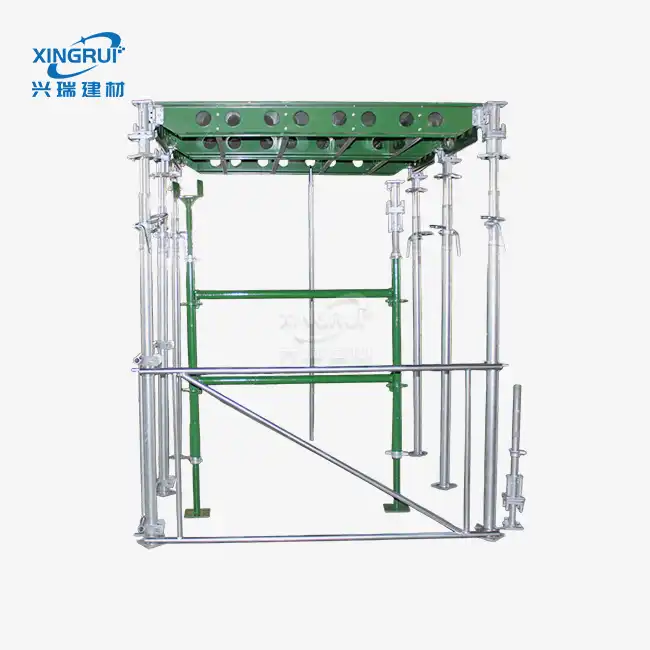
Understanding Lightweight Steel Formwork and Its Benefits
Modular steel shuttering has changed how mid-rise and civil construction teams think about concrete placement. Instead of hauling heavy timber frames or sourcing plywood by the pallet, crews can now work with precision-formed steel panels that one worker can lift and position without a crane.
What Defines the System?
Lightweight steel formwork is a modular concrete casting system built from cold-rolled, high-strength steel—typically Q235 or Q345 grade—with a plate thickness of 2.0 mm and a frame thickness of 2.5 mm. Each panel weighs no more than 22 kg, which makes single-person handling practical on any floor level.
Core Performance Characteristics
The panel face tolerances hold within ±2 mm flatness, producing smooth concrete surfaces that reduce finishing labor. Tight-fit joint design prevents grout leakage, which directly lowers material waste per pour. Hot-dip galvanization or powder coating protects the steel against alkaline concrete environments, delivering a service life measured in years rather than months.
Where It Fits Best?
The system is well-suited to civil buildings, mid-rise residential towers, and small municipal works such as utility tunnels and retaining walls. Standard panel combinations of 1000×300 mm and 1500×200 mm cover most repetitive layouts, while custom sizing handles irregular column grids or non-standard wall thicknesses without field cutting.
Challenges in Traditional Formwork and the Rise of OEM Solutions
It's hard for builders who have ever led a crew through a plywood-heavy pour cycle. The panels swell when it rains, the joints leak, and the boards can only be used a few times before they need to be thrown away.
The Weight and Waste Problem
Traditional wood formwork needs two people per panel because it's heavy and doesn't fit together easily. The cost of products stays high because they have to be changed out so often. In cities, it's hard to keep and rotate big woodstocks, which is an extra cost that doesn't show up in the first estimates.
Where Standard Steel Misses the Mark?
Things that are made with heavy gang-form steel systems last longer, but they are also heavier. To get crane lifts, they have to rent a crane, set it up, and can only use it on buildings that are over a certain height or in small holes. Standard building sizes also don't usually work with off-the-shelf panels; expensive changes have to be made in the field.
How OEM Manufacturing Closes the Gap?
An OEM seller of lightweight steel formwork makes panels based on the exact drawings that the customer gives them. The sizes, hole designs, and connection parts are changed before production begins. This method makes sure that every panel fits the first time and cuts down on waste because the panels are not cut on-site. Custom-made inventory also helps rental companies make more money every day because it perfectly meets the needs of projects that come up over and over again.
How OEM Custom Steel Formwork Cuts Costs?
When you break the cost case for custom modular formwork into three groups, it's easy to see how it works: labor, tools, and material lifecycle.
If you want to save money on OEM steel forms, these are the key ways it does so:
- Labor savings through lighter panels: At ≤22 kg per panel, one worker handles installation without mechanical assistance. This lowers crew size requirements and removes hoisting equipment rental costs from the budget entirely. On a 10-story residential building, that reduction compounds across every floor cycle.
- Fewer pours wasted to leakage and misalignment: Tight-fit joint sealing and ±2 mm frame flatness mean the concrete surface comes off the form clean. Finishing trades spend less time grinding honeycombing or patching blow-outs, which cuts both labor hours and repair materials.
- Long reuse life reducing per-cycle cost: With more than 40 confirmed reuse cycles, the amortized cost per pour drops steadily. A plywood panel may last 5–8 uses; a steel panel from the same project budget outlasts it by a factor of five or more.
With these tips, you can really save cash. One group in China says that switching from wooden to steel formwork systems that can be used more than once can cut down on material waste on mid-rise residential projects by up to 30%. That number goes up even more when OEM accuracy is added, since the panels are already set up and ready to go when they get there. When you think about all of these things, OEM steel formwork usually has a lower total cost of ownership over time and across multiple jobs than both normal aluminum systems and plywood.
Comparing Steel Formwork to Other Formwork Types
Steel, aluminum, plywood, and plastic are often on the short list of choices for purchasing managers evaluating lightweight steel formwork. There are good reasons to use each piece of information, but comparing them across multiple projects changes things a lot.
Steel vs. Aluminum
Making metal costs more per kg, but each panel is lighter weight. Not only that, but metal panels get dents when they are hit, and they need special welding to fix them, which a trade contractor working in a rural area might not be able to do. Cold-rolled steel panels can handle impacts better, and any skilled welder can fix them on-site. This means they last longer without having to be fixed at the plant.
Steel vs. Plywood and Timber
Wooden forms are still used a lot because they are simple to find and don't cost a lot at first. However, replacing things often over the course of a project's life wipes out any savings made at the beginning. Plywood also takes in water, which changes its size, the finish on the outside, and how strong the joints are. Both problems are solved by steel, and there is less waste on the job site. This is in line with the ISO 14001 environmental management standards that many project owners now expect workers to follow.
Steel vs. Plastic
Strong steel systems can hold more weight than plastic ones, but plastic ones are lighter and don't rust. Plastic panels might bend too far in places where there is a lot of horizontal concrete pressure, like in shear walls or columns. When steel panels are put under a lot of stress, like in civil and mid-rise building, they keep their shape.
Procurement Guide for OEM Lightweight Steel Formwork
To find the best OEM lightweight steel formwork provider, you need to do more than just look at prices per panel. A structured evaluation makes it less likely that the quality will be bad, the delivery will be late, or the specifications won't match.
Verify Certifications and Manufacturing Capacity
If a seller has ISO 9001 for quality management, ISO 14001 for environmental management, or ISO 45001 for health and safety at work, you should give them more weight. They are proof that the plant follows official, written procedures instead of informal ones that could be hacked. Shaanxi Xingrui Building Materials Co., Ltd. owns all of these and has 180 professional techs working in 79,800 square meters of plant space.
Request Samples Before Committing to Volume
A good OEM steel formwork manufacturer will give you samples to look at for size and surface quality before you place a large order. Make sure that the joints are tight and that the galvanization goes all the way around the plate. When procurement teams buy from companies they don't know, they often worry that sellers will thin the steel between the quote and production. This step gets rid of those sellers.
Evaluate Total Cost of Ownership
You should look at the cost per cycle instead of the price per panel in this case. Think about how long it will take to get the item, whether there are any import taxes, how many times it is likely to be used, and how much it costs to keep inventory between tasks. People who rent things out should also think about how much value the things still have after they've been used. When you no longer need steel panels, you can sell them as scrap, but you can't sell metal or plastic.
Conclusion
Construction companies and rental companies can use lightweight steel formwork as custom OEM instead of off-the-shelf or wood systems because it lasts longer and costs less. The cost of labor goes down when panels are lighter, when standards are high, and when panels can be used more than 40 times. Over time, the cost per pour also goes down. You should choose an OEM partner whose certifications you can look at, whose quality controls you can see, and whose examples you can ask for. The money will be worth it in more than one project if those things happen.
FAQ
Q1: How many times can a steel formwork panel be reused?
A: Panels manufactured to Q235 or Q345 steel specifications with proper surface treatment typically achieve more than 40 reuse cycles under normal site conditions. This figure depends on how consistently crews clean panels after each pour and apply a release agent before the next casting.
Q2: Can OEM panels be made to non-standard sizes?
A: Yes. OEM manufacturing exists precisely to address non-standard column grids, irregular wall lengths, and unique slab configurations. Standard combinations of 1000×300 mm and 1500×200 mm cover most repetitive layouts; custom dimensions require advance drawings and typically a 4–6 week production lead time.
Q3: What certifications should I require from a steel formwork supplier?
A: At minimum, request ISO 9001 for quality management and ISO 14001 for environmental controls. ISO 45001 for occupational safety is increasingly required by project owners and general contractors on internationally funded projects.
Q4: Is a minimum order quantity required for OEM production?
A: This varies by supplier. Some manufacturers accept small trial orders before committing to a framework agreement. Confirming MOQ and sample availability upfront is a practical step during the initial inquiry stage.
Q5: How do I verify steel plate thickness before a bulk order?
A: Request a physical sample and measure it with a calibrated micrometer. Reputable suppliers also provide material test reports (MTRs) from the steel mill showing certified thickness, yield strength, and chemical composition for each production batch.
Get a Custom Quote from GREEN FORMWORK Today
GREEN FORMWORK sends ISO-certified lightweight steel formwork to builders and rental companies in more than 100 countries with the help of Shandong Xingrui Building Materials Co., Ltd. Before, during, and after you place an order, we provide free samples, allow for different order sizes, and offer full technical support. Email our team at sdxingruiqp@126.com to learn more about how our services as a provider of lightweight steel forms can help your next project.
References
1. China Construction Industry Association. Technical Specification for Construction Formwork Safety. 2018.
2. International Organization for Standardization. ISO 9001: Quality Management Systems — Requirements. 2015.
3. International Organization for Standardization. ISO 14001: Environmental Management Systems — Requirements with Guidance for Use. 2015.
4. International Organization for Standardization. ISO 45001: Occupational Health and Safety Management Systems. 2018.
5. European Committee for Standardization. EN 12812: Falsework — Performance Requirements and General Design. 2008.
6. American Concrete Institute. ACI 347R: Guide to Formwork for Concrete. 2014.
Learn about our latest products and discounts through SMS or email