- English
- French
- German
- Portuguese
- Spanish
- Russian
- Japanese
- Korean
- Arabic
- Greek
- German
- Turkish
- Italian
- Danish
- Romanian
- Indonesian
- Czech
- Afrikaans
- Swedish
- Polish
- Basque
- Catalan
- Esperanto
- Hindi
- Lao
- Albanian
- Amharic
- Armenian
- Azerbaijani
- Belarusian
- Bengali
- Bosnian
- Bulgarian
- Cebuano
- Chichewa
- Corsican
- Croatian
- Dutch
- Estonian
- Filipino
- Finnish
- Frisian
- Galician
- Georgian
- Gujarati
- Haitian
- Hausa
- Hawaiian
- Hebrew
- Hmong
- Hungarian
- Icelandic
- Igbo
- Javanese
- Kannada
- Kazakh
- Khmer
- Kurdish
- Kyrgyz
- Latin
- Latvian
- Lithuanian
- Luxembou..
- Macedonian
- Malagasy
- Malay
- Malayalam
- Maltese
- Maori
- Marathi
- Mongolian
- Burmese
- Nepali
- Norwegian
- Pashto
- Persian
- Punjabi
- Serbian
- Sesotho
- Sinhala
- Slovak
- Slovenian
- Somali
- Samoan
- Scots Gaelic
- Shona
- Sindhi
- Sundanese
- Swahili
- Tajik
- Tamil
- Telugu
- Thai
- Ukrainian
- Urdu
- Uzbek
- Vietnamese
- Welsh
- Xhosa
- Yiddish
- Yoruba
- Zulu
Fast Cuplock Scaffolding Uses in Industrial and Commercial Builds
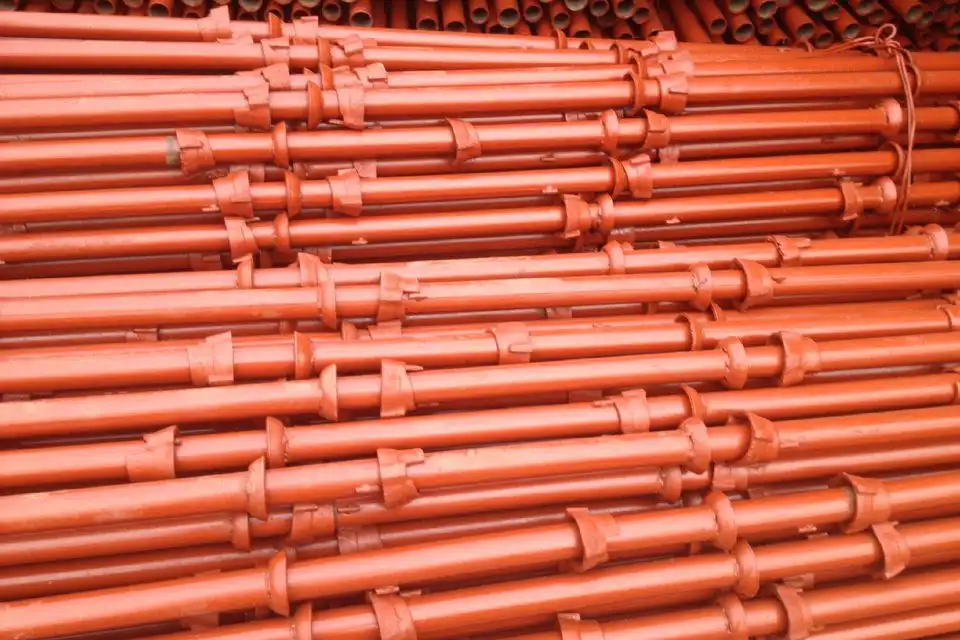
Fast cuplock scaffolding is a modular support system built around a fixed bottom cup and a sliding top cup that locks up to four horizontal ledgers onto a single vertical standard in one motion. For procurement managers sourcing support structures across bridge decks, industrial plants, and commercial high-rises, this system addresses three real field problems: excessive labor hours, lost fasteners, and inconsistent tightening torque. The self-aligning node eliminates those variables, delivering faster erection cycles and predictable load paths on large-scale standardized construction projects.
Understanding Fast Cuplock Scaffolding and Its Core Features
What the Node Actually Does?
At every 0.5 meters, the bottom cup is welded to the vertical standard at the factory. Someone on the team slots the horizontal ledger blades into that node and drops the top cup. A spring mechanism then instantly starts to work. At the same time, all four links lock. Not a hammer. There should be no loose bolts. No second pass to check the torque. The only thing that sets a cuplock modular scaffold system apart from older tube-and-clamp designs is this one action.
Material and Build Quality
Each vertical standard is made by Shandong Xingrui Building Materials Co., Ltd. from Q235 high-strength carbon steel. The tubes are 48.3 mm in diameter and the walls are 3.2–3.5 mm thick. Hot-dip galvanization (HDG) at 65–85 microns protects the surface and meets the standards of ASTM A123. In seaside or industrial settings, this amount of coating makes the product last much longer than 15 years, compared to painted options that only last 2–3 years.
Modular Design and Reusability
Every part of this system is custom made and made to be used over and over again in different project cycles. Because the node geometry is always the same, parts from one project site can be moved directly to the next without being changed. Purchasing teams that are in charge of multiple sites can base all of their goods on a single system. This makes storage easier and lowers the cost of replacements over time.
Comparing Fast Cuplock Scaffolding to Other Scaffolding Types
Cup-Lock vs. Ring Lock
A rosette plate with eight connection points is used in ring lock scaffolding, which gives it a lot of geometric flexibility. But each link needs its own wedge pin, which is pushed in with a hammer. In standard bay configurations, fast cuplock scaffolding locks four connections at once without a wedge. This cuts assembly time by about 40%. For projects with grid layouts that are used over and over, like warehouse floors or bridge falsework, the time-saving spreads out over hundreds of nodes.
Cup-Lock vs. Frame Scaffolding
Frame scaffolding comes in panels with fixed widths, which makes it harder to change the layout on uneven surfaces. The cuplock scaffold system has its own standards and ledgers, which means that bay widths and heights can be changed to fit the structure. This is better than pushing the structure to fit panel sizes. This is important in caves and industrial plants where the shape of the space doesn't always follow a straight line.
Cost Efficiency Over the Project Lifecycle
Cuplock parts cost more per unit up front than basic tube-and-clamp materials. The financial offset shows up in work. Field data from studies on building output shows that cup-lock systems cut the amount of work needed to set up structures on-site by up to 35% compared to traditional methods. That gap more than makes up for the difference in material cost over a 10,000-square-meter falsework deck in just one use cycle.
Practical Benefits and Use Cases in Industrial and Commercial Projects
Heavy-Duty Shoring and Formwork Support
Formwork shoring has to handle constant vertical loads when building tall buildings out of concrete. The cuplock scaffold system can hold up to 60 kN as a standard in engineered configurations. It is stiff enough to support slab pours without letting them move side to side. With the help of 12 welding robots and 6 automatic welding lines, Xingrui's production team keeps the dimensions of every cup node within ±1.5 mm, which has a direct effect on the regularity of load distribution.
In the field, this system works best in the following situations and gives measurable results:
- Bridge and pier falsework: Adjustable base jacks compensate for uneven riverbed or slope terrain. The system reaches tower heights exceeding 50 meters under engineered load plans, making it practical for long-span bridge deck construction where other systems require intermediate foundations.
- Petrochemical plant turnarounds: Refinery maintenance windows are measured in days, not weeks. The spring-locking node allows crews to erect and strike access platforms at a pace that keeps shutdown schedules intact, without sacrificing the load ratings required around heavy process equipment.
- Commercial multi-story frames: Office towers and large retail structures benefit from the system's 360-degree layout flexibility. Bays adapt to column grids, curtain wall setbacks, and MEP coordination zones without requiring additional fabrication.
In all of these cases, the need is for effective load movement and quick cycle time. Both of these conditions are met by the cuplock scaffold system, which doesn't make operations more difficult.
Environmental and Sustainability Considerations
When it's time to recycle, the Q235 steel used in each part of the fast cuplock scaffolding can be used again and again. The Xingrui factory has ISO 14001 environmental management certification. This means that production processes keep track of waste and emissions against goals that can be measured. If EPC contractors and commercial developers have to follow green building rules, buying from a manufacturer that is ISO 14001-certified can help them meet the documentation needs for project sustainability reporting.
Procurement Insights: Buying, Renting, and Supplier Selection
What Certified Suppliers Must Demonstrate?
A good cuplock scaffolding supplier should have mill test certificates (MTC) for the steel they bring in, records of ultrasonic or magnetic particle weld inspections, and galvanization thickness reports from a third party. The company Xingrui has ISO 9001 certification for quality management, ISO 14001 certification for environmental management, and ISO 45001 certification for health and safety at work. All of the products that have CE approval. These files help contractors send their bids to project owners in places that need to follow EN 12811-1.
Custom Orders and Sample Lead Times
Xingrui can do custom work based on samples and drawings provided by the customer. The standard wait time for a sample is 7–14 days from the approval of the drawing. This quick turn-around helps buying teams that need to see the goods in person before placing a big order. There is technical help during the drawing review and sample approval stages, which cuts down on the number of emails that need to be sent back and forth before production starts.
Logistics and Trade Terms
The Xingrui facility is in Rizhao, which is in Shandong Province. It has easy access to Rizhao Port, area airports, and high-speed train. You can choose between FOB and CIF terms. This port's closeness cuts down on travel time within the country and makes it easier to book containers for export orders. This location lowers logistical risk compared to suppliers based farther inland for large EPC contractors who have to meet tight delivery windows.
Ensuring Safety and Compliance When Using Fast Cuplock Scaffolding
International Standards That Apply
The Xingrui fast cuplock scaffolding system meets the standards for temporary works equipment (BS EN 12811), scaffold safety in the United States (ANSI/SSFI SC100-5/05), and Australia and New Zealand's AS/NZS 1576. If a procurement team is looking for suppliers for projects in more than one area, they can use these three standards to meet most of the compliance needs in North America, Europe, and Oceania without having to define different systems.
Pre-Use Inspection Protocol
They should check the following things before every deployment:
- Top cups for seizure or deformation that prevents free sliding
- Ledger blade ends for bends or weld cracks at the blade-to-tube junction
- Bottom cup welds for cracking, particularly at the 12 o'clock and 6 o'clock positions
- Galvanization integrity on vertical standards, noting any areas of bare steel that indicate handling damage
It takes less than 90 seconds per node to do a systematic pre-use check, which decides whether a part goes back into service or to replacement stock.
Load Management and Worker Training
The most common reason a scaffold system fails is that the loads on the nodes are too high. Before the building starts, the site engineer has to make sure that the load chart that came with the engineering drawings matches the planned bay configuration. Workers who are in charge of erection should go through a formal training session that includes going over the spring-locking mechanism, the limits of the base jack's adjustments, and the ledger alignment process.
Conclusion
The main problem in building support work is that structures need to be able to go up quickly, carry big loads, and come down just as quickly for the next turn. Fast cuplock scaffolding solves this problem. The hot-dip galvanized finish, spring-locking node, and Q235 steel construction make for a system that works well in bridge falsework, industrial maintenance platforms, and commercial shoring situations. The Xingrui cuplock scaffold system is a practical and well-known option for large-scale project delivery for procurement teams that value certified quality, custom specification support, and reliable export logistics.
FAQ
Q1: How does the spring-locking mechanism differ from a hammer-set wedge?
A: The spring engages automatically when the ledger blade enters the cup node. A hammer-set wedge requires a manual strike and a separate verification check. The spring method removes operator variability from the connection, which matters on large crews where tightening consistency is difficult to supervise.
Q2: What is the maximum tower height for this system?
A: With proper engineering and base reinforcement, towers exceed 50 meters. The actual limit depends on load calculations, bracing intervals, and site-specific wind exposure, not a fixed product ceiling.
Q3: Can I order non-standard cup spacing or tube lengths?
A: Yes. Xingrui accepts custom orders based on submitted drawings. Standard cup spacing is 0.5 meters, but modified configurations are available with confirmed technical review.
Q4: What documentation supports CE compliance?
A: Xingrui provides CE certification, ISO 9001 quality records, batch inspection reports, and mill test certificates. EN 12811-1 calculation books are available on request for project submittals.
Q5: What is a realistic lead time for a bulk order?
A: Sample confirmation takes 1–2 weeks. Production for large orders runs 15–30 days. Total time from first inquiry to container loading typically falls within 60–90 days, depending on order volume and customization scope.
Request a Quote from GREEN FORMWORK — Fast Cuplock Scaffolding Supplier
GREEN FORMWORK sells industrial-grade cuplock scaffolding that is CE-certified, meets ISO 9001, 14001, and 45001 standards, and can be fully customized. Samples are sent out 7–14 days after the drawing is confirmed. Shandong Xingrui Building Materials Co., Ltd. can handle orders from more than 100 countries, and we offer adjustable FOB/CIF options. You can email us at sdxingruiqp@126.com to get technical sheets, model arrangements, or a price that is tailored to your project.
References
1. Construction Industry Research and Information Association (CIRIA). Scaffolding Safety and Design Guide. 2019.
2. British Standards Institution. BS EN 12811-1: Temporary Works Equipment — Scaffolds. 2003.
3. Cheng, X., & Li, Y. Construction Falsework Systems: Design, Performance and Procurement. Journal of Construction Engineering and Management. 2020.
4. American National Standards Institute / Scaffold and Access Industry Association. ANSI/SSFI SC100-5/05: Scaffold User Procedures. 2005.
5. Standards Australia. AS/NZS 1576: Scaffolding — General Requirements. 2010.
6. Engineering News-Record (ENR). Modular Scaffolding in Large-Scale Infrastructure Projects: Trends and Procurement Considerations. 2022.
Learn about our latest products and discounts through SMS or email