- English
- French
- German
- Portuguese
- Spanish
- Russian
- Japanese
- Korean
- Arabic
- Greek
- German
- Turkish
- Italian
- Danish
- Romanian
- Indonesian
- Czech
- Afrikaans
- Swedish
- Polish
- Basque
- Catalan
- Esperanto
- Hindi
- Lao
- Albanian
- Amharic
- Armenian
- Azerbaijani
- Belarusian
- Bengali
- Bosnian
- Bulgarian
- Cebuano
- Chichewa
- Corsican
- Croatian
- Dutch
- Estonian
- Filipino
- Finnish
- Frisian
- Galician
- Georgian
- Gujarati
- Haitian
- Hausa
- Hawaiian
- Hebrew
- Hmong
- Hungarian
- Icelandic
- Igbo
- Javanese
- Kannada
- Kazakh
- Khmer
- Kurdish
- Kyrgyz
- Latin
- Latvian
- Lithuanian
- Luxembou..
- Macedonian
- Malagasy
- Malay
- Malayalam
- Maltese
- Maori
- Marathi
- Mongolian
- Burmese
- Nepali
- Norwegian
- Pashto
- Persian
- Punjabi
- Serbian
- Sesotho
- Sinhala
- Slovak
- Slovenian
- Somali
- Samoan
- Scots Gaelic
- Shona
- Sindhi
- Sundanese
- Swahili
- Tajik
- Tamil
- Telugu
- Thai
- Ukrainian
- Urdu
- Uzbek
- Vietnamese
- Welsh
- Xhosa
- Yiddish
- Yoruba
- Zulu
Heavy-Duty Formwork vs Standard Systems: Which Is Best for Sites?
Heavy-duty formwork is best for pours with significant lateral pressure, strict tolerances, or multiple reuses. Bridge piers, dams, tunnels, and deep basements are examples. For low walls, modest footprints, and light projects with rated pressure, standard systems operate effectively. Correct solution depends on pour height, pace, concrete mix, geometry, and scheduling. For these needs, Shandong Xingrui Building Materials Co., Ltd. makes heavy-duty steel and aluminium systems at GREEN FORMWORK. This tutorial explains how to evaluate alternatives and what to examine before buying.
What Is Heavy-Duty Formwork?
Core Components and Their Jobs
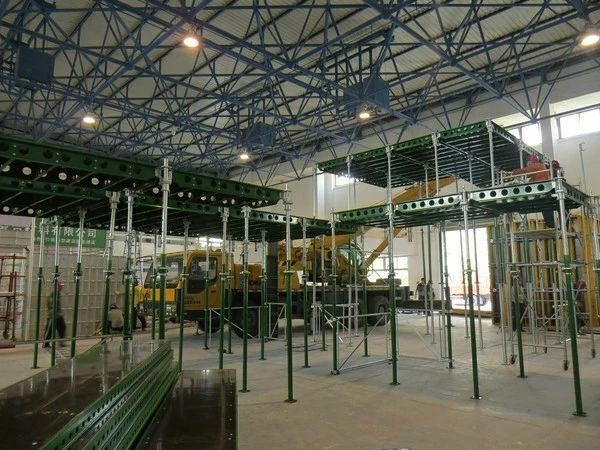
Engineered heavy-duty formwork retains new concrete until it hardens. Face panel forms concrete. Strongbacks distribute load along the wall height, while steel or aluminium frames and walers strengthen the panel. Props and braces stabilise forms against wind and building stresses, while tie rods resist lateral strain. Crews are safe with brackets and platforms, and cranes can move big panels. Each section bears a load, hence the weakest connection determines capacity. I usually recommend purchasers check the whole assembly, not just the panel rating.
How It Differs From Ordinary Panels
Ordinary panels handle mild loads and few pours. Heavy-duty formwork reduces pressure deflection using thicker material and stronger frames. Our aluminium system employs 6 mm thick profiles and steel panels at least 3.0 mm thick. Each has a design load capacity of at least 80 kN/m² (1,670 psf). Concrete weighs about 24 kN/m³, therefore 80 kN/m² corresponds to a full fluid head approximately 3.3 m. Due to pour rate and temperature, real pressure typically falls below full head, therefore project estimates determine design.
Typical Applications
I see heavy-duty formwork on projects where failure might cost days or even lives. System for bridge pylons and huge piers must manage deep-lift pours and wind vertical tolerance. Hydroelectric dam shapes must withstand concrete heat and thick mixtures. Large panels in leaping or climbing arrangements on high-rise core walls may be cast in four days. Warehouses, parking complexes, and industrial plants benefit from firm basements that withstand ground pressure. Spillway surfaces and retaining walls share huge pours and demanding completion standards.
Heavy-Duty Formwork vs Standard Formwork: Key Differences
Structural Performance and Concrete Pressure
Pressure drives the comparison for heavy-duty formwork. Pour rate, concrete temperature, unit weight, mix, and placement height determine lateral pressure, which caps at full fluid head in ACI 347. Pressure may approach that cap with fast pours and fluid mixing. Deep interior vibration increases load. Standard systems have lower pressure ratings, which vary by manufacturer. For low deflection, heavy-duty systems use steel, tighter tie patterns, and stronger bracing. The system you choose should have project-specific capacity calculations.
Durability, Reuse, and Total Cost
Purchase price is just portion of cost. Our heavy-duty steel formwork may be used 300-500 times and aluminium 200-300 times. Repairs, replacement parts, and rework from defective surfaces need labour. Divide the amount by pours, not panels. A more expensive method that pours more can decrease contact area cost per square metre. The arithmetic may favour conventional panels or rental for projects with few repeated pours.
Steel vs Aluminum Performance
Steel and aluminum both carry heavy loads, but they handle differently. Steel gives stiffness and impact resistance and lasts through more cycles. Aluminum weighs less, which helps crews and cranes. The table lists our specifications.
| Parameter | Steel Formwork | Aluminum Formwork |
|---|---|---|
| Panel thickness | ≥3.0 mm | 6 mm (thickened profile) |
| Design load capacity | ≥80 kN/m² | ≥80 kN/m² |
| Maximum pressure rating | 90-120 kN/m² | 90-100 kN/m² |
| Standard panel size | Up to 2.4 m × 6.0 m | Up to 2.4 m × 6.0 m |
| Frame material | Q355B structural steel | Aviation-grade aluminum alloy |
| Surface treatment | Hot-dip galvanization | Powder coating/anodizing |
| Reuse cycles | 300-500 uses | 200-300 uses |
Pressure ratings above 90 kN/m² still need a project check. Steel suits the heaviest pours, while aluminum suits crews who need lighter panels.
Which System Is Best for Different Construction Sites?
Bridges, Dams, and Infrastructure
I advocate heavy-duty steel formwork for piers, pylons, box girders, and spillways. Pressure from large pours and uneven forms need bespoke shutters. Using steel panels up to 2.4 m × 6.0 m reduces joints and improves concrete quality. In humid and rainy situations, hot-dip galvanisation protects panels. Because one inaccurate dimension on an odd shape might halt a pour, customisation matters. We build bespoke forms from client designs and samples, so share early before the bid package closes.
Basements and Heavy-Load Structures
Forms are stressed by deep basements, industrial foundations, and hefty structural parts when using heavy-duty formwork. A rigid design prevents bulging and maintains wall thickness. Steel and aluminium work well, so pick by crane access and crew size. Lighter aluminium panels help with limited cranes. Rebar cages and equipment may hit forms, but steel resists impact. So crews don't improvise, shop drawings must clearly plan embedded goods and apertures.
When Standard Formwork Still Makes Sense
Standard techniques work for low-rise walls, modest footings, and tasks with few pours if predicted pressure remains within limits. Both suited situations where personnel hand-lift panels. Heavy equipment for one small wall may cost more than it saves. Combining heavy-duty modules on key pours and regular panels elsewhere may work. The exam is straightforward. Move up if estimated pressure, tolerance, or reuse goal exceeds normal system capacity. If no, simplify the task.
How to Choose and Buy Heavy-Duty Formwork
Define the Project and Run Engineering Checks
Wall height, thickness, pour height, concrete rate, finish class, and geometry are structural data. Next, compute lateral pressure using ACI 347 or your owner's code. Check tie spacing, wind, support responses, deflection, and stability. Compare weight, rigidity, corrosion resistance, handling, repairability, and reuse. Request calculations and shop drawings from the provider, not just a rating. Make sure crane capacity meets panel weight and panel size suits delivery route. Review US OSHA concrete work regulations, including 29 CFR 1926. Subpart Q.
Build a Clear RFQ
A complete RFQ speeds up quotes and prevents rework. Send the items below.
| RFQ Item | What to Send |
|---|---|
| Drawings | Structural plans, openings, embedded items |
| Concrete data | Mix, temperature, pour rate, pour height |
| Performance | Pressure, deflection limit, finish class |
| System | Steel or aluminum, panel sizes, accessories |
| Delivery | Schedule, Incoterms, destination |
| Support | Engineering, warranty, spare parts |
Price depends on material, customization, surface treatment, freight, and accessories. Compare quotes line by line, so you see what each price includes.
Evaluate Suppliers and Avoid Common Mistakes
Assess a supplier's capacity, quality, paperwork, and export experience for heavy-duty formwork. Request ISO certifications, material traceability, and a sample. Some project blunders include picking based on pricing, neglecting pour rate or fluid mixtures, pushing standard parts over their rating, and altering panels without consent. Maintenance counts. Clean faces after pours, apply release agent, dry panels and check welds and tie holes before reuse. Protect your paid reuse counts with these actions.
Why Choose a Professionally Engineered Heavy-Duty Formwork Solution
Custom Engineering From Your Drawings
Customers may submit designs and samples to GREEN FORMWORK. Panel layout, tie placements, and support arrangement are determined by shop drawings and load calculations before production. Single-source panels, platforms, brackets, ties, and props eliminate site improvisation. Since strange forms take longer to correct, irregular walls, piers, and transfer structures benefit most. One supplier can match the whole assembly with our accessory assortment of over 1,000 kinds and specifications, including adjustable shoring props.
Factory Capacity and Quality Control
In 2007, Shandong Xingrui was created in Rizhao, a seaport, airport, and high-speed rail hub. The standardised workshop is about 40,000 square meters and the plant is 79,800 square meters. Production uses 12 welding robots, 6 automated welding lines, and 4 cold roll forming units. 180 of our 920 workers are technicians. For complete traceability, we examine raw materials and products at each step. We have ISO 9001, ISO 14001, and CE certifications for our heavy-duty steel formwork.
Samples and Technical Assistance
Many buyers want proof on a sample section before a supply agreement. We supply samples and provide technical assistance, from system selection to drawing review. Your technical and safety teams can then check panel flatness, welds, and coating before a bulk order. Our products ship to more than 100 countries and regions, so export packing and paperwork are routine for us. Share your schedule early, so we can plan production against your pour dates.
Conclusion
Verified engineering data, not price, determines heavy-duty formwork or standard formwork. Pour rate, temperature, mix, and height determine lateral pressure and load. Due to its thicker material, tougher frames, greater rated pressure, and 200 to 500 reuses, heavy-duty steel and aluminium systems are ideal for bridges, dams, deep basements, and large structural pours. Standard solutions work for low walls and limited reuse. Buyers acquire the best results by defining project data, checking calculations, comparing cost per pour, and verifying supplier quality and traceability. Clean and store to preserve reuse. No system is best everywhere; it depends on the pour.
FAQ
What is the difference between heavy-duty and standard formwork?
Heavy-duty formwork uses thicker material, stiffer frames, and higher rated pressure. Our systems carry a design load of at least 80 kN/m². Standard systems carry lower ratings that vary by maker.
Which lasts longer, steel or aluminum?
Our steel formwork is rated for 300-500 uses, and our aluminum formwork for 200-300 uses. Aluminum weighs less, so it suits crews that need easier handling.
Can you make custom forms for irregular structures?
Yes. We process custom forms from customer drawings and samples. Send structural drawings and concrete data, and our technicians will review them.
Do you provide samples and certification?
Yes. We supply samples and technical assistance. Our heavy-duty steel formwork is certified to ISO 9001, and our products carry CE certification.
Request a Heavy-Duty Formwork Quotation From GREEN FORMWORK
Planning a bridge, dam, or basement pour? Send your drawings, concrete data, reuse target, and schedule to GREEN FORMWORK. As a heavy-duty formwork manufacturer, we offer steel and aluminum systems, custom processing, samples, and technical assistance. Email sdxingruiqp@126.com or visit sdxingrui.com for details. Request a custom heavy-duty formwork proposal for your next project.
References
1. ACI Committee 347, Guide to Formwork for Concrete (ACI 347R-14), 2014
2. Hurd, M. K., Formwork for Concrete (ACI SP-4, 7th Edition), 2005
3. CIRIA, Concrete Pressure on Formwork (Report 108), 1985
4. ASCE/SEI, Design Loads on Structures During Construction (ASCE/SEI 37-14), 2015
5. DIN, Pressure of Concrete on Vertical Formwork (DIN 18218), 2010
6. ISO, Quality Management Systems: Requirements (ISO 9001:2015), 2015
Learn about our latest products and discounts through SMS or email