- English
- French
- German
- Portuguese
- Spanish
- Russian
- Japanese
- Korean
- Arabic
- Greek
- German
- Turkish
- Italian
- Danish
- Romanian
- Indonesian
- Czech
- Afrikaans
- Swedish
- Polish
- Basque
- Catalan
- Esperanto
- Hindi
- Lao
- Albanian
- Amharic
- Armenian
- Azerbaijani
- Belarusian
- Bengali
- Bosnian
- Bulgarian
- Cebuano
- Chichewa
- Corsican
- Croatian
- Dutch
- Estonian
- Filipino
- Finnish
- Frisian
- Galician
- Georgian
- Gujarati
- Haitian
- Hausa
- Hawaiian
- Hebrew
- Hmong
- Hungarian
- Icelandic
- Igbo
- Javanese
- Kannada
- Kazakh
- Khmer
- Kurdish
- Kyrgyz
- Latin
- Latvian
- Lithuanian
- Luxembou..
- Macedonian
- Malagasy
- Malay
- Malayalam
- Maltese
- Maori
- Marathi
- Mongolian
- Burmese
- Nepali
- Norwegian
- Pashto
- Persian
- Punjabi
- Serbian
- Sesotho
- Sinhala
- Slovak
- Slovenian
- Somali
- Samoan
- Scots Gaelic
- Shona
- Sindhi
- Sundanese
- Swahili
- Tajik
- Tamil
- Telugu
- Thai
- Ukrainian
- Urdu
- Uzbek
- Vietnamese
- Welsh
- Xhosa
- Yiddish
- Yoruba
- Zulu
How Do Light-Duty Formwork Systems Compare With Heavy-Duty Options?
Light-duty formwork and heavy-duty formwork serve different structural demands, and choosing between them directly affects your labor costs, project timeline, and budget. Light-duty formwork — available in steel (panel thickness ≤2.2mm) and aluminum (panel thickness ≤3.5mm) — is engineered for manual handling, with a load capacity of ≤35kN/m² and a weight range of 15–25 kg/m². Heavy-duty systems use thicker steel or reinforced plywood and suit high-rise or infrastructure work. For residential buildings, low-rise structures, and small civil projects, lightweight shuttering panels deliver the right balance of practicality and economy.
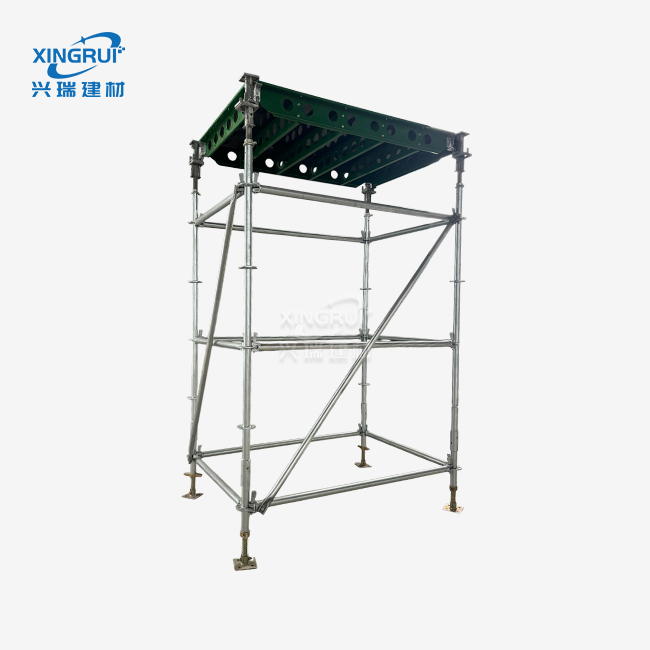
Understanding Light-Duty vs. Heavy-Duty Formwork
What Defines Each System
Light-duty formwork is made of thin-gauge steel or aluminum alloy panels that are easy for one person to carry and set up without the need for a crane or other lifting equipment. To hold up the weight of big loads of concrete in bridges, tunnels, and high-rise cores, heavy-duty systems use thick structural steel or plywood that has been fortified.
Typical Materials and Applications
Light-duty steel and aluminum panels are used for general public buildings, multi-story home projects, and small structural elements like walls and columns. They weigh 15–25 kg/m². Heavy-duty steel formwork is used for major projects where the pour pressure regularly goes over 60kN/m² and is too heavy or too thick for these jobs.
Safety Standards and Compliance
Both groups must meet well-known standards. The light-duty steel panels made by Green Formwork are certified by ISO 9001 for quality management, ISO 14001 for environmental management, and ISO 45001 for occupational health and safety. These panels meet international standards and lower the risks that contractors around the world face on the job site.
Performance and Benefits Comparison
If you choose the wrong system, you will either waste money by paying too much for features you never use or by not specifying enough and putting the structure at risk of failing. Here are the measures that procurement teams care about most when selecting light-duty formwork and how they match between the two groups.
Structural Strength and Load Capacity
Light-duty panels can normally hold 35kN/m², which is enough for most household and low-rise concrete slabs. Heavy-duty systems are rated much higher, but they are also heavier, more expensive, and harder to handle. The lighter grade is enough for normal floor slabs and wall panels in public buildings.
Cost-Effectiveness and Labor Efficiency
Since light-duty panels don't need any special lifting equipment, they can be put up faster and for less money each day. The cost-per-pour drops a lot over the life of a project because each panel can be used 100–150 times and has a non-stick surface that makes cleaning faster between pours. While heavy-duty systems have longer overall service lives, they cost more to buy and require more upkeep.
Environmental and Sustainability Profile
Both methods can be used again and again, which means less wood waste than with single-use plywood. The ISO 14001-certified way that Green Formwork makes their products adds a verified environmental layer. As stricter sustainability standards are put in place for public purchases in North America and Europe, certified goods really do have an edge when it comes to meeting those standards.
Choosing the Right Formwork System for Your Project
Three useful factors help you make the right choice: the size of the job, the conditions of the place, and the total cost of ownership. Working through each filter in a planned way keeps things from being too detailed and keeps the gaps safe.
Match System to Project Scale
When it comes to general public buildings, low-rise domestic construction, and confined structural elements, light-duty shuttering panels are the best choice. Heavy-duty systems are needed for projects with deep foundations, long-span bridges, or high-rise concrete cores that need high-pressure pours all the time. Both types can be used on the same site because universal adapter clamps make it easy for light-duty panels to connect to existing steel or wood frames.
Evaluate Weight, Reusability, and Installation Complexity
Single-person handling gets rid of the need to schedule cranes, cuts down on labor, and speeds up the cycle time. A ±1mm measurement error in both steel and aluminum versions of light-duty formwork stops grout from leaking and gives a Class 2–3 concrete finish, which lowers the cost of fixing problems after the pour. These measured improvements have a direct effect on the project margin.
Supplier Selection and Quality Assurance
Batch stability is important when getting formwork panels from outside the country. When packages arrive with different panel thicknesses or locking pin shapes, it can be hard to get everything lined up on site. Give more weight to suppliers who list their dimensional tolerances, have third-party certifications, and offer samples before they ship. The company that makes Green Formwork is called Shandong Xingrui Building Materials Co., Ltd. They have 79,800 m² of production space and use 12 welding robots and 4 cold roll forming lines. At every stage of production, they track quality in real time.
Installation and Operational Insights
Step-by-Step Installation Overview
A flexible locking system lets light-duty panels fit together. A normal crew puts the base panels in place, locks or wedge slots them in place by hand, and then builds up without using power tools or lifting aids. Because it's put together like a puzzle, most teams are able to become fully proficient in just one working day. This keeps the costs of activation low for short-cycle projects.
Common Onsite Challenges and Solutions
Most of the time, when panels are set up on uneven ground, they lose their alignment. This can be fixed by shifting the base course and checking it with a straightedge before each lift. For pours in temperatures above 35°C, buckling can be avoided by leaving a 1–2 mm thermal expansion gap or putting flexible gaskets between the panels. These are normal changes to the field; they are not design limits.
Maintenance for Extended Service Life
To get rid of the concrete dust left over from each pour, use a plastic scraper to get rid of it before it hardens completely. Then, use the recommended release agent to give it a light coat. This process makes sure that the non-stick surface works and that the 100–150 cycle grade is kept. Panels that are kept flat and dry don't change size between jobs that can be measured.
Market Trends and Future Outlook
Advanced Materials and Modular Design
In Southeast Asia, the Middle East, and Eastern Europe, thin-gauge steel and aluminum alloy light-duty formwork panels are still being used instead of wood planks in mid-sized markets. The change is due to higher labor costs that make manual-handling systems more cost-effective and stricter waste laws that favor reusable steel or aluminum over disposable plywood.
Rental vs. Purchase Models
Smaller contractors who want to work on short-term jobs with little up-front cash are increasingly turning to rental models. For import wholesalers who sell building materials in regional markets, keeping a standard range of products on hand—with set panel sizes, consistent weight classes, and stable reorder specifications—helps keep track of inventory and makes it easier for clients to place new orders.
Digitalization in Procurement
Before making an order for a trial container, buyers can now use B2B procurement tools to check the certifications of suppliers, ask for samples, and compare dimensional specs. Southeast Asian and Eastern European distributors use sales data every three months to plan when to place restocking orders, starting with a single container to see how things go before raising the number. This model works well with suppliers who offer standard product datasheets and quick sample shipping.
Conclusion
General public buildings, low-rise construction, and confined structural elements are best suited for light-duty formwork where human handling, quick cycle times, and controlled cost-per-pour are most important. Heavy-duty methods are still the best choice for large-scale building projects that need to handle constant high-pressure concrete loads.
Lightweight steel or metal shuttering panels are a useful, certified, and cost-effective way to cover most home and small business projects without having to buy extra capacity that the project never needs. The best decision a contractor or distributor can make when buying something is to match the system weight class to the needs of the project.
FAQ
What is the main difference between light-duty and heavy-duty formwork?
Light-duty systems have panels made of thin-gauge steel (≤2.2mm) or aluminum (≤3.5mm) that are rated at 35kN/m² and are made to be handled by hand by one person. For infrastructure and high-rise projects, heavy-duty systems use thicker steel or plywood that has been strengthened to withstand higher concrete forces.
Can light-duty panels be used on multi-storey buildings?
Yes. Light-duty panels can hold up to 35kN/m² of weight and have a ±1mm tolerance on their dimensions. They work well for multi-story buildings, home floors, columns, and walls where the pour pressure stays within the stated range.
How many times can light-duty formwork panels be reused?
If you clean and apply a release agent after each pour, steel panels can be used more than 100 times, and aluminum panels can be used 100 to 150 times.
What is the difference in unit cost between light-duty and heavy-duty systems?
Light-duty panels carry lower unit prices and eliminate machinery rental costs, making total project cost lower for standard residential work. Heavy-duty systems cost more per unit, but their volume and durability make up for it on big building projects.
Do you offer samples before a full order?
Yes. You can get samples, and you can get direct technical support. You can ask for a sample or product information by emailing sdxingruiqp@126.com.
Request a Quote From GREEN FORMWORK — Your Trusted Light-Duty Formwork Supplier
GREEN FORMWORK, which is backed by Shandong Xingrui Building Materials Co., Ltd., sells light-duty formwork that is certified by ISO 9001, ISO 14001, and ISO 45001, and it comes in both steel and aluminum. It is made to order and is ready to be sent anywhere in the world. Our team reacts quickly, whether you need a trial container or a long-term supply deal. You can get specs, samples, or a custom price right now by emailing sdxingruiqp@126.com or going to sdxingrui.com.
References
1. American Concrete Institute. ACI 347R-14: Guide to Formwork for Concrete. American Concrete Institute, 2014.
2. British Standards Institution. BS EN 12812: Falsework — Performance Requirements and General Design. BSI, 2008.
3. Construction Industry Research and Information Association. CIRIA Report C703: Formwork — A Guide to Good Practice. CIRIA, 2012.
4. Hurd, M.K. Formwork for Concrete, 7th ed. American Concrete Institute, 2005.
5. International Organization for Standardization. ISO 9001:2015 Quality Management Systems — Requirements. ISO, 2015.
6. Peurifoy, R.L., and Oberlender, G.D. Formwork for Concrete Structures, 4th ed. McGraw-Hill, 2011.
Learn about our latest products and discounts through SMS or email