- English
- French
- German
- Portuguese
- Spanish
- Russian
- Japanese
- Korean
- Arabic
- Greek
- German
- Turkish
- Italian
- Danish
- Romanian
- Indonesian
- Czech
- Afrikaans
- Swedish
- Polish
- Basque
- Catalan
- Esperanto
- Hindi
- Lao
- Albanian
- Amharic
- Armenian
- Azerbaijani
- Belarusian
- Bengali
- Bosnian
- Bulgarian
- Cebuano
- Chichewa
- Corsican
- Croatian
- Dutch
- Estonian
- Filipino
- Finnish
- Frisian
- Galician
- Georgian
- Gujarati
- Haitian
- Hausa
- Hawaiian
- Hebrew
- Hmong
- Hungarian
- Icelandic
- Igbo
- Javanese
- Kannada
- Kazakh
- Khmer
- Kurdish
- Kyrgyz
- Latin
- Latvian
- Lithuanian
- Luxembou..
- Macedonian
- Malagasy
- Malay
- Malayalam
- Maltese
- Maori
- Marathi
- Mongolian
- Burmese
- Nepali
- Norwegian
- Pashto
- Persian
- Punjabi
- Serbian
- Sesotho
- Sinhala
- Slovak
- Slovenian
- Somali
- Samoan
- Scots Gaelic
- Shona
- Sindhi
- Sundanese
- Swahili
- Tajik
- Tamil
- Telugu
- Thai
- Ukrainian
- Urdu
- Uzbek
- Vietnamese
- Welsh
- Xhosa
- Yiddish
- Yoruba
- Zulu
48 Series Ringlock Scaffolding Safety: Standards and Best Practices
When site managers and procurement teams search for a modular access system that genuinely performs under pressure, 48 series ringlock scaffolding consistently comes up as the answer. Built from Q235 premium steel with a 48.3mm outer diameter, this system delivers a rated single upright load of 60kN, making it well-suited for high-rise residential and civil building construction. Its self-locking rosette connector reduces assembly time and minimizes loose-fitting hazards that plague older tube-and-clamp setups. Understanding the safety standards and installation best practices behind this system is the first step toward protecting your crew and your investment.
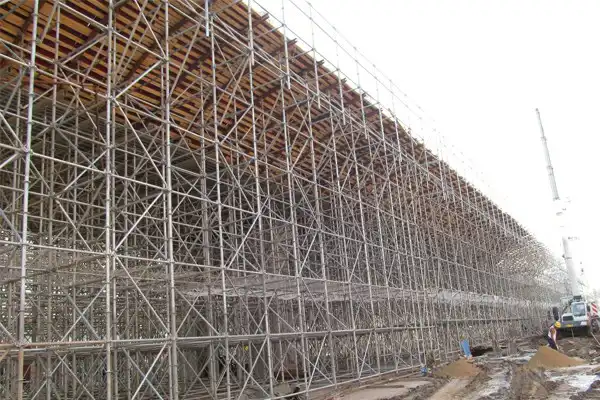
Understanding 48 Series Ringlock Scaffolding and Its Safety Essentials
What Makes the Rosette Connection Different
The rosette disk is welded to the vertical standard every 500 mm, giving each node up to eight connection points. When a ledger wedge is driven home, it closes without any extra tools being needed. This makes it much less likely that a link will be missed. That technical reliability is a safety benefit that busy sites just can't get from systems that don't fit well.
Core Components You Must Know
The set includes 48.3 mm OD and 3.2 mm walled vertical standards, 0.9 m, 1.2 m, and 1.5 m long horizontal ledgers, diagonal braces, base plates, and U-head jacks. Each part is hot-dip galvanized to get a zinc covering of at least 80 microns thick. This protects against corrosion in seaside and high-humidity areas. Knowing what each part does helps site supervisors find broken or old parts before they are put together.
Safety Features Built Into the Design
The first line of defense against falling down by accident is the self-locking wedge mechanism. The link gets stronger as the structure holds weight because the wedge tightens instead of opening when it's loaded. This behavior is in line with the performance standards set out in EN 12810-1 and helps your structural engineer do the math they need to do to predict the load paths.
Safety Standards and Regulatory Compliance
International Standards That Apply
When selling scaffolding in the US, it's important to make sure it meets OSHA 29 CFR 1926 Subpart Q standards. These standards set minimum load ratings, guardrail heights, and inspection schedules. At the same time, AS/NZS 1576 covers projects in Australia and New Zealand, while EN 12810-1 controls performance-based design for wall scaffolding in Europe. 48 series ringlock scaffolding is a relevant product category in this context. Shandong Xingrui's 48 series product has CE certification, which means it has been tried to make sure it meets European standards.
Material and Dimensional Compliance
For compliance, you must specify the right wall thickness. As long as the wall width of a 48.3mm tube is 3.2mm, the cross-sectional area stays within the tolerance bands needed by most national rules. Before receiving a full shipment, procurement teams should ask for mill certificates that prove the chemistry of Q235 steel, including the amounts of carbon, silicon, manganese, phosphorus, and sulfur. If suppliers refuse to do this, that's a red flag.
Third-Party Certification and Quality Management
Shandong Xingrui has certifications in ISO 9001 (quality management), ISO 14001 (environmental management), and ISO 45001 (health and safety at work). With these three licenses, the plant has a set of written rules for quality control that follow raw materials through all stages of production, from cold-roll forming on four specialized lines to robotic welding on 12 automated stations. Third-party audit records give procurement managers a paper trail that can be checked by both internal compliance teams and safety inspectors on-site.
Best Practices for Installation and Maintenance
Pre-Erection Site Assessment
Before putting up a single standard, a qualified person needs to check its ground-bearing capacity, overhead clearance, closeness to power lines, and wind exposure category. The base plates need to be on sole boards that are big enough to spread the 60kN upright load out without going through soft ground. Skipping this step is the main reason why scaffold foundations fail on residential tower projects.
Every team should do these basic checks before an erection:
- Ground survey: Make sure the estimated base plate pressure matches the bearing capacity; use wood sole boards (at least 225 mm wide) on soft or disturbed ground.
- Plumb and level check: To check the plumbing and level, set the first set of standards to within ±1mm of the vertical tolerance before adding more lifts. Use a spirit level on two faces that are not parallel to each other to do this.
- Tie spacing verification: To check the tie spacing, follow the tie pattern provided by the manufacturer. For facade scaffolding, the maximum distance between vertical ties is usually 4 m and between horizontal ties is usually 6 m, assuming normal wind loads.
Progressive fall is the main cause of scaffolding-related deaths in the building industry, and 48 series ringlock scaffolding checks directly lower the risk of it happening.
Qualified Personnel and Safety Accessories
Scaffolding should only be put up or taken down by trained, skilled workers. On every open level edge, there must be guardrails between 0.95m and 1.1m high, mid-rails, and toe boards. Fall-arrest straps must be clipped to a separate lifeline, not to the scaffold itself, for workers above 6 meters.
Routine Inspection and Component Replacement
OSHA requires that scaffolding be inspected before every work shift and after any event that could weaken the structure, like a storm or an accident. During the review, look for deformation or shortening in the wedge pins, which are the main fastening mechanism. Any pin that shows wear should be replaced. The hot-dip galvanized finish makes it easy to see if the surface is damaged. If you can see bare steel through the zinc layer, that means the part needs to be taken out of service or re-galvanized before it can be used again.
Comparing 48 Series Ringlock Safety With Other Systems
48 Series vs. Cuplock and Kwikstage
Cuplock systems use a rotating top cup to lock four ledgers at the same time. This is quick, but the cup needs to be fully seated before it can lock in place. Kwikstage uses a blade-and-notch connection that can come loose after being shaken a lot. The wedge-and-rosette connection on a 48 series ringlock scaffolding system locks firmly and doesn't depend on torque or user rotation. This gives site engineers more faith that the connection will stay the same across a big crew.
48 Series vs. Frame Scaffolding
Frame scaffolding is fast on normal bay lengths, but it can't be used in a lot of different shapes. Frame systems need non-standard adapters that add more failure points when building on uneven lots, which is common in urban home construction. The modular 48 series ringlock scaffolding system can handle different bay widths (0.9m to 1.5m ledger choices) without the need for adapters. This keeps the load path clean and the safety margin reliable.
48 Series vs. 60 Series Ringlock
The 60 series has tubes with a diameter of 60 mm and is made for heavy-duty supporting in bridge decks and big civil engineering projects. For normal high-rise residential work, the 48 series has enough capacity at a lower dead weight per component, which means that fewer injuries will happen during assembly. For a normal residential facade project, choosing the 60 series adds weight that isn't needed and doesn't improve safety in any way that can be measured.
Practical Guidance for Procurement
Evaluating Supplier Credibility
Ask for proof, like mill certificates, qualifications for the welding process, and third-party inspection reports. A reliable 48 series ringlock scaffolding maker will offer samples before you place an order for a full container and will be there to help with technical questions during the acceptance inspection. During the whole buying process, Shandong Xingrui gives samples and keeps expert staff on call in case of problems.
Balancing Cost and Safety Over the Asset Lifecycle
If the price per ton is lower but the wall thickness is less than 3.2mm, it will cost more in replacements, failed inspections, and possible liability than a product that is correctly specified. If the standard is made correctly, the hot-dip galvanized surface makes it last longer than 15 years across multiple project cycles. This means that the real cost-per-use is much lower than with untreated or thin-walled options.
Delivery Capacity for Large Orders
Demand is focused during the busy building season. Shandong Xingrui's 79,800-square-meter factory has 12 welding robots and 6 automatic welding lines to keep up with the production needed to meet the deadlines for large container orders. Making sure the factory has space before locking in a price will help keep your project on schedule.
Conclusion
Safety on scaffolding is not just an idea; it is the direct result of proper specifications, checked materials, and careful placement. With a 3.2 mm wall and a 10 mm rosette disk, the 48 series ringlock scaffolding system is made to Q235 steel standards and gives procurement teams a baseline that they can measure and certify. When combined with the ISO 9001, ISO 14001, and ISO 45001 management systems, Shandong Xingrui's system makes it possible to track quality from the raw materials to the finished product. Stick to the rules, do regular inspections, and pick a provider who can back up their products with paperwork and samples.
FAQ
How often should a ringlock scaffold be inspected on an active site?
OSHA 29 CFR 1926.451(f)(3) says that a qualified person must inspect the structure before every work shift and after any event that could affect its integrity. For long-term projects, it's a good idea to have a formal engineer's inspection every two weeks.
Can I mix 48 series components from different manufacturers?
Rosette width and wedge angle are different for each brand. Even if the tube width is the same (48.3 mm), the parts must be fit-tested on real parts before they can be mixed on a live structure.
What is the difference between hot-dip galvanizing and paint coating for scaffold components?
Hot-dip galvanizing attaches zinc to the steel surface at a thickness of 80 microns or less. Paint is a shield on the outside that chips and lets rust happen on the inside. Hot-dip galvanizing is the right method for scaffolding items that will be used more than once and should last at least 15 years.
Does the 48 series meet US OSHA requirements?
The system can hold up to 60kN standing and is compliant with EN 12810-1, which meets the load-rating standards of OSHA Subpart Q. Before erection can happen, site-specific engineering calculations and approval from a qualified person are still needed.
Are custom lengths and configurations available?
Yes, Shandong Xingrui can make custom configurations based on customer drawings or samples. This means that project-specific bay widths and standard heights can be used without changing the certified connection geometry.
Source Your Next Order of 48 Series Ringlock Scaffolding Through GREEN FORMWORK
You can get in touch with Shandong Xingrui Building Materials Co., Ltd. through GREEN FORMWORK. They are a confirmed maker of 48 series ringlock scaffolding and have ISO 9001, ISO 14001, ISO 45001, and CE certifications. We send samples, technical documents, and on-time large-order fulfillment from a 79,800-square-meter building that has been used in more than 100 countries. Send us an email at sdxingruiqp@126.com or go to sdxingrui.com to get a price right away.
References
1. Occupational Safety and Health Administration (OSHA). Scaffolding Standards: 29 CFR 1926 Subpart Q. U.S. Department of Labor, 2021.
2. European Committee for Standardization. EN 12810-1: Facade Scaffolding Made of Prefabricated Components — Part 1: Products Specifications. CEN, 2003.
3. Standards Australia / Standards New Zealand. AS/NZS 1576: Scaffolding — General Requirements. SAI Global, 2010.
4. International Organization for Standardization. ISO 9001: Quality Management Systems — Requirements. ISO, 2015.
5. International Organization for Standardization. ISO 45001: Occupational Health and Safety Management Systems. ISO, 2018.
6. Peng, J. L., Pan, A. D., & Chen, W. F. Approximate Analysis Method for Modular Tubular Falsework. Journal of Structural Engineering, ASCE, 2001.
Learn about our latest products and discounts through SMS or email