- English
- French
- German
- Portuguese
- Spanish
- Russian
- Japanese
- Korean
- Arabic
- Greek
- German
- Turkish
- Italian
- Danish
- Romanian
- Indonesian
- Czech
- Afrikaans
- Swedish
- Polish
- Basque
- Catalan
- Esperanto
- Hindi
- Lao
- Albanian
- Amharic
- Armenian
- Azerbaijani
- Belarusian
- Bengali
- Bosnian
- Bulgarian
- Cebuano
- Chichewa
- Corsican
- Croatian
- Dutch
- Estonian
- Filipino
- Finnish
- Frisian
- Galician
- Georgian
- Gujarati
- Haitian
- Hausa
- Hawaiian
- Hebrew
- Hmong
- Hungarian
- Icelandic
- Igbo
- Javanese
- Kannada
- Kazakh
- Khmer
- Kurdish
- Kyrgyz
- Latin
- Latvian
- Lithuanian
- Luxembou..
- Macedonian
- Malagasy
- Malay
- Malayalam
- Maltese
- Maori
- Marathi
- Mongolian
- Burmese
- Nepali
- Norwegian
- Pashto
- Persian
- Punjabi
- Serbian
- Sesotho
- Sinhala
- Slovak
- Slovenian
- Somali
- Samoan
- Scots Gaelic
- Shona
- Sindhi
- Sundanese
- Swahili
- Tajik
- Tamil
- Telugu
- Thai
- Ukrainian
- Urdu
- Uzbek
- Vietnamese
- Welsh
- Xhosa
- Yiddish
- Yoruba
- Zulu
How Does Aluminum Formwork for Construction Improve Build Speed Today?
Aluminum formwork for construction accelerates build speed by replacing slow, labor-heavy timber and steel molds with lightweight, modular aluminum panels that workers can carry and connect by hand. With a floor cycle time of just 4–5 days per level, precision tolerances of ±1mm, and a pin-and-wedge assembly system that requires minimal training, projects move faster at every stage. The result is fewer delays, lower labor costs, and a smoother finish that skips the plastering step entirely.
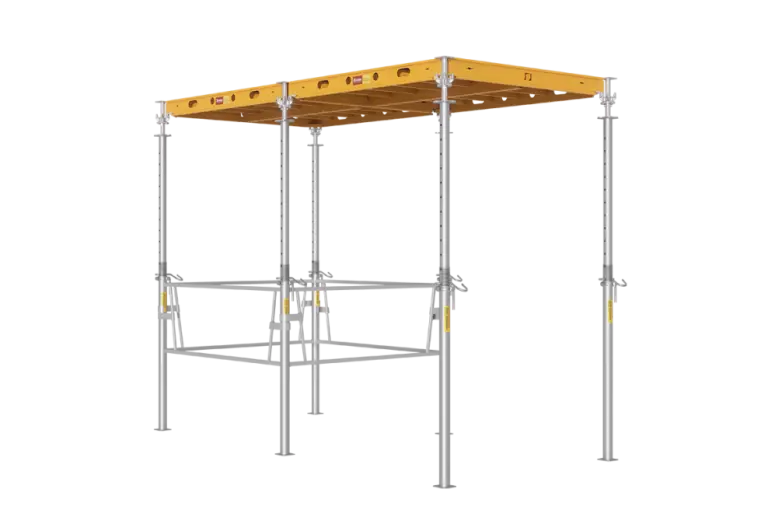
Understanding Aluminum Formwork in Construction
What It Is and How It Works?
A modular concrete forming system shapes walls, slabs, columns, and beams during cast-in-place pours by using metal pieces that fit together and lock into place. Workers put panels in place, use pins and wedges to lock them in place, pour concrete, and then take the panels apart and use the same parts on the next floor. The whole process happens again and again without using cranes or other big equipment.
Material at the Core
The frames that Shandong Xingrui Building Materials Co., Ltd. makes are made from an aviation-grade aluminum metal called 6061-T6. This grade has a tensile strength of at least 265 MPa and a yield strength of at least 245 MPa. Each panel weighs between 18 and 25 kg, which is light enough for one person to handle. Because the panels are 4 mm thick and the frame is 6 mm thick, the system can handle up to 60 KN/m² of sideways concrete pressure.
Precision That Eliminates Rework
With aluminum formwork for construction, a concrete forming accuracy of ±1 mm and panel flatness within ≤2 mm across the whole surface means there is almost no slurry leaking and no gaps that aren't lined up right. This level of measurement control directly cuts down on repair hours and keeps schedules intact for B2B procurement managers in high-rise residential and urban mixed-use projects that use the same floor plans over and over again.
Traditional Formwork Limitations vs. Aluminum Formwork Innovations
Many job sites still use traditional steel forms and shuttering made of wood, even though both have known problems that cause projects to run late.
When wood gets wet, it warps, and when it's used over and over, it splinters. Most wood only lasts 5–10 pours before it needs to be replaced. Because steel molds are so much heavier than aluminum molds, they need to be moved with the help of a crane, which adds hours to each cycle. Both systems create a lot of waste on-site and can only be changed by skilled carpenters or fabricators.
That picture is different now that the metal modular system is in place:
- Weight reduction: At 20–25 kg/m², aluminum panels allow 100% manual handling, removing crane dependency from the daily workflow and cutting repositioning time per floor.
- Reuse rate: Each panel survives 200+ cycles under standard operating conditions, with well-maintained sets reaching 300–500 reuses. After roughly 50–60 cycles, the system covers its initial cost premium over timber.
- Assembly speed: The pin-and-wedge connection requires no special tools. Unskilled workers learn the system quickly, and 70–80% of standard panels carry over to the next project layout without modification.
- Surface quality: Panels produce a smooth, fair-faced finish that meets no-plaster standards immediately after stripping, removing an entire finishing trade from the schedule.
Aluminum Formwork Performance: Speed and Efficiency Analysis
Floor Cycle Time
Foot cycle time is the best way to see how fast aluminum formwork for construction is going. With a flexible metal system and a well-organized crew, each level can be taken down, put back up, and ready for the next pour in 4–5 days. Similar timber systems usually take 7–10 days for the same sequence because panels need to be inspected, stripping takes longer, and damaged boards need to be replaced.
Safety and Uninterrupted Progress
Panels are small enough that workers can pass them hand-to-hand, which is common on busy urban sites in Latin America and Southeast Asia. This means that moving equipment isn't needed as much, which can slow things down. There are fewer places where trades can get in each other's way when there are fewer crane lifts. This keeps the plan going. Before being shipped, every Xingrui panel goes through a full factory trial assembly. This way, problems with fitting that slow down progress on-site are almost completely eliminated.
Lifecycle Cost vs. Speed
Cost and speed are linked. When concrete making systems need to be fixed or replaced often, they cause unplanned downtime. The surface of 6061-T6 aluminum doesn't rust, and its shape stays the same in high humidity, tropical heat, and heavy rain, all of which quickly break down wood. Maintenance times are longer, and as the run count goes up, the cost per use goes down constantly.
Procurement Insights: Choosing the Right Aluminum Formwork System
It takes more than just looking at panel prices to choose the right metal concrete making system. Four useful factors should be used by procurement managers who are in charge of rental teams or big EPC contracts to judge suppliers.
First, make sure that the dimensions are all the same. With a 50 mm modular increment, panels from the same batch can be put together without any special machining, and later-ordered replacement panels will fit with what is already in stock. Second, ensure the practice of plant trial assembly. When suppliers put together all of their orders before sending them, buying teams know that problems on-site won't throw off the plan.
Third, look over the paperwork for the certification. In the US, Europe, and the Middle East, projects often need ISO 9001 quality management records, ISO 14001 environmental approval, and CE compliance backed by math reports to EN 12811 or better. Shandong Xingrui has ISO 9001 and ISO 14001 certifications, and all of their products have CE certification. This is proof that many EPC clients need for third-party audits.
Fourth, check how much change is possible for aluminum formwork for construction. Xingrui will take orders based on drawings and samples provided by the customer. It takes 7–14 days to make samples. OEM and ODM production is available under confidentiality agreements for rental companies that need panels with their own logos or joint details that aren't found anywhere else. Trade terms like FOB and CIF from Rizhao Port are flexible, and the factory covers 40,000 m² and has 12 robot welders and 6 automatic welding lines to make sure that large orders are delivered on time.
Future Outlook: How Aluminum Formwork Is Shaping Construction Speed Trends
Aluminum forming systems are being used more and more in commercial podiums, large-scale affordable housing programs, and residential towers. Southeast Asian, Latin American, and Middle Eastern governments have all backed mass housing programs that like systems that can be used over and over again and have low per-unit forming costs. These are exactly the conditions in which aluminum panels give the best return.
The next step is to add prefabrication. Designers are putting together precast stair cores, bathroom pods, and modular forming systems. They see the aluminum shell as just one part of a coordinated assembly sequence, not as a separate trade. The mobilization step is sped up even more by digital layout planning tools, which map out the arrangement of panels in software before the first piece comes on site.
Sustainability concerns are also changing how things are bought. When aluminum's useful life is over, it can be recycled, and using less wood is in line with environmental buying rules that are now written into many public-sector contracts. For rental companies that keep track of how their assets are used, a method that can be used 300–500 times before it needs to be replaced creates a lot less waste per square meter of made concrete than any wood option.
Conclusion
Aluminum formwork for construction speeds up floor cycles, reduces the need for labor, and produces a finished surface that cuts out whole trade steps. The use of 6061-T6 metal engineering, pin-and-wedge assembly, 200+ reuse cycles, and ±1mm forming accuracy makes it possible to go directly from the base to the topping out, with fewer delays and lower costs per cycle. With each finished project, the case for aluminum modular forming systems gets stronger for procurement teams that are in charge of rental fleets, EPC contracts, or housing programs that are used over and over again.
FAQ
Q1: How does aluminum formwork compare to steel formwork on weight?
A: Each aluminum panel weighs 18–25 kg, so they can be moved by one person without a crane. Similar-sized steel formwork panels usually weigh two to three times as much, which means they need to be lifted by machines and each repositioning cycle takes longer. The main reason why aluminum systems have shorter floor cycle times on busy urban job sites is because they are lighter.
Q2: What is the realistic reuse life of an aluminum forming system?
A: If you follow standard working procedures and clean the panels properly after each pour, 6061-T6 alloy panels usually last 200 passes or more. Sets that are well taken care of and used over and over on home projects can be used 300 to 500 times. Usually, between the 50th and 60th cycle, the higher initial cost of the wood gives way to a return on investment.
Q3: Can the system be adapted to non-standard floor layouts?
A: Yes. About 70–80% of standard panels can be used directly in different project layouts. Because each project needs its own set of filler pieces with a specific shape, rental companies and EPC contractors can use most of their stock on multiple jobs without having to buy a whole new set.
Q4: Does Xingrui support custom panel designs?
A: Shandong Xingrui will make things based on samples and drawings provided by customers. Samples are sent out within 7–14 days, and clients with secret joint configurations can get OEM production with confidentiality agreements.
Request a Technical Package from GREEN FORMWORK
For construction companies, GREEN FORMWORK has a tried-and-true aluminum formwork solution that comes with CE and ISO certifications, more than 200 reuse cycles, and a 40,000 m² factory in Rizhao, China. Get in touch with our expert team right away to get product details, sample arrangements, and a quote that is tailored to your project. To start your question, email us at sdxingruiqp@126.com.
References
1. American Concrete Institute. ACI 347R-14: Guide to Formwork for Concrete. ACI, 2014.
2. Construction Industry Research and Information Association. Formwork: A Guide to Good Practice. CIRIA, 2012.
3. Hurd, M. K. Formwork for Concrete, 8th ed. American Concrete Institute, 2005.
4. Peurifoy, R. L., and Oberlender, G. D. Formwork for Concrete Structures, 4th ed. McGraw-Hill, 2011.
5. The Concrete Society. Formwork: A Guide to Good Practice, 3rd ed. The Concrete Society, 2012.
6. Chudley, R., and Greeno, R. Building Construction Handbook, 12th ed. Routledge, 2020.
Learn about our latest products and discounts through SMS or email