- English
- French
- German
- Portuguese
- Spanish
- Russian
- Japanese
- Korean
- Arabic
- Greek
- German
- Turkish
- Italian
- Danish
- Romanian
- Indonesian
- Czech
- Afrikaans
- Swedish
- Polish
- Basque
- Catalan
- Esperanto
- Hindi
- Lao
- Albanian
- Amharic
- Armenian
- Azerbaijani
- Belarusian
- Bengali
- Bosnian
- Bulgarian
- Cebuano
- Chichewa
- Corsican
- Croatian
- Dutch
- Estonian
- Filipino
- Finnish
- Frisian
- Galician
- Georgian
- Gujarati
- Haitian
- Hausa
- Hawaiian
- Hebrew
- Hmong
- Hungarian
- Icelandic
- Igbo
- Javanese
- Kannada
- Kazakh
- Khmer
- Kurdish
- Kyrgyz
- Latin
- Latvian
- Lithuanian
- Luxembou..
- Macedonian
- Malagasy
- Malay
- Malayalam
- Maltese
- Maori
- Marathi
- Mongolian
- Burmese
- Nepali
- Norwegian
- Pashto
- Persian
- Punjabi
- Serbian
- Sesotho
- Sinhala
- Slovak
- Slovenian
- Somali
- Samoan
- Scots Gaelic
- Shona
- Sindhi
- Sundanese
- Swahili
- Tajik
- Tamil
- Telugu
- Thai
- Ukrainian
- Urdu
- Uzbek
- Vietnamese
- Welsh
- Xhosa
- Yiddish
- Yoruba
- Zulu
How Safe Is Coupler Type Steel Tube Scaffolding for High-Rise Jobs?
Coupler type steel tube scaffolding is genuinely safe for high-rise construction when it is sourced from certified manufacturers, installed by trained crews, and maintained on a regular schedule. Built from Q235 steel tubes at Φ48×3.0mm and connected through right-angle, swivel, and butt-joint couplers, this system meets EN74, BS1139, and EN12811 load requirements. Its modular design distributes vertical and lateral forces across multiple connection points, reducing the chance of progressive failure. With proper torque settings, hot-dip galvanized coating, and scheduled inspections, the system performs reliably at significant heights across civil engineering projects worldwide.
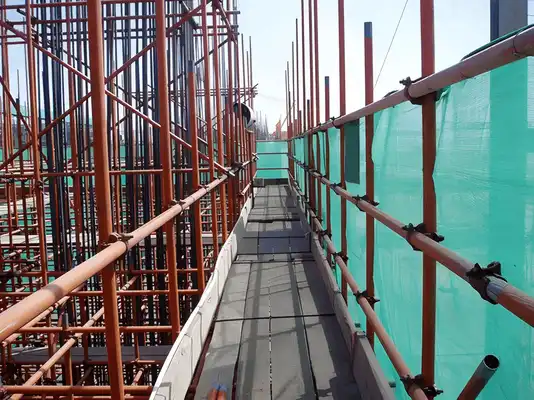
Understanding Coupler Type Steel Tube Scaffolding and Its Safety Framework
Before spending budget on a scaffold system for a high-rise job, it pays to understand exactly what makes tube-and-coupler scaffolding structurally sound—and where the risks hide.
Essential Components and Their Roles
The system uses three primary steel tube roles: uprights carry vertical load, cross bars transfer lateral forces, and diagonal braces resist racking. All tubes run at Φ48×3.0mm from Q235 carbon steel. Three coupler types—right-angle, swivel, and butt-joint—fix each intersection. Forged or cast-steel couplers certified to EN74 Class A or B deliver slip resistance above 15 kN at right-angle joints. This connection geometry spreads load across the entire frame rather than concentrating stress at single nodes.
Applicable Safety Standards
OSHA 29 CFR 1926 Subpart Q sets the baseline in the United States. Internationally, EN12811 governs performance loads and deflection limits, while BS1139 covers tube material requirements. When a manufacturer holds CE certification and can produce a Declaration of Performance (DoP), procurement teams get documented proof that every production batch meets those benchmarks. Mill Test Certificates (MTCs) for steel and third-party lab reports for coupler slip resistance add another verification layer that project engineers rely on during pre-qualification.
Material and Coating Specifications
Q235 steel in coupler type steel tube scaffolding offers a minimum yield strength of 235 MPa, which is well-suited for multi-story load paths. Hot-dip galvanization at ≥40 microns per ISO 1461 protects tubes against corrosion for more than 10 years under normal site conditions. Coupler bolt threads should be oiled periodically, and tubes must be stored in ventilated areas to prevent white-rust accumulation. These material choices directly influence how long the system stays structurally sound across repeated project cycles.
Key Safety Benefits of Coupler Type Steel Tube Scaffolding in High-Rise Applications
Strong winds and changing facade shapes make high-rise projects hard on scaffolding. Also, contractors are often pressed for time, so there isn't much time for structural rework. When it comes to safety, tube-and-coupler systems are great for building up walls because
- Geometric flexibility: Unlike fixed-frame systems, the coupler connection allows adjustment in height, width, and angle without special components, so the structure wraps irregular facades tightly rather than leaving unsafe gaps.
- Redundant load paths: Because couplers lock at every intersection, the system distributes load across hundreds of nodes. If one coupler loosens, adjacent nodes absorb the differential load before failure progresses.
- Proven load performance: Forged right-angle couplers exceed 15 kN slip resistance under EN74 testing, which aligns with the lateral bracing demands reported in EN12811 for scaffolding heights beyond 24 meters.
That's why project engineers who care about safety keep asking for tube-and-coupler designs for high-rise buildings, bridge abutments, and industrial plants. Spread out connection logic in the system acts as a built-in safety cushion that isn't present in rigid frame scaffolding.
Comparing Coupler Type Steel Tube Scaffolding with Other Scaffolding Systems
How flexible it is, how strong the connections are, and how much it will cost in the long run are the three things that make system scaffolding the best choice. The table below compares tube-and-coupler scaffolding to two other often-used types.
| Criterion | Tube & Coupler | Ringlock | Frame Scaffolding |
|---|---|---|---|
| Facade adaptability | High | Moderate | Low |
| Connection strength | EN74-certified | Wedge-locking | Pinned frame |
| Installation skill required | High | Medium | Low |
| Reuse cycles | 10+ years | 8–10 years | 5–8 years |
| Best fit | Complex/irregular structures | Standard mid-rise | Repetitive residential |
When building forms are square or rectangular, frame scaffolding is easy to set up. But when building faces aren't square or rectangular, a swivel coupler in coupler type steel tube scaffolding can make great angle changes. Locks that use rings are in the middle. It's easier to change them when the shape of the project changes, but they are faster to put together than tube-and-couplers. Tube-and-coupler scaffolds often make up for the higher cost of skilled assembly when buyers look at the total cost of ownership. This is because they last longer and can be used for more things.
Installation, Maintenance, and Usage Guidelines to Maximize Safety
Even the best steel support fails when it is put up quickly. Through disciplined practice, good materials lead to real safety on the job site.
Installation Best Practices
The only thing that can be changed most about fitting is the tightening pressure. Professionals say that coupler bolts should be able to handle 40 to 65 Nm of torque. When they go over that force, the threads will strip or the tube walls will bend. If they don't, the couplers will slip under load. Some boards on the sole should be upright in at least two places so that point loads are spread out. The base plates should be put down on flat, hard ground. Everyone on the team who works above 6 meters should take a known course on how to set up a platform before touching couplers at a height.
Regular Inspection Protocols
Checks must be done before the first use, after any changes, after bad weather, and every seven days while it's being used. People who check the tubes see how thick the walls are (less than 3.0 mm is rejected), how good the coupler bolts are, and how strong the galvanizing is. The Salt Spray Test needs to be done for at least 500 hours, according to ISO 9227. This helps the teams that buy things make sure that the finishes will last before they send out big orders. During an inspection, look for rust or thread wear. This will stop the kind of damage that builds up over time and makes the tower fall.
Load Limits and Environmental Protocols
There should not be any coupler type steel tube scaffolding bays that can hold more weight than they were designed to. When you work on big buildings, the wind pressure goes up by 1% for every 10 meters you go up. So, as the scaffold rises, structural engineers have to figure out again how far apart the lateral bracing should be. They should never stack things higher than the platform can hold, and at every level of work, there should be safety nets or toe boards to catch things that fall.
Procurement Considerations for Safe Coupler Type Steel Tube Scaffolding
When buying something, the certification papers and factory capacity are the two things that most directly show if the product will work as expected.
Supplier Evaluation Criteria
Tier-1 project owners and EPC contractors usually need to be certified in ISO 9001 quality management, ISO 14001 environmental management, and CE certification with a DoP. They also ask approved third-party labs to send them batch-level MTCs and test reports on coupler slip-resistance. The production base for Shandong Xingrui is more than 40,000 m² and has 12 welding robots and 6 automatic welding lines. This means that the company can keep measurement errors on the outside diameter of the tube at least 0.5 mm, which is the lowest level needed by EN74 for coupler compatibility.
Buying vs. Renting: A Safety Perspective
Hiring equipment from a rental company might not make financial sense if you do a lot of high-rise jobs. When you buy your own equipment, it follows your own review plan instead. No one knows how often rented trucks get damaged. When you buy something, make sure the seller has photographic records of galvanizing thickness tests and that you can see any audit reports from a third party.
Bulk Orders and Lead Time Planning
For large EPC jobs, it takes 15 to 30 days to make stock things. It takes an extra 7–14 days for samples to be approved for custom tube lengths or branding couplers. If buying things is planned at least 60 to 90 days before they are moved to the site, the key way stays clear.
Conclusion
Coupler type steel tube scaffolding is one of the safest and most flexible ways to work on tall buildings as long as you buy it from a reputable company. Couplers that meet EN74 standards and ISO 1461 plating make up the base. The base is made of Q235 steel. To run, you need to set the torque correctly, check it often, and guess the load correctly. The system can handle even the most difficult vertical building jobs because all of these parts work together. To lower safety risks and speed up projects, procurement teams can do things like look at certifications, ask for MTCs, and work with big manufacturers.
FAQ
Q1: Is tube-and-coupler scaffolding safer than frame scaffolding on high-rise projects?
A: If the front is rough or tall, yes. But in frame framing, the fixed pin joints take most of the stress. Coupler links spread the weight of many nodes out. Swivel couplers can be changed to any angle above 24 meters. This means that bracing gaps can be made smaller, which makes it less likely that the structure will move when the wind blows.
Q2: Which certifications should I verify before purchasing?
A: When you ask for CE certification, make sure you have a DoP, EN74 Class A or B coupler test result, BS1139 tube compliance, and ISO 9001 quality management certificate with you. For US jobs, make sure the system meets the safety rules in OSHA 29 CFR 1926 Subpart Q for load.
Q3: How often should couplers be inspected during a high-rise project?
A: Before it's used for the first time, after any changes are made to it, after bad weather, and every seven days while it's being used. You should get a new coupler if the threads are worn out, the shape is warped, or the bolt force is less than 40 Nm.
Q4: Can I mix tubes from different manufacturers?
A: Tubes from different sources can physically work together if they are 48.3 mm outside diameter, but mixing them is not a good idea unless you have MTCs that say the steel grade and wall thickness are the same. If the size difference is more than ±0.5 mm, the coupler isn't safe to hold and doesn't meet EN74 standards.
Q5: What is the expected service life of hot-dip galvanized tubes?
A: Hot-dip galvanized Q235 tubes will last longer than 10 years if you keep them in a dry, well-ventilated place and check on them every so often. You can also use them for more than one project.
Request a Certified Coupler Scaffolding Quote from GREEN FORMWORK
It is used by builders and buying teams in more than 100 countries to get coupler type steel tube scaffolding. Shaanxi Xingrui Building Materials Co., Ltd. backs the business. Our factory has more than 40,000 m² of specialized workshops where they can make things. It is certified by ISO 9001, ISO 14001, and CE. Feel free to email us at sdxingruiqp@126.com with information about your project to get a coupler type steel tube scaffolding sample and price quote from a respectable company.
References
1. British Standards Institution. BS 1139-1.2: Metal Scaffolding — Steel Tubes. BSI, 2010.
2. European Committee for Standardization. EN 74-1: Couplers, Spigot Pins and Baseplates for Use in Falsework and Scaffolding. CEN, 2005.
3. European Committee for Standardization. EN 12811-1: Temporary Works Equipment — Scaffolds — Performance Requirements and General Design. CEN, 2003.
4. Occupational Safety and Health Administration. OSHA 29 CFR 1926 Subpart Q: Scaffolding Standards for Construction. U.S. Department of Labor, 2020.
5. International Organization for Standardization. ISO 1461: Hot Dip Galvanized Coatings on Fabricated Iron and Steel Articles. ISO, 2022.
6. Peng, J. L., Pan, A. D., & Chen, W. F. "Approximate Analysis Method for Modular Tubular Falsework." Journal of Structural Engineering, ASCE, 2001.
Learn about our latest products and discounts through SMS or email