- English
- French
- German
- Portuguese
- Spanish
- Russian
- Japanese
- Korean
- Arabic
- Greek
- German
- Turkish
- Italian
- Danish
- Romanian
- Indonesian
- Czech
- Afrikaans
- Swedish
- Polish
- Basque
- Catalan
- Esperanto
- Hindi
- Lao
- Albanian
- Amharic
- Armenian
- Azerbaijani
- Belarusian
- Bengali
- Bosnian
- Bulgarian
- Cebuano
- Chichewa
- Corsican
- Croatian
- Dutch
- Estonian
- Filipino
- Finnish
- Frisian
- Galician
- Georgian
- Gujarati
- Haitian
- Hausa
- Hawaiian
- Hebrew
- Hmong
- Hungarian
- Icelandic
- Igbo
- Javanese
- Kannada
- Kazakh
- Khmer
- Kurdish
- Kyrgyz
- Latin
- Latvian
- Lithuanian
- Luxembou..
- Macedonian
- Malagasy
- Malay
- Malayalam
- Maltese
- Maori
- Marathi
- Mongolian
- Burmese
- Nepali
- Norwegian
- Pashto
- Persian
- Punjabi
- Serbian
- Sesotho
- Sinhala
- Slovak
- Slovenian
- Somali
- Samoan
- Scots Gaelic
- Shona
- Sindhi
- Sundanese
- Swahili
- Tajik
- Tamil
- Telugu
- Thai
- Ukrainian
- Urdu
- Uzbek
- Vietnamese
- Welsh
- Xhosa
- Yiddish
- Yoruba
- Zulu
How to Choose a Coupler Type Round Tube Scaffolding Supplier
Choosing the right coupler type round tube scaffolding supplier is one of the most consequential decisions a procurement team makes. Wrong decisions might result in delayed shipments, failed inspections and on-site safety mishaps. The right provider produces steel tube and coupler assemblies, on schedule, in compliance, with traceable quality records, and fast technical support. This guide takes your team through the issues to consider from material standards and certifications to logistical capabilities and after-sales support so you can make a well-grounded sourcing option.
Understanding Coupler Type Round Tube Scaffolding
Before evaluating suppliers, it helps to understand exactly what this system is and why it behaves differently from other scaffold types.
What the System Is Made Of?
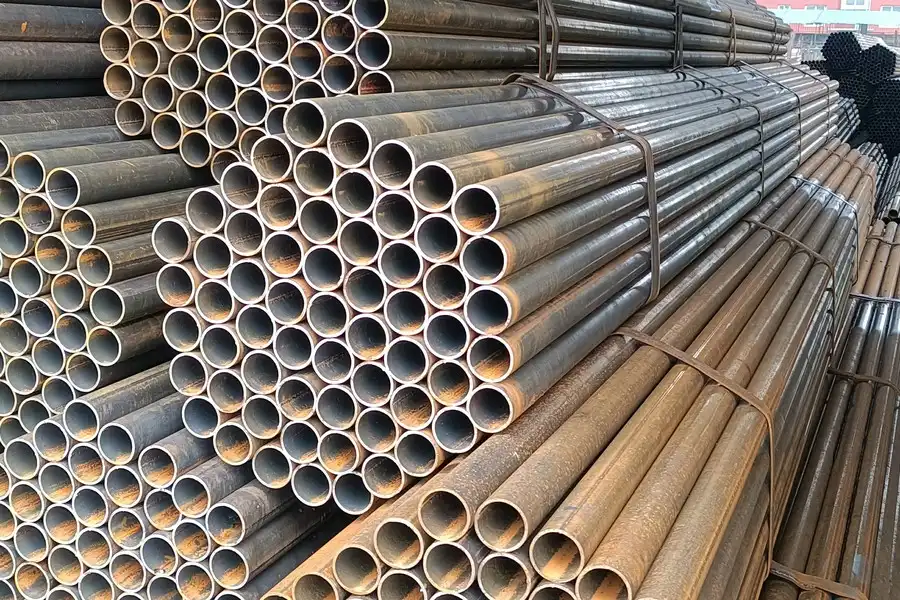
Tube and coupler scaffolding is constructed from steel tubes of Φ48mm, commonly Q235 or Q355 grade carbon steel, joined by malleable cast iron or drop forged couplers. The three basic types of couplers are: the right-angle coupler, the swivel coupler and the sleeve coupler. Their structural function ranges from orthogonal ledger to conventional connections to permitting off-angle bracing on curved facades.
Where It Performs Best?
This technology copes with uneven building exteriors, bridge falsework, cast-in-place box girder shoring and tunnel secondary lining support with a precision that pre-engineered modular frames cannot equal. Tubes may be cut to correct lengths and joined at any point so the geometry fits the site rather than the site fitting the system.
Key Technical Parameters
EN74-1, BS1139 and EN39 are the worldwide standards for tube and coupler scaffolding. They require compliant assemblies to maintain the same joint slip loads and tube bending resistance during the whole of the service life. A well built system should have a distributed load capacity of more than 2.5 kN/m2. A hot dip galvanised (HDG) coating of 40 – 60 microns will provide corrosion protection for more than ten years, including coastal settings.
Criteria for Evaluating Tube and Coupler Scaffolding Suppliers
Not every manufacturer that lists "scaffolding" in its catalog can supply a reliable product for a demanding infrastructure project. These are the evaluation dimensions that matter most.
Material and Certification Compliance
Any supplier worth shortlisting for coupler type round tube scaffolding must provide batch-traceable mill certificates for their steel tubes and third-party test reports for coupler slip resistance. CE certification to EN74-1 is a minimum requirement for entry into the European market. ISO 9001 quality management certification indicates that the quality procedure is consistent across production runs and not simply sample orders. Verify if the supplier is also ISO 14001 and ISO 45001 certified. This shows that the provider has environmental and occupational health governance.
Production Capacity and Lead-Time Reliability
A supplier's declared capacity is believable to the degree that it possesses physical infrastructure. Workshops equipped with automated welding lines and robotic welding cells may be able to attain dimensional homogeneity at scale, something that is not possible in human manufacture. For example, Shandong Xingrui Building Materials Co., Ltd. has more than 40,000 square meters of standard workshops, 12 welding robots and 6 automatic welding lines, so the firm can accept enormous orders without compromising the tolerance control. Before you sign a purchase order, ask all your potential suppliers for their recorded on-time delivery rates and their production plans during busy seasons.
Customization and Engineering Support
For more unusual geometries – curved facades, angled bridge decks, ancient structures – you need a supplier that can take engineering drawings and transform them into matching component sets. Confirm the provider can take orders according to the designs and can supply samples within 7-14 days. Ask whether they can give calculation reports according to EN 12811 or the project's load requirements. Suppliers providing load tables, Declaration of Performance (DoP) documentation and OEM/ODM capabilities gives procurement teams a lot more flexibility.
How Coupler Scaffolding Compares with Other Systems?
Understanding where tube and coupler scaffolding sits relative to ringlock and cuplock systems helps procurement teams justify their selection internally.
Flexibility vs. Speed
Ringlock and cuplock systems assemble faster because their connection geometry is pre-determined. Coupler type round tube scaffolding takes longer to erect but accommodates any structural shape without compromise. On a bridge with non-standard pier spacing or a facade with recessed window bays, the time savings of a modular system often disappear once workers start improvising around its geometric limitations.
Load-Bearing Adaptability
System scaffolding is engineered for defined load ranges. Tube and coupler assemblies, by contrast, can be configured by a structural engineer to meet site-specific load requirements. This makes them the preferred choice for heavy falsework applications where bearing loads exceed what standard modular systems are rated for.
Long-Term Asset Value
Coupler scaffolding components have a longer service life when properly maintained because there are no proprietary wedge or disc connections that wear out and require full-assembly replacement. Individual tubes and couplers are independently replaceable, which reduces the total cost of ownership over multiple project cycles.
How to Vet and Select Your Supplier: A Step-by-Step Approach
When you use a well-planned screening method, you are less likely to make mistakes when you are sourcing that add up over time.
Step 1 — Define Your Technical Requirements
Make a list of the tube's width, wall thickness, coupler type, surface treatment needs, and safety standards for your job. Because of this, you don't have to compare prices from sources that are very different from one another when you make each RFQ.
Step 2 — Verify Certifications and Audit Readiness
Get copies of the most recent test results and ISO and CE certificates. These will show how the tests went. You should also ask the seller if they let outsiders check out the plants. A lot of EPC and government-funded building projects need these. Suppliers who let you see audits and good paperwork show that they are open for business, which makes buying from them less risky.
Step 3 — Request Samples and Evaluate Logistics
Many skilled makers of coupler type round tube scaffolding can finish a sample order in 7 to 14 days. Your tech team can check that the numbers are correct, the coupler torque works, and the zinc covering sticks well before you decide to buy a lot of them. Also, make sure the supplier is near the port and can help you figure out how to ship the goods. The home of Shandong Xingrui is in Rizhao, Shandong. Rizhao has its own high-speed train, airport, and harbor. We can ship things faster within the country and quickly load containers for orders going abroad.
Maintenance, Safety, and Technical Support Considerations
Sourcing a scaffolding system is not a one-time transaction. The supplier relationship needs to extend through the product's service life.
Installation and Inspection Protocols
The coupler torque must be maintained in the range of 40–60 Nm as stated in EN74-1. Under-tightening permits slide at the junction, whereas over-tightening deforms the tube wall. A good provider sends installation instructions and torque recommendations with every shipment, not by request only.
Scheduled Inspection Frequency
Industry norm dictates a comprehensive technical examination before to every new project deployment and every seven days while the scaffold is in operation. If your suppliers provide inspection checklists that satisfy the OSHA 1926.451 or EN 12811 criteria, then compliance paperwork for your site supervisors is a piece of cake.
Ongoing Technical Support
Technical help after shipping for batch problems or site modifications. Verify if the provider provides multi-channel communication (email, WhatsApp, video consultation) and whether the technical staff is available to reply within a set service window. As Shandong Xingrui notes, a supplier with 180 skilled technicians on staff has the internal knowledge to handle technical issues without passing every query via a sales middleman.
Conclusion
If you need to buy coupler type round tube scaffolding, you should think about how to get the parts, check that the company is licensed, and make sure they offer technical support after the sale. These organised elements assist teams responsible for purchasing products to appraise firms on more than simply pricing. This means they always get jobs done quicker, have less mishaps while working and are more efficient with their resources throughout many rounds of projects. This is a handbook that provides information that is valuable for first time purchasers as well as individuals who will be in the supply chain for a long period. If you are tight from the very beginning, your money and your strategy will be secure in the long term.
FAQ
Q1: Why choose drop-forged couplers over pressed steel couplers?
A: Drop-forged couplers have higher material density and better impact resistance than pressed alternatives. For heavy-duty falsework or industrial maintenance scaffolding where dynamic loads are present, drop-forged connections provide a measurably safer joint.
Q2: Can this system be used alongside ringlock scaffolding?
A: Yes, with purpose-built adapter components. Any mixed-system configuration requires a structural engineer's sign-off to confirm that load paths remain intact across the connection points.
Q3: How do I verify a supplier's quality without visiting the factory?
A: Request current CE certificates, ISO certificates, and third-party batch test reports. Ask for a sample order with dimensional inspection data. If your project requires it, arrange a remote audit or third-party inspection through a recognized agency.
Q4: What customization options should I expect from a qualified supplier?
A: A qualified supplier should accept drawing-based orders, produce matched samples within 7–14 days, and supply calculation documentation aligned with EN 12811 or project-specific standards. OEM and ODM capability, including branded components, is an additional indicator of manufacturing maturity.
Q5: What is the realistic lead time from order to shipment?
A: For standard stock items, 15–30 days from order confirmation is typical. OEM or drawing-based orders typically require 45–60 days to account for tooling, sample approval, and production scheduling.
Partner with GREEN FORMWORK for Your Next Scaffolding Project
This type of coupler-type round tube scaffolding can be bought in some countries that are approved by CE and ISO 9001. Shandong, China is home to the company that makes it. If you need 48mm Q235 steel tube systems in a range of shapes, sizes, and surface finishes, we can make them just for you. Send your RFQ or project drawings to sdxingruiqp@126.com, and our team of experts will get back to you with a price that works for you.
References
1. British Standards Institution. BS 1139-1.2: Metal Scaffolding — Tubes. BSI, 2010.
2. European Committee for Standardization. EN 74-1: Couplers, Spigot Pins and Baseplates for Use in Falsework and Scaffolding. CEN, 2005.
3. European Committee for Standardization. EN 12811-1: Temporary Works Equipment — Scaffolds: Performance Requirements and General Design. CEN, 2003.
4. Occupational Safety and Health Administration. OSHA Standard 1926.451: Scaffolding. U.S. Department of Labor, 2020.
5. Peng, J. L., et al. "Stability and Load-Bearing Capacity of Tube-and-Coupler Scaffolding." Journal of Constructional Steel Research, 2009.
6. Chandrangsu, T., and Rasmussen, K. J. R. "Investigation of Geometric Imperfections and Joint Stiffness of Support Scaffold Systems." Journal of Constructional Steel Research, 2011.
Learn about our latest products and discounts through SMS or email