- English
- French
- German
- Portuguese
- Spanish
- Russian
- Japanese
- Korean
- Arabic
- Greek
- German
- Turkish
- Italian
- Danish
- Romanian
- Indonesian
- Czech
- Afrikaans
- Swedish
- Polish
- Basque
- Catalan
- Esperanto
- Hindi
- Lao
- Albanian
- Amharic
- Armenian
- Azerbaijani
- Belarusian
- Bengali
- Bosnian
- Bulgarian
- Cebuano
- Chichewa
- Corsican
- Croatian
- Dutch
- Estonian
- Filipino
- Finnish
- Frisian
- Galician
- Georgian
- Gujarati
- Haitian
- Hausa
- Hawaiian
- Hebrew
- Hmong
- Hungarian
- Icelandic
- Igbo
- Javanese
- Kannada
- Kazakh
- Khmer
- Kurdish
- Kyrgyz
- Latin
- Latvian
- Lithuanian
- Luxembou..
- Macedonian
- Malagasy
- Malay
- Malayalam
- Maltese
- Maori
- Marathi
- Mongolian
- Burmese
- Nepali
- Norwegian
- Pashto
- Persian
- Punjabi
- Serbian
- Sesotho
- Sinhala
- Slovak
- Slovenian
- Somali
- Samoan
- Scots Gaelic
- Shona
- Sindhi
- Sundanese
- Swahili
- Tajik
- Tamil
- Telugu
- Thai
- Ukrainian
- Urdu
- Uzbek
- Vietnamese
- Welsh
- Xhosa
- Yiddish
- Yoruba
- Zulu
Is Lightweight Steel Formwork Suitable for Repeated Concrete Pours?
Yes — lightweight steel formwork is well-suited for repeated concrete pours. Panels manufactured from Q235/Q345 cold-rolled steel maintain dimensional stability across dozens of pour cycles, resisting the alkaline chemistry of fresh concrete without significant surface degradation. At Shandong Xingrui Building Materials Co., Ltd. (GREEN FORMWORK), each panel carries a verified reuse rating of more than 40 cycles, a frame flatness tolerance of ±2mm, and tight-fit joint sealing that prevents leakage. For procurement teams weighing long-term asset value, these figures translate directly into lower per-pour costs and predictable project budgets.
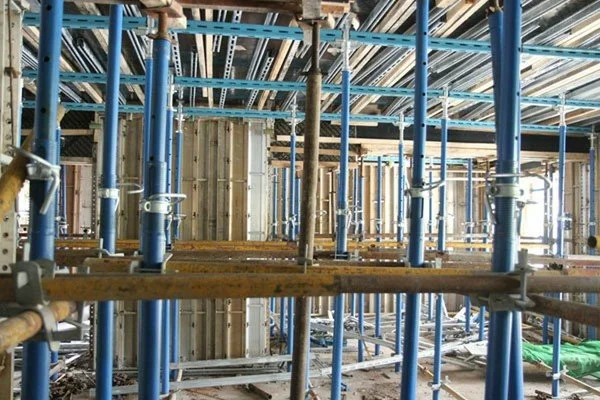
Understanding Lightweight Steel Formwork
Before considering choices, it's helpful to know what this type of product includes and how it differs from shutters made of wood or heavier steel.
What the System Is
A modular lightweight steel formwork system holds new concrete in place until it becomes strong enough to stand on its own. It does this by using cold-rolled, high-strength steel profiles. Each panel is a structural face that moves the water pressure from the wet concrete into the frame and tie system around it. The steel face doesn't absorb water like wood plywood does, so it keeps its shape pour after pour.
Material Grade and Surface Treatment
GREEN FORMWORK panels are made of Q235 or Q345 steel, which are the same construction types that are required by GB/T 700 and GB/T 1591 in China. Steel can last up to 5–10 years under normal site conditions if it is hot-dip galvanized or coated with powder. This saves it from the high pH of Portland cement paste.
Types Available for Different Sites
There are flat wall panels, column shapes, and modular combinations in the line. Most home and business plans can use standard sizes of 1000×300mm and 1500×200mm. For odd-shaped plans, utility tunnels, or municipal culvert work, custom sizes can be made. This is a direct response to the common request for non-standard sizes on the job site.
Durability and Reusability in Repeated Concrete Pours
For any buying manager, the most important question is how many times can I pour before the panel needs to be replaced?
Verified Reuse Cycles
GREEN FORMWORK panels have been tested to be used more than 40 times. For example, normal construction-grade plywood can be used five to ten times before the face layer starts to break down and leave marks on concrete surfaces. A lightweight steel formwork panel that has been used over 40 times on a 200-unit apartment building can save a lot of money without having to replace a single board in the middle of the project.
Corrosion and Abrasion Resistance
When the steel is hot-dip galvanized, a zinc-iron alloy layer is formed that mechanically attaches to the steel below. This layer stops the alkaline bleed water that touches the face of the mold every time it's poured. After the coating is poured, cleaning the panels with water and a release agent brush keeps the coating in good shape and makes them ready to rent for multiple seasons.
Factors That Govern Longevity
Three things that are done on the job site directly affect how long panels last: (1) using a release agent before each pour to stop concrete from sticking; (2) storing panels flat to keep them from warping; and (3) checking welds and corner joints after impacts. When these steps are taken, panels often hit or beat the rated 40-cycle figure, which means that the initial investment is truly recouped.
Installation and Operational Efficiency for Multiple Concrete Pours
When cycle times are short, how fast the parts are put together is just as important as how long they last.
Single-Person Panel Handling
It takes 22kg to make one GREEN FORMWORK panel. That one number changes a lot about how the crew works. Without having to wait for cranes to come up, workers move panels by hand through floor penetrations on high-rise sites, into tight utility trenches, and across scaffold decks. Construction labor research shows that moving the forms takes 30–40% of the total time spent on forming. Lowering the weight of the panels cuts right into that number.
Quick-Lock Assembly Mechanism
The wedge-pin link on the flexible frame doesn't need any special tools. A trained two-person crew can take down, clean, and put back up a normal wall bay in one shift. This helps keep the concrete placement plan on track. When a contractor turns over a panel set more quickly, they don't have to buy or rent as many of them, which frees up cash that would otherwise be used to buy supplies.
Application Range Across Project Types
The method works well for civil buildings, mid-rise apartment towers, and small city works, which are the three types of projects that regional contractors do most often. Here are the main ways that release can happen:
- Urban residential walls and columns: Panels are moved by hand through floor slabs, which gets rid of the need for tower cranes on sites where structural steel and precast elements are mostly handled by them.
- Underground box culverts and utility tunnels: The flexible width makes it possible to put together systems in small areas where bigger ones would not fit.
- Municipal retaining walls and bridge abutments: For municipal retaining walls and bridge abutments, panels that are cut to fit non-standard shapes are used instead of site-built woodwork or wooden filler pieces.
These deployment scenarios are based on what regional contractors actually do every day when they have a variety of jobs to do. Because lightweight steel formwork can be used for different types of projects, a single panel inventory can handle multiple contracts throughout the year. This helps formwork leasing businesses get better rental utilization rates.
Cost-Benefit Analysis: Lightweight Steel vs. Other Formwork for Repeated Use
The main complaint against steel over wood is that it costs more. When you look at the total cycle count, the math answers that question.
Per-Pour Cost Comparison
Steel has a much lower total cost per pour than plywood, even though it costs more per unit. This is because steel can be reused over 40 times, while plywood can only be reused 5–10 times. A procurement manager who does 200 wall pours a year on a residential project pays off the capital cost of a steel panel set very early on in the first project. Form material costs for subsequent projects are almost zero.
Rental Business Economics
For businesses that rent out formwork, residual value is just as important as reuse count. When their time is up, steel plates can be turned into scrap steel, but old plywood can't be used again. Companies that rent out steel forms say they get their money back faster because customers are willing to pay more per day for a better finish, and the panels can handle the normal wear and tear of rental logistics without being thrown away often.
Environmental and Procurement Compliance
Cutting down on the use of wood is in line with green building standards that business companies and city clients are increasingly demanding. lightweight steel formwork helps achieve this goal. GREEN FORMWORK has ISO 9001, ISO 14001, and ISO 45001 certifications, which are pieces of paper that many tender packages require for sustainability audits to be completed without the need for extra surveys for suppliers.
Why Procurement Teams Choose GREEN FORMWORK
Quality assurance paperwork tells the difference between providers who are honest and those who lie on their standard sheets.
Certified Quality Management System
ISO 9001 approval covers the whole production process, from inspecting the raw materials that come in to sending out the finished panels. During production, non-destructive testing is used to check the integrity of the welds, and before any panel ships, its dimensions are compared to a standard for flatness that is within 2mm. When you order across multiple delivery lots, batch consistency is often a concern. This is managed by inspection records that are attached to each production run.
Manufacturing Scale and Technical Support
The Rizhao building is 79,800 square meters big, and there are more than 40,000 square meters of standard workshop space. Twelve robots that weld and six automatic welding lines handle a lot of work without lowering the quality of the joints. A team of 180 expert techs helps with technical questions during production and after the sale. In the normal 2–6 week procurement cycle, qualified buyers can get free samples before committing to bulk orders. This is an important risk-reduction step.
Export Track Record
GREEN FORMWORK products are shipped to more than 100 countries in Asia, the Middle East, Southeast Asia, South America, Europe, and Africa. Logistics from Rizhao are helped by having direct access to a seaport, an airport, and high-speed train links. These things cut down on travel times and the risk of freight damage, which are two issues that often come up when suppliers are being evaluated.
Conclusion
Lightweight steel formwork provides quantifiable performance over multiple concrete pours. This performance is demonstrated by the material grade, coating standard, dimensional tolerance, and recorded usage cycles, not just marketing speak. When local builders and formwork rental companies look at the long-term value of an asset, the numbers show that steel is better than disposable options for any size job that matters.
GREEN FORMWORK panels have a working weight of 22kg, can be used over and over again, are made in a factory that is ISO-certified, and come with technical help from a team that has worked directly in production. Steel forming makes sense based on facts, and those facts are true for all kinds of projects and all over the world.
FAQ
How many times can a steel form panel actually be reused?
It is said that GREEN FORMWORK panels can be used more than 40 times under normal conditions. To get the full cycle count, you need to use a release agent before each pour, clean up any leftover concrete right away after stripping, and store the panels flat to keep them from warping. When these steps are followed, projects always report that the panels stay within tolerances well above the stated figure.
Is steel formwork suitable for slab casting as well as walls?
Yes. The modular panel system can be used for both vertical wall and column applications as well as horizontal deck forming thanks to its early-stripping head attachments and adjustable shoring props. Adjustable shoring props are one of GREEN FORMWORK's products, which means that slab and wall forming can work with the same supplier.
What maintenance does a steel panel require between pours?
It's easy to take care of: rinse or brush off any leftover concrete right after stripping, check the panel face and frame welds for damage from impacts, and put on a thin layer of form release agent before the next pour. This routine doesn't add much time to the stripping cycle and keeps the surface finish and coating's integrity through all reuse cycles.
Can I order a sample before committing to a full order?
If a buyer meets the requirements, GREEN FORMWORK will send a sample. Samples let your site's technical team check the actual plate thickness, surface flatness, and joint fit before making a purchase choice. This is a normal step in responsible B2B buying.
Get a Custom Quote from GREEN FORMWORK
Shandong Xingrui Building Materials Co., Ltd. makes GREEN FORMWORK, which is lightweight steel formwork that can be used over 40 times or more. It is certified by ISO 9001, 14001, and 45001, and approved buyers can get free samples. Get in touch with our expert team to talk about your next project's specs, special sizes, or bulk purchase prices. You can email us at sdxingruiqp@126.com or go to sdxingrui.com to get a catalog and a personalized quote.
References
1. Hurd, M. K. Formwork for Concrete (7th ed.). American Concrete Institute, 2005.
2. Peurifoy, R. L., & Oberlender, G. D. Formwork for Concrete Structures (4th ed.). McGraw-Hill, 2011.
3. Construction Industry Research and Information Association (CIRIA). Formwork: A Guide to Good Practice (3rd ed.). CIRIA, 2012.
4. American Concrete Institute. ACI 347R-14: Guide to Formwork for Concrete. ACI Committee 347, 2014.
5. International Organization for Standardization. ISO 1461: Hot Dip Galvanized Coatings on Fabricated Iron and Steel Articles. ISO, 2022.
6. Guo, Z., & Chen, W. "Reusability and Structural Performance of Modular Steel Formwork Systems in High-Rise Construction." Journal of Construction Engineering and Management, ASCE, 2019.
Learn about our latest products and discounts through SMS or email