- English
- French
- German
- Portuguese
- Spanish
- Russian
- Japanese
- Korean
- Arabic
- Greek
- German
- Turkish
- Italian
- Danish
- Romanian
- Indonesian
- Czech
- Afrikaans
- Swedish
- Polish
- Basque
- Catalan
- Esperanto
- Hindi
- Lao
- Albanian
- Amharic
- Armenian
- Azerbaijani
- Belarusian
- Bengali
- Bosnian
- Bulgarian
- Cebuano
- Chichewa
- Corsican
- Croatian
- Dutch
- Estonian
- Filipino
- Finnish
- Frisian
- Galician
- Georgian
- Gujarati
- Haitian
- Hausa
- Hawaiian
- Hebrew
- Hmong
- Hungarian
- Icelandic
- Igbo
- Javanese
- Kannada
- Kazakh
- Khmer
- Kurdish
- Kyrgyz
- Latin
- Latvian
- Lithuanian
- Luxembou..
- Macedonian
- Malagasy
- Malay
- Malayalam
- Maltese
- Maori
- Marathi
- Mongolian
- Burmese
- Nepali
- Norwegian
- Pashto
- Persian
- Punjabi
- Serbian
- Sesotho
- Sinhala
- Slovak
- Slovenian
- Somali
- Samoan
- Scots Gaelic
- Shona
- Sindhi
- Sundanese
- Swahili
- Tajik
- Tamil
- Telugu
- Thai
- Ukrainian
- Urdu
- Uzbek
- Vietnamese
- Welsh
- Xhosa
- Yiddish
- Yoruba
- Zulu
How to Choose the Best Lightweight Aluminum Formwork Supplier
To find the best lightweight aluminum formwork supplier, make sure you look at proof before price. Ask for a report on the 6061-T6 material, a sample panel, an exact weight for each piece, and a plan for how to load the boxes. After that, check out the factory's quality system, the engineering help for the drawings, and the total cost over many projects. A good supplier will respond quickly, share test records, and give you a price quote for the work you asked for. This guide was made for contractors, importers, and distributors who want the shipment to be more like the sample. You can be sure that you can compare prices if you do these things.
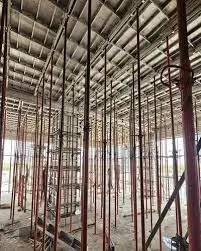
Define Your Project Requirements Before Comparing Suppliers
Start With Building Type and Site Conditions
There are certain tools that are needed for each job. You need light panels and work that can be done quickly for a villa project with short floor cycles. From floor to floor, a mid-rise building must have the same panels and sizes. Make a list of the building's type, number of floors, distance between floors, and how the panels will be moved. See if there is a crane around. How you plan to divide up the work will change if there is a panel that only one person can carry. Write down the standards your inspector wants, the weather, and the safety rules for the area. ACI 347R-14 is a guide that many US contractors use to figure out how to design and load formwork. If you give them a clear brief, anyone can quote the right system the first time.
Prepare Drawings and Technical Targets
Builders can't make a layout from a sketch. Send drawing of the structure and architecture, as well as the wall and slab thicknesses, openings, stairs, and balconies. Write down your goals, like how many days you want each floor to be up and how much pressure you want on the concrete from the side. For instance, our lightweight aluminum formwork can withstand lateral pressure up to 60 kN/m2 and has a 1 mm dimension tolerance. Compare those numbers to your own design load and pour rate. How rapid it is poured, how hot it is, and how well it is mixed all affect how much pressure it has. "Formwork for Concrete" by Hurd talks about how these things change the way things are designed. That should be a red flag if a supplier won't talk about pressure and tolerance in plain English.
Compare Aluminum With Steel, Timber, and Plastic
Check each piece of information against what you do for a living. The ASM Handbook says that 6061 aluminum is about 2.7 g/cm³ dense, which is only a third as dense as steel. Screens are easier to carry by hand because they are lighter than other things. Steel can still be used for heavy work or work that isn't a straight line. But wood isn't the same from board to board and makes more waste than it's worth. Even though plastic is light, different types have different stiffness, load capacity, and temperature resistance. When the same panels show up over and over in a floor plan, aluminum works well. Don't just look at how much the concrete costs to buy; also look at how much it costs to put in, reuse, ship, fix, and finish.
Evaluate the Lightweight Aluminum Formwork System and Quality Proof
Check the Alloy Grade, Panel Thickness, and Weight
Write down the numbers. The 6061-T6 aluminum alloy profiles we sell have thin walls and are 3.5 mm thick. Each piece weighs no more than 16 kg. Most panels weigh between 18 and 25 kg/m². Your supplier should be able to tell you what standard their profiles are made to if you want to know more about they. Ask not for a general file, but for a report on the chemical make-up and a report on the mechanical test for the batch you buy. With spectroscopic analysis, you can show what grade of alloy it is. Making this step keeps you safe from material that has been switched out. When your customers ask for proof, this also shows them what they are renting or buying.
Review the Complete System, Not Just Panels
The slabs, corners, props, pins, and wedges must all fit together for the system to work. Make a list of the parts and check that each one fits the project you want to make. All of the walls, columns, beams, and slabs in our modular lightweight aluminum formwork system are connected with a pin-and-wedge system. These two pieces can be joined together without any special welding being done on-site. Based on what we've seen, crews can be ready to go after just two or three days of training. Also, find out how the outside of the panels is stored, fixed, and cared for. The number of cycles they give depends on how they are used. The company you buy from should talk to you about reuse numbers and the rules that govern them. Our panels can be used 250 to 300 times if they are taken care of properly.
Inspect the Factory and the Paperwork
A tour of the factory, either in person or on video, is better than a brochure. Our factory in Rizhao is 79,800 square meters big, and our standard workshops take up more than 40,000 square meters. About 920 people work for us, and 180 of them are trained technicians. Six automatic welding lines, 12 robots for welding, and 4 sets of tools for cold roll forming make up our fleet. It is important to make sure that the company cuts, welds, inspects, and keeps records that can be tracked. Make sure that each one lists the right company after getting proof of ISO 9001 and CE. ISO 9001 sets rules for a quality management system. This means that it shows that the whole process is under control, not just how well the product works. Some buyers also want design documents that are based on EN, and EN 12812 sets standards for how well falsework should work.
Assess Engineering Support and the Real Cost
Look for Layout Drawings and a Bill of Materials
With good engineering, mistakes on the site can be avoided. Ask the supplier to turn your sketches into a layout with numbered panels, a list of materials, and steps on how to put it together. Panels with numbers help the crews put each piece in the right place, and a layout check finds any issues before they are built. How does the supplier handle design changes? How quickly does it answer technical questions? We build it just the way you want it, and we can make it from drawings and samples given by customers. We can also help you set up and take down technically. Having a real person answer quickly is often more important than having a small discount written down.
Plan for After-Sales Service and Spare Parts
Pieces of furniture break and pins and wedges get lost. Ask the supplier how they handle broken or missing parts before you place your order. They should also tell you what spare parts you should keep on hand. It's helpful for importers who rent to contractors to have a list of spare parts with prices because contractors don't like it when their goods break down on the job site. Talk to the supplier about how they handle claims and if they can send replacement parts with your next shipment. Ask for clear pictures and a list of things to pack for each box. This is what a supplier who has been exporting for a long time does every time. We ship to over 100 countries and regions, and users can ask for spare parts as part of setting up regular orders.
Calculate the Real Cost per Use
A quote should have separate lists for engineering, packaging, freight terms, spare parts, panels, accessories, props, and other things. In order to compare prices, you should only look at offers that use the same formwork area, Incoterm, and accessory scope. After that, think about how much it costs every time you use it. They are made to be used 250–300 times, which means that the higher price of buying them is spread out over many pours. You can also save money by doing things like floor cycles faster, plastering less, and throwing away less wood. Two to five floors are added to mid-rise and villa-style projects every four to five days. This is how our system is meant to work. To figure out payback, you can't just look at a general online price. You need to use your own labor rates and reuse plan.
Match the Supplier to Your Procurement Needs
Fit the System to Mid-Rise and Villa Projects
The type of building you have should match these strengths. Our improved, light aluminum alloy formwork works well for quick projects on villas and mid-rise buildings. People don't have to use cranes to move and set up light panels, which makes the job easier. Walls and slabs stay put because they are very strong and level. After being stripped, the surface of concrete is smooth, so it doesn't need to be plastered again to get a fair face. These traits are usually useful on floor plans where crews do the same moves over and over. Ask the supplier how many custom panels your project will need and how that will change the price and lead time if it needs a special shape.
Check Export Experience and Container Loading
Logistics can change your profit if you buy something to sell or rent it out. Need to know how many panels or square meters can fit in a 40HQ container? Ask the supplier for a container loading plan. You should also find out how the panels are packed so they don't get broken. To help you get through customs, ask for packing lists and records. When loads are mixed, it can be harder to get through, so ask the supplier how they label and separate goods. It may be cheaper to ship and handle aluminum panels than steel panels per square meter because they are lighter. But the exact amount will depend on how it's laid out and how big the container is. Make a written guess of how much the weight is before you decide.
Use a Weighted Scorecard to Compare Suppliers
A scorecard counts up the things you think about. The technical fit of lightweight aluminum formwork gets 25% of the vote, the total cost of the project gets 20%, the delivery performance gets 15%, the engineering support gets 10%, and the business terms get 10%. Make a list of your criteria and give each one a certain amount of weight. On each line, give each supplier a score between 1 and 5 based on test reports, samples, and project references. It's your choice whether to change the weights or not. For a distributor, paperwork and loading the container might be more important than lead time. For a contractor, lead time might be more important. Make a list of red flags, such as unclear specs, claims of reuse that can't be proven, poor drawings, and factories you can't visit.
Complete Due Diligence and Make the Final Decision
Write a Clear RFQ
You get correct quotes when you ask for them in detail. Put down where the project is happening, what kind of building it is, how many floors it has, drawings, the area where the forms will be used, the target cycle time, the standards that will be used, the delivery date, the port of destination, and the Incoterm. Describe the training that is needed and what the warranty covers. Next, ask them all the same questions about the type of alloy, the thickness of the panels, how much weight they can hold, how many times they can be used, how long it takes to make, where to get spare parts, and project examples. If you ask the same questions of each offer, you can compare them line by line. When providers answer quickly and clearly in English, they also show what they will do after the order is placed. Then, send the same package to all of them and see how they respond.
Order a Sample and a Trial Shipment
Samples lower the risk before you decide what to do. You can use your own tools to check the panels' thickness, weight, finish, and pin-and-wedge fit after we give you samples and technical help. Use the written specification as a guide and check the sample against it. Then, place a small order such as a trial container to learn from it, and have a company like SGS or Bureau Veritas check it. Sizes must be within ±1 mm, flatness must be within 2 mm on a 2-meter rule, and the material report must be present. Do the same checks on the bulk goods and the sample. That test tells you if the quality stays the same or not.
Confirm Contract Terms and Choose the Partner
Check the payment terms, steps for inspection, packaging, warranty, replacement for defects, late delivery fees, design change fees, and prices for spare parts before you sign. The technical annex and bill of materials that have been approved should be added to the offer. The supplier with the best prices isn't always the first one to offer them. Find a partner that can help you with everything, from design to shipping and spare parts. The partner should also offer easy handling, accurate measurements, quick installation, a clean concrete finish, and the chance to use the product more than once. Put the total cost, samples, references, technical proposals, and factory proof next to each other and look at them side by side. You have more control over the quality and schedule when you base your decisions on evidence that has been checked out.
Conclusion
Use facts to help you pick a lightweight aluminum formwork supplier. The first thing you should do is describe the project by the type of building, the drawings, the pressure, the tolerance, and the cycle time. Then check the type of metal, the thickness of the panel, its weight, any claims that it can be used again, the factory's capacity, and any certificates that come with it. For a better comparison, look at the total cost instead of the price you paid for each material.
Engineers are less likely to make mistakes later on if there are clear RFQs, spare part support, and plans for loading containers. With a weighted scorecard, a sample check, and a trial shipment that has been inspected, claims can be turned into results that can be tracked. The best supplier makes sure that the whole project has light handling, accurate measurements, a clean finish, durability, and good service. They also back up everything they say with proof, not just words.
FAQ
How many times can the panels be reused?
The 6061-T6 panels we sell can be used 250 to 300 times. The real results depend on how well you keep your sites clean, managed, and in good shape.
Which projects suit this system?
It works well for mid-rise buildings and projects with short time frames, like villas, where one floor changes hands every four to five days. The panels are light enough that they can be moved without a crane. Each one weighs 16 kg or less.
Can I get samples before ordering?
Yes. Before you buy more, you can use our samples to check the thickness, weight, finish, and fit of the connections.
What should I send for a quotation?
Send your floor plans, drawings, cycle time goals, destination port, and Incoterm. Once we know these things, we can make a layout and quote that works for you.
Request a Lightweight Aluminum Formwork Proposal From GREEN FORMWORK
From its base in Rizhao, Shandong, GREEN FORMWORK makes and ships lightweight aluminum formwork all over the world. To sdxingruiqp@126.com, send your drawings along with the area of the formwork and the port where the ship will arrive. We'll get back to you with a quote, a panel layout, and some other details. Our 6061-T6 panels don't weigh more than 16 kg each, and if you have any technical questions, our team is here to help.
References
1. ASM Handbook, Volume 2: Properties and Selection: Nonferrous Alloys and Special-Purpose Materials, 1990
2. ACI 347R-14: Guide to Formwork for Concrete, American Concrete Institute, 2014
3. Formwork for Concrete (SP-4), M.K. Hurd, American Concrete Institute, 2005
4. ASTM B221: Standard Specification for Aluminum and Aluminum-Alloy Extruded Bars, Rods, Wire, Profiles, and Tubes, ASTM International, 2021
5. EN 12812: Falsework – Performance Requirements and General Design, European Committee for Standardization, 2008
6. ISO 9001: Quality Management Systems – Requirements, International Organization for Standardization, 2015
Learn about our latest products and discounts through SMS or email