- English
- French
- German
- Portuguese
- Spanish
- Russian
- Japanese
- Korean
- Arabic
- Greek
- German
- Turkish
- Italian
- Danish
- Romanian
- Indonesian
- Czech
- Afrikaans
- Swedish
- Polish
- Basque
- Catalan
- Esperanto
- Hindi
- Lao
- Albanian
- Amharic
- Armenian
- Azerbaijani
- Belarusian
- Bengali
- Bosnian
- Bulgarian
- Cebuano
- Chichewa
- Corsican
- Croatian
- Dutch
- Estonian
- Filipino
- Finnish
- Frisian
- Galician
- Georgian
- Gujarati
- Haitian
- Hausa
- Hawaiian
- Hebrew
- Hmong
- Hungarian
- Icelandic
- Igbo
- Javanese
- Kannada
- Kazakh
- Khmer
- Kurdish
- Kyrgyz
- Latin
- Latvian
- Lithuanian
- Luxembou..
- Macedonian
- Malagasy
- Malay
- Malayalam
- Maltese
- Maori
- Marathi
- Mongolian
- Burmese
- Nepali
- Norwegian
- Pashto
- Persian
- Punjabi
- Serbian
- Sesotho
- Sinhala
- Slovak
- Slovenian
- Somali
- Samoan
- Scots Gaelic
- Shona
- Sindhi
- Sundanese
- Swahili
- Tajik
- Tamil
- Telugu
- Thai
- Ukrainian
- Urdu
- Uzbek
- Vietnamese
- Welsh
- Xhosa
- Yiddish
- Yoruba
- Zulu
How Do Modular Aluminum Formwork Systems Compare With Steel Options?
When contractors and rental fleet operators evaluate concrete formwork, the choice between aluminum and steel shapes everything from daily labor costs to long-term asset returns. Modular aluminum formwork — engineered from high-strength 6061-T6 alloy and assembled from standardized panels, connectors, and wedge-pin accessories — consistently outperforms conventional steel systems in weight, reuse cycles, and surface finish quality. Steel formwork carries structural familiarity and lower upfront cost per panel, yet its heavier mass, corrosion exposure, and longer cycle times erode those early savings across a multi-story project.
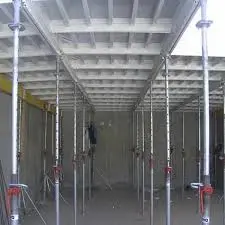
Introduction to Modular Formwork Systems
What Is Modular Aluminum Formwork?
Modular aluminum formwork is a precision-engineered, temporary concrete casting system made from standardized aluminum alloy panels that interlock through pins and wedges. At Shandong Xingrui Building Materials Co., Ltd. (GREEN FORMWORK), each system consists of standard panels, non-standard panels, and supporting accessories — covering walls, beams, columns, floor slabs, and bay windows within a single integrated assembly.
What Is Steel Formwork?
Steel formwork uses welded or bolted steel plates and frames to contain poured concrete. It handles heavy loads and suits large infrastructure pours. However, standard steel panels weigh roughly 40–60 kg/m², compared to just 20–25 kg/m² for aluminum — a difference that directly affects labor productivity on every floor cycle.
Why the Choice Matters?
Formwork selection affects construction speed, surface quality, labor demand, and total project cost. For rental operators who redeploy assets across multiple sites, the modularity and cross-project compatibility of a panel system determine asset utilization rates and repair frequency — both of which feed directly into return on investment.
Key Differences Between Modular Aluminum and Steel Formwork
Weight and Handling
Workers can move and carry modular aluminum formwork parts without a crane for most jobs thanks to metal panels that weigh 20–25 kg/m². When moving steel versions, a machine almost always has to move them. It takes a lot longer to move things by hand in a 30-story apartment building, which changes the schedule for the whole project.
Corrosion Resistance and Maintenance
Aluminum doesn't rust because it makes an oxide layer on its own. It doesn't need to be painted or galvanized. Steel walls need to be cleaned often to keep them from rusting, especially in places that are near the coast, are humid, or get a lot of rain. The costs of maintaining aluminum parts that have been used 300 times in the same way are still much lower than maintaining steel parts that have been used in the same way.
Lifecycle Cost and Reuse Cycles
Steel formwork can be used 50–150 times before the frames are too weak to hold smooth concrete because of stress on the structure, warping, or surface wear. The metal system from GREEN FORMWORK can be used more than 300 times if it is cleaned and maintained regularly. When aluminum is no longer useful, 95% of it can be recovered. This means that the total cost of ownership per cycle is much lower than with steel. Because of this, aluminum is the cheaper option for fleet operators who are in charge of large pools of assets.
Performance and Application Suitability
Installation Speed and Floor Cycle Time
For aluminum panel systems with standard split designs, there is no need for the hard work of matching parts that is often needed on-site for steel parts. Because GREEN FORMWORK is monolithic, walls, slabs, columns, and beams can all be cast at the same time. It only takes 4–5 days for each floor, which speeds up the building process. If everything stays the same on the site, the cycle can take up to 7–10 days per floor when steel forms are used. This is because the horizontal and vertical parts have to be poured separately.
Surface Finish and Concrete Quality
After being cut to a size tolerance of ±1mm, modular aluminum formwork panels make concrete that doesn't need to be plastered and has a smooth, even surface. The surface gets bumpy and weld marks show up on the concrete face when steel panels are used a lot. Getting rid of the caulking saves money on materials and speeds up the finishing process, which is helpful when you need to turn the house over quickly.
Application Range
Here are some job types that show how well each method works:
- High-rise residential towers: Aluminum's repetitive standard panels accelerate floor-by-floor deployment where consistent floor plans repeat across 20–50 levels. The 4–5 day floor cycle is particularly valuable here.
- Underground utility tunnels: HIGH-pressure resistant joints and water-tight panel connections allow aluminum systems to maintain structural integrity in confined, high-humidity environments where steel corrosion accelerates rapidly.
- Commercial complexes with non-standard geometry: BIM-integrated custom panel fabrication allows aluminum non-standard components to handle curved beams, cantilevered slabs, and irregular core walls alongside standard panels — delivering architectural concrete finishes without secondary treatment.
There is a clear pattern here: aluminum systems work best in places where steel breaks down quickly or on projects with repeated floor plans. Steel is still a good choice for big industrial pours that only need to be done once and don't care about weight or how often they are used.
Procurement Insights for B2B Clients
Standardization and Asset Compatibility
People who run rental fleets might run into trouble when they add more metal formwork to their stock because the standard panel sizes from different manufacturers might not fit together. At different job sites, panels with the same width and link shape can be put back together. But panels that don't match leave asset groups alone, which means they aren't used as much. Cross-site recombination is an important part of GREEN FORMWORK's system for operators who are moving from one region to more than one city.
Purchasing Models and Bulk Orders
GREEN FORMWORK takes both large orders for supplies and smaller orders for extra parts. One of the most common problems rental companies face is having to replace panels in the middle of a project. This way, they don't have to worry about that. You can keep the rental plan going and keep the operator's promise to the general contractor to make money by getting replacement panels without having to buy a lot of them at once. This is possible because of the live rental cycle.
Post-Sale Technical Support
The 180 professional techs at GREEN FORMWORK help with modular aluminum formwork installation, offer help with BIM planning, and provide quality assurance records like ISO 9001 and ASTM-B209 compliance records. Rizhao is the city where the business is located. It has its own dock, airport, and high-speed rail line. People in North America, the Middle East, and Southeast Asia can get their goods quickly because of this.
Deciding Factors When Choosing Between Aluminum and Steel Formwork
Project Frequency and Reuse Expectation
If there won't be more than 20 pours of concrete, steel may be a better choice because it costs less. The cost per cycle of aluminum drops below that of steel after that point because it lasts longer, saves money on labor, and needs less upkeep. According to figures from the industry, the ROI tipping point is always between the 30th and 50th refill cycle.
Environmental Conditions and Sustainability
When builders work near the coast, in tropical areas, or in places with a lot of humidity, steel breaks down more quickly. This makes it more expensive to fix or replace. That factor is taken away by the fact that metal doesn't naturally rust. The 95% recycling rate also backs up green building approval standards that are being put into more and more North American business and government project plans.
Long-Term Asset Strategy
Any rental company that wants to grow should make sure that all of their equipment is set up to use the same standard panel system from the same company. This method speeds up the repair process and makes it easier to keep track of goods. It also lets warehouse workers fix up panels without having to find parts from different manufacturers that fit.
Conclusion
When it comes to how often it can be used, how much it costs, how well it works, and how long it lasts, aluminum formwork is clearly the winner. Steel formwork is also useful for some building tasks. The 300+ cycle service life, ±1mm dimensional accuracy, and standard panel compatibility of GREEN FORMWORK's modular aluminum formwork system directly lead to higher asset utilization and lower per-floor operating costs for rental fleet operators. These are the metrics that determine whether a business can stay in business in a competitive rental market.
FAQ
Q1: How many reuse cycles can aluminum formwork achieve compared to steel?
A: GREEN FORMWORK's aluminum panels achieve 300+ reuse cycles with standard maintenance. Steel formwork typically reaches 50–150 cycles before surface quality and structural tolerance degrade below acceptable thresholds for fair-faced concrete applications.
Q2: Does aluminum formwork require specialized labor for installation?
A: Workers need a focused 3–5 day training period to learn the pin-and-wedge sequencing. After that initial period, installation speed consistently exceeds steel setups because the components are lighter and the connection method is straightforward.
Q3: Can the system handle non-standard structural shapes?
A: Yes. Non-standard panels fabricated via BIM-assisted CAD design combine with standard components to address bay windows, curved beams, irregular core walls, and cantilevered slabs — the full range of architectural complexity found in modern residential and commercial buildings.
Q4: What is the early stripping timeline?
A: Panels can be stripped within 48 hours of pouring while structural supports remain in position. This early stripping capability supports the 4–5 day floor cycle that makes aluminum systems attractive for high-rise residential projects.
Q5: Does GREEN FORMWORK accept small supplemental component orders?
A: Yes. The company accepts supplemental panel and accessory orders to support mid-project replacement needs — an important consideration for rental operators managing active deployments across multiple sites.
Request a Quote From GREEN FORMWORK — Modular Aluminum Formwork Supplier
A company called Shandong Xingrui Building Materials Co., Ltd. makes GREEN FORMWORK, which is flexible metal formwork that is carefully put together and sold to rental companies, general builders, and other businesses around the world. With a precision of ±1mm, our 6061-T6 alloy system can be used more than 300 times. It can also be used to make unique panels that work with BIM. Another thing is that it is ISO 9001 certified and can export goods from Rizhao port. Please email our team at sdxingruiqp@126.com to get more information, samples, or a price quote for buying in bulk.
References
1. American Concrete Institute. (2019). ACI 347R-14: Guide to Formwork for Concrete. ACI Publications.
2. Construction Industry Institute. (2021). Benchmarking and Metrics Report: Formwork Productivity in High-Rise Construction. University of Texas at Austin.
3. Hurd, M. K. (2005). Formwork for Concrete (7th ed.). American Concrete Institute.
4. ASTM International. (2020). ASTM B209: Standard Specification for Aluminum and Aluminum-Alloy Sheet and Plate. ASTM International.
5. Peurifoy, R. L., & Oberlender, G. D. (2011). Formwork for Concrete Structures (4th ed.). McGraw-Hill Education.
6. International Organization for Standardization. (2015). ISO 9001:2015 Quality Management Systems — Requirements. ISO Publications.
Learn about our latest products and discounts through SMS or email