- English
- French
- German
- Portuguese
- Spanish
- Russian
- Japanese
- Korean
- Arabic
- Greek
- German
- Turkish
- Italian
- Danish
- Romanian
- Indonesian
- Czech
- Afrikaans
- Swedish
- Polish
- Basque
- Catalan
- Esperanto
- Hindi
- Lao
- Albanian
- Amharic
- Armenian
- Azerbaijani
- Belarusian
- Bengali
- Bosnian
- Bulgarian
- Cebuano
- Chichewa
- Corsican
- Croatian
- Dutch
- Estonian
- Filipino
- Finnish
- Frisian
- Galician
- Georgian
- Gujarati
- Haitian
- Hausa
- Hawaiian
- Hebrew
- Hmong
- Hungarian
- Icelandic
- Igbo
- Javanese
- Kannada
- Kazakh
- Khmer
- Kurdish
- Kyrgyz
- Latin
- Latvian
- Lithuanian
- Luxembou..
- Macedonian
- Malagasy
- Malay
- Malayalam
- Maltese
- Maori
- Marathi
- Mongolian
- Burmese
- Nepali
- Norwegian
- Pashto
- Persian
- Punjabi
- Serbian
- Sesotho
- Sinhala
- Slovak
- Slovenian
- Somali
- Samoan
- Scots Gaelic
- Shona
- Sindhi
- Sundanese
- Swahili
- Tajik
- Tamil
- Telugu
- Thai
- Ukrainian
- Urdu
- Uzbek
- Vietnamese
- Welsh
- Xhosa
- Yiddish
- Yoruba
- Zulu
How to Import Round Tube Scaffolding Without Costly Delays Abroad
Importing round tube scaffolding from overseas manufacturers can save your business significant money per ton—but only when the process runs smoothly. Many importers in West Africa and South Asia lose weeks, and sometimes entire project windows, to preventable bottlenecks: wrong documentation, substandard wall thickness, or missed customs deadlines. This guide walks you through every stage of the import process, from verifying material specs to clearing your port without surprises. Whether you are sourcing your first container or scaling up bulk orders, these steps will protect your margins and keep your job sites on schedule.
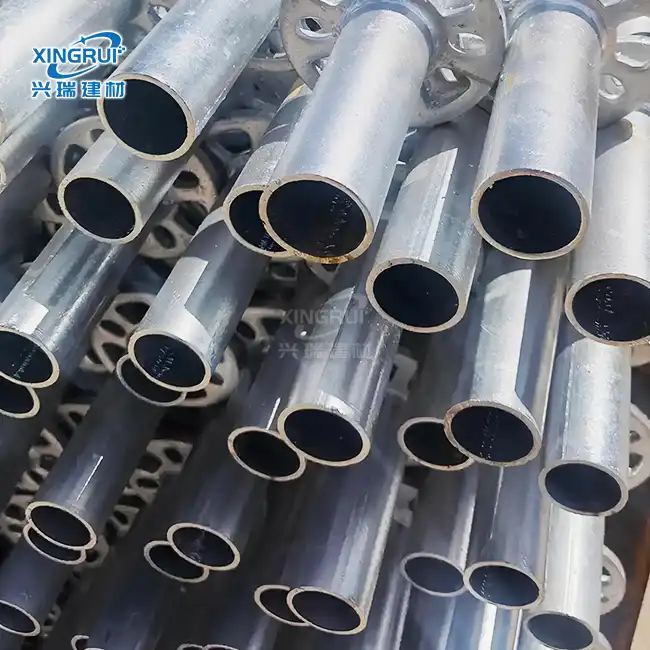
Understanding the Import Challenges of Round Tube Scaffolding
Why Delays Happen More Often Than They Should
Most import delays are caused by one of three main issues: shipping documents that are missing or unclear, material certifications that are not clear, or bad planning before the shipment. A container can be held at port for weeks if it doesn't have the right HS tariff code or the certificate of conformity. In places where infrastructure is in high demand, like West Africa during road-building seasons, even a two-week delay can cost you the whole project contract.
Common Quality Mismatch Problems
When buyers get the steel tubes, they often find that they don't meet the agreed upon standards. One of the most common issues from bulk importers is that the wall thickness falls below the agreed 3.0 mm. Not only does this cost money, but it also puts people's safety at risk on-site. Making sure there is a third-party inspection before the container is sealed is the best way to find these problems early.
Building a Delay-Free Foundation
Solid contracts, clearly defined material grades, and agreed upon checking processes are the building blocks of a smooth round tube scaffolding import. You need to write down the steel grade (Q235 is common for tube and coupler systems), the outer diameter (Φ48mm), and the exact wall thickness range before you sign. Add terms that punish late shipments and things that don't meet specifications. Adding these words doesn't cost anything, but they protect everything that comes after.
Critical Specifications and Compliance for Round Tube Scaffolding Imports
Key Technical Parameters to Confirm Before You Order
These factors have a direct effect on how your goods are categorized at customs, so having accurate specs also speeds up the clearance process.
- Material grade: Q235 carbon steel, with a minimum yield strength of ≥235 MPa, is the accepted standard for scaffolding tubes in most markets.
- Tube diameter and wall thickness: The Φ48×3.0mm specification is internationally compatible with universal fasteners and couplers. Confirm wall thickness with ultrasonic testing reports.
- Available lengths: Standard cut lengths of 1.5m, 2.0m, 3.0m, 4.0m, and 6.0m allow flexible configuration across different site requirements.
Note that not all claims of certification are the same. ISO 9001 makes sure that the company manages quality in a managed way. ISO 14001 means that environmental management rules have been followed. If a product has CE approval, it means it meets European safety standards. Many port officials in Africa and Asia now see this as a reliable sign of quality. Not just logos on a product page; always ask for copies of up-to-date certification documents.
Certifications and Standards That Matter
Missing paperwork is the fastest way to cause a delay that costs a lot of money. Make sure you have these things before you ship your container:
Documentation Checklist for Smooth Customs Clearance
Missing paperwork is the fastest route to a costly delay. Before your container ships, confirm you have the following in hand:
- Commercial invoice and packing list
- Bill of lading
- Certificate of origin
- Material test report (mill certificate)
- Certificate of conformity
- Import permit (country-specific)
Optimizing Your Procurement Process to Avoid Delays
How to Evaluate and Select the Right Supplier
If you go with a producer instead of a trade business, you can directly monitor the quality and usually get better prices per ton. Check out a supplier's factory size, how long it's been open, the tools they use, and the countries they already sell to. A company that sends goods to more than 100 countries has already figured out how to deal with the paperwork you will need. Before you place a full order, ask for samples of the product and a technical data sheet.
The Case for Bulk Purchasing With a Verified Supplier
Buying in bulk from a single confirmed source lowers the cost per unit and makes shipping easier. You only have to deal with one set of shipping papers, one inspection, and one person. If a buyer has more than one job site, ordering standard lengths in one container shipment instead of sending them to different suppliers cuts down on lead time and the cost of freight per piece.
Here is a simple way to evaluate suppliers that lowers the risk of sourcing:
- Request factory audit or third-party inspection report
- Confirm active ISO and CE certifications
- Review material test reports for the specific batch
- Agree on wall thickness tolerance in writing
- Define loading and shipping timeline in the contract
This process adds less than a week to the time it takes to source goods, but it makes it much less likely that you will get goods that aren't what you ordered.
Using Order Tracking to Stay Ahead
Ask your round tube scaffolding supplier for updates on production and loading in real time. Loading photos, packing lists, and shipping documents should be sent by reputable manufacturers within 24 hours of the container being sealed. Because of this, you can get your local customs broker ready and plan your delivery spot ahead of time.
Best Practices for Logistics and Shipping of Round Tube Scaffolding
Choosing the Right Shipping Method
Sea freight is the most practical way to ship large amounts of steel tubes. A normal 20-foot container can hold 20–22 tons of scaffolding tubes, which is a good deal for big orders. Steel in large quantities can't be sent by air because it costs too much. For urgent part-load orders, LCL (less-than-container-load) consolidation can help, but it costs more per ton.
Packaging, Port of Origin, and Transit Time
It is easy to send goods to West Africa, the Middle East, and South Asia from Rizhao Port in Shandong Province, which is a direct export hub. Steel tubes that are properly grouped with end caps and wrapped in moisture-resistant material arrive in better shape than loads that aren't tightly packed. Depending on the shipping line and route, it usually takes 25 to 35 days to get from Rizhao to ports in West Africa.
Working With Your Customs Broker
At least five days before the ship comes, give your dealer all of the necessary paperwork. In this window, you can go through customs before you arrive, which greatly reduces the time you have to wait in port. If you are selling steel in a market that is currently reviewing antidumping actions, make sure that the country of origin on your certificate of origin is correct.
Post-Import Considerations: Maintenance, Usage, and Brand Support
On-Site Inspection After Delivery
Do not skip the round tube scaffolding receiving check when your package gets there. Compare the lengths and quantities that were brought to the packing list. Also, use calipers to check the wall thickness of a few tubes from each group. Any problem should be photographed and reported to the seller within the agreed-upon claim window, which is usually 14 to 30 days after arrival.
Reusability and Long-Term Cost Efficiency
A steel tube scaffold system that is well-made can be used for dozens of different projects. If you hot-dip galvanize Q235 tubes and make sure the wall width is the same, they can last 10 to 15 years outside. Because they can be used more than once, they are much cheaper per use than disposable options. Buying certified, spec-compliant tubes at first is the better long-term choice.
After-Sales Support and Supplier Relationship
Keep working with your manufacturer even when you're not ordering from them. A trustworthy supplier will offer new couplers, up-to-date material certifications for re-export markets, and technical support for when your site teams have questions about how to put the parts together. This ongoing support keeps your reputation with local contractors safe and cuts down on downtime.
Conclusion
To import round tube scaffolding without delays that cost a lot of money, you need to pay attention at every step: the contract needs to have clear specifications, certifications need to be checked before payment is made, there needs to be a full pre-shipment inspection, accurate customs paperwork, and a receiving check when the goods arrive. Buyers protect their margins and project timelines when they see this as a system instead of a set of one-time deals. Most of the usual risks are taken care of right away when you work with a manufacturer that ships regularly to your area, works on a large scale, and has current ISO and CE certifications.
FAQ
What documents are essential for importing steel tube scaffolding?
A bill of lading, a business statement, a packing list, a certificate of origin, a material test report, and a certificate of conformity are the things you need. Some countries where the goods are going also need an import pass or a proof of pre-shipment inspection. Before the order ships, check with your local customs office to see what they need.
How do I verify that an overseas supplier meets safety standards?
Ask the maker for copies of their current ISO 9001, ISO 14001, and CE certification papers. Look up the certificate numbers in the public database of the issuing body. You can also hire a third-party inspection company to do an audit of the factory or a pre-shipment inspection of the product on your own.
Should I buy or rent scaffolding for large infrastructure projects?
When you buy in bulk from a certified round tube scaffolding maker, you pay less per use over time. This is especially true for building projects that happen over and over again and have steady demand. It makes sense to rent for one-time projects with unknown completion dates. If you are an importer who works with more than one contractor, owning your own inventory lets you set your own prices and move your goods more quickly.
What is the standard wall thickness I should specify?
The standard for tube and coupler scaffolding around the world is ¥48×3.0mm. Always write down the minimum wall thickness you need and ask for ultrasonic thickness test results to make sure you're following the rules before shipping.
Partner With GREEN FORMWORK for Certified Round Tube Scaffolding Supply
With Q235 steel, ISO 9001, ISO 14001, and CE certifications, Shandong Xingrui Building Materials Co., Ltd. backs GREEN FORMWORK as a professional-grade round tube scaffolding maker. Our Rizhao facility ships to more than 100 countries quickly and with full documentation support. You can get samples and detailed data sheets if you ask for them. Get in touch with us right away at sdxingruiqp@126.com to talk about your bulk order needs.
References
1. International Labour Organization. Safety and Health in Construction. ILO, 2016.
2. British Standards Institution. BS EN 39: Loose Steel Tubes for Tube and Coupler Scaffolds. BSI, 2001.
3. Occupational Safety and Health Administration. Scaffolding Safety Standards (29 CFR 1926.451). U.S. Department of Labor, 2019.
4. International Organization for Standardization. ISO 9001: Quality Management Systems—Requirements. ISO, 2015.
5. World Bank Group. Doing Business 2020: Comparing Business Regulation in 190 Economies. World Bank, 2020.
6. Construction Industry Institute. Best Practices in Global Procurement and Supply Chain Management for Construction Materials. CII, 2018.
Learn about our latest products and discounts through SMS or email