- English
- French
- German
- Portuguese
- Spanish
- Russian
- Japanese
- Korean
- Arabic
- Greek
- German
- Turkish
- Italian
- Danish
- Romanian
- Indonesian
- Czech
- Afrikaans
- Swedish
- Polish
- Basque
- Catalan
- Esperanto
- Hindi
- Lao
- Albanian
- Amharic
- Armenian
- Azerbaijani
- Belarusian
- Bengali
- Bosnian
- Bulgarian
- Cebuano
- Chichewa
- Corsican
- Croatian
- Dutch
- Estonian
- Filipino
- Finnish
- Frisian
- Galician
- Georgian
- Gujarati
- Haitian
- Hausa
- Hawaiian
- Hebrew
- Hmong
- Hungarian
- Icelandic
- Igbo
- Javanese
- Kannada
- Kazakh
- Khmer
- Kurdish
- Kyrgyz
- Latin
- Latvian
- Lithuanian
- Luxembou..
- Macedonian
- Malagasy
- Malay
- Malayalam
- Maltese
- Maori
- Marathi
- Mongolian
- Burmese
- Nepali
- Norwegian
- Pashto
- Persian
- Punjabi
- Serbian
- Sesotho
- Sinhala
- Slovak
- Slovenian
- Somali
- Samoan
- Scots Gaelic
- Shona
- Sindhi
- Sundanese
- Swahili
- Tajik
- Tamil
- Telugu
- Thai
- Ukrainian
- Urdu
- Uzbek
- Vietnamese
- Welsh
- Xhosa
- Yiddish
- Yoruba
- Zulu
How to Select a Multi-Layer Multi-Directional Crab Scaffolding Supplier
Selecting the right multi-layer multi-directional crab scaffolding supplier comes down to five core factors: verified certifications (CE, ISO 9001), documented load-bearing capacity, customization capability, responsive technical support, and transparent trade terms. For bridge, stadium, or industrial plant projects where geometry is irregular and tolerances are tight, the wrong supplier choice directly delays milestones and increases on-site risk. I recommend shortlisting manufacturers that provide engineering calculation sheets, physical samples, and traceable batch quality reports before you commit to a purchase order.
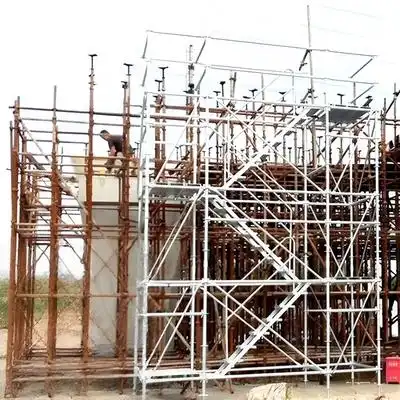
Understanding the Importance of Choosing the Right Supplier
Why Supplier Selection Affects Project Outcomes?
A scaffolding system is not a commodity. When your project involves curved bridge piers, dome ceilings, or ultra-high-rise factory floors, the structural support system must perform exactly as engineered. Choosing a supplier without verified production capacity or certified material traceability transfers enormous risk onto your project team.
The Role of Modular Design in Procurement Decisions
The rosette-node architecture of a crab-type scaffold allows ledgers and diagonal braces to connect at 45-degree increments across a full 360-degree range. This modular geometry means node tolerances must stay within ±1 mm across every layer. A supplier that cannot demonstrate dimensional consistency in a sample set is unlikely to hold that tolerance at scale.
Long-Term Relationship Value
Procurement managers who treat their scaffold supplier as a one-time vendor typically pay more in the second year through replacement components, rework labor, and emergency freight. Suppliers with in-house R&D teams, reusable component libraries, and dedicated after-sales contacts reduce total project cost over multiple build cycles.
Criteria for Evaluating Crab Scaffolding Suppliers
Material Grade and Load Certification
Start with the metal for multi-layer multi-directional crab scaffolding. Most heavy-duty modular scaffolding is made of Q235 quality steel that has been hot-dip galvanized (HDG) until the finish is 60–80 μm thick. Get mill certificates and batch inspection reports and let them know you need them. Make sure that the figures of the loads are in line with EN 12811, ANSI/SSFI SC100, or the standard that your job needs.
Certifications and Traceability
You should have ISO 9001 quality control approval at the very least. EPC contractors in the US or Europe should only do business with suppliers who have a signed Declaration of Performance (DoP), ISO 14001 certification, and a CE mark. Being able to trace means that each batch can be connected to a certain lot of raw materials and date of production. This is important in case your client's tech asks for proof of an audit.
Customization and Sample Responsiveness
When building something that isn't round, a normal list is almost never enough. Talk to the seller and see if they can use your engineering drawings to rebuild node modules and give you tested samples in 7–14 days. These suppliers are much more likely to consistently hit that window than those who do all of their work by hand. This is because they use dedicated CNC cold-roll forming equipment and automated welding lines.
Any fair review of a seller should start with these three things. When you buy from someone who checks all three boxes, your risk goes down a lot before a single piece of steel ships.
Comparing Crab Scaffolding with Other Scaffolding Systems
Crab Scaffold vs. Ringlock and Cuplock Systems
Ringlock and cuplock platforms are good for building simple walls. But the shapes of their nodes make it hard to make connections at right angles. You add eccentric loads to a ringlock system when you push it into an odd shape, like on a bent bridge abutment or a domed sports facility. This is exactly what causes the system to gradually fall apart. In a crab-type system, the multi-angle rosette node takes care of that problem on its own.
Performance Against Tube-and-Clamp Scaffolding
If you want to change the way it looks, tube-and-clamp framing is still the best choice. But that freedom costs something: each link has to be strengthened by hand, which takes time and skilled work. Of course, in multi-layer multi-directional crab scaffolding, the self-locking wedge mechanism takes care of that. The time it takes to put things together is cut by 40–60% and inspection cycles are sped up because the wedge engagement can be seen.
Safety and Compliance Comparison
As you can see, traditional bamboo or wood shoring doesn't work well for most foreign EPC projects because it gets damaged quickly by fire, water, and changes in size. This is now something that most institutional clients and insurers expect, not something that is optional. These needs can be met by a Q235 steel crab scaffold system with an HDG surface treatment and production that is ISO-certified.
Practical Steps to Engage and Work with a Supplier
Requesting Quotes and Technical Packages
Send an RFQ with your structural drawings, the timeline for the project, and the tallest building you can build. A good supplier will tell you more about the price than just that. They will also send a technical proposal with a component schedule, a load chart, and a diagram of how the nodes will be set up. It's a bad sign if all they give you back is a price list.
Navigating Lead Times and Payment Terms
It usually takes 15 to 30 days to make something after an order has been approved. It is usual to pay 30% to 50% TT ahead of time. The rest is due when the shipping papers are received. Because of this, please give an extra 30 to 45 days for production, sample approval, and batch registration for sales with OEM or custom labels. When you sign the subcontract, you shouldn't learn about those windows. They should be planned into the schedule for the project.
After-Sales Support and Warranty Conditions
Ask straight out for multi-layer multi-directional crab scaffolding: What happens if a lot of different sizes shows up? Reliable sellers keep extra parts on hand, offer written guarantees that cover issues with how the product was made, and give each customer a professional contact person they can talk to within 24 hours. It is much faster to make sure of this chain before you place the order than to try to figure it out while you are working on a project.
Case Studies: Verifying Supplier Capabilities
Bridge Deck Shoring in Central Europe
Heavy-duty shoring that could go in more than one way was needed for a multi-span bridge project in Poland. This was so that curved pier caps with different heights could be supported. They sent a crab scaffold system that was set up with three straight layers and lateral supports that fit the shape of the pier. Five times faster than the tube-and-clamp method used on the previous job next to it, each bay was put together on-site.
Industrial Plant Maintenance in a Refinery Setting
A local EPC company had to shut down a plant so that it could be fixed, and they needed a system that could work in high-up pipe networks that were very tight. Crew could move the scaffold bays around fixed obstacles because of the modular node design. They didn't have to cut or make new parts on the job site. That set of reused parts was put back into the rental pool after the shutdown, and less than 2% of them were lost.
Stadium Canopy Construction
The contractor got a special node setup from a manufacturer that could redraw and re-sample in ten business days for a stadium canopy job with 40,000 seats. What made the source choice wasn't the price per unit, but the ability to get certified samples before making a lot of them.
As you can see, the suppliers that win difficult jobs are not just the ones with the lowest FOB price. They are also the ones that have shown they can do the technical work.
Conclusion
Picking a multi-layer multi-directional crab scaffolding provider is a technical choice that can have an impact on both time and safety. Pay attention to the approved grades of materials, the load performance that has been recorded, and the ability to be changed in a way that has been shown to work. From the first assembly to the last takedown, your project team will have a solid base if the suppliers give you engineering samples, batch reports that you can keep track of, and helpful contacts after the sale. Because its parts can be used more than once and its shape can go in different ways, the method works well for building complicated structures. But this is only true if the supplier can keep quality high on a large scale.
FAQ
Q1: What certifications should a crab scaffolding supplier hold?
A: Check for the ISO 9001 and CE marks and a Declaration of Performance at the very least. For jobs in the US, make sure that all the paperwork needed to comply with OSHA 1926.451 is in order. European EPC contractors have to use EN 12811-1 load calculation reports as part of their work.
Q2: How do I verify a supplier's actual load capacity?
A: Ask for more than just internal quality control records. You should also ask for test results that show damage and inspection papers from a third party. In order for a company to say how much weight it can hold, it should have tests done at a reputable lab that show the wedge-lock system has a safety factor of at least 2.5:1.
Q3: What is a reasonable MOQ for a first trial order?
A: Well-known manufacturers often take on small test orders so that fit can be checked on-site before they start a full job. During the first talks, make sure this is possible and ask if the price structure for each unit changes for small amounts versus large amounts.
Q4: How long does the system last?
A: A crab scaffold system should last more than 15 years in normal industrial settings as long as it is well taken care of and the HDG surface is treated at 60–80 μm. That goes even further if you check and change the wedges on high-cycle parts once a year.
Q5: Can the system be customized for non-standard geometries?
A: Yes. They can change how the node modules are set up based on engineering plans if they have their own cold-roll making and welding automation. Check how long it will take to send the sample back (the goal is 7–14 days), and ask for a written report of the measurements to be sent with it.
Get a Custom Quote from GREEN FORMWORK
You can find GREEN FORMWORK in the 40,000-square-meter factory in Rizhao, Shandong. The plant is run by Shandong Xingrui Building Materials Co., Ltd. It gives builders in more than 100 countries multi-layer, multi-directional crab scaffolding to buy. We are a trustworthy business that makes multi-layer, multi-directional crab scaffolding. We can fully customize based on plans, use CE-certified parts, and ship a trial order within 7–14 days. Send our technical team an email at sdxingruiqp@126.com to get a price quote for your specific job.
References
1. European Committee for Standardization. EN 12811-1: Temporary Works Equipment — Scaffolds — Performance Requirements and General Design. CEN, 2003.
2. American National Standards Institute / Scaffold and Access Industry Association. ANSI/SSFI SC100: Scaffolding — Safety Requirements. SSFI, 2021.
3. International Organization for Standardization. ISO 9001:2015 Quality Management Systems — Requirements. ISO, 2015.
4. Occupational Safety and Health Administration. OSHA 1926.451: Scaffolding Standards for the Construction Industry. U.S. Department of Labor, 2020.
5. Peng, J. L., Pan, A. D., & Chan, S. L. "Simplified Models for Analysis and Design of Modular Falsework." Journal of Constructional Steel Research, 2009.
6. Chandrangsu, T., & Rasmussen, K. J. R. "Investigation of Geometric Imperfections and Joint Stiffness of Support Scaffold Systems." Journal of Constructional Steel Research, 2011.
Learn about our latest products and discounts through SMS or email