- English
- French
- German
- Portuguese
- Spanish
- Russian
- Japanese
- Korean
- Arabic
- Greek
- German
- Turkish
- Italian
- Danish
- Romanian
- Indonesian
- Czech
- Afrikaans
- Swedish
- Polish
- Basque
- Catalan
- Esperanto
- Hindi
- Lao
- Albanian
- Amharic
- Armenian
- Azerbaijani
- Belarusian
- Bengali
- Bosnian
- Bulgarian
- Cebuano
- Chichewa
- Corsican
- Croatian
- Dutch
- Estonian
- Filipino
- Finnish
- Frisian
- Galician
- Georgian
- Gujarati
- Haitian
- Hausa
- Hawaiian
- Hebrew
- Hmong
- Hungarian
- Icelandic
- Igbo
- Javanese
- Kannada
- Kazakh
- Khmer
- Kurdish
- Kyrgyz
- Latin
- Latvian
- Lithuanian
- Luxembou..
- Macedonian
- Malagasy
- Malay
- Malayalam
- Maltese
- Maori
- Marathi
- Mongolian
- Burmese
- Nepali
- Norwegian
- Pashto
- Persian
- Punjabi
- Serbian
- Sesotho
- Sinhala
- Slovak
- Slovenian
- Somali
- Samoan
- Scots Gaelic
- Shona
- Sindhi
- Sundanese
- Swahili
- Tajik
- Tamil
- Telugu
- Thai
- Ukrainian
- Urdu
- Uzbek
- Vietnamese
- Welsh
- Xhosa
- Yiddish
- Yoruba
- Zulu
Ringlock Scaffolding System vs. Frame Scaffolding: Key Differences
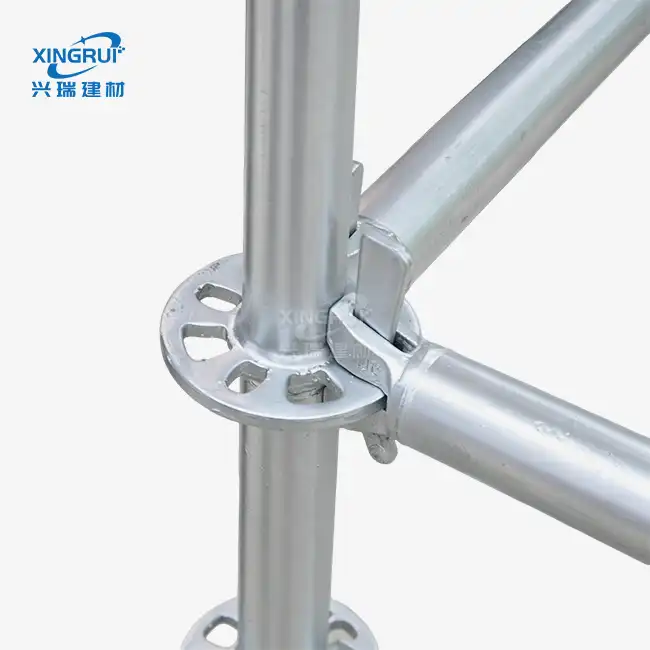
When comparing a ringlock scaffolding system to traditional frame scaffolding, the differences go well beyond surface-level design. The ringlock system uses a circular rosette connector with eight locking points, allowing multiple components to attach at a single node — a structural advantage that frame scaffolding simply cannot match. Frame scaffolding relies on pre-welded rectangular frames joined by cross braces, which works adequately for straightforward tasks but falls short on complex industrial sites. For EPC contractors, power plant operators, and procurement managers sourcing at volume, understanding these differences directly affects project safety, assembly speed, and total cost of ownership.
Understanding the Basics of Ringlock and Frame Scaffolding Systems
What Is a Ringlock Scaffolding System?
The ringlock scaffolding system is made up of separate steel parts that are stacked on top of each other and welded to vertical standards every 500 mm. Each rosette can hold up to eight pieces at once, like stair stringers, diagonal braces, and ledgers. They are held in place by a wedge-shaped pin that gets tighter when it's loaded. This system is made by Shandong Xingrui Building Materials Co., Ltd. from Q235 high-strength steel (48x3.2mm vertical standards, 10mm disk wall thickness). The surface is hot-dip galvanized to make it resistant to corrosion in industrial settings.
What Is Frame Scaffolding?
The frames of frame scaffolding are made of pre-welded steel frames that are usually in the shape of a H or a ladder. They are connected by horizontal cross braces and coupling pins. The frame sizes set the geometry, which makes setting easier for standard-height home or small business work. However, that fixed geometry makes it hard to build structures with irregular shapes, curved facades, or lots of pipes, which are common in chemical plants and refineries.
Core Structural Principles Side by Side
In a flexible ringlock system, the rosette connection lets you move the parts in any direction. Frame scaffolding lets you connect things in a single plane. This difference sets the tone for all the differences that follow in terms of load capacity, configuration freedom, and work needs. For large-scale business-to-business purchases, the design principle you pick at the specification stage affects how well the site works months later.
Comparing Ringlock Scaffolding vs. Frame Scaffolding: Structural and Functional Differences
Assembly Speed and Labor Demand
In a ringlock system, the wedge-pin connection locks itself, so there are no bolts, wrenches, or loose fasteners needed. A single hammer blow is used to drive the pin into place. Studies from European construction sites consistently show that modular ringlock assembly works 20–30% faster than similar tube-and-clamp configurations. It also works much faster than frame scaffolding when it comes to adapting to non-standard shapes. For time-sensitive EPC milestones, that gap in speed means that the plan is guaranteed.
Safety Compliance and Load Capacity
Frame scaffolding usually meets the requirements of OSHA 1926.451 for home and light business loads. It is designed to meet the requirements of EN 12810-1, EN 12811-1, and ANSI/SSFI SC100-5/05. EN 12812 shoring standards show that a single standard made of Q235 steel can hold between 40kN and 70kN, based on the distance between the ledgers. The gravity-assisted wedge tightens when the frame shakes, which is a safety trait that bolted frame links don't have.
Flexibility Across Project Configurations
Frame scaffolding works well for repeated, flat-surface tasks like standard access to the outside of a building or working on the roof inside at a set height. The ringlock scaffolding system, on the other hand, can be used for working platforms, full-hall interior scaffolding, and protecting the outside of walls. The same parts are often reconfigured for all three types of setups in the same project cycle. When moving around vessel hulls and dense pipes, refineries and shipyards like this adaptability.
Cost and Procurement Considerations for B2B Buyers
Initial Price vs. Lifecycle Cost
Most of the time, frame scaffolding costs less per unit. The total cost estimate changes, though, when you think about how often the product can be used, how much it costs to maintain, and how often parts need to be replaced. A maker like Shandong Xingrui's hot-dip galvanized ringlock system will last 10–15 years with regular upkeep, which is a lot longer than painted frame options. For rental companies that keep track of how often their assets are replaced, the higher initial cost of a lasting modular system is often worth it because it loses less value each year.
Rental vs. Purchase Decision
Most of the time, getting frame scaffolding makes financial sense for jobs that last less than six months. Buying a ringlock system and using it on multiple projects saves more money when it comes to recurring industrial maintenance contracts like annual plant shutdowns and ongoing infrastructure programs. Companies that do construction work on multiple sites can benefit from having a standard collection of modular parts that can be shipped and rearranged without having to buy each one separately for each job.
ISO 9001 quality management, CE marking, and EN-standard calculation reports are all things that project owners in Europe and North America must have. Everyone that buys something from Shandong Xingrui has to be certified by ISO 9001 and CE.
Supplier Selection Criteria
After the sale, there is support that includes direct technical help, documented batch tracking, and quick communication to protect procurement investments when problems happen in the field.
- Certification coverage: ISO 9001 quality management, CE marking, and EN-standard calculation reports are non-negotiable for European and North American project owners. Shandong Xingrui holds ISO 9001 certification and CE certification across its product range.
- Production capacity: A supplier's ability to fulfill large orders on schedule matters as much as unit price. Shandong Xingrui operates over 40,000㎡ of standardized workshops with 12 welding robots and 6 automatic welding lines.
- Customization and sampling: Custom orders based on customer drawings, with sample delivery in 7–14 days, reduce technical risk before full commitment.
- After-sales support: Direct technical support, documented batch traceability, and responsive communication protect procurement investments when field issues arise.
These factors together show if a company can meet delivery dates based on milestones without lowering the quality of their work.
Evaluating Which Scaffolding System Best Fits Your Construction Needs
Matching System to Project Type
Frame scaffolding is good for simple home building, interior fit-out, and low-rise building wall access. The ringlock scaffolding system can be used for heavy civil infrastructure, industrial maintenance, shoring up bridges, getting into power plants, and any other situation where the shape of the work changes from one phase to the next. The modular system is the best choice if your project has changes in slope, curved buildings, or big loads that are going up and down.
Decision Framework for Procurement Managers
Three questions help cut down the choices:
- Does the project require EN 12811 or ANSI/SSFI compliance? If yes, only a certified modular system meets that bar.
- Will the same scaffold inventory serve multiple projects or sites? Ringlock components standardize across configurations; frame sets do not.
- Is the project timeline compressed? Self-locking assembly reduces crew size and erection time under schedule pressure.
Pros and Cons at a Glance
Frame scaffolding is cheaper up front, easy to find locally, and simple to set up on flat surfaces. In situations with a lot of weight, a shape that isn't straight, or long asset life cycles, its flaws become clear. While the ringlock system costs more to buy at first, it has higher load rates, lasts longer, and can be set up in a variety of ways. For buyers on an industrial scale, this trade-off clearly works out in favor of the modular approach.
Best Practices for Safe Installation and Use of Ringlock and Frame Scaffolding
Ringlock Installation Checkpoints
Before putting up any standards for a ringlock scaffolding system, make sure the base plates are level and the bottom boards are in the right place. Before wedge pins are put in place, rosette disks must be clean and free of any debris. After pushing each wedge in, make sure it sits all the way. A wedge that only fits partially is a structural weak spot. Before going to the next level, do a full inspection of each lift.
Frame Scaffolding Safety Protocols
Before every deployment, check all frame welds and cross-brace pins. Any parts that are bent or corroded should be replaced right away; frame scaffolds can't handle as much physical change as modular systems can. On soft ground, use mud sills and make sure all the base plates are tight. Before loading, make sure that the cross-braces are engaged at every joint in the panel.
Routine Maintenance for Both Systems
Clean and re-galvanize parts that have been exposed to base metal. To keep things from permanently changing shape, store them horizontally on level racks. Put damaged parts in a separate area and label them before putting them back into the active inventory. For ringlock systems, check the rosette welds every 50 rounds and replace any standards that show weld erosion. Regular maintenance directly increases the useful life and protects the value of your scaffolding assets.
Conclusion
In the end, the choice between frame scaffolding and a ringlock scaffolding system comes down to project scale, load needs, and the asset's life cycle. Frame support works well for easy, short-term jobs. The modular ringlock system works better with heavier loads, lasts longer, and can be set up faster when under pressure in industrial, infrastructure, and multi-cycle settings. When purchasing managers look at the total cost of ownership instead of just the unit price, they always find that a certified, high-quality modular system keeps projects on schedule and keeps workers safe.
FAQ
Q1: Is a ringlock scaffolding system safer than frame scaffolding for industrial projects?
A: Yes, for industrial settings with a lot of work. The wedge-pin connection gets tighter when there is vibration and dynamic load, which lowers the chance of the parts coming apart at height. Frame scaffolding uses pin-and-clip connections that need to be checked by hand on a regular basis to make sure they are working. The ringlock system meets EN 12811-1 standards and has tested axial load ratings between 40kN and 70kN, which gives power plants, refineries, and bridge shoring a much higher safety margin.
Q2: Can ringlock scaffolding be customized for specialized project requirements?
A: Yes, Shandong Xingrui can make special orders based on plans and samples provided by the customer. Standard ledger lengths are 0.9 m, 1.2 m, and 1.5 m, but other lengths can be ordered upon request. Sample delivery usually takes between 7 and 14 days. During the specification and procurement process, you can get direct technical support.
Q3: What are typical lead times for a large ringlock order?
A: Depending on the number of orders, it takes 15 to 30 days from the time an order is approved until it is shipped. From the first request for quote (RFQ) to the stable delivery of a large order, the whole procurement process usually takes between 60 and 120 days. This includes sampling, technical agreement, and scheduling production. Shandong Xingrui is located in Rizhao, Shandong, which is a city with its own seaport. This makes it easy for international buyers to send goods to China.
Request a Quote from GREEN FORMWORK — Ringlock Scaffolding System Supplier
With the help of Shandong Xingrui Building Materials Co., Ltd., GREEN FORMWORK sells ringlock support systems that are ISO 9001-certified to people in over 100 countries. From a 40,000㎡ facility, our Q235 steel modular systems can handle custom specifications, quick samples, and large-scale production. Get in touch with our team to talk about the needs of your project, get technical information, or place a trial order. You can email us at sdxingruiqp@126.com.
References
1. European Committee for Standardization. EN 12811-1: Temporary Works Equipment — Scaffolds — Performance Requirements and General Design. CEN, 2003.
2. European Committee for Standardization. EN 12810-1: Facade Scaffolding Made of Prefabricated Components — Product Specifications. CEN, 2003.
3. Occupational Safety and Health Administration. OSHA Standard 1926.451: Scaffolding. U.S. Department of Labor, 2023.
4. Scaffolding Industry Association. ANSI/SSFI SC100-5/05: Scaffolding — Safety Requirements. SIA, 2005.
5. Chandrangsu, T., and Rasmussen, K.J.R. "Structural Modelling of Support Scaffold Systems." Journal of Constructional Steel Research, 2011.
6. Peng, J.L., Pan, A.D., and Chen, W.F. "Approximate Analysis Method for Modular Tubular Falsework." Journal of Structural Engineering, ASCE, 1998.
Learn about our latest products and discounts through SMS or email