- English
- French
- German
- Portuguese
- Spanish
- Russian
- Japanese
- Korean
- Arabic
- Greek
- German
- Turkish
- Italian
- Danish
- Romanian
- Indonesian
- Czech
- Afrikaans
- Swedish
- Polish
- Basque
- Catalan
- Esperanto
- Hindi
- Lao
- Albanian
- Amharic
- Armenian
- Azerbaijani
- Belarusian
- Bengali
- Bosnian
- Bulgarian
- Cebuano
- Chichewa
- Corsican
- Croatian
- Dutch
- Estonian
- Filipino
- Finnish
- Frisian
- Galician
- Georgian
- Gujarati
- Haitian
- Hausa
- Hawaiian
- Hebrew
- Hmong
- Hungarian
- Icelandic
- Igbo
- Javanese
- Kannada
- Kazakh
- Khmer
- Kurdish
- Kyrgyz
- Latin
- Latvian
- Lithuanian
- Luxembou..
- Macedonian
- Malagasy
- Malay
- Malayalam
- Maltese
- Maori
- Marathi
- Mongolian
- Burmese
- Nepali
- Norwegian
- Pashto
- Persian
- Punjabi
- Serbian
- Sesotho
- Sinhala
- Slovak
- Slovenian
- Somali
- Samoan
- Scots Gaelic
- Shona
- Sindhi
- Sundanese
- Swahili
- Tajik
- Tamil
- Telugu
- Thai
- Ukrainian
- Urdu
- Uzbek
- Vietnamese
- Welsh
- Xhosa
- Yiddish
- Yoruba
- Zulu
Steel Formwork Construction: A Complete Guide for Contractors
Steel formwork construction is a method of casting concrete structures using rigid steel panels and frames that hold fresh concrete in shape until it reaches adequate strength. Unlike timber shuttering, steel molds resist moisture absorption, deliver consistent surface finishes, and survive repeated use across many project cycles. For contractors managing government infrastructure, high-rise buildings, or heavy civil works, switching to a well-engineered steel system directly reduces material waste, shortens cycle times, and lowers the total cost per pour over a project's lifetime.
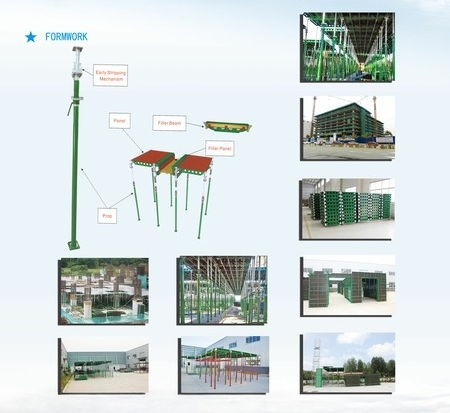
Understanding Steel Formwork Construction
What It Is and How It Differs from Other Systems?
Steel formwork is a mold system made up of carbon steel panels, stiffeners, and hardware for connecting them. Shutters made of wood soak up water, warp when the temperature changes, and rarely last more than 8–10 pours. Aluminum is lighter, but each panel costs more and bends more when heavy concrete is put on it. When used more than 50 times, steel panels keep their shape, which is why they are the best choice for contractors who need consistent results across multiple projects.
The Construction Workflow
A typical steel formwork cycle goes like this: surface preparation and application of a release agent; panel assembly and alignment; placement of concrete and vibration; curing period; stripping and cleaning of the panels. For walls that aren't supporting weight, concrete stripping usually starts when the compression strength hits 1.2 MPa. At each step, you have to pay close attention to how tight the joints are and how level the panels are so that slurry doesn't leak out and there aren't any surface flaws that need expensive repairs.
System Types and Load-Bearing Mechanics
[H3] Panel formwork, modular formwork, tunnel formwork, and table formwork are the four main types of steel formwork construction systems. Panel systems can handle normal beams and walls. Repeated floor plans can be made faster with modular systems. Tunnel methods pour blocks and walls at the same time. Large flat-slab pours can be done on table systems. All of them depend on steel's high modulus of elasticity (about 200 GPa) to withstand the lateral hydrostatic pressure from concrete without deflection when the panel thickness is right.
Advantages and Challenges of Steel Formwork
Core Strengths Worth Knowing
Steel formwork is clearly better than other types of mold materials. Now let's look at the main strengths that matter on site:
- Reuse durability: Quality panels rated for 50+ reuse cycles spread the unit cost far below disposable timber over a multi-phase project.
- Surface finish quality: A flat panel face produces a smooth concrete surface that reduces plastering time and material cost.
- Dimensional accuracy: Surface flatness held within ≤2mm tolerance means fewer alignment corrections and less rework on tight-tolerance structures.
These traits directly lower the two biggest cost factors that contractors have to deal with: the cost of replacement materials and the cost of fixing things.
Comparing Steel Against Competing Materials
Steel costs more per panel at first, but it lasts longer, so it's worth it. Even though wood costs less up front, it makes about three times as much waste over the course of a year. For hand-setting, aluminum's lighter weight is a plus, but it's not stiff enough for ultra-thick base walls or high-pressure tube pours. Plastic composite panels can be used for light household work, but they are not made to hold big loads for infrastructure.
Maintenance, Corrosion, and Safety
Surface rust and panel distortion from rough handling are the main problems in the field. The risk of corrosion is greatly reduced by using a special release agent before each pour and keeping panels off of bare ground when not in use. Panels that have changed shape beyond what the maker allows must be taken out of rotation. On the job site, you should always follow load-bearing verification guidelines that are in line with EN 12812 (the EU falsework standard) or their local equivalents. You should also check the frame integrity and bolt holes for alignment before the pour.
Choosing the Right Steel Formwork for Your Project
Cost Factors That Drive Total Investment
What a steel formwork construction system really costs is the type of material used, how the panels are customized, the freight terms (FOB vs. CIF), and the labor needed to put it together on-site. A better Q235 panel with robotic-welded joints costs more per unit, but it fails less often every 1,000 pours. When comparing suppliers, procurement teams should look at cost-per-pour instead of cost-per-panel. This is especially important for projects that need more than 100,000 m² of formed concrete surface.
Design Principles for Structural Integrity
A good flexible design lets a single panel inventory cover a number of different pour shapes. Some important design checks are making sure that the bolt-hole pitch is the same across all panel sizes, that the frame rib depth is right for the expected side pressure, and that joining parts work with both standard and special panels. Before you sign a contract with a supplier, ask for technical drawings and make sure that the panel diagonal symmetry tolerances meet the needs of your project. Pre-shipment mock-up assembly is a good way to find fit problems with panels before they get to the job site.
Evaluating Suppliers from a B2B Perspective
When EPC companies look for suppliers in more than one project area, they need to look at more than just unit price. Third-party quality audits from SGS or Bureau Veritas give objective data on how well welds penetrate and coats stick to each batch. Getting ISO 9001 approval proves that process control is recorded. When it comes to big sales, the track record of delivery is important because missing a shipment window can lead to liquidated losses on a government contract. Before making a trial order, see if the company has worked on similar building projects in the past.
Innovations and Trends in Steel Formwork Technology
BIM Integration and Digital Planning
With the help of Building Information Modeling tools, engineering teams can now test out 3D layouts for steel formwork construction before a single panel is shipped. This cuts down on the work that needs to be done on-site for changes and gives procurement teams accurate quantity take-offs. A number of makers make panel libraries that work with both Revit and AutoCAD. This makes it easier for project engineers to go from planning to ordering.
Sustainability and Life Cycle Impact
The World Steel Association says that more than 85% of steel in the world is recycled every year. This makes steel one of the most recycled products in the world. When compared to single-use wood systems, a well-kept panel inventory that can be used more than 50 times creates a lot less waste. Manufacturers who are ISO 14001 certified keep records of how they manage the environment. This gives procurement teams data that they can check for green building compliance submissions.
Automation in Manufacturing
Panels made by robotic welding and cold roll forming lines now have tighter tolerances than panels made by hand at the same rate. Automated production lines allow factories to keep weld depth and frame shape consistent from batch to batch, which directly lowers fit fails at the site. When looking for providers for high-volume, multi-year supply deals, this stability in manufacturing is a key differentiator.
Practical Guide to Procuring Steel Formwork
Sourcing Strategy and Customization
For contractors working in Africa, the Middle East, and Southeast Asia, they have to get their supplies from a company that takes custom orders based on drawings. Standard panel sizes can be used for most wall and column pours, but panels need to be custom cut for pier geometries and curved retaining walls. Make sure that your supplier can profile-form materials in-house and send custom panels within the mobilization time for your project.
Rental vs. Purchase Decision
It's cheaper to rent for a single short-term project where it's easy to store and return the items. When the same system is used on two or more job sites, it saves money to buy it all at once, especially when panels can be used more than 30 times. Ownership also lets EPC contractors keep track of their goods and removes the risk of not being able to rent during busy building seasons.
Logistics, Contracts, and Warranty
FOB pricing from a port city with direct access to major shipping lanes lowers freight costs and transit times. Early on, confirm the container-load numbers with your provider to avoid paying extra for a partial shipping. The warranty terms should say how much deformation is okay, how long the coating should last, and how to replace a broken panel. You should include a clause in your purchase agreement that allows a third party to check the goods before they leave the plant.
Conclusion
Contractors who need regular concrete quality, controlled cycle times, and predictable material prices across multi-phase projects can get a lot out of steel formwork construction systems. Not just the line-item price is important when choosing panels; you should also check the material grade, weld quality, surface tolerance, and supplier delivery capacity. If a supplier has certified quality management, automated production, and real custom drawing capabilities, they are no longer just a vendor but an asset to the supply chain. This difference tells big EPC contractors whether formwork is a project risk or a benefit for projects spread out across multiple areas.
FAQ
What is the difference between steel and timber formwork?
Steel panels are rigid, non-absorbent, and reusable for 50 or more pours. Timber absorbs moisture, warps over time, and typically survives 8–10 pours at best. Steel produces a smoother concrete surface and holds tighter dimensional tolerances, which reduces finishing labor. The higher upfront cost of steel is recovered quickly on medium-to-large projects through lower waste disposal and replacement spend.
What safety standards apply to steel formwork?
In Europe, EN 12812 governs falsework and formwork performance requirements. In the United States, OSHA 29 CFR 1926 Subpart Q covers concrete and masonry construction. Contractors should verify that panels have been load-tested and that supplier documentation confirms compliance with the relevant standard for the project country.
What drives the cost of a steel formwork system?
The main cost drivers are steel grade, panel thickness, degree of customization, surface treatment type, order volume, and freight terms. A Q235 panel with a factory-applied anti-corrosion coating and robotic-welded joints will carry a higher unit price than a basic manually welded alternative, but the total cost over the panel's service life is lower due to fewer replacements and less maintenance.
Can steel panels be made to custom dimensions?
Yes. Reputable manufacturers accept project-specific drawings and produce panels in non-standard sizes for curved walls, bridge piers, and other complex geometries. Confirm that the supplier has profile forming equipment and a technical team capable of drawing review before committing.
Get Steel Formwork Panels Built to Your Project Specs — GREEN FORMWORK
With help from Shandong Xingrui Building Materials Co., Ltd., GREEN FORMWORK makes Q235 premium carbon steel formwork panels in a 79,800 m² factory that has 4 cold roll forming lines and 12 welding robots. Our systems are certified by ISO 9001, ISO 14001, and ISO 45001, can be used more than 50 times, and are shipped to more than 100 countries. As a reliable steel formwork construction supplier, we can take custom orders based on project drawings and offer samples along with full technical support. To get a quote right away, email us at sdxingruiqp@126.com.
References
1. World Steel Association. Steel Statistical Yearbook. 2022.
2. American Concrete Institute. ACI 347R-14: Guide to Formwork for Concrete. 2014.
3. British Standards Institution. EN 12812: Falsework — Performance Requirements and General Design. 2008.
4. Peurifoy, R.L., & Oberlender, G.D. Formwork for Concrete Structures (4th ed.). McGraw-Hill. 2011.
5. Hurd, M.K. Formwork for Concrete (7th ed.). American Concrete Institute. 2005.
6. Construction Industry Research and Information Association (CIRIA). Formwork — A Guide to Good Practice (3rd ed.). CIRIA. 2012.
Learn about our latest products and discounts through SMS or email